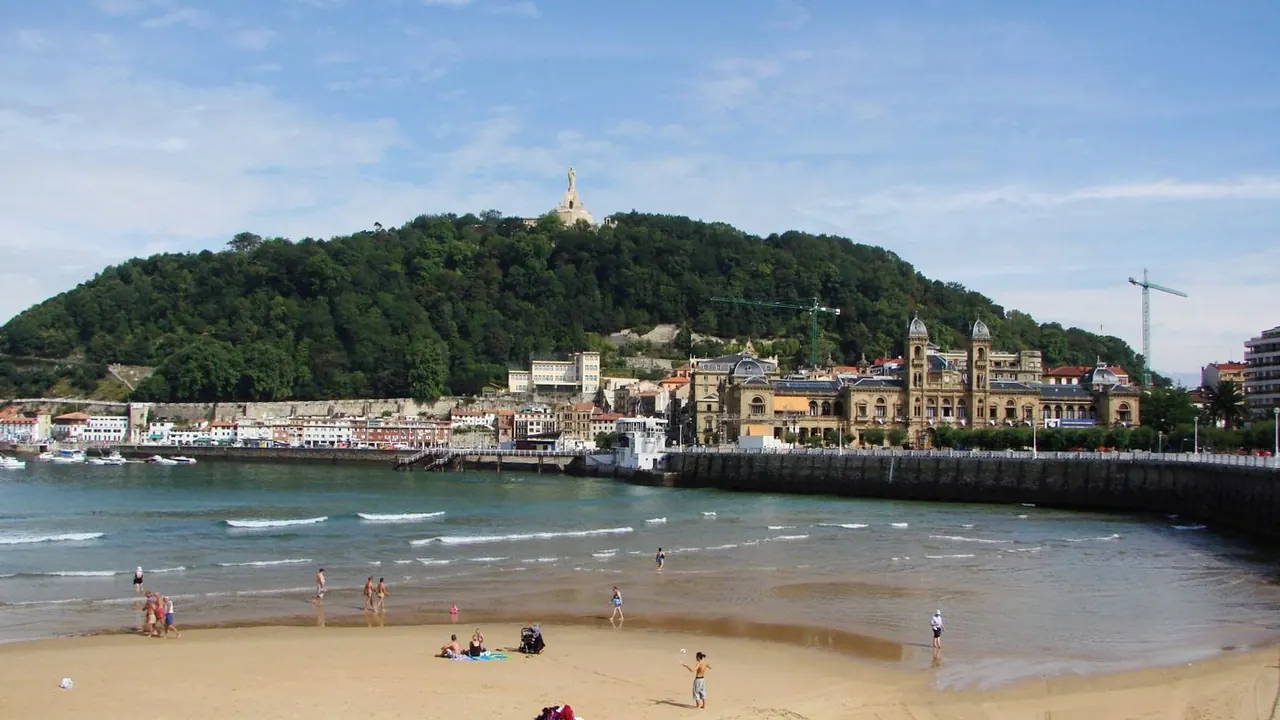
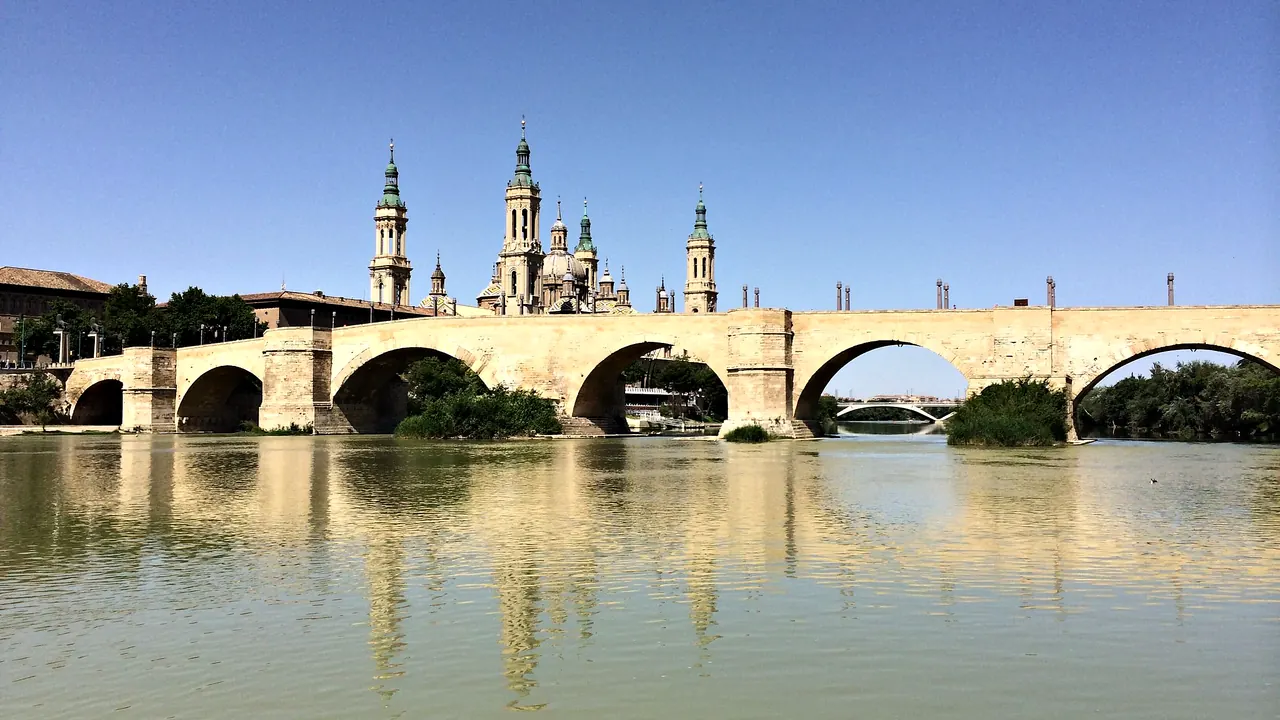
Photos: San Sebastian by Guérin Nicolas, CC BY-SA 3.0, cropped; Zaragoza by Pablo Alejandro Araujo Granda, CC BY-SA 2.0, cropped.
San Sebastian or Zaragoza?
Our verdict in twelve categories, each scored against the same fixed benchmark cities, and the climate month by month, so you can choose for your trip.
Choose San Sebastian for
- beaches
- food and drink
- nature and the outdoors
San Sebastian suits travellers who plan their days around eating and the sea. The pintxo bars of the Parte Vieja and Gros, a beach of pale sand in the middle of town, green coastal walks and short hops into the French Basque country make it a rich short stay. You have to accept the high cost and the rain that keeps the hills so green.
Choose Zaragoza for
- prices
- culture and sights
- nightlife
Zaragoza is the better pick for history and for making a budget go further. Roman ruins, the Aljafería and the Pilar basilica give it more to see, rooms and meals cost far less, and the high-speed line puts Madrid and Barcelona within easy reach. There is no sea and the summer is fierce, so it rewards spring and autumn visits by people happy in an inland city.
Scoreboard
Twelve categories on one fixed scale from 0 to 100. The shaded stretch is the gap between the two.
Your match
Pick a travel style or drag the sliders, and both match scores follow your weighting.
Wins on beaches and food and drink with your weighting.
Wins on prices and culture and sights with your weighting.
What matters to you?
Category by category
What the scores mean for a trip.
Beaches & swimming
This is the widest gap between the two. San Sebastian has three town beaches within walking distance of each other: sheltered La Concha with Santa Clara island across its mouth, Ondarreta for local families and Zurriola for surfing, with the long strand at Zarautz close by. The catch is the Atlantic, which is cool and only reliably good for swimming in high summer.
Zaragoza has no beach at all. The coast is more than 200km away and the Ebro is not for swimming, so in the summer heat people go to the municipal open-air pools. Anyone who wants the sea should add a few days on the coast.
Food & drink
Both cities eat at the bar counter, moving from one bar's speciality to the next, but San Sebastian takes it much further. The pintxos of the Parte Vieja and Gros are more inventive and the txakoli is poured from height. Above the bars sit some of Spain's most celebrated restaurants in the hills around town, and the cider houses of Astigarraga open from January into spring.
Zaragoza's El Tubo does the same thing more simply: croquetas, mushroom skewers, ternasco lamb and borage with clams, with inexpensive reds from Cariñena and Somontano. Neither city offers much beyond its own regional cooking.
Culture & sights
Zaragoza has more history to show. It runs from Roman Caesaraugusta, with an underground forum and an open-air theatre, through the Islamic Aljafería palace to the Baroque Pilar basilica, whose ceilings were painted partly by a young Goya. The Goya Museum adds to it.
San Sebastian is more about how the city looks than about its monuments: the grid of the Parte Vieja rebuilt after 1813, the late 19th-century streets around the Buen Pastor, the castle on Monte Urgull, the San Telmo Museum and Chillida's Peine del Viento on the rocks. Both are well covered in two or three days.
Nightlife
Zaragoza goes out later and for longer. After tapas in El Tubo, students fill the bars around Plaza San Felipe and Plaza Santa Marta from Thursday, a few clubs run into the early morning, and during the October fiestas the streets stay full until dawn.
In San Sebastian the pintxo crawl is the night out, sociable and noisy in the old town, but after it the choice narrows to a few late bars and clubs. The city livens up in summer and during Semana Grande and is quiet the rest of the year.
Nature & outdoors
San Sebastian is greener, and its landscapes start at the edge of town. Monte Igueldo and Monte Ulia rise straight from the bay, the cliff path runs to Pasaia, and the walk over Jaizkibel to Hondarribia is one of the finest coastal walks in northern Spain. You can surf and paddleboard from the city beaches. The price is frequent rain.
Zaragoza sits on a dry, windswept steppe, with the Ebro path and Parque Grande in town. Its striking country, the beech woods of Moncayo, the Mallos de Riglos and the Bardenas Reales badlands, is an hour or more away by car.
Day trips
Both make excellent bases, but they point in different directions. From San Sebastian the outings are short and mostly along the coast: Hondarribia, Getaria, Bilbao and the Guggenheim, and the French Basque towns of Biarritz and Saint-Jean-de-Luz, most of them easy by train or bus.
Zaragoza's strength is the high-speed line, which puts Madrid and Barcelona about an hour and a half away. Inland Aragon adds Loarre castle, the ruins of Belchite, Tarazona and Albarracín, which are much easier to reach with a hired car.
Good for families
San Sebastian has a slight edge with children. The main reasons are the calm, sheltered beaches in the centre and the car-free promenade, along with the harbour aquarium, the Eureka science museum and the funfair on Monte Igueldo. Rainy spells can keep everyone off the sand for days.
Zaragoza has its own river aquarium and the open space of the Parque del Agua, but no sea, and July and August are very hot for small children. In both cities, children are part of the evening life in the squares.
Getting around
Both cities are flat and easy to walk, but San Sebastian is more compact. The old town, the bay and Gros are minutes apart, bike lanes follow the waterfront, and the Euskotren reaches the French border and heads towards Bilbao, so you don't need a car.
Zaragoza's sights are spread a little more widely between the Pilar, the Casco and the Aljafería, so you will use the tram and buses more. Delicias station is a ride out of the centre.
Shopping & style
Neither is a shopping destination, and what differs is the kind of shop. San Sebastian leans towards small independents: boutiques in the Centro, espadrilles and berets in the Parte Vieja, and surf shops in Gros.
Zaragoza is more mainstream, with fashion chains and a department store on Paseo de la Independencia and a large mall on the southern edge of town. In both, the best buys are edible: anchovies and Idiazabal cheese in one, candied fruit and Cariñena wine in the other.
Affordability
San Sebastian's costs are lopsided. The bed is the big outlay, because rooms are scarce for the number of visitors, and July, August and festival weeks are dearest of all. Yet the town's chief pleasures, the bay, the promenade and the climbs up Urgull and Ulia, cost nothing. Eating can go either way, from a careful pintxo round to a meal at one of the restaurants in the hills that becomes the biggest expense of the trip.
In Zaragoza the whole trip costs less, and the expensive time of year is different. The hot summer months bring no rise in price, and it is the Fiestas del Pilar in October that fill the rooms. Sightseeing barely shows in the budget, since the basilica is free and the museums ask little. A spring or autumn stay away from fiesta week costs a fraction of a summer week on the Basque coast.
Live music & performing arts
The two are evenly matched but busy at different times. San Sebastian's music is concentrated in summer: Jazzaldia in July brings concerts to the Kursaal and Zurriola beach, and the Quincena Musical fills August with orchestras and opera.
Zaragoza spreads its programme across the season at the Auditorio and the Teatro Principal. Its local signature is the jota, Aragon's leaping folk song and dance, which you see most during the Fiestas del Pilar.
Wellness & relaxation
San Sebastian is the more restful of the two. Its tradition from the days as a royal seaside resort lives on in the seawater thalassotherapy spa on the La Concha promenade. The gentle pace of strolls along the promenade and long lunches suits a slow stay.
Zaragoza has hotel spas and an Arab-style bathhouse or two, and the thermal waters of Alhama de Aragón are a little over an hour away. Evenings by the Ebro are calming, but the summer heat and the cierzo wind are not.
When should you go?
Pick your month. The climate figures are measured averages, not a forecast.
San Sebastian in July
Zaragoza in July
Daytime high, °C
Rainfall in the month, mm
Where the figures come from
San Sebastian's station stands 252 m above the city centre, so the centre is likely a little warmer than the figures say.
Temperature and rainfall are climate normals, averaged over the years shown. San Sebastian: 1991-2020 normals, San Sebastian / Igueldo (6.1 km from centre). Zaragoza: 1991-2020 normals, Zaragoza / Aeropuerto (11.2 km from centre).
San Sebastian has a short, mild summer. July and August bring highs in the low twenties, and by August the Atlantic has warmed to about 22°C. That is enough for swimming at La Concha, and the water stays almost as warm through September. Rain falls in every month, though, and late autumn is the wettest stretch, with about 203mm in November. Winters are cool, grey and short on sunshine.
Zaragoza works the other way round. It is dry and sunny all year, with little rain in any month, but it gets hot. July reaches about 33°C, which is too much for walking the streets in the middle of the day. Spring and autumn are the times to go: May is around 25°C and October is pleasantly warm. Winter highs are much the same as on the Basque coast, but the days are noticeably brighter and drier.
Which traveller are you?
On a beach and sun trip, San Sebastian is the clear choice. La Concha and Ondarreta give you calm sand right in the city and Zurriola has surf, while Zaragoza is far inland and offers only pools. Go in July or August for the warmest sea.
For a culture and arts trip, Zaragoza gives you more to fill the days. The Aljafería palace, the Mudéjar wall of La Seo, Goya's ceilings in the Pilar and the underground Roman forum add up to a richer list than San Sebastian's handful of museums.
On a tight budget, Zaragoza makes the money go much further. Central hotels are good value for most of the year, tapas and set lunches are generous and the local wine costs little. In San Sebastian rooms are scarce and expensive, especially in summer.
Before you go
| Measure | San Sebastian | Zaragoza |
|---|---|---|
| Official language | Spanish | Spanish |
| Currency | Euro (EUR) | Euro (EUR) |
| Sockets | CF230 V, 50 Hz | CF230 V, 50 Hz |
| Driving side | Right | Right |
| Time zone | UTC+1, UTC+2 in summer | UTC+1, UTC+2 in summer |
| Emergency number | 112 | 112 |
| Elevation | 6 m | 200 m |
| Main airport | San Sebastián Airport (EAS)16 km from centre11 non-stop destinations | Zaragoza Airport (ZAZ)13 km from centre12 non-stop destinations |
| Public holidays this year | 13 days | 12 days |
By the numbers
| Measure | San Sebastian | Zaragoza |
|---|---|---|
| City population | 189,866 | 693,091 |
| People per km² | 3,118 | 712 |
| Museums within 10 km | 14 | 22 |
| UNESCO World Heritage sites within 50 km | 3 | 1 |
| Swim season, months above 21 °C | 2 months | - |
Where else could you go?
Every comparison below shares a destination with this one, so you can follow San Sebastian or Zaragoza somewhere new.