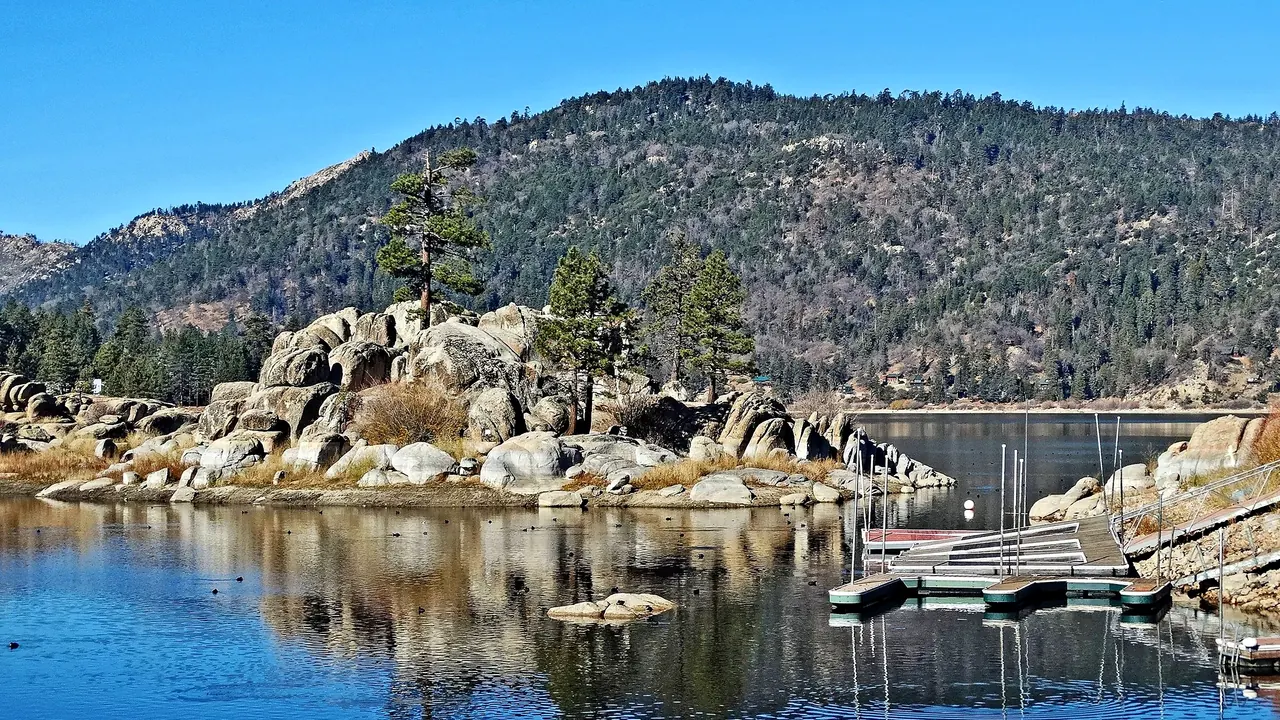
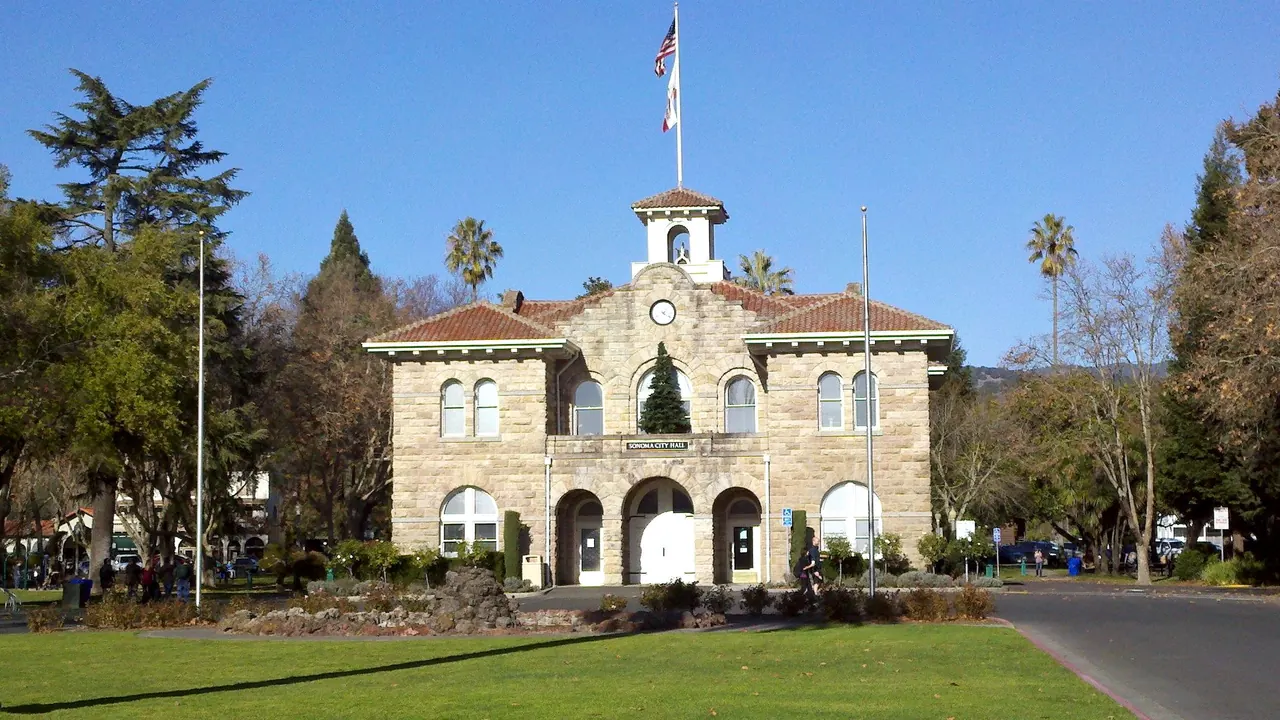
Photos: Big Bear Lake by inkknife_2000, CC BY-SA 2.0, cropped; Sonoma by Cullen328, CC BY-SA 3.0, cropped.
Big Bear Lake or Sonoma?
Our verdict in twelve categories, each scored against the same fixed benchmark cities, and the climate month by month, so you can choose for your trip.
Choose Big Bear Lake for
- families
- prices
- nature and the outdoors
Big Bear Lake suits travellers who come for the mountain itself: skiing and sledding in winter, then hiking, biking and paddling on the lake in summer, with a cabin and a hot tub waiting at the end of the day. It is also the stronger choice with children and the easier one to keep affordable, as long as you avoid winter weekends. Evenings are quiet, the food is simple and there is very little in the way of sights.
Choose Sonoma for
- day trips
- food and drink
- culture and sights
For a trip built around wine, long lunches and a slower pace, Sonoma is the better pick. Tasting rooms line its historic plaza, the mission and General Vallejo's house give you half a day of history, Boyes Hot Springs is there for a spa day, and San Francisco and Napa are close enough for easy outings. It costs more and gives children little to do, so it works best for couples and groups of adults.
Scoreboard
Twelve categories on one fixed scale from 0 to 100. The shaded stretch is the gap between the two.
Your match
Pick a travel style or drag the sliders, and both match scores follow your weighting.
Wins on families and prices with your weighting.
Wins on day trips and food and drink with your weighting.
What matters to you?
Category by category
What the scores mean for a trip.
Beaches & swimming
Neither is a beach destination, but Big Bear Lake at least has water on the doorstep. You can swim from the shore in July and August, and the supervised swim beach at Meadow Park is the safe choice with children. Even so, the lake is mostly for boats, kayaks and paddleboards.
Sonoma has no water of its own. The coast around Bodega Bay is well over an hour away and too cold and rough for swimming, so a swim means a hotel pool or a summer drive to the gravel beaches of the Russian River.
Food & drink
The gap here is wide. Big Bear Lake feeds skiers and hikers with diner breakfasts, burgers, barbecue and brewpub pints, and many visitors simply cook in their rental cabins.
In Sonoma, eating and drinking are the reason to come. There are tasting rooms around the plaza, wineries from the Carneros hills up to Glen Ellen, and seasonal Californian cooking with local cheese, olive oil and oysters from the coast. Choice is limited to what a small town can offer, but the quality is what people travel for.
Culture & sights
Of the two, only Sonoma has real history. There is the plaza where the Bear Flag Revolt broke out in 1846, the last of California's Franciscan missions, the adobe barracks and General Vallejo's Gothic-style house, which together make a good half day. Big Bear Lake has a forest discovery centre, a small museum and a dirt-road drive past the gold-rush remains of Holcomb Valley, and very little else.
Nightlife
Both towns go quiet early and neither has a club, but their evenings differ. At Big Bear Lake, nights out mainly happen in ski season, with après-ski in the bars near the slopes and the Village pubs before most people head back to the hot tub. Sonoma's evenings centre on dinner, with a few wine bars and saloons on the plaza and warm summer nights on the square.
Nature & outdoors
Both are good places to be outdoors, but Big Bear Lake is the true mountain base. It has skiing and sledding in winter, mountain-bike trails on the summer slopes, a lake for kayaks and sailing boats, the Pacific Crest Trail along the north shore and the San Gorgonio Wilderness close by.
Sonoma's landscape is gentler: vineyards between the Mayacamas range and the Sonoma Mountains, trails that climb from the plaza, and redwoods and views at Sugarloaf Ridge and Jack London park. It suits cycling among the vines and spring wildflowers more than hard days in the hills, and summer heat or fire-season smoke can get in the way.
Day trips
Sonoma is far better placed for day trips. San Francisco is about an hour away, Napa's wine towns are just across the hills, and Healdsburg, Petaluma and Sausalito all make easy outings, even if many of them are more wine country.
Big Bear Lake sits at the end of slow, winding mountain roads. Lake Arrowhead and the orchards of Oak Glen are the realistic outings, and Palm Springs or Los Angeles mean a long day at the wheel.
Good for families
With children, Big Bear Lake is the clear choice. Snow play and beginner ski lessons in winter, the alpine slide, mini-golf and pedal boats in summer, and the rescued bears and bobcats at the Alpine Zoo keep them busy, and roomy cabins with kitchens make the practical side easy.
Sonoma is calm and safe but built for wine tasting. The playground on the plaza, the miniature railway park and the African wildlife park near Santa Rosa are enough for a day or two. After that, children are left waiting through tasting rooms and long lunches.
Getting around
In both places you will want a car, and in both the walkable area is small. Big Bear's Village is easy on foot, and a local bus and seasonal trolley reach the ski areas. Getting there, though, means steep mountain highways, snow chains in winter and slow weekend traffic.
In Sonoma, a cluster of tasting rooms lies within a few blocks of the plaza, and the flat valley roads are good for cycling to nearby wineries. Beyond that the buses are of little use, so most visitors hire a car or book a driver, which also settles who drives after the wine.
Shopping & style
Sonoma is the better place to browse. Its arcades off the plaza hold independent boutiques, galleries and kitchen shops, and you can take home wine, cheese and olive oil bought direct from the producers. Big Bear's Village is a few blocks of fudge shops, bear-themed souvenirs and outfitters renting ski and lake gear, and an hour there is plenty. Neither has fashion or department stores worth the journey.
Affordability
Big Bear Lake is the cheaper of the two, and the gap is widest for families and groups. A cabin split several ways, meals cooked in its kitchen and days on the trails or the sledding hills cost little. A winter weekend changes that, once lift tickets and ski hire for everyone are added to weekend cabin rates.
In Sonoma, the costs come at every step. A harvest weekend means a small inn room at peak rates, a long lunch at a plaza restaurant and a fee at each winery, plus a driver if nobody wants to stay off the wine. Sleeping in a larger town nearby and picnicking among the vines lowers the bill, but Sonoma is still the more expensive trip.
Live music & performing arts
Sonoma has more on stage, though mostly in summer. There are Broadway-style concerts among the ruins at Jack London park, concerts at the wineries and the 1930s theatre on the plaza, and half an hour away the Green Music Center's concert hall draws touring orchestras. Big Bear Lake has a small community arts centre, free summer concerts by the lake and the Bavarian bands of its autumn Oktoberfest.
Wellness & relaxation
Sonoma is the better place to unwind properly. Mineral water from Boyes Hot Springs has fed a historic resort spa for over a century, and day passes are sold to non-guests. Calistoga's mud baths are an hour away, and the town's slow mornings and silent evenings make resting easy.
At Big Bear Lake, relaxing happens in private: the hot tub on the cabin deck, a wood stove and the quiet of the pines midweek. There are a few day spas but no springs, and crowds on winter weekends break the calm.
When should you go?
Pick your month. The climate figures are measured averages, not a forecast.
Big Bear Lake in July
Sonoma in July
Daytime high, °C
Rainfall in the month, mm
Where the figures come from
Big Bear Lake has no rain gauge within 25 km of the centre, so its rainfall comes from a gridded climate dataset read at the city rather than from a gauge further away.
Sonoma has no rain gauge within 25 km of the centre, so its rainfall comes from a gridded climate dataset read at the city rather than from a gauge further away.
Sonoma's sunshine is measured 87 km from the centre, at Sacramento Executive Airport.
Temperature and rainfall are climate normals, averaged over the years shown. Big Bear Lake: 2014-2025 (rainfall 1991-2020) normals, Big Bear City (5 km from centre). Sonoma: 1991-2020 (sunshine 1981-2010) normals, Napa / Middleton (17.8 km from centre).
Big Bear Lake has two seasons that matter. From December to March the mountain is cold, with daytime highs around 7°C in January, and most of the year's rain and snow falls then, which is what the ski slopes need. June to September is the warm, dry stretch for hiking, biking and the lake, with highs near 26°C in July and almost no rain. Spring and late autumn are cool in-between seasons.
Sonoma is milder all year. Its wet season runs from November to March, and December and January are the wettest months of all, with more rain than the mountain gets. June to September is close to rainless, very sunny and reliably warm, though the valley floor can feel hot by mid-afternoon. Spring and October are the most comfortable months for walking among the vines. The Pacific stays around 12°C to 14°C even in late summer, far too cold for a swim.
Which traveller are you?
On a family trip with children, Big Bear Lake wins easily. The town is set up for families in winter and summer alike, and cabins give them room to spread out and cook. Sonoma's days revolve around tasting rooms, where children soon get bored.
For a food and nightlife trip, Sonoma is the choice, mainly because of the food. Wineries, tasting rooms and seasonal Californian cooking make every meal worth planning. Neither town stays up late, but Sonoma's dinners and wine bars beat Big Bear's burgers and brewpubs.
For skiers and snowboarders, only Big Bear Lake fits. Its two ski areas above the south shore offer modest but reliable runs with plenty of snowmaking, and gear hire and après-ski are close by in the Village. In Sonoma, winter is simply the rainy season.
Before you go
| Measure | Big Bear Lake | Sonoma |
|---|---|---|
| Currency | US Dollar (USD) | US Dollar (USD) |
| Sockets | AB120 V, 60 Hz | AB120 V, 60 Hz |
| Driving side | Right | Right |
| Time zone | UTC-8, UTC-7 in summer | UTC-8, UTC-7 in summer |
| Emergency number | 911 | 911 |
| Elevation | 2,058 m | 26 m |
| Main airport | Ontario International Airport (ONT)67 km from centre28 non-stop destinations | Charles M. Schulz Sonoma County Airport (STS)39 km from centre14 non-stop destinations |
| Public holidays this year | 13 days | 13 days |
By the numbers
| Measure | Big Bear Lake | Sonoma |
|---|---|---|
| City population | 5,046 | 10,739 |
| People per km² | 299 | 1,513 |
| Museums within 10 km | 1 | 7 |
| UNESCO World Heritage sites within 50 km | 0 | 0 |
| Swim season, months above 21 °C | - | None |
Where else could you go?
Every comparison below shares a destination with this one, so you can follow Big Bear Lake or Sonoma somewhere new.
- Napavs Sonoma
- San Franciscovs Sonoma
- Palm Springsvs Big Bear Lake
- Palm Desertvs Big Bear Lake
- Anaheimvs Big Bear Lake
- Laguna Beachvs Big Bear Lake