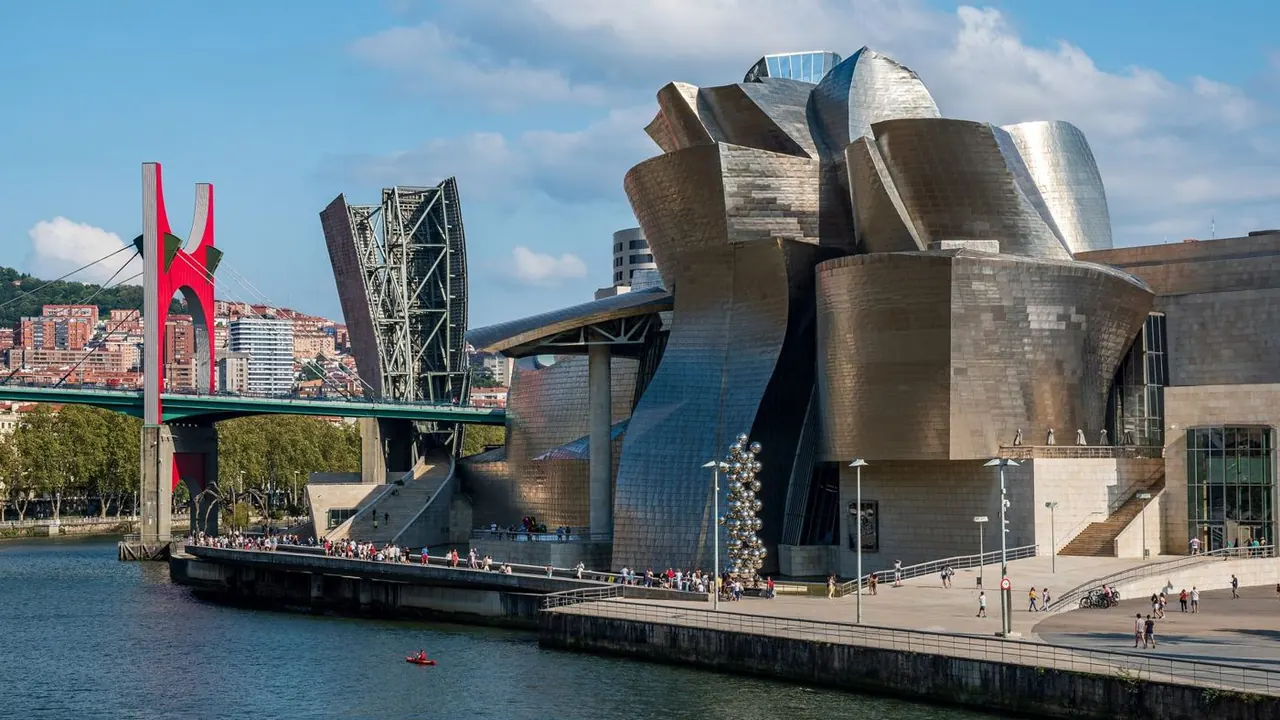
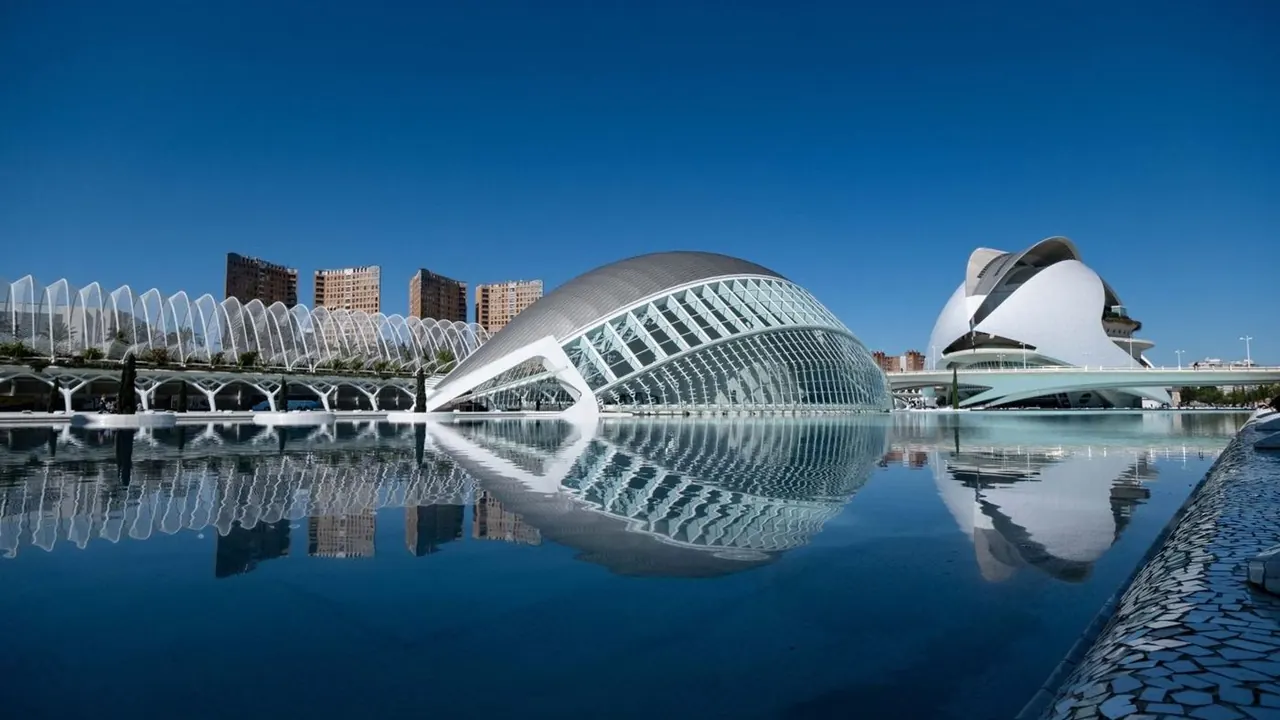
Photos: Bilbao by José Ligero Loarte, CC BY-SA 4.0, cropped; Valencia by Francesco Ungaro, Pexels License.
Bilbao or Valencia?
Our verdict in twelve categories, each scored against the same fixed benchmark cities, and the climate month by month, so you can choose for your trip.
Choose Bilbao for
- nature and the outdoors
- day trips
- food and drink
Bilbao suits travellers who put eating first and don't mind a bit of weather. The pintxo bars of the Casco Viejo and a Basque kitchen with real depth keep it a step ahead of Valencia at the table. Green hills and the mountains of Urkiola and Gorbea begin within an hour. San Sebastián, the Rioja Alavesa and the fishing ports of the Biscay coast make for unusually strong day trips. In return, expect rain and a higher bill.
Choose Valencia for
- beaches
- families
- prices
Valencia is the better choice for a sunnier, easier trip with the sea built in. Its wide sandy beaches are a short tram ride from the centre, and the Oceanogràfic and the Turia gardens make it far more rewarding with children. The evenings in Ruzafa offer more choice, and the whole stay costs less. It also has the fuller old town, with the Lonja de la Seda, the cathedral and the medieval gates.
Scoreboard
Twelve categories on one fixed scale from 0 to 100. The shaded stretch is the gap between the two.
Your match
Pick a travel style or drag the sliders, and both match scores follow your weighting.
Wins on nature and the outdoors and day trips with your weighting.
Wins on beaches and families with your weighting.
What matters to you?
Category by category
What the scores mean for a trip.
Beaches & swimming
Bilbao has no beach of its own. The metro runs out to Ereaga and Arrigunaga in Getxo, the open sands of Sopelana and the sheltered bay at Plentzia. That makes a good afternoon out, but the Biscay water is cool until late summer and July can still turn grey. Sopelana's swell suits surfers better than toddlers.
In Valencia the beach is part of daily life. A long, wide band of fine sand at Las Arenas and Malvarrosa lies about twenty minutes from the centre, with shallow, calm water. Quieter dune beaches at El Saler sit behind the pines of the Albufera park. For days spent on the sand, Valencia is far ahead.
Food & drink
Both cities take food seriously, but Bilbao has the edge. The poteo means drifting from counter to counter in the Casco Viejo and Plaza Nueva for txakoli and pintxos. Behind it stands a Basque kitchen of grilled hake, bacalao al pil-pil and txuleta, with several Michelin-starred restaurants in the city and the hills around it.
Valencia's cooking is built around rice and the long lunch. Try paella valenciana, arroz negro and all i pebre at the beach restaurants and in the Albufera villages, and horchata in Alboraya. The Mercado Central is the grander market of the two. Valencia's best eating happens at midday, while Bilbao's continues through the evening.
Culture & sights
Bilbao's culture rests on two museums of real weight, the Guggenheim and the Bellas Artes. It adds a compact Casco Viejo and the Vizcaya Bridge, a transporter bridge down the estuary. It is the sharper choice for anyone travelling for contemporary art and architecture.
Valencia goes further back in time and has more to see. It has the UNESCO-listed Lonja de la Seda, the cathedral with its Holy Grail chalice and Miguelete tower, the medieval gates of Serranos and Quart, and the ceramics museum in the Marqués de Dos Aguas palace. Add the white City of Arts and Sciences at the far end of the Turia, and Valencia makes the fuller sightseeing trip.
Nightlife
In Bilbao, a night out is the pintxo crawl carried on later. The Casco Viejo and the streets around Licenciado Poza are busy from Thursday to Saturday, but there are few clubs and weeknights are quiet.
Valencia has more nightlife and more variety: the cocktail bars and terraces of Ruzafa, the rougher bars of El Carmen and the cheap student streets of Benimaclet. In summer, open-air clubs near Malvarrosa run until dawn. The big street parties also fall at different times of year: Bilbao's Aste Nagusia is in August, Valencia's Fallas in March.
Nature & outdoors
Bilbao is greener and hillier. The Artxanda funicular and the Pagasarri hike start from town, and the limestone of Urkiola and the beech woods of Gorbea are about an hour away. The coast adds cliff paths, the Urdaibai reserve, San Juan de Gaztelugatxe and the surf at Mundaka. The price is rain in every season.
Valencia's outdoors is flat and watery. There is the Albufera lagoon with its rice fields, herons and sunset boat trips, the pine and dune trails of the Devesa, and 9km of Turia gardens for running and cycling. Mountains mean a drive to the Sierra Calderona or the gorge at Chulilla.
Day trips
Bilbao has the richer surroundings. San Sebastián is a little over an hour away by bus, and Gernika and the fishing ports of Mundaka, Elantxobe and Lekeitio are close. Further days can go to the wine villages of the Rioja Alavesa around Laguardia, or along the Cantabrian coast to Santillana del Mar.
Valencia's outings are good but more spread out. Sagunto's Roman theatre and Xàtiva's castle are about half an hour away, and the fast train reaches Cuenca's hanging houses in about an hour. Peñíscola, Elche and the Costa Blanca take an hour and a half or more.
Good for families
Bilbao is pleasant with children: flat, safe and clean, with Doña Casilda Park, the Artxanda funicular and Puppy outside the Guggenheim. But it has no zoo, aquarium or theme park, and rainy days need a backup plan.
Valencia has much more for children. The Oceanogràfic, the hands-on science museum and the Hemisfèric sit together in the City of Arts and Sciences, and Bioparc shows African animals in open habitats. The Gulliver playground and the shallow city beaches fill the rest of the day. Only the heat of summer afternoons counts against it.
Getting around
Both are easy without a car, in different ways. Bilbao's sights line a flat few kilometres of river that you can walk or ride by tram. Norman Foster's metro runs down both banks to the beaches and the Vizcaya Bridge, and regional buses run often to San Sebastián and Vitoria.
Valencia is a city for bikes. The car-free Turia gardens run from the old town to the City of Arts and Sciences, with bike lanes and a bike-share scheme across the centre. Metro and tram reach the airport and the beaches, though the beaches and the City of Arts and Sciences are a ride or a long walk from the old town.
Shopping & style
Bilbao's Gran Vía has the main chains and a department store, but little beyond them for fashion. The better browsing is in the old family shops of the Casco Viejo, for berets, linen and espadrilles, and at the Ribera market for txakoli, Idiazabal and tinned anchovies.
Valencia has more range for clothes. Luxury boutiques sit alongside the chains around Calle Colón and Poeta Querol, and El Carmen and Ruzafa have vintage and independent design. Local crafts include Manises ceramics, painted fans and silk, while saffron and turrón from the Mercado Central make the edible souvenirs.
Affordability
Bilbao is one of the dearer Spanish cities, and central hotels cost more than in most of the country. A pintxo crawl keeps evenings reasonable, but the asadores and starred kitchens charge accordingly.
Valencia goes further on the same budget. The multi-course set lunch with wine is everywhere, tapas cost little away from the tourist squares, and hotels are fairly priced for most of the year. Only beachside summer and Fallas push costs up.
Live music & performing arts
The two are close in scale, and each centres on a landmark modern hall. Bilbao's Euskalduna hosts the ABAO opera season and the symphony orchestra, and the Arriaga and Campos Elíseos stage theatre and dance. In July, the BBK Live festival brings international bands to Mount Cobetas.
Valencia's Palau de les Arts, with its own highly regarded orchestra, makes it a little stronger for opera and ballet. The Palau de la Música stands on the edge of the Turia gardens, and Ruzafa has small jazz stages. Bilbao has Basque choral singing at its festivals; in Valencia, the village wind bands play all through Fallas.
Wellness & relaxation
Bilbao has no bathing tradition, so relaxing there means hotel spas, long lunches and riverside walks. For a proper spa stay, the historic balnearios of the Basque interior are a separate trip.
Valencia is the more restful of the two. Its Arab-style bath houses add a little, and the mild, dry weather, the seafront promenade and the shady Turia paths make doing very little easy. For serious pampering, though, you still need the resort hotels on the coast.
When should you go?
Pick your month. The climate figures are measured averages, not a forecast.
Bilbao in July
Valencia in July
Daytime high, °C
Rainfall in the month, mm
Temperature and rainfall are climate normals, averaged over the years shown. Bilbao: 1991-2020 normals, Bilbao / Sondica (4.1 km from centre). Valencia: 1991-2020 normals, Valencia (1.6 km from centre).
Bilbao is at its best from June to September, when daytime highs reach the mid-20s and rainfall is at its lowest. Even then, grey and showery days are common, and it gets roughly half of Valencia's sunshine. The Biscay sea only reaches about 22°C in August, so swimming is a late-summer pleasure. From October the rain builds sharply to a peak of 170mm in November. Winter is mild but wet and dim, better suited to museums and bars than to the coast.
Valencia has a long beach season, with the sea warm enough from June into October and reaching 26°C in August. High summer is almost dry but hot, around 31°C, which makes afternoon walking hard work. Spring and October are the most comfortable months for the streets. September and October are its wettest months, but they are still far drier than autumn in Bilbao, and winter stays mild and fairly bright.
Which traveller are you?
On a beach and sun trip, Valencia is the clear choice. Malvarrosa and Las Arenas are wide, shallow and close to the centre, the sea stays warm for months and the sun is reliable. Bilbao's beaches are a metro ride away, under changeable skies.
On a family trip with children, Valencia has far more made for them: the Oceanogràfic, the hands-on science museum, Bioparc, Gulliver in the Turia gardens and calm sandy beaches. Bilbao is safe and easy, but it has no zoo, aquarium or theme park.
For an outdoors trip, Bilbao is the stronger choice. Mountain walking in Urkiola and Gorbea is about an hour away, cliff paths run along the coast beyond Getxo, and Mundaka's wave draws serious surfers. Valencia has the Albufera lagoon and flat cycling, but you need a car to reach hills.
Before you go
| Measure | Bilbao | Valencia |
|---|---|---|
| Official language | Spanish | Spanish |
| Currency | Euro (EUR) | Euro (EUR) |
| Sockets | CF230 V, 50 Hz | CF230 V, 50 Hz |
| Driving side | Right | Right |
| Time zone | UTC+1, UTC+2 in summer | UTC+1, UTC+2 in summer |
| Emergency number | 112 | 112 |
| Elevation | 19 m | 15 m |
| Main airport | Bilbao Airport (BIO)5 km from centre73 non-stop destinations | Valencia Airport (VLC)9 km from centre109 non-stop destinations |
| Public holidays this year | 13 days | 13 days |
By the numbers
| Measure | Bilbao | Valencia |
|---|---|---|
| City population | 351,124 | 840,792 |
| People per km² | 8,440 | 6,242 |
| Museums within 10 km | 17 | 45 |
| UNESCO World Heritage sites within 50 km | 2 | 2 |
| Swim season, months above 21 °C | 1 month | 5 months |
Where else could you go?
Every comparison below shares a destination with this one, so you can follow Bilbao or Valencia somewhere new.