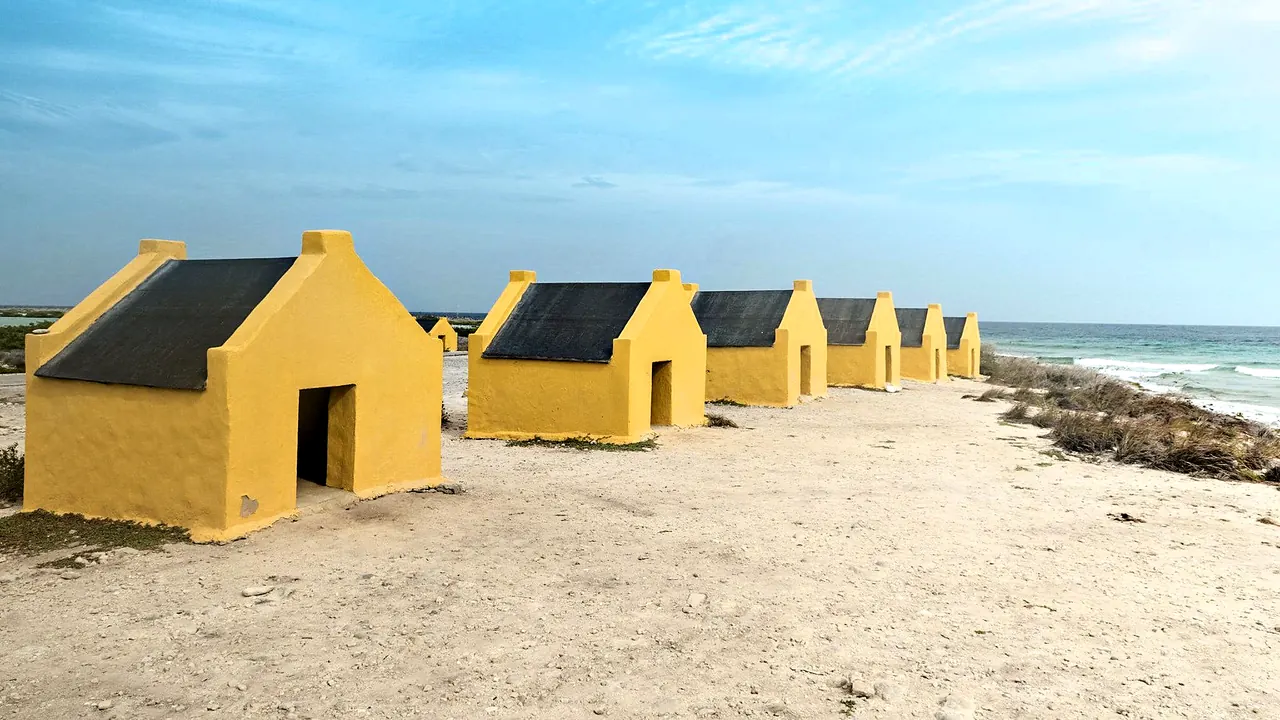
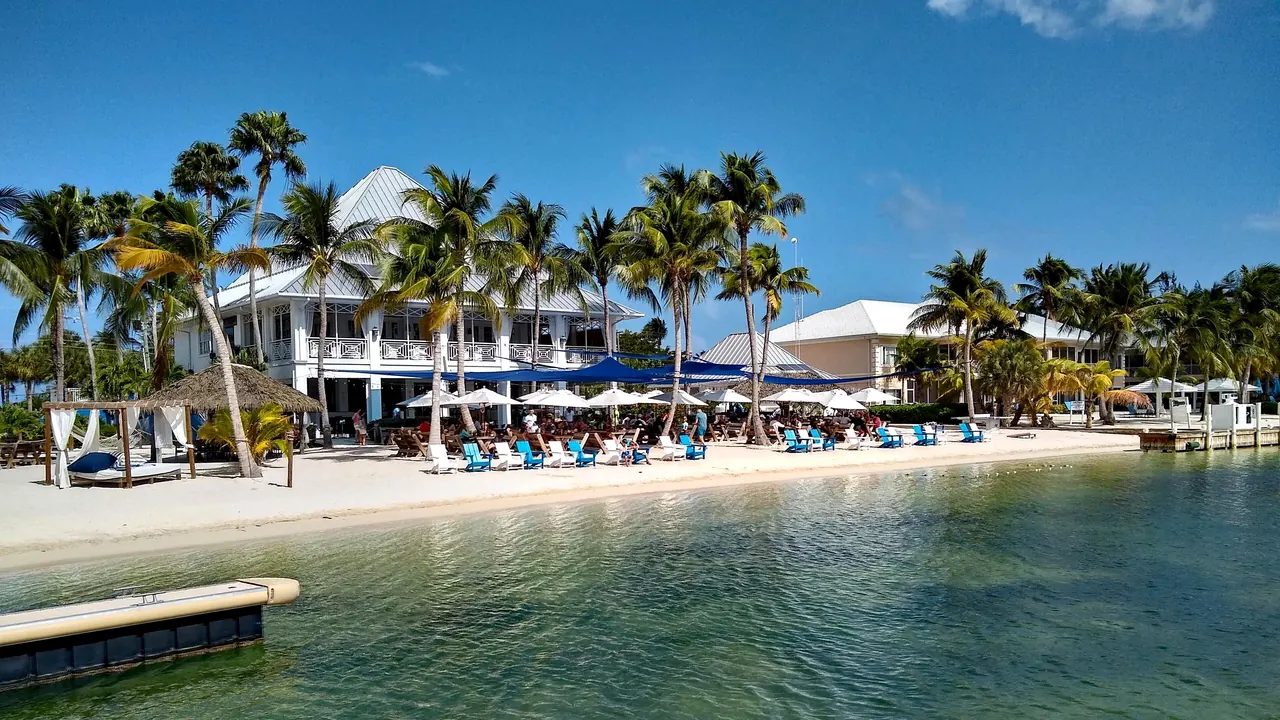
Photos: Bonaire by Dronepicr, CC BY 3.0, cropped; Cayman Islands by P. Hughes, CC BY-SA 4.0, cropped.
Bonaire or Cayman Islands?
Our verdict in twelve categories, each scored against the same fixed benchmark cities, and the climate month by month, so you can choose for your trip.
Choose Bonaire for
- prices
- getting around
- nature and the outdoors
Bonaire suits the traveller who plans each day around the next dive. The whole coastline is a protected marine park, and the reef begins a few metres from the coast road, so a hire car and a tank in the back are all you need. Lac Bay adds some of the best windsurfing anywhere. In return you accept coral-rubble entries instead of sand, simple eating, very little to do after dark, and a bill that is high but still easier to manage than Cayman's.
Choose Cayman Islands for
- food and drink
- families
- beaches
Choose the Cayman Islands if the beach matters as much as the water. Seven Mile Beach gives you soft white sand and calm sea outside the hotel, and small children can wade among the starfish at Rum Point. Stingray City, a wider choice of restaurants and sociable sunset bars round out the stay. Divers do well here too, Bloody Bay Wall above all, but this polish comes at some of the steepest costs in the Caribbean.
Scoreboard
Twelve categories on one fixed scale from 0 to 100. The shaded stretch is the gap between the two.
Your match
Pick a travel style or drag the sliders, and both match scores follow your weighting.
Wins on prices and getting around with your weighting.
Wins on food and drink and families with your weighting.
What matters to you?
Category by category
What the scores mean for a trip.
Beaches & swimming
Both islands have warm, clear, calm water on their sheltered west coasts, but only Cayman has the beach to go with it. Seven Mile Beach is a long run of soft white sand where you can swim and snorkel straight off the shore. The north side adds glassy, shallow lagoons at Rum Point and Starfish Point.
On Bonaire you go into the water rather than lie beside it. Most swimming spots are small coral-rubble coves or limestone ledges, and water shoes help. Real sand is found at Sorobon on Lac Bay, at Pink Beach and on Klein Bonaire, reached by water taxi.
Food & drink
Grand Cayman gives you far more choice. Polished steak, sushi, Italian and seafood restaurants line the beach and Camana Bay. Below them sits a lively local layer of weekend fish fries and jerk stands in West Bay, Bodden Town and the East End, serving conch fritters and fish cooked Cayman style.
Bonaire is plainer. Kralendijk's waterfront serves grilled wahoo and international dishes to divers, while goat stew, funchi and iguana soup are found at roadside stands. Many visitors end up self-catering.
Culture & sights
Neither island takes more than half a day to see, but the history they show differs. Bonaire's most moving sight is the row of tiny slave huts beside the southern salt pans. Arawak rock inscriptions at Onima and the cunucu houses of Rincon add to the story. Cayman's heritage is more about government and art: the restored great house of Pedro St James, the National Museum in an old courthouse and the National Gallery of Caymanian painting.
Nightlife
Neither island stays up late, but Cayman at least has an evening out. Sunset drinks on Seven Mile Beach, rum punch on George Town's waterfront decks and a few small clubs that fill on Fridays give it a social side, though licensing laws close things down around midnight.
Bonaire's divers are in bed early. Evenings mean dinner and a drink at one of a few harbour bars in Kralendijk, and the island is quiet well before midnight.
Nature & outdoors
Bonaire is the purer reef destination. Its entire coast is protected, and yellow stones by the road mark where to wade in, so you never need a boat. Lac Bay's steady trade winds over shallow water make it a famous windsurfing spot. On land, Washington Slagbaai, the climb up Brandaris and the flamingos at Gotomeer fill a day or two.
Cayman's highlights are deep walls and set-piece encounters. You get Bloody Bay Wall off Little Cayman, wrecks off the west coast, stingrays at the North Sound sandbar and a bioluminescent bay at night. On land the islands are flatter and quieter, with the Mastic Trail and the blue iguanas at the botanic park.
Day trips
Both are places where you stay put, though Cayman has a little more to vary a stay. A small plane reaches Cayman Brac's bluff or Little Cayman's empty beaches, usually for a few nights rather than a day. On Bonaire, the outings are a boat to Klein Bonaire for snorkelling and an hour in Rincon. Curacao and Aruba need a flight.
Good for families
Cayman is the more natural family choice. The sea off the main beach is calm, the starfish lagoons are shallow enough for toddlers, and hotels and condos are designed for families. Stingray City, the turtle farm and submarine trips keep children busy.
Bonaire is safe and relaxed, and it is excellent for older children ready to learn to dive. Small children, though, are mostly limited to the shallows at Sorobon, the donkey sanctuary and flamingo spotting, and many entries mean scrambling over coral.
Getting around
Bonaire is simpler, as long as you hire a car. Its roads are quiet and in good repair, and dive sites along the coast are marked by painted stones. Only the tracks in the northern national park call for a high-clearance vehicle.
Grand Cayman has minibuses between West Bay, the beach strip and George Town, but service is informal and fades in the evening. Taxis are expensive, and traffic into George Town is slow at rush hour. Reaching the sister islands also means a small plane.
Shopping & style
Cayman offers more, mostly in the form of duty-free jewellery, watches and resortwear along George Town's cruise waterfront. Camana Bay adds boutiques, bookshops and galleries, and caymanite carvings from the islands' own banded stone make a distinctive gift. Bonaire's few streets in Kralendijk cover a lost mask, beachwear and some local crafts, and little more.
Affordability
Neither island is cheap, because both import almost everything, but Bonaire gives you more control over the bill. The usual way to travel there is also the thriftier one: an apartment with a kitchen, supermarket shopping, and a hire car that takes you to dive sites you can walk into from the shore. That removes the boat, usually the biggest single cost of a dive trip.
On Cayman, much of the extra cost comes with the setting. Rooms on the main beach are aimed at a well-off market, and the famous diving, from the deep walls to Stingray City, mostly means going out by boat. Getting about without a car means paying for taxis. A condo kitchen and the roadside fish fries still help, but they only trim a higher bill. They won't bring it down to what the same habits cost on Bonaire.
Live music & performing arts
On Bonaire, music comes from the island's own calendar rather than from any stage. The best time to hear it is at Simadan, when villages in the north mark the harvest with traditional song and dance, or at the small carnival. Otherwise, if you're lucky, a local band may be playing in one of the harbour bars in Kralendijk.
Cayman comes out a little ahead because it has a venue with a programme: the Harquail Theatre in George Town stages local plays, dance and seasonal shows. Its resorts and beach bars book calypso, reggae and steel pan more often than Bonaire's bars do. Its street festivals, Batabano in spring and Pirates Week in autumn, are bigger occasions, with parades and fireworks. Still, neither island is worth the trip for concerts or theatre.
Wellness & relaxation
Both islands offer the same kind of rest: a slow, quiet rhythm rather than any bathing tradition. If you want proper treatments, the large resorts on Seven Mile Beach have the more polished spas, and Little Cayman is the place for days of doing nothing. Bonaire has fewer spas, but its early nights and uncrowded coast make it just as easy to slow down.
When should you go?
Pick your month. The climate figures are measured averages, not a forecast.
Bonaire in July
Cayman Islands in July
Daytime high, °C
Rainfall in the month, mm
Where the figures come from
Bonaire has no rain gauge within 25 km of the centre, so its rainfall comes from a gridded climate dataset read at the destination rather than from a gauge further away.
Bonaire's sunshine is measured 77 km from the centre, at Hato Airport, Curacao.
Temperature and rainfall are climate normals, averaged over the years shown. Bonaire: 2009-2025 (sunshine 1991-2020, rainfall 1991-2020) normals, Flamingo Airport, Bonaire (2 km from centre). Cayman Islands: 1971-2000 normals, Owen Roberts Airportgrand Cayman (6.8 km from centre).
Both islands are warm enough for swimming every month, with the sea in the high 20s all year, so the choice of season comes down to rain. Bonaire is hot and steady, with highs from 30°C to 33°C and plenty of sunshine in every month. It stays dry from February to September. Showers pick up from October to January, peaking in November at about 119mm, which is still a modest amount. The heat makes midday walking hard work in any season, so plan land outings for the early morning.
The Cayman Islands have a sharper split. December to April is dry, with highs near 28°C at the start of the year that make it the most comfortable time to be out and about. From May the rain builds steadily, reaching about 225mm in October, and late summer and autumn also fall in the hurricane season. For a winter trip either island works well. Between May and November, Bonaire is the drier choice.
Which traveller are you?
On a beach and sun trip, Bonaire gives you superb water but few real beaches, and many of its entries are over coral rock. The Cayman Islands are the clear choice, with Seven Mile Beach's long, soft white sand and calm, clear sea right outside the hotels.
On a family trip with children, Bonaire works best for older children who already snorkel or want to learn to dive. Cayman suits younger ones better, with shallow starfish lagoons, family-minded hotels and condos, Stingray City, the turtle farm and submarine trips.
For an outdoors trip, Bonaire comes out ahead. Its whole coast is a marine park where you can dive from the shore anywhere, Lac Bay adds windsurfing, and Washington Slagbaai has trails and parrots. Cayman's strengths are dramatic wall dives, boat trips and the Mastic Trail.
Before you go
| Measure | Bonaire | Cayman Islands |
|---|---|---|
| Official language | English, Dutch, Papiamento | English |
| Currency | US Dollar (USD) | Cayman Islands Dollar (KYD) |
| Sockets | - | AB120 V, 60 Hz |
| Driving side | Right | Left |
| Time zone | UTC-4 | UTC-5 |
| Emergency number | - | 911 |
| Main airport | Flamingo International Airport (BON)11 non-stop destinations | Owen Roberts International Airport (GCM)30 non-stop destinations |
| Public holidays this year | 13 days | 11 days |
By the numbers
| Measure | Bonaire | Cayman Islands |
|---|---|---|
| Population | 24,090 | 88,833 |
| People per km² | 84 | 339 |
| Swim season, months above 21 °C | 12 months | 12 months |
Where else could you go?
Every comparison below shares a destination with this one, so you can follow Bonaire or Cayman Islands somewhere new.
- Curaçaovs Bonaire
- Arubavs Bonaire
- Cozumelvs Cayman Islands
- Turks and Caicosvs Cayman Islands
- Arubavs Cayman Islands
- Curaçaovs Cayman Islands