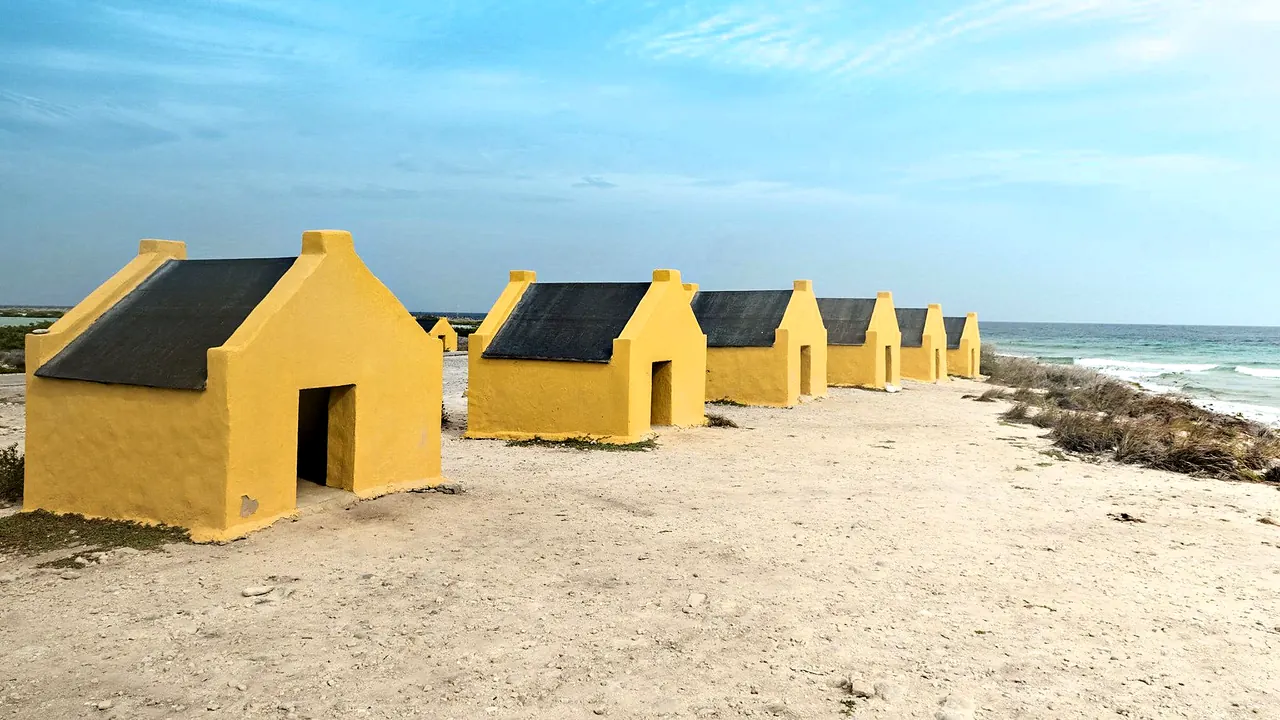
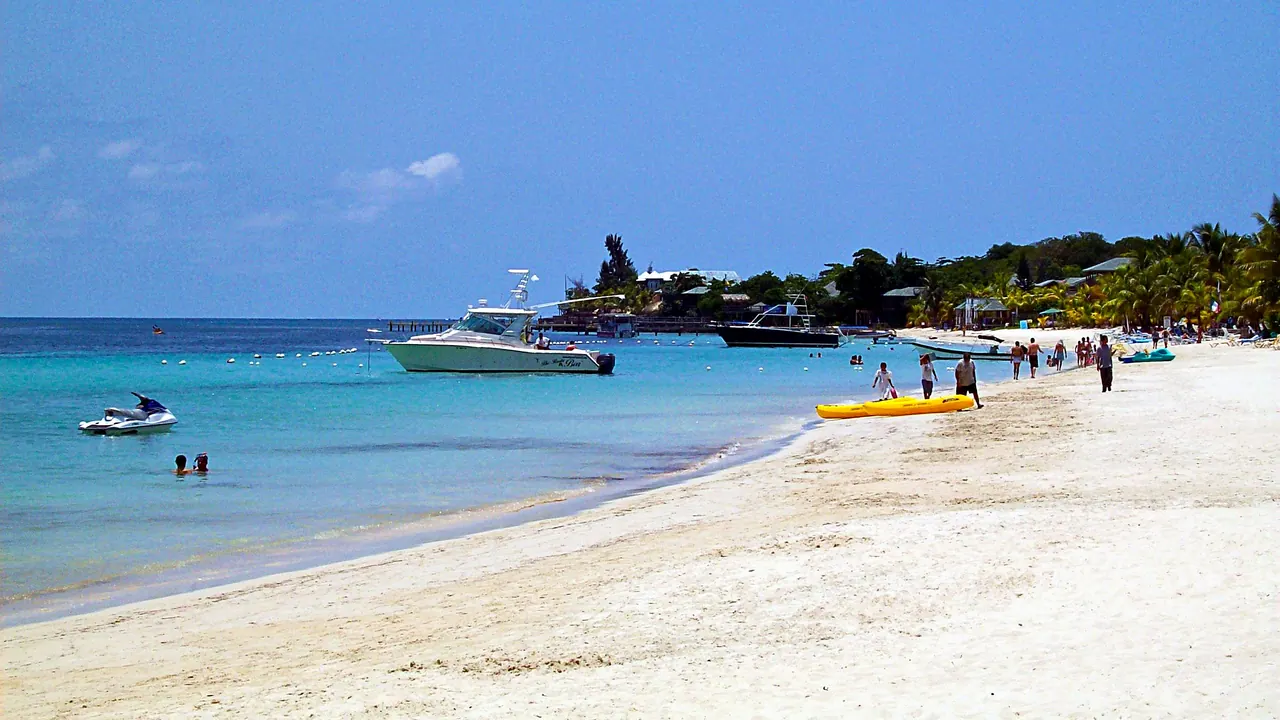
Photos: Bonaire by Dronepicr, CC BY 3.0, cropped; Roatán by Adalberto Hernandez Vega from Copan Ruinas, Honduras, CC BY 2.0, cropped.
Bonaire or Roatán?
Our verdict in twelve categories, each scored against the same fixed benchmark cities, and the climate month by month, so you can choose for your trip.
Choose Bonaire for
- getting around
- culture and sights
- nature and the outdoors
Bonaire is for the traveller who wants to dive or snorkel on their own terms. You drive the coast road, pull over at a painted stone and wade out onto the reef, with no boat schedule to keep. It also suits windsurfers drawn to Lac Bay, and anyone who wants the most reliably dry weather of the two. You give up soft sand, evening life and any variety beyond the island, and you pay more for the privilege.
Choose Roatán for
- nightlife
- prices
- day trips
Roatán makes more sense if a proper beach matters as much as the reef. West Bay's long stretch of sand puts coral a short swim from your towel, and West End offers cheap dive courses, simple guesthouses and a row of bars that fill at sunset. It is the better pick for learning to dive, for a trip with a tighter budget, and for a hop across to Utila. In return, the rainy months are far wetter and the western beaches can feel crowded on cruise ship days.
Scoreboard
Twelve categories on one fixed scale from 0 to 100. The shaded stretch is the gap between the two.
Your match
Pick a travel style or drag the sliders, and both match scores follow your weighting.
Wins on getting around and culture and sights with your weighting.
Wins on nightlife and prices with your weighting.
What matters to you?
Category by category
What the scores mean for a trip.
Beaches & swimming
Both islands have warm, clear water with coral close to shore, but only Roatán has a real beach to build a day around. West Bay's long sand, lined with resorts, lets you swim from your sunlounger straight out to the reef, and Half Moon Bay in West End is a smaller, sheltered alternative. The downsides are crowds on cruise ship days and sand flies at dawn and dusk.
Bonaire's sheltered west coast is mostly small coves and rocky ledges, some reached by stone steps. For sand you have to go to Sorobon on Lac Bay, take the water taxi to No Name Beach on Klein Bonaire, or drive south to Pink Beach. It suits swimmers more than sunbathers.
Food & drink
Neither island is a reason to travel for food, and both are at their best with fresh grilled fish. What differs is the local kitchen. Bonaire's is Antillean with a Dutch influence: goat stew, funchi and the famous iguana soup, best eaten at roadside snack stands. Many visitors self-cater, because the choice in the Kralendijk restaurants runs thin over a long stay.
Roatán leans towards the Caribbean coast of Central America, with Garifuna tapado and coconut bread on the north coast, lobster in season and baleadas for breakfast. Beach shacks around West End and West Bay make eating out more casual.
Culture & sights
Both islands are light on sights, but Bonaire has more you can visit in a short outing. The obelisks and tiny slave huts beside the southern salt pans are moving in a way nothing on Roatán quite matches. Fort Oranje and the Dutch harbour front in Kralendijk, together with the Arawak inscriptions at Onima, fill a solid half day.
Roatán's heritage lives in its communities more than its buildings. The Garifuna village of Punta Gorda and the stilt houses of Oak Ridge along a mangrove channel are worth an afternoon, and there is one small museum. For Maya ruins you would need a separate trip to the mainland.
Nightlife
Roatán is the one with an evening scene, small as it is. West End's beach and dock bars along the sandy main road fill up at sunset and stay busy on party nights, with dive instructors, backpackers and rum punch. There are still no proper clubs.
Bonaire offers dinner and a sunset drink at a few waterfront bars in Kralendijk, and that is about it. Divers fill the island and most are in bed long before midnight.
Nature & outdoors
These are two of the Caribbean's great diving islands, and the difference is in how you dive. Bonaire's fringing reef starts at the shoreline along its protected coast, so you can dive independently from the road with a rented pickup and a tank. Lac Bay adds world-class windsurfing, kitesurfers gather at the southern tip, and on land there are flamingos and the dry, cactus-covered national park in the north.
Roatán sits on the Mesoamerican Barrier Reef, with walls, wrecks and swim-throughs a few minutes by boat from West End. It is one of the classic places to take a first dive course, and whale sharks pass nearby Utila in spring and late summer. Its hills are green, but there is little proper walking on either island.
Day trips
Roatán gives you places to go by boat. Utila, with its wooden harbour village, makes an easy day out, and the protected Cayos Cochinos, with their Garifuna fishing village, are a longer outing south.
From Bonaire there is almost nothing beyond the island. Rincon takes an hour and Klein Bonaire is for snorkelling. Curaçao and Aruba need a flight, so expect to spend the whole stay on Bonaire.
Good for families
Families find a similar setup on both islands: calm water, no attractions built for children, and the most fun for children who can already swim well. Roatán is easier for younger ones, thanks to West Bay's shallow sandy water, glass-bottom boats, zip-lines and small animal parks. The trade-offs are sand flies, narrow unlit roads and only basic medical care for anything serious.
Bonaire feels quieter and safer on the roads, and the shallow water at Sorobon suits toddlers. Away from there, though, swimming usually means climbing over coral rock, and afternoons out are mostly the donkey sanctuary and spotting flamingos.
Getting around
Bonaire is simpler, provided you hire a car. The island is small, the roads are quiet and well kept, and the dive sites are marked by painted roadside stones. Only the tracks inside the northern national park need a high-clearance vehicle.
Roatán's main bases are walkable, and shared minibuses, water taxis and plenty of taxis connect them without a car. Exploring the east, though, means hilly, winding and sometimes potholed roads, which are unlit after dark, and you need to agree every taxi fare in advance.
Shopping & style
Neither island is a shopping destination, and on both you should bring what you need. The difference is in the souvenirs. Kralendijk sells dive gear and some local art. Roatán has carved mahogany, hammocks and Garifuna crafts, mostly at stalls in West End and by the cruise piers.
Affordability
Roatán is clearly easier on the wallet. West Bay's resorts cost about what you would pay elsewhere in the Caribbean, but West End's dive hostels, local food stalls and shared minibuses bring a stay well down, and its dive courses are known for being good value.
Bonaire has no real budget option. Nearly everything is imported, accommodation is mostly mid-range or better, and almost every visitor also pays for car hire. Shore diving and self-catering help, but they only go so far.
Live music & performing arts
There is little to see on either island, and what there is belongs to the local communities. Roatán's Garifuna drumming and punta dancing can be seen at Punta Gorda and at cultural shows, which makes it easier to catch. Bonaire's traditions come out mostly during Simadan, the harvest festival in the north, and at its small carnival.
Wellness & relaxation
On both islands, rest comes from the slow pace more than from spas, and each has a modest handful of resort spas and yoga classes. Bonaire is quiet all over, with sunrise dives and early nights. On Roatán you will find real peace on the eastern side, among hammocks and mangroves, and should avoid the western beaches on cruise ship days.
When should you go?
Pick your month. The climate figures are measured averages, not a forecast.
Bonaire in July
Roatán in July
Daytime high, °C
Rainfall in the month, mm
Where the figures come from
Bonaire has no rain gauge within 25 km of the centre, so its rainfall comes from a gridded climate dataset read at the destination rather than from a gauge further away.
Bonaire's sunshine is measured 77 km from the centre, at Hato Airport, Curacao.
Roatán's temperatures are measured 69 km from the centre, at La Ceiba Airport.
Roatán has no rain gauge within 25 km of the centre, so its rainfall comes from a gridded climate dataset read at the destination rather than from a gauge further away.
Temperature and rainfall are climate normals, averaged over the years shown. Bonaire: 2009-2025 (sunshine 1991-2020, rainfall 1991-2020) normals, Flamingo Airport, Bonaire (2 km from centre). Roatán: 1991-2020 normals, La Ceiba Airport (69 km from centre).
Both islands are hot all year, with daytime highs around 30°C and seas warm enough for long swims and dives in every month. The real difference is rain. Bonaire is dry, sunny and steady almost all year. Its only wetter stretch runs from October to January and peaks at about 119mm in November, which still means short showers rather than lost days. The midday heat, up to 33°C in September, is the bigger reason to explore on land early in the morning.
Roatán's weather swings much more. February to May is the time to go, when the sea is calmest and clearest and April brings only about 56mm of rain. Summer is hotter and somewhat wetter. From October to January the rain is heavy, reaching about 400mm in both October and November, with much less sunshine and the occasional storm. For a winter getaway, Bonaire is the safer choice by a wide margin.
Which traveller are you?
For a beach and sun trip, Roatán is the clear choice. Bonaire's few sandy spots are scattered, so every beach day means a drive or a water taxi. On Roatán, West Bay's long sand can fill a whole day, from a morning swim to sunset.
On a trip with a tight budget, Roatán gives you more room. On Bonaire the costs come with the island itself, from imported food to the hire car nearly everyone needs. On Roatán, West End's guesthouses, food stalls and good-value dive courses keep spending down.
For windsurfers, Bonaire is the obvious pick. Steady trade winds blow over the flat, shallow water of Lac Bay, and the dry, sunny weather means few lost days. Kitesurfers have their own spot at the island's southern tip. Roatán has nothing comparable.
Before you go
| Measure | Bonaire | Roatán |
|---|---|---|
| Official language | English, Dutch, Papiamento | Spanish |
| Currency | US Dollar (USD) | Lempira (HNL) |
| Sockets | - | AB110 V, 60 Hz |
| Driving side | Right | Right |
| Time zone | UTC-4 | UTC-6 |
| Emergency number | - | Police 199, ambulance 199, fire 198 |
| Main airport | Flamingo International Airport (BON)11 non-stop destinations | Juan Manuel Gálvez International Airport (RTB)16 non-stop destinations |
| Public holidays this year | 13 days | 11 days |
By the numbers
| Measure | Bonaire | Roatán |
|---|---|---|
| Population | 24,090 | 41,831 |
| People per km² | 84 | 327 |
| Swim season, months above 21 °C | 12 months | 12 months |
Where else could you go?
Every comparison below shares a destination with this one, so you can follow Bonaire or Roatán somewhere new.
- Curaçaovs Bonaire
- Arubavs Bonaire
- Caye Caulkervs Roatán
- Ambergris Cayevs Roatán
- Cozumelvs Roatán
- Riviera Mayavs Roatán