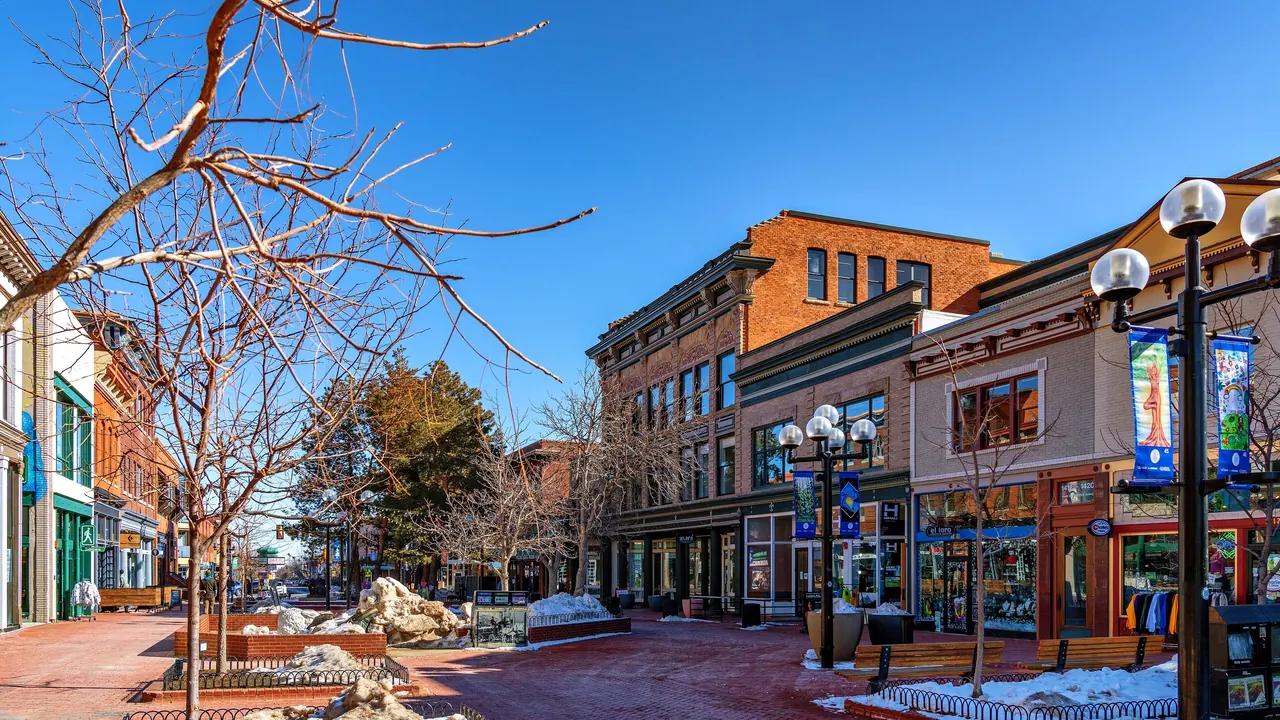
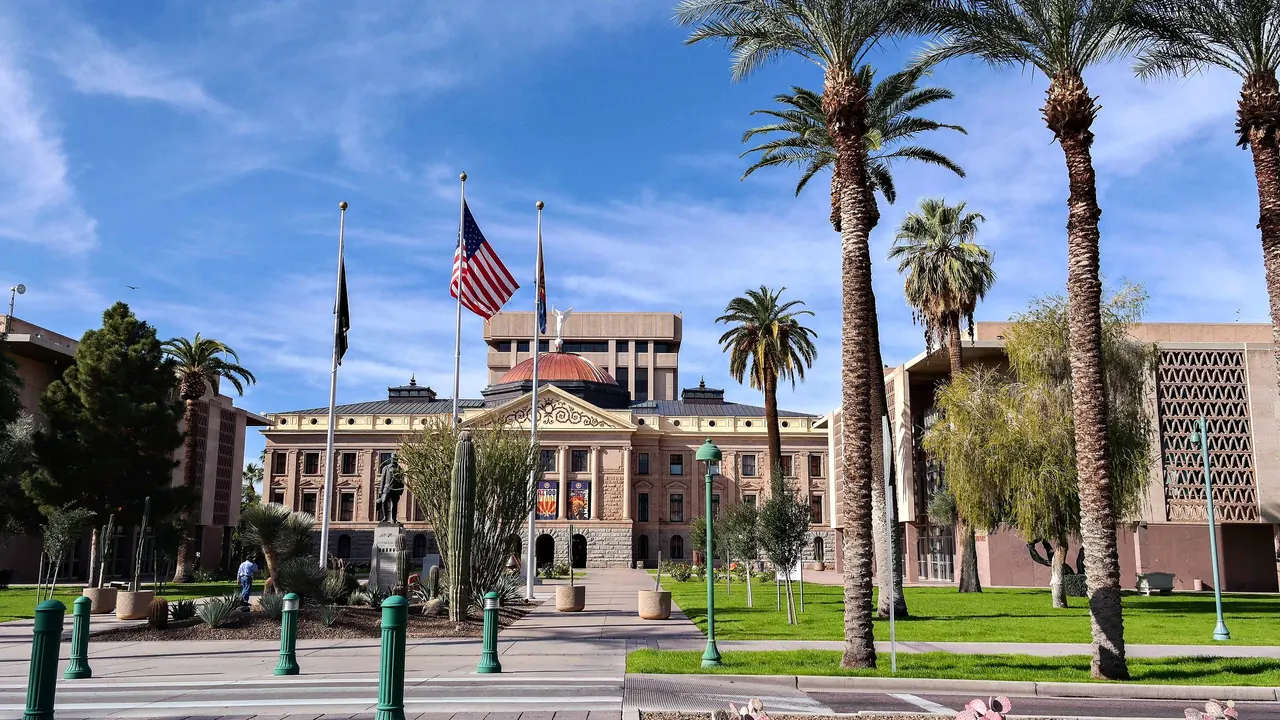
Photos: Boulder by Tony Webster, CC BY 2.0, cropped; Phoenix by Visitor7, CC BY-SA 3.0, cropped.
Boulder or Phoenix?
Our verdict in twelve categories, each scored against the same fixed benchmark cities, and the climate month by month, so you can choose for your trip.
Choose Boulder for
- getting around
- nature and the outdoors
- live music and the arts
Boulder suits travellers who measure a trip in trailheads. The Flatirons rise straight behind town, Eldorado Canyon and Rocky Mountain National Park are close by, and the compact centre can be covered on foot or by bike path between hikes. Expect to pay well for a room and to go to bed early, but for climbing, cycling and mountain walking from a small, easy base it is the stronger choice.
Choose Phoenix for
- prices
- culture and sights
- food and drink
Phoenix makes more sense as a winter escape for people who want warmth, comfort and more to do in the evenings. It has the better museums, Sonoran Mexican cooking, the full range of Scottsdale resort spas and pools, and costs less to stay in. You will need a car for almost everything, and the desert hiking is at its best only in the cooler half of the year.
Scoreboard
Twelve categories on one fixed scale from 0 to 100. The shaded stretch is the gap between the two.
Your match
Pick a travel style or drag the sliders, and both match scores follow your weighting.
Too close to call, 2 points apart
Wins on getting around and nature and the outdoors with your weighting.
Wins on prices and culture and sights with your weighting.
What matters to you?
Category by category
What the scores mean for a trip.
Beaches & swimming
Neither city has a coast, so swimming in both means fresh water or a pool. Boulder has a small sandy swim area at the reservoir and inner tubes on Boulder Creek. Phoenix has lake beaches at Saguaro and Canyon Lakes among bare desert cliffs, tubing on the lower Salt River and big resort pools with slides, which are where most summer days there end up.
Food & drink
Phoenix has the stronger food scene because it has a cuisine of its own. Sonoran carne asada, paper-thin flour tortillas, bacon-wrapped hot dogs from evening carts and family-run Mexican kitchens give it a regional identity, and there is wood-fired pizza and polished Scottsdale dining on top. The catch is that the good places are spread out and you usually have to drive between them.
Boulder eats well for a small town, but in a narrower way. Expect seasonal, vegetarian-friendly cooking, the Saturday farmers' market by the creek, taprooms on the east side and tea at the hand-carved Dushanbe Teahouse. Street food and ethnic variety are thin, and for range people go to Denver.
Culture & sights
Phoenix has more to see. The Heard Museum is one of the great collections of Native American art, the Musical Instrument Museum can fill half a day, and Taliesin West shows Frank Lloyd Wright's desert architecture. There is no old centre, though, and each sight is a separate drive.
Boulder offers charm more than sights: the 1898 Chautauqua cottages below the Flatirons, the sandstone and red-tile university campus, and I.M. Pei's atmospheric research laboratory on the mesa. They are all close together and fit easily into a single day.
Nightlife
Boulder goes to bed early. A night out means brewery taprooms and pubs around Pearl Street, or the student bars on University Hill, which are lively in term and quiet in summer. For anything bigger, people make the 40-minute trip to Denver.
Phoenix gives you more choice after dark. Old Town Scottsdale has clubs and rooftop bars that fill up at weekends, Mill Avenue in Tempe is a student strip, and Roosevelt Row has cocktail lounges with a local crowd. The districts are far apart, though, so you pick one for the night and take a ride-hail home.
Nature & outdoors
This is Boulder's great strength. The Flatirons and a ring of protected open space start right at Chautauqua Park, Eldorado Canyon is a famous climbing wall ten minutes away, and the canyon roads draw serious cyclists to train at altitude. Beyond those lie the Indian Peaks, the Eldora ski slopes and the alpine tundra and elk of Rocky Mountain National Park.
Phoenix's desert is impressive in its own way: saguaro forest in the McDowell Sonoran Preserve, steep scrambles up Camelback, and Sedona's red rock within reach. But the season is shorter, because summer heat makes hiking unsafe after mid-morning.
Day trips
The day trips are about equally good, but different. Boulder's best outing is Denver, which you can reach by express bus for its art museum and Union Station, and with a car you can visit the Victorian silver towns of Georgetown and Idaho Springs.
Phoenix's outings involve more landscape and more driving. Choices include hillside Jerome, the cliff dwelling at Montezuma Castle, the red rocks of Sedona and the adobe barrios of Tucson, and every one of them needs a car.
Good for families
Both cities suit families, but in very different ways. Boulder is small, safe and easy-going, and children spend their days outside: on the creek path, in the Chautauqua meadow, tubing on the creek and watching the street performers on Pearl Street. For a zoo or a big science museum, though, you have to go to Denver.
Phoenix has those large attractions itself: a zoo, an aquarium, a science centre, water parks and resort pools with slides. The cost is long drives between them, and from June to September the heat keeps young children indoors after the early morning.
Getting around
Boulder is far easier without a car, at least in town. Downtown, Pearl Street, the campus and Chautauqua are all close together and linked by off-street bike paths along the creek, and an express bus runs to Denver. You only need a car for trailheads further out and for the national park.
Phoenix is built around the car. One light rail line serves the airport, downtown and Tempe, buses are slow, and the districts are dozens of kilometres apart, so nearly every visitor hires a car.
Shopping & style
Phoenix offers more scope for shopping, with Scottsdale's luxury mall, department stores and the open-air centre near the Biltmore. Its signature buy is Navajo and Zuni silver and turquoise, best found in museum shops and reputable galleries. Boulder is all about the Pearl Street Mall, with its independent bookshops, galleries and toy shops, and it has unusually good climbing, running and cycling gear for a town its size.
Affordability
Phoenix is the cheaper of the two, especially in summer, when resort rooms drop sharply, and chain hotels along the freeways are reasonable all year. The main extra cost is the rental car most visits need, plus resort parking.
Boulder is expensive to stay in. It is a wealthy town with few hotels, rooms are dearest in summer and on graduation and football weekends, and eating out costs affluent American prices. In both places the main attraction, hiking, is almost free.
Live music & performing arts
The two are level here, but their seasons are opposite. Boulder's highlights come in summer: the Colorado Music Festival in the wooden Chautauqua Auditorium, outdoor Shakespeare on campus, and Red Rocks Amphitheatre about 45 minutes south, plus bluegrass and roots acts in small rooms all year.
Phoenix keeps a big-city line-up from autumn to spring. It has a symphony, Arizona Opera, Ballet Arizona, and touring Broadway shows at Frank Lloyd Wright's round Gammage auditorium in Tempe.
Wellness & relaxation
Phoenix is the better place to rest. Large desert resorts at the foot of Camelback and in north Scottsdale combine full spas, several pools and treatments made with sage, clay and agave, and the dry winter warmth makes a week by the pool easy, as long as you can afford resort prices.
Boulder's version is more about a way of life than about pampering: yoga and meditation studios, a Buddhist-inspired university and slow, sunny mornings. For soaking there is only the modest spring-fed pool at Eldorado Springs, and the nearest proper hot springs are an hour away.
When should you go?
Pick your month. The climate figures are measured averages, not a forecast.
Boulder in July
Phoenix in July
Daytime high, °C
Rainfall in the month, mm
Where the figures come from
Boulder has no rain gauge within 25 km of the centre, so its rainfall comes from a gridded climate dataset read at the city rather than from a gauge further away.
Temperature and rainfall are climate normals, averaged over the years shown. Boulder: 2010-2025 (rainfall 1991-2020) normals, Boulder / Valmont (6.1 km from centre). Phoenix: 1991-2020 normals, Phoenix Sky Harbor Airport (2.8 km from centre).
The two cities peak in opposite seasons. Boulder is at its best from June to September. Highs reach about 31°C in July, warm enough for the reservoir swim area and tubing on the creek, though storms tend to build over the high trails in the afternoon. Late spring is the damp spell, with May the wettest month at around 61mm. From November to March the days are cold, about 7°C in January, but usually dry enough for a walk around town.
Phoenix is the opposite: it is best from October to April, when January still reaches about 20°C, which is ideal for desert hiking and long days by the pool. From June to September highs stay around 41°C, too hot for walking the streets or hiking after mid-morning. What little rain falls comes in two short spells, one in winter and one in late summer, and late spring is almost completely dry. In practice, choose Boulder for a summer trip and Phoenix for a winter one.
Which traveller are you?
For an outdoors trip, Boulder is the clear choice. More than 200km of trails start at the edge of town, Eldorado Canyon is a world-class climbing wall, and the national park is an hour away, while Phoenix's desert trails close down in summer heat.
On a culture and arts trip, Phoenix offers more. The Heard Museum's Native American collections, the Musical Instrument Museum and Taliesin West fill several days, plus a symphony, opera and ballet, whereas Boulder's handful of sights take about a day.
For a trip on a tight budget, Phoenix is the easier city. Freeway chain hotels are good value all year, rooms fall sharply in summer, and Sonoran food is cheap, while Boulder's limited hotels are expensive and push many visitors to stay in Denver.
Before you go
| Measure | Boulder | Phoenix |
|---|---|---|
| Currency | US Dollar (USD) | US Dollar (USD) |
| Sockets | AB120 V, 60 Hz | AB120 V, 60 Hz |
| Driving side | Right | Right |
| Time zone | UTC-7, UTC-6 in summer | UTC-7 |
| Emergency number | 911 | 911 |
| Elevation | 1,655 m | 331 m |
| Main airport | Denver International Airport (DEN)56 km from centre231 non-stop destinations | Phoenix Sky Harbor International Airport (PHX)6 km from centre149 non-stop destinations |
| Public holidays this year | 12 days | 12 days |
By the numbers
| Measure | Boulder | Phoenix |
|---|---|---|
| City population | 108,250 | 1,608,139 |
| People per km² | 1,628 | 1,199 |
| Museums within 10 km | 4 | 10 |
| UNESCO World Heritage sites within 50 km | 0 | 1 |
Where else could you go?
Every comparison below shares a destination with this one, so you can follow Boulder or Phoenix somewhere new.