Photos: Brač by dronepicr, CC BY 2.0, cropped; Procida by DIANA.GRYGAROVA, CC BY-SA 4.0, cropped.
Brač or Procida?
Our verdict in twelve categories, each scored against the same fixed benchmark cities, and the climate month by month, so you can choose for your trip.
Choose Brač for
- nightlife
- nature and the outdoors
- beaches
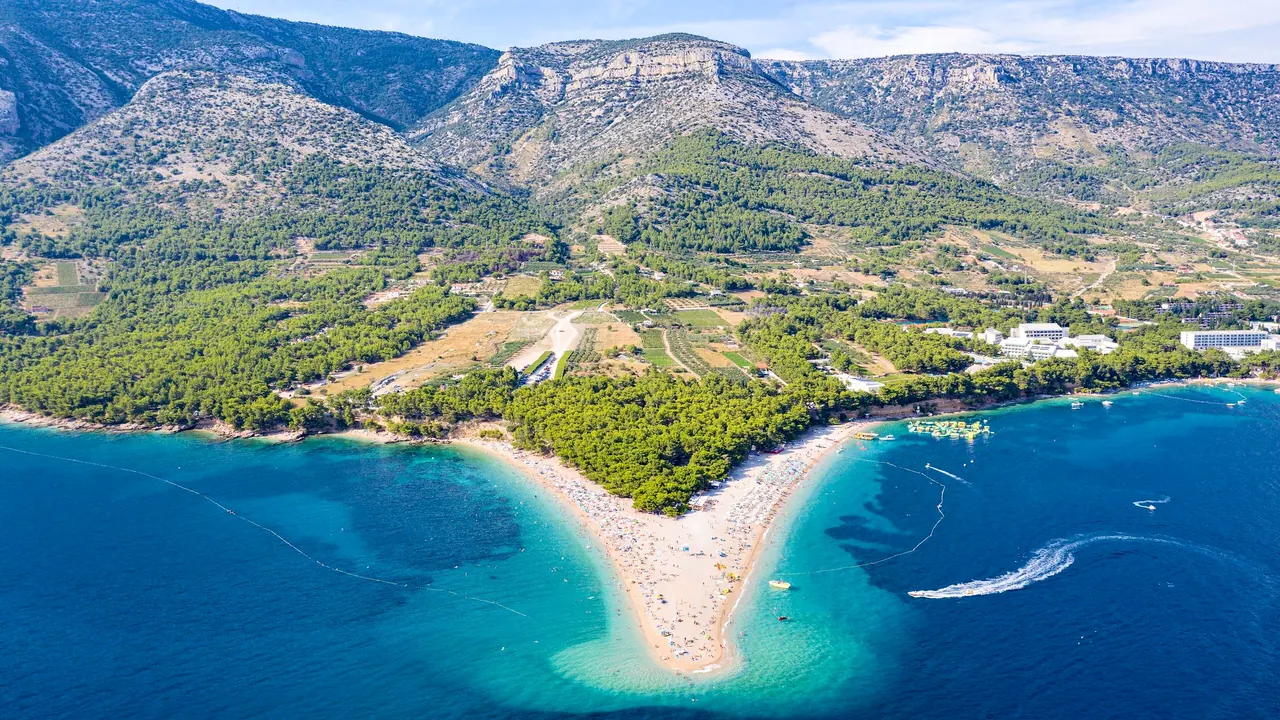
Brač is the island to choose when the sea and the landscape are the point of the trip. Its shoreline is longer and more varied, from Zlatni Rat at Bol to the shallow bays of the north coast. Behind it, a high karst interior climbs to Vidova Gora, with real hiking, and the channel off Bol draws windsurfers. Families with children have an easier time here, and in July and August there is a little more life after dark. You will want a car. Split and Diocletian's Palace are a short ferry crossing away, but the list of outings is shorter, and the boats thin out once summer ends.
Choose Procida for
- day trips
- getting around
- wellness
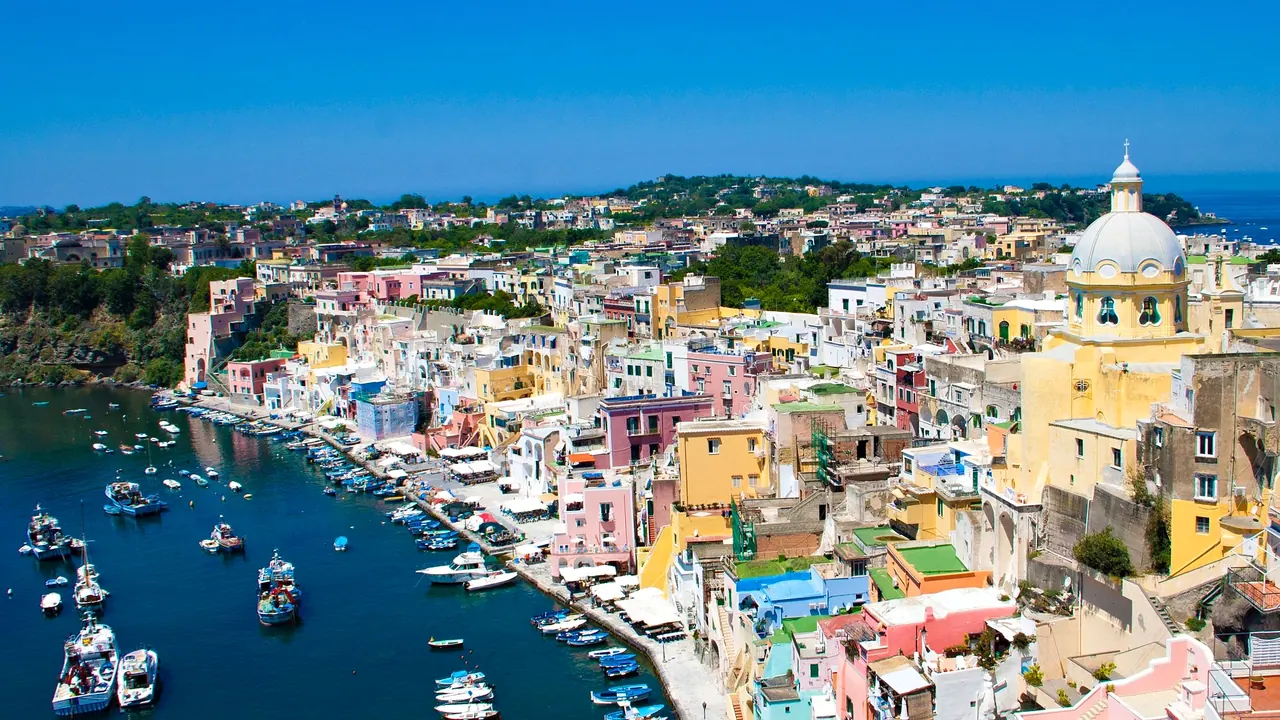
For a slower stay with more to see beyond the shore, Procida makes the better base. It is small enough to manage without a car, and its frequent boats put Ischia, Pozzuoli and the Phlegraean Fields within easy reach, with Naples under an hour away. Herculaneum and Pompeii make a long day out through the city. Its coves are small and its walks run out within a few days, but the colours of Corricella and the unhurried pace of the whole island make it the more restful of the two.
Scoreboard
Twelve categories on one fixed scale from 0 to 100. The shaded stretch is the gap between the two.
Your match
Pick a travel style or drag the sliders, and both match scores follow your weighting.
Too close to call, 1 point apart
Wins on nightlife and nature and the outdoors with your weighting.
Wins on day trips and getting around with your weighting.
What matters to you?
Category by category
What the scores mean for a trip.
Beaches & swimming
Brač has the stronger beaches by some way. Zlatni Rat at Bol is a long spit of fine pebble backed by pine, with quieter coves running west towards Murvica. The north coast towns of Supetar, Sutivan and Postira add shallow bays, and there is a sandy beach at Lovrečina. It is pebble and rock almost everywhere, though, so water shoes help.
Procida's beaches are dark volcanic sand, which is softer underfoot, but they are small coves. Chiaiolella and Ciraccio are the main stretch, while Chiaia and Pozzo Vecchio are smaller and calmer. With so little space they fill early in August, and boat trips to coves reachable only from the sea give you more choice.
Food & drink
The food on the two islands is close in quality, and both are simple, local and limited in range. Brač leans towards the land: lamb, vitalac spit-roasted over the fire, octopus cooked under an iron lid, olive oil and the red wine from above Bol. The more authentic tables are in inland villages such as Dol.
Procida's cooking is about the sea and its lemons. You eat fried anchovies and seafood linguine on the harbours at Corricella and Marina Grande, a lemon salad with mint and chilli, and lingua pastry with your coffee as the ferries come in. On both islands many places close out of season.
Culture & sights
Neither island holds major museums, and they are about level for sightseeing. What you see differs, though. Brač's heritage is spread out in its white stone: the cliff hermitage of Blaca reached on foot, the Illyrian walls and Venetian tower at Škrip, the stonemasons' harbour of Pučišća and a Tintoretto in the Dominican monastery at Bol. It rewards a few days of driving between villages.
Procida's sights are packed into one walk. Terra Murata holds the Abbey of San Michele Arcangelo and the former prison of Palazzo d'Avalos, and below it lie the pastel houses of Corricella. You can see it all in a day or two on foot.
Nightlife
Brač has more going on after dark, though only in high summer. In July and August Bol has beach bars along the path to Zlatni Rat and a few open-air dance venues that stay open late, and Supetar has a strip of waterfront bars. Hvar town's party scene is a catamaran ride away.
Procida has no clubs to speak of. Evenings end with a drink at Marina Grande or Chiaiolella around midnight, and a real night out means a ferry to Ischia or Naples and a plan for getting back.
Nature & outdoors
Brač offers far more ground to cover. Its interior is a high karst plateau of dry-stone walls, olive groves and pine, climbing to Vidova Gora at 778m with a view straight down onto Zlatni Rat. There are hikes to the Blaca hermitage and gravel roads for cycling. On the water there is reliable afternoon wind for windsurfing and kitesurfing off Bol.
Procida is low and small, a landscape of drowned craters and walled lemon gardens. Its walks lead to viewpoints such as Terra Murata and the headlands above Pozzo Vecchio, and Vivara can only be visited on guided openings. Snorkelling and a boat trip round the island round it out, but a few days will cover it.
Day trips
Procida is much better placed for day trips. Ischia is a quarter of an hour away by boat and Pozzuoli about half an hour, with the Roman amphitheatre, Baia's submerged villas and Greek Cuma close by. Naples's historic centre and museums are under an hour by hydrofoil, and Herculaneum, Pompeii and Sorrento are within reach for a full day.
From Brač, the main outing is Split and Diocletian's Palace, with Trogir beyond. Summer boats also reach Hvar and Makarska. It is a good set of trips, but it is shorter, and the ferries run less often once summer ends.
Good for families
Brač is the easier island with children. The north coast towns of Supetar, Sutivan and Postira have shallow, sheltered beaches, flat waterfront promenades and apartments with kitchens, and families can stroll the harbour fronts late into the evening. Neither island has anything built for children, and on Brač that means a trip to the mainland.
Procida's Chiaiolella and Ciraccio slope gently and distances are short. The lanes have no pavements and carry steady traffic, though, and the steps down to Corricella and Chiaia make a pushchair hard work. It suits families with very young children who are happy to keep to one beach.
Getting around
Procida is simpler to get around. It is only a few kilometres across, small buses and three-wheeled taxis link the port to every corner, and you have no need for a car. Frequent ferries and hydrofoils make Marina Grande a hub for the whole gulf. The catch is walking, which means narrow walled lanes without pavements, and steps up to Terra Murata.
On Brač a car or scooter is close to essential. Buses are too infrequent to rely on, the winding road over the plateau to Bol is slow, and car ferry queues at Supetar get long on summer weekends. Once you are in a town, though, everything is in walking distance.
Shopping & style
Neither island is a place to shop, though Brač has slightly more to take home. Carved objects from the stone workshops of Pučišća stand out, along with olive oil, wine, honey and lavender. On Procida the choice comes down to ceramics, limoncello and linen along Via Roma. Serious shopping means Split for one and Naples for the other.
Affordability
The two cost about the same, and both are expensive in July and August. On Brač, hotels in Bol, waterfront meals and car ferry fares add up, so apartments in the north coast villages or inland keep the budget in check. You also save if you need no car on Procida, where buses, pizza and pastries are cheap. Rooms there are few, however, and fill quickly. On both islands, June and September are easier on the wallet.
Live music & performing arts
Neither island has a theatre or a regular music venue, and both offer only summer concerts in their squares. What each has in its place differs. Brač has klapa singing on festival evenings and the Split summer festival across the water. Procida's great occasion is the Good Friday procession of the Misteri, with brass bands and hooded confraternities walking down from Terra Murata. Opera in Naples is close but hard to get back from at night.
Wellness & relaxation
On Brač you have to go looking for calm. Bol and Supetar are busy in summer, and their larger hotels hold the island's only spas, with massages, saunas and pools. The real quiet is in the far harbours of Milna, Pučišća, Povlja and Sumartin and in the stone villages and olive groves of the interior, so it comes down to choosing your base carefully or driving out to find it.
Procida is the more restful island because its slow pace is not confined to one corner. The island is so small that a day needs no planning and can pass between a cove and a table above Corricella. It has almost no treatments of its own, so for proper thermal bathing you take the boat to Ischia. Both islands are at their calmest either side of July and August.
When should you go?
Pick your month. The climate figures are measured averages, not a forecast.
Brač in July
Procida in July
Daytime high, °C
Rainfall in the month, mm
Where the figures come from
Brač's temperatures are measured 34 km from the centre, at Split / Marjan.
Brač has no rain gauge within 25 km of the centre, so its rainfall comes from a gridded climate dataset read at the destination rather than from a gauge further away.
Brač's sunshine is measured 34 km from the centre, at Split / Marjan.
Procida's temperatures are measured 32 km from the centre, at Grazzanise.
Temperature and rainfall are climate normals, averaged over the years shown. Brač: 1991-2020 (sunshine 1971-2000) normals, Split / Marjan (33.5 km from centre). Procida: 1991-2020 (rainfall 1971-2000) normals, Grazzanise (32.2 km from centre).
Both islands keep the same summer rhythm. The sea is warm enough to swim from June into early October, and July and August bring highs around 31°C, which is hot for walking in the middle of the day. Procida's sea runs a degree or so warmer, reaching about 26°C in August, and its September stays summery at 28°C, while Brač has already eased off by then. Brač gets a little more sun in high summer, with long, very bright days on its bare plateau. Late spring and September are the best months for walking on either island.
The real difference comes in autumn and winter. Brač's rain builds through the autumn to a peak in November, but Procida is clearly wetter from October to February, with about 163mm in November. Procida's winters are a little milder, though neither island is a beach destination between November and April.
Which traveller are you?
On a beach and sun trip, Brač wins. Zlatni Rat is one of the Adriatic's most famous beaches, the north coast adds calm town bays and coves, and there is far more shoreline than on Procida, whose small volcanic-sand coves fill early in August.
For an outdoors trip, choose Brač. You can climb Vidova Gora from Bol, walk the southern cliffs to the Blaca hermitage, cycle the quiet plateau roads or windsurf the channel. Procida offers viewpoints and a guided visit to Vivara, but little more.
On a relaxing and wellness trip, Procida is the gentler pick. The island is small, there are few cars on its minor lanes, and long harbour lunches set the pace. Ischia's hot springs and thermal gardens are a quarter of an hour away by boat.
Before you go
| Measure | Brač | Procida |
|---|---|---|
| Official language | Croatian | Italian |
| Currency | Euro (EUR) | Euro (EUR) |
| Sockets | CF230 V, 50 Hz | CFL230 V, 50 Hz |
| Driving side | Right | Right |
| Time zone | UTC+1, UTC+2 in summer | UTC+1, UTC+2 in summer |
| Emergency number | 112 | 112 |
| Main airport | Split Saint Jerome Airport (SPU)69 non-stop destinations | Naples International Airport (NAP)131 non-stop destinations |
| Public holidays this year | 14 days | 13 days |
By the numbers
| Measure | Brač | Procida |
|---|---|---|
| Population | 14,434 | 10,092 |
| People per km² | 36 | 2,347 |
| Swim season, months above 21 °C | 4 months | 5 months |
Where else could you go?
Every comparison below shares a destination with this one, so you can follow Brač or Procida somewhere new.