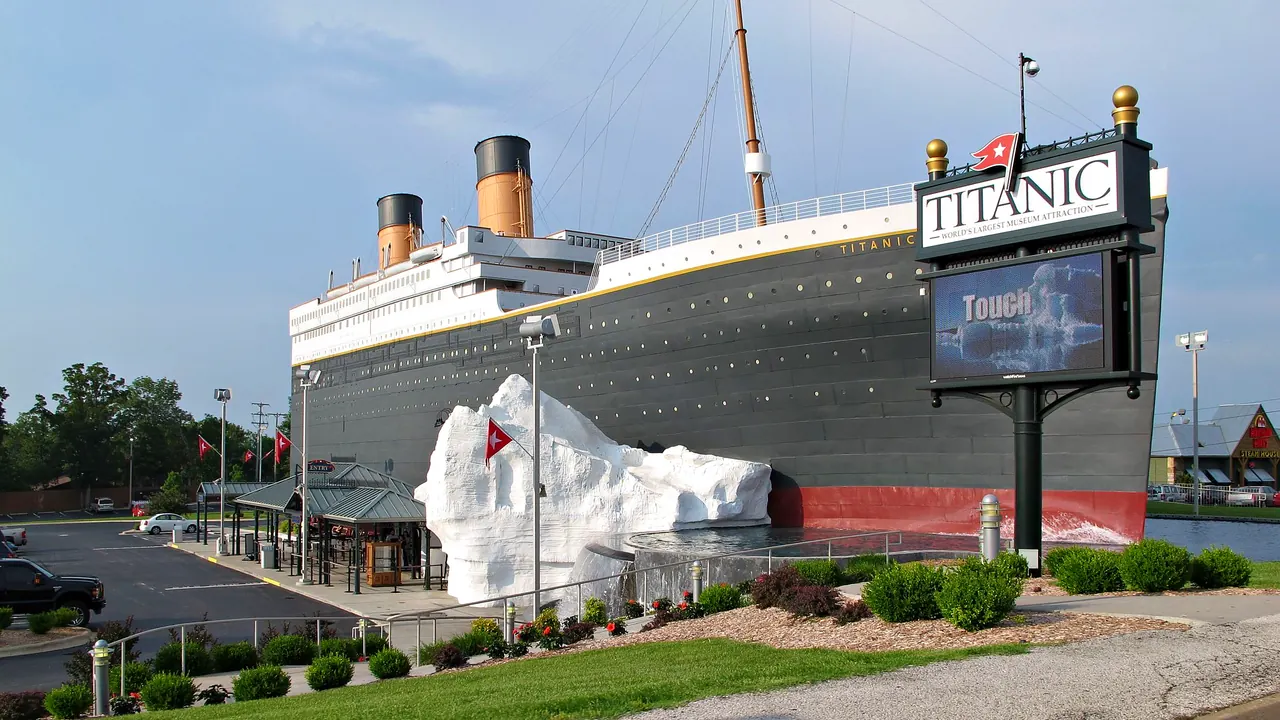
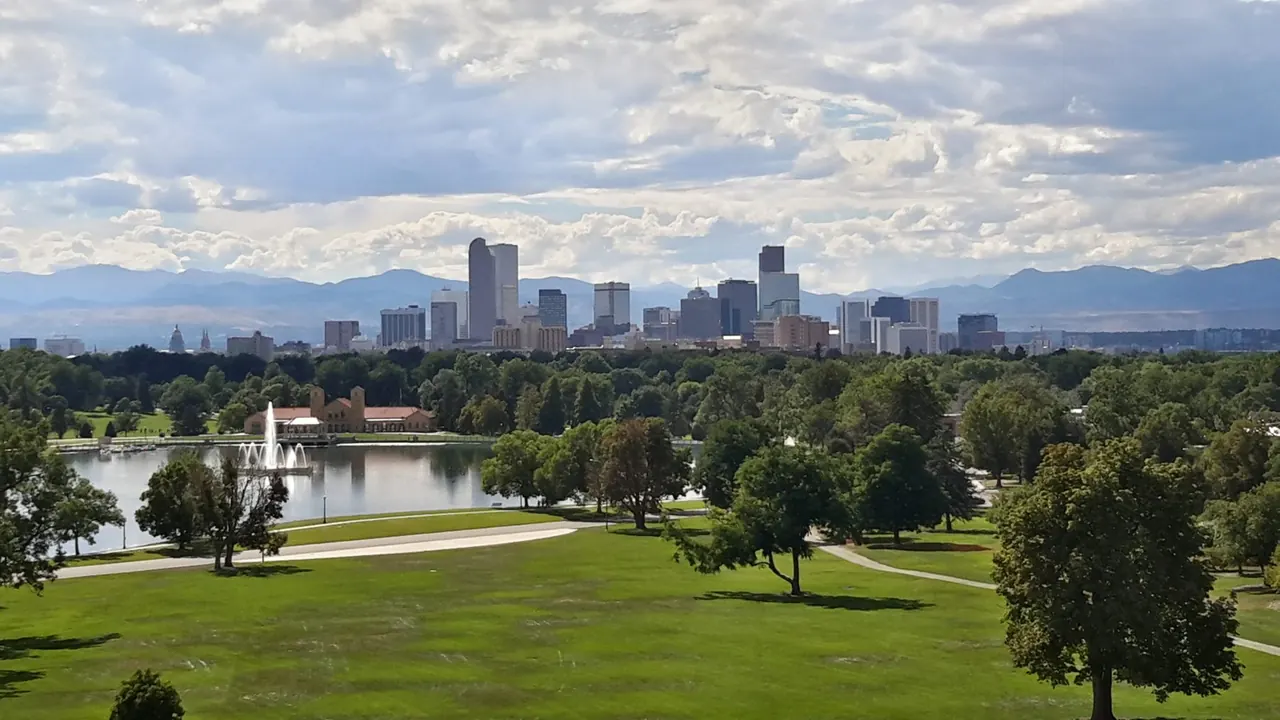
Photos: Branson by Brad A. Totman, Public domain; Denver by Zenhaus, CC BY-SA 4.0, cropped.
Branson or Denver?
Our verdict in twelve categories, each scored against the same fixed benchmark cities, and the climate month by month, so you can choose for your trip.
Choose Branson for
- beaches
- families
- prices
Branson is the better choice for a family week built around shows, rides and the lake. Everything is made for children: a frontier-themed park, water parks, a showboat and wholesome theatre from morning to night, with lake cabins and motels that keep the stay reasonably priced. Adults wanting good food, a night out or real sights will find little to do once the shows end.
Choose Denver for
- nightlife
- food and drink
- culture and sights
Travellers who want a proper city with mountains close by should pick Denver. It has better museums, breweries and bars in RiNo and LoDo, and a walkable downtown. Red Rocks and the foothill trails are half an hour away, and Rocky Mountain National Park and the ski resorts about two hours out. It costs more and you will still want a car, but it offers far more variety for adults.
Scoreboard
Twelve categories on one fixed scale from 0 to 100. The shaded stretch is the gap between the two.
Your match
Pick a travel style or drag the sliders, and both match scores follow your weighting.
Wins on beaches and families with your weighting.
Wins on nightlife and food and drink with your weighting.
What matters to you?
Category by category
What the scores mean for a trip.
Beaches & swimming
Neither city has a coast, but Branson has a real summer swimming season and Denver barely has one. Table Rock Lake warms well in summer, the water is clear, and you can swim from brought-in sand at public swim areas or from a rented pontoon in a quiet cove.
Denver's options are the sandy reservoir beaches at Cherry Creek and Chatfield state parks, on the edge of the city. The mountain lakes stay cold even in July, so most visitors cool off in a hotel or public pool.
Food & drink
Denver eats far better. It has a serious brewing culture, with taprooms in old RiNo warehouses, Southwestern cooking built on green chile and breakfast burritos, chef-run places in Highland and LoHi, and a long stretch of Vietnamese and Mexican kitchens on Federal Boulevard.
Branson serves large portions of comfort food for coach parties: buffets, fried chicken, catfish, and set meals at dinner theatres, with national chains along Highway 76. Its best local tastes are Ozark ones, such as skillet cooking, fudge and fresh trout, but they are snacks on the way to a show rather than a reason to visit.
Culture & sights
Denver has the more substantial sights. The Civic Center area alone gives you the gold-domed Capitol, the Denver Art Museum with its Native American collection, and the Clyfford Still Museum. Add the brick warehouses of LoDo, Larimer Square and the Beaux-Arts Union Station, and you have two or three good days.
Branson's sights are entertainment rather than heritage: wax museums, a museum shaped like the bow of an ocean liner, and a small old downtown. Its real cultural interest is Ozark folk crafts, shown by blacksmiths and glassblowers at the 1880s-themed park, and the varied collection of the Ralph Foster Museum.
Nightlife
This is where the two differ most. Denver has a relaxed but genuine night out: sports crowds in LoDo, cocktail bars and taprooms in RiNo, dive bars on East Colfax and neighbourhood bars on South Broadway, with a small dance-music club scene on top.
In Branson the evening is the show itself. When the theatres empty, families and older couples head back to their rooms, and apart from a few brewpubs near the lakefront and some hotel lounges, nothing stays open late.
Nature & outdoors
Both are good places to be outdoors, but Denver's landscape is on another scale. The Rockies start with the red sandstone of Red Rocks and the Golden foothills, rise to summits over 4,000m, and include the tundra and elk of Rocky Mountain National Park, with ski resorts along I-70 in winter.
Branson's Ozarks are gentler and more about water: bass fishing and paddleboarding on Table Rock Lake, trout below the dam, glade walks in Hercules Glades and show caves to explore. Here the high season is spring dogwood blossom and red autumn hillsides rather than snow and high peaks.
Day trips
Denver has more places to go and more variety. Boulder sits under the Flatirons, Georgetown has a mining-era railway, Manitou Springs is an old spa town and Estes Park is the gateway to the national park, all within about two hours.
Branson's shorter list has two highlights: the steep Victorian streets of Eureka Springs and the woodland art museum Crystal Bridges in Bentonville. Springfield's Civil War battlefield fills out a couple of days. Both cities need a car for these outings.
Good for families
Branson is built around families and shows it at every turn. The Ozark-themed park with roller coasters, water parks, the Table Rock showboat, zip lines, caves and dinner shows with horses and stunts all sit within a short drive, and almost every show is suitable for children.
Denver is a good family city in a different way. City Park pairs the zoo with a natural history museum full of dinosaurs, there is a cluster of attractions by the South Platte, and scenic railways and mining towns appeal to older children. Families coming from sea level need to take the altitude and strong sun seriously.
Getting around
Denver is easier, at least in the centre. The flat downtown links LoDo, Union Station and the Civic Center museums on foot, a free shuttle runs along the 16th Street Mall, and a train comes in from the airport. You still need a car for the mountains.
Branson is a car town from start to finish. Attractions stretch over hilly kilometres of Highway 76, pavements are patchy and the strip crawls on show nights. Only the lakefront shopping district and the small old downtown can be explored on foot.
Shopping & style
Denver offers more choice and more character. Cherry Creek pairs an upscale mall with streets of boutiques and galleries, South Broadway is good for vintage clothes and records, and the city is especially good for outdoor gear and Western boots and hats.
Branson's shopping centres on the chain stores at Branson Landing and the outlet malls on the strip. Its distinctive buys are Ozark crafts such as blown glass, quilts and ironwork, often made in front of you.
Affordability
Branson is the cheaper place to stay. Motels, condos and lake cabins are plentiful and buffet meals are modest, but show tickets, park entry and boat hire add up over a week, and show-and-hotel packages only partly offset that.
Denver has big-city hotel prices, especially during conventions and ski season, and car hire adds to the bill. On the other hand, its biggest attractions, the parks, trails and mountain views, cost nothing, which Branson's paid entertainment cannot match.
Live music & performing arts
Both cities are strong for live performance, but in very different ways. Branson puts on shows all day in dozens of theatres: country and bluegrass family acts, gospel quartets, tribute shows and biblical spectacles with live animals. It is polished and plentiful, but the range is narrow.
Denver is more varied, with less of it. Summer concerts at Red Rocks between the sandstone monoliths are the highlight, while the Denver Center for the Performing Arts covers theatre, touring musicals, symphony, opera and ballet, and Five Points keeps its jazz tradition alive.
Wellness & relaxation
Denver is somewhat better for unwinding. Historic mineral pools and steam caves at Idaho Springs are under an hour away, there are larger hot-spring resorts deeper in the mountains, and the city's sunny parks and yoga studios suit an easy pace.
Branson has no hot springs. Peace there means a lodge spa on Table Rock Lake or a cabin on a wooded cove, well away from the neon and traffic of the strip.
When should you go?
Pick your month. The climate figures are measured averages, not a forecast.
Branson in July
Denver in July
Daytime high, °C
Rainfall in the month, mm
Where the figures come from
Branson's station stands 174 m above the city centre, so the centre is likely a little warmer than the figures say.
Branson has no rain gauge within 25 km of the centre, so its rainfall comes from a gridded climate dataset read at the city rather than from a gauge further away.
Branson's sunshine is measured 69 km from the centre, at Springfield-Branson National.
Temperature and rainfall are climate normals, averaged over the years shown. Branson: 2014-2025 (sunshine 1991-2020, rainfall 1991-2020) normals, Branson West (14.8 km from centre). Denver: 1991-2020 (sunshine 1981-2010) normals, Denver / Stapleton International, Co. (11.2 km from centre).
Both cities reach about 32°C in July, but they feel very different. Branson's summer is humid, and its rain is spread through the year, with around 100mm a month from March to November. Lake swimming runs from June to early September. For walking and the outdoor parks, April, May, September and October are kinder, with highs in the twenties. Winters are cool and grey, and the sunshine drops away sharply.
Denver is much drier, with only 11mm of rain in January, and sunny in every season, with close to twice Branson's sunshine in midwinter. June to September is warm and settled for hiking and outdoor concerts. From December to February daytime highs sit around 7°C to 8°C, and November and March are only a few degrees milder. That is chilly, but often bright enough for a day among the downtown sights.
Which traveller are you?
On a family trip with young children, Branson makes the easier week: rides or the lake by day, an early show in the evening and very little to plan. Denver fills a few good city days, then means longer drives and minding the altitude.
For a food and nightlife trip, Branson's evenings end with the curtain, after an early buffet or a dinner-theatre meal. Denver is the better choice, because a night can build there: dinner in one neighbourhood, a taproom, then a bar elsewhere until well past midnight.
On an outdoors trip, Branson suits slow days on the water: a rented boat, an early walk before the humid heat, fishing at dusk. Denver is the stronger pick, with long, demanding days in high mountains, summer or winter, and thin air to reckon with.
Before you go
| Measure | Branson | Denver |
|---|---|---|
| Currency | US Dollar (USD) | US Dollar (USD) |
| Sockets | AB120 V, 60 Hz | AB120 V, 60 Hz |
| Driving side | Right | Right |
| Time zone | UTC-6, UTC-5 in summer | UTC-7, UTC-6 in summer |
| Emergency number | 911 | 911 |
| Elevation | 237 m | 1,609 m |
| Main airport | Springfield Branson National Airport (SGF)69 km from centre14 non-stop destinations | Denver International Airport (DEN)30 km from centre231 non-stop destinations |
| Public holidays this year | 14 days | 12 days |
By the numbers
| Measure | Branson | Denver |
|---|---|---|
| City population | 12,638 | 715,522 |
| People per km² | 234 | 1,783 |
| Museums within 10 km | 2 | 26 |
| UNESCO World Heritage sites within 50 km | 0 | 0 |
Where else could you go?
Every comparison below shares a destination with this one, so you can follow Branson or Denver somewhere new.
- Bouldervs Denver
- Winter Park, Coloradovs Denver
- Estes Parkvs Denver
- Keystonevs Denver
- Breckenridgevs Denver
- Colorado Springsvs Denver