Photos: Brasov by Jorge Franganillo, CC BY 2.0, cropped; Bucharest by Jorge Láscar, CC BY 2.0, cropped.
Brasov or Bucharest?
Our verdict in twelve categories, each scored against the same fixed benchmark cities, and the climate month by month, so you can choose for your trip.
Choose Brasov for
- nature and the outdoors
- day trips
- getting around
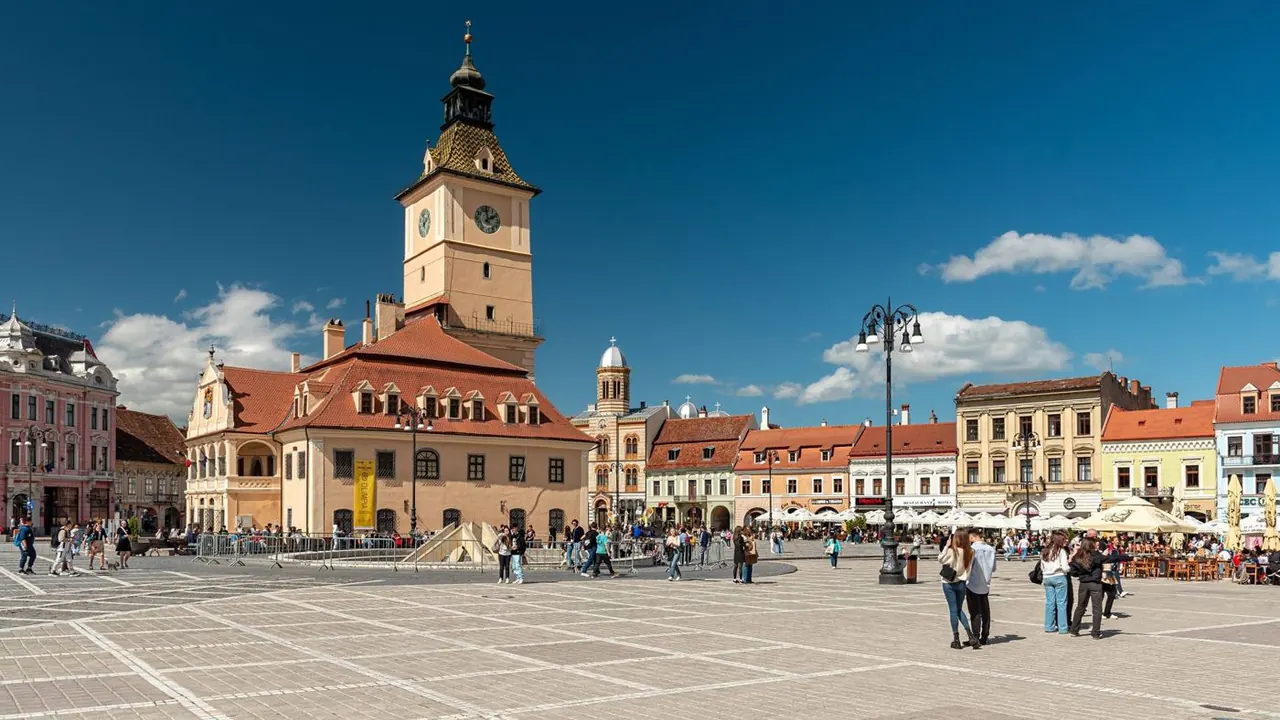
Brasov suits travellers who want mountains and history within easy reach of one small town. Forested Tampa hill rises straight above the old walls, ski slopes and high plateaus are close by, and Bran, Rasnov, the Saxon fortified churches and Sighisoara make a strong run of day trips. It is a compact, unhurried base for walkers, families and anyone touring Transylvania.
Choose Bucharest for
- nightlife
- live music and the arts
- food and drink
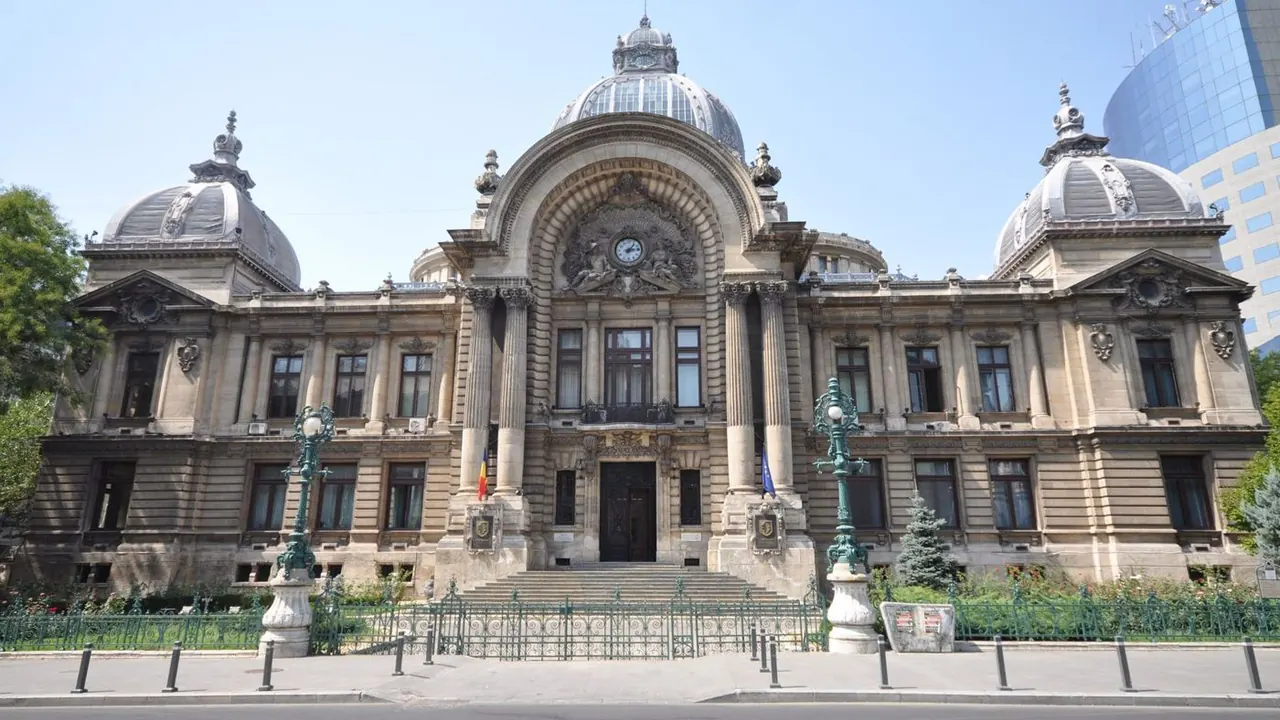
Pick Bucharest for a city break with more going on after dark. This capital of Belle Epoque mansions, small Orthodox churches and communist-era monuments has the better food scene, nights that run until sunrise, and classical music at the Romanian Athenaeum and the National Opera. Outdoors it offers only parks and lakes, but for eating out, concerts and nightlife it gives far more than its mountain neighbour.
Scoreboard
Twelve categories on one fixed scale from 0 to 100. The shaded stretch is the gap between the two.
Your match
Pick a travel style or drag the sliders, and both match scores follow your weighting.
Too close to call, 1 point apart
Wins on nature and the outdoors and day trips with your weighting.
Wins on nightlife and live music and the arts with your weighting.
What matters to you?
Category by category
What the scores mean for a trip.
Beaches & swimming
Neither city is a beach destination. Both sit far inland, and the Black Sea coast is a separate trip from either one. What differs is how you swim in summer: Brasov has cold mountain lakes and a water park with indoor pools, while Bucharest has Lake Snagov to the north and big pool complexes on its edge. Its own park lakes are for boating only.
Food & drink
Both cities serve the same core of ciorba, sarmale, mici and papanasi. Brasov adds Saxon and Hungarian influences, smoked sausages and sheep's cheese from the hills, eaten in cellar dining rooms or on terraces facing the Black Church. The food is honest and filling, but there is little international choice.
Bucharest gives a food-minded traveller much more to explore: modern bistros, specialty coffee and wine bars around Calea Victoriei, Dorobanti and Piata Romana, wines from the Dealu Mare hills, and the stalls of Piata Obor. The one catch is that its Old Town terraces are the weakest place to eat, so it pays to walk a few streets further.
Culture & sights
The two are well matched for sightseeing, but they offer different kinds of city. Brasov is one coherent medieval picture: a walled Saxon town around Council Square, with the Black Church and its Anatolian carpets, the bastions and towers below Tampa hill, and the Schei quarter with the first Romanian-language school.
Bucharest is a city of layers and contrasts, from Belle Epoque mansions on Calea Victoriei and the carved courtyard of Stavropoleos to the vast Palace of the Parliament. Its museums are stronger too, especially the National Museum of Art and the open-air Village Museum, where Brasov's are modest.
Nightlife
Bucharest is the place to go out. The Old Town lanes fill every evening with terraces, cocktail bars and clubs, the bars around Piata Romana and the courtyard gardens of old villas feel more local, and the city's techno and minimal scene keeps going until after sunrise. Summer adds rooftops and open-air venues.
Brasov offers a pleasant evening rather than a long night: cellar bars and craft beer pubs around Council Square and Republicii Street, a few student clubs at weekends, and some après-ski noise in winter. Most nights there end well before the small hours.
Nature & outdoors
Brasov is a mountain base, and Bucharest is not. From Brasov's old town you can walk or take the cable car up Tampa hill, Poiana Brasov is about 12km away for skiing or mountain biking, and Piatra Craiului and the Bucegi plateaus are within an hour. Guided bear watching in the surrounding forests is something the capital cannot match.
Bucharest is flat, and its green spaces are parks and lakes: rowing on Herastrau, the old Cismigiu garden, and birdwatching in the reedbeds of Vacaresti. The same Bucegi mountains are about two hours away by train, which is better as an overnight than a day out.
Day trips
Brasov sits right among the places that most visitors to Romania come to see. Bran and the peasant fortress at Rasnov are about half an hour away, the fortified churches of Prejmer and Harman are on the edge of town, and Viscri, Fagaras and the walled citadel of Sighisoara all make good longer days.
From Bucharest the best outing is Peles Castle at Sinaia, about an hour and a half by train. Closer options are the palace at Mogosoaia and the island monastery at Snagov. Brasov and Bran take about three hours each way from the capital, so most travellers stay a night there instead.
Good for families
Brasov is the slightly easier city with children, mainly because it is small. Parts of the old town are traffic-free and safe to wander, and the Tampa cable car, a rope adventure park in the forest and the bear sanctuary near Zarnesti fill the days, with sledging and beginner slopes at Poiana Brasov in winter. Cobbles and steep lanes make it hard going with a pushchair, though.
Bucharest's attractions lean more on museums and parks: the lively Grigore Antipa natural history museum, the farmhouses and windmills of the open-air Village Museum, and playgrounds and boat hire in the big parks. When the weather turns, the thermal water complex with slides on the northern edge of the city makes a full day out. Against that, heavy traffic, broken pavements and hot summers make the days more tiring.
Getting around
Brasov is the simpler city to get around. You can cross the old town on foot in a quarter of an hour, almost every sight is within or just outside the walls, and buses run up to the ski resort. The weak point is the countryside: rural buses are infrequent, so for castles and fortified churches most people use a car, a taxi or a tour.
In Bucharest you mix walking with the metro, which is reliable but leaves gaps, so the rest is done by tram, bus or the widely used ride-hailing apps. Rush-hour traffic is heavy and a car is more trouble than help.
Shopping & style
Neither city is a shopping destination, but Bucharest offers more choice. Large malls gather the international chains, Calea Victoriei has a handful of luxury labels, and Romanian designers sell from boutiques in the old villa districts. The craft fairs and the Village Museum shop are good for embroidered blouses and ceramics.
In Brasov, Republicii Street mixes chain stores with Dracula souvenirs. The best things to take home are edible: sheep's cheese, plum brandy and honey from the local markets.
Affordability
Both are cheap by European standards, and a budget goes a long way in either. In Brasov, guesthouses and hearty meals cost little, and the main extras are restaurants on Council Square and lift passes in the ski season.
In Bucharest, the metro and ride-hailing cost very little and tavern lunch menus are good value. Costs climb if you spend your evenings in the smarter restaurants and cocktail bars of the north, where prices are closer to Western Europe's, and the Palace of the Parliament tour is the one notable entry fee.
Live music & performing arts
Bucharest is far ahead for classical music. The George Enescu Philharmonic plays under the frescoed dome of the Romanian Athenaeum, the National Opera stages opera and ballet, and in festival years the George Enescu Festival brings leading orchestras to town in late summer and early autumn. Jazz clubs and summer concerts in the parks fill out the calendar.
Brasov has a philharmonic and a small opera company, but the evening most visitors remember is an organ recital in the Black Church in summer. In both cities, theatre is performed in Romanian.
Wellness & relaxation
For a proper day of soaking, Bucharest is the better choice. One of Europe's largest thermal-water complexes is about half an hour north, with warm pools under a glass dome, saunas and quiet areas among the palms. The city itself is loud, so calm comes from a slow morning by Herastrau lake.
Brasov offers the opposite: hotel spas in Poiana Brasov and the saunas at its water park are all it has for treatments, but the town itself is calm, and an afternoon on a terrace under the mountains is easy to come by.
When should you go?
Pick your month. The climate figures are measured averages, not a forecast.
Brasov in July
Bucharest in July
Daytime high, °C
Rainfall in the month, mm
Where the figures come from
Brasov has no rain gauge within 25 km of the centre, so its rainfall comes from a gridded climate dataset read at the city rather than from a gauge further away.
Temperature and rainfall are climate normals, averaged over the years shown. Brasov: 2016-2025 (rainfall 1991-2020) normals, Brasov (3 km from centre). Bucharest: 1991-2020 normals, Bucuresti / Imh (10 km from centre).
Brasov sits higher and stays cooler. Summer peaks at about 27°C in August, which is pleasant for hiking and for walking the old town, though June and July are its wettest months, with about 81mm in June. Winters are cold and snowy, good for skiing at Poiana Brasov but chilly for sightseeing. May, September and early October bring mild days, and in autumn the beech slopes turn colour.
Bucharest runs hotter and sunnier. July and August reach around 31°C with close to 300 hours of sunshine, so walking the wide boulevards is hard work in the afternoons and the pool complexes earn their place. Its rain is spread more evenly through the year. Late April to early June and September into early October are the comfortable months for the city, while December and January are cold and see little sun. In high summer Brasov is the cooler escape, and in winter both are cold.
Which traveller are you?
On an outdoors trip, Brasov wins easily. Tampa hill rises from the town walls, Poiana Brasov, the Bucegi and Piatra Craiului are close, and you can watch bears in the Carpathian forests. Bucharest has parks, lakes and a two-hour train ride to the mountains.
For a food and nightlife trip, Bucharest is far ahead. Its bistros and wine bars around Piata Romana and Dorobanti go well beyond Brasov's hearty cellar restaurants, and its nights run late, from courtyard garden bars to techno clubs that play past sunrise.
On a culture and arts trip, Bucharest has the edge in the evenings, with concerts at the Romanian Athenaeum, the National Opera and, in festival years, the George Enescu Festival. Brasov has its walled Saxon town and fortified churches but much less on stage.
Before you go
| Measure | Brasov | Bucharest |
|---|---|---|
| Official language | Romanian | Romanian |
| Currency | Romanian Leu (RON) | Romanian Leu (RON) |
| Sockets | CF230 V, 50 Hz | CF230 V, 50 Hz |
| Driving side | Right | Right |
| Time zone | UTC+2, UTC+3 in summer | UTC+2, UTC+3 in summer |
| Emergency number | 112 | 112 |
| Elevation | 600 m | 70 m |
| Main airport | Brașov-Ghimbav International Airport (GHV)9 km from centre14 non-stop destinations | Bucharest Henri Coandă International Airport (OTP)18 km from centre121 non-stop destinations |
| Public holidays this year | 17 days | 17 days |
By the numbers
| Measure | Brasov | Bucharest |
|---|---|---|
| City population | 237,589 | 1,716,961 |
| People per km² | 890 | 7,597 |
| Museums within 10 km | 8 | 41 |
| UNESCO World Heritage sites within 50 km | 1 | 0 |
Where else could you go?
Every comparison below shares a destination with this one, so you can follow Brasov or Bucharest somewhere new.