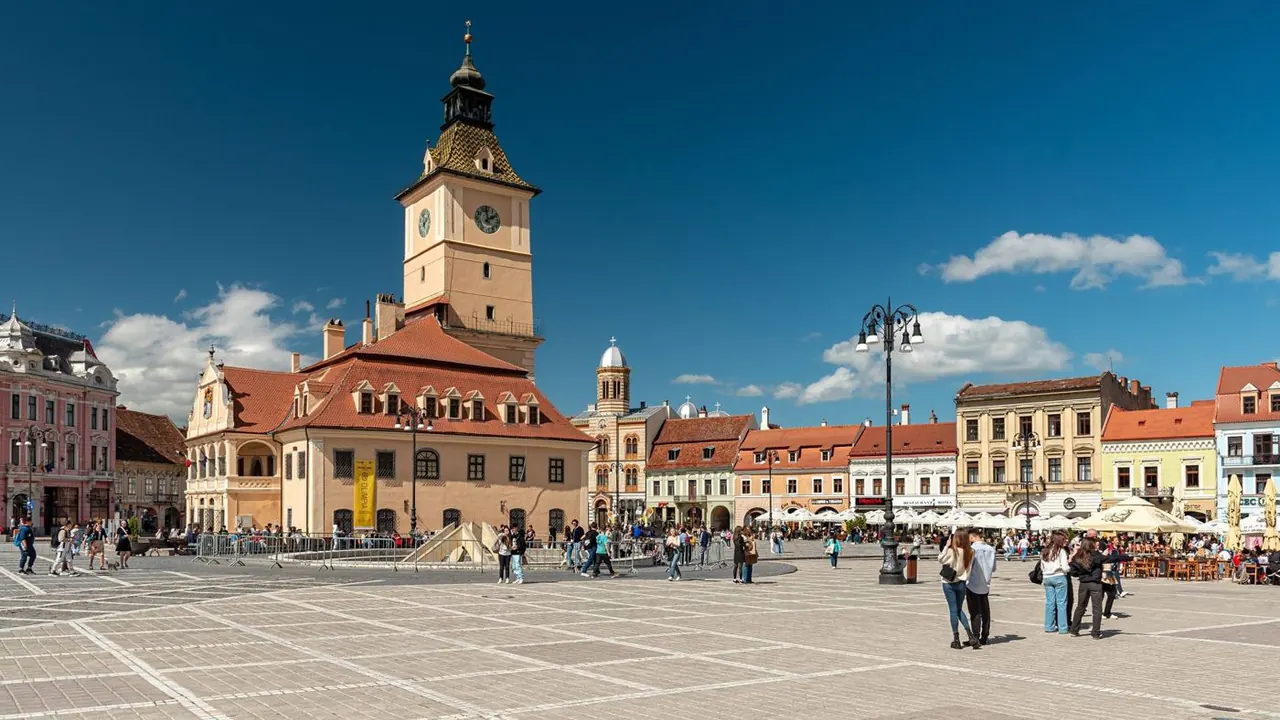
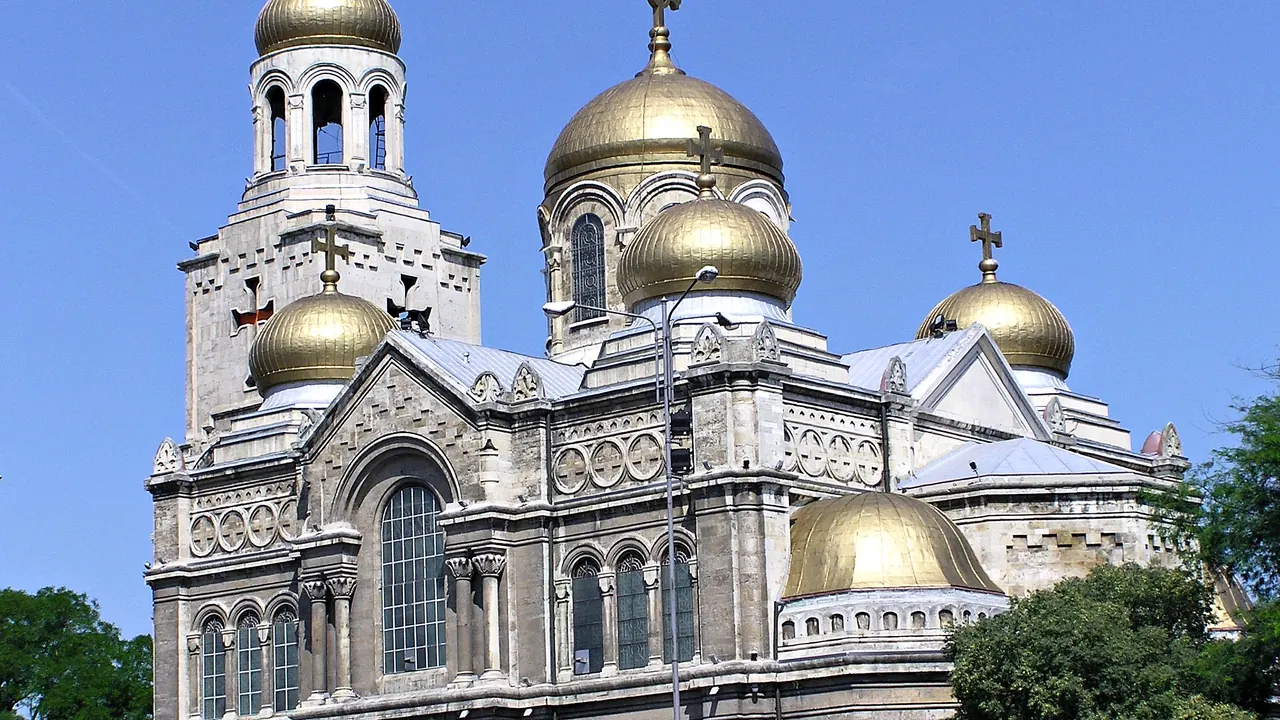
Photos: Brasov by Jorge Franganillo, CC BY 2.0, cropped; Varna by Raphaël Toussaint, CC BY-SA 3.0, cropped.
Brasov or Varna?
Our verdict in twelve categories, each scored against the same fixed benchmark cities, and the climate month by month, so you can choose for your trip.
Choose Brasov for
- nature and the outdoors
- day trips
- culture and sights
Brasov is the choice for travellers who want mountains and history close together. A walled Saxon town sits under a forested hill, with ski slopes, bear country and serious hiking all near by. It is also the best base in southern Transylvania for castles, fortified churches and Sighisoara. It works in every season, from summer trekking and autumn beech woods to winter sledging.
Choose Varna for
- beaches
- wellness
- nightlife
Varna makes sense when the trip is about the sea. In July and August it offers sandy city beaches, warm, gentle water and beach clubs that stay open until dawn, and the mineral spas at St Konstantin and Elena are close by. Its culture comes in a few strong pieces rather than a whole old town, and its season is shorter. For a summer trip of sun, swimming and late nights, it is the clear pick.
Scoreboard
Twelve categories on one fixed scale from 0 to 100. The shaded stretch is the gap between the two.
Your match
Pick a travel style or drag the sliders, and both match scores follow your weighting.
Wins on nature and the outdoors and day trips with your weighting.
Wins on beaches and wellness with your weighting.
What matters to you?
Category by category
What the scores mean for a trip.
Beaches & swimming
Swimming barely features in Brasov. The choice is a hotel pool, the water park or a chilly mountain lake, and a beach means a separate trip to the coast.
In Varna, the beach is the main summer draw. Lifeguarded sand runs right along the city front, wider beaches line the resorts 10km to 20km north, and the shallow water warms well in July and August. Quieter sand lies towards Balchik or past Kamchia.
Food & drink
Neither city is a reason to travel for food on its own, but the cooking is quite different. Brasov serves hearty Transylvanian food shaped by Romanian, Saxon and Hungarian kitchens: sour soups, sarmale with polenta, smoked sausages and papanasi, eaten in cellar dining rooms around Council Square.
Varna eats from the sea. Fried sprats, farmed mussels and turbot come with shopska salad and crisp Black Sea whites. Its best seafront kitchens are a summer affair, whereas Brasov's old-town cellars suit a cold evening.
Culture & sights
Brasov offers a whole medieval townscape. The Saxon streets around Council Square, the great Gothic Black Church with its Anatolian carpets, and surviving bastions and gates along the walls make the centre itself the sight. The Schei quarter adds the story of the town's Romanian side.
Varna's highlights are fewer and more scattered. The Necropolis gold in the Archaeological Museum, around six thousand years old, is remarkable, and the Roman Thermae are substantial. Between them, though, the streets are a mix of nineteenth century houses and socialist blocks. Either city takes a day or two to see.
Nightlife
Varna has the bigger night out, but only in summer. From June to September, beach clubs below the Sea Garden run DJ terraces until dawn, and Golden Sands adds a louder party strip a short taxi ride north.
Brasov is low-key all year. It has cellar bars, craft beer pubs and terraces around Republicii Street, a few student clubs and some après-ski noise in winter. Out of season, the two towns are much alike for an easy drink.
Nature & outdoors
Brasov is a mountain town. Tampa hill rises straight from the walls, Poiana Brasov sits about 12km up the road for skiing or summer biking, and the Bucegi and Piatra Craiului ranges are within an hour, with plateaus above 2,000m. Its forests hold a large brown bear population that you can watch from hides.
Varna's outdoors is gentler. It has shaded paths in the Sea Garden, the odd stone columns of Pobiti Kamani and the floodplain forest of the Kamchia. Its finest scenery is the red cliffs of Cape Kaliakra, where dolphins are often seen, but there is nothing for serious hikers.
Day trips
Brasov has the richer choice, and much of it is close. Bran Castle and the peasant fortress at Rasnov make an easy pairing about half an hour away, and the fortified churches of Prejmer and Harman sit just outside the city. Peles Castle at Sinaia is about an hour over the mountains. Sighisoara's walled citadel, around two hours away, fills a full day, and the UNESCO-listed village of Viscri, further out still, is a longer outing for its fortified church and painted farmhouses.
Varna has fewer outings, and they are more spread out. Balchik's palace and terraced gardens are about 40 minutes north, Nessebar's peninsula of medieval churches is an hour and a half south, and the Madara Rider, Pliska and Preslav make an inland day into Bulgaria's early history. In both regions, the villages and smaller sites are far easier by car or with a tour.
Good for families
Both are easy, small-scale places for children, but the days look different. In Brasov, families take the cable car up Tampa, try the forest rope park, visit castles and the bear sanctuary near Zarnesti, and go sledging in winter, though the cobbles are hard work with a pushchair.
Varna puts everything in the Sea Garden: the zoo, aquarium, planetarium and playgrounds are all a stroll from lifeguarded beaches. The flat promenade makes pushchairs easy.
Getting around
Both centres take about a quarter of an hour to cross on foot, so a city stay needs little transport in either. The difference is getting out. Brasov's buses run up to Poiana Brasov and its trains reach Sinaia and Sighisoara.
In Varna, the buses to the northern resorts are crowded in summer and signed in Cyrillic, so most visitors use the cheap taxis instead.
Shopping & style
Shopping is plain in both cities, with high-street chains on a pedestrian main street and malls further out. What you bring home differs. Brasov's markets have sheep's cheese, plum brandy, honey and embroidered blouses, while Varna sells rose oil cosmetics, linens and Bulgarian wine and rakia.
Affordability
Both are cheap by European standards, and a stay goes a long way in either. The costly moments come at different times. In Brasov, prices rise on Council Square and for ski passes in peak winter. In Varna, room rates jump in July and August, so June or September gives better value.
Live music & performing arts
Varna has slightly more to offer, mainly in summer. The Varna Opera fills a grand theatre on the main square, the Varna Summer festival brings classical music, theatre and jazz, and the long-running International Ballet Competition comes to the city in some years.
Brasov's highlight is an organ recital in the Black Church, which feels special in that setting. Beyond that, it has a philharmonic, a small opera company and open-air concerts on Council Square.
Wellness & relaxation
Brasov offers comfort rather than a cure. Its spa time happens in hotels, many of them up at Poiana Brasov, where a sauna and pool make a natural end to a day on the slopes or the trails, and the water park in town has pools and saunas for a wet afternoon. For mineral water you would have to go deeper into the Carpathians, to Romania's older spa towns.
Varna has what Brasov lacks, which is thermal water under the city itself. The springs that once fed the Roman baths still supply the resorts just north, so a treatment day at St Konstantin and Elena, about 10km out, or at Golden Sands is a short ride rather than an excursion. Even on the seafront, people stop at taps that run with warm mineral water.
When should you go?
Pick your month. The climate figures are measured averages, not a forecast.
Brasov in July
Varna in July
Daytime high, °C
Rainfall in the month, mm
Where the figures come from
Brasov has no rain gauge within 25 km of the centre, so its rainfall comes from a gridded climate dataset read at the city rather than from a gauge further away.
Temperature and rainfall are climate normals, averaged over the years shown. Brasov: 2016-2025 (rainfall 1991-2020) normals, Brasov (3 km from centre). Varna: 1991-2020 normals, Varna (1.3 km from centre).
Brasov sits in a mountain basin, so its year has sharper edges. Winter highs fall to about 2°C in January, with snow on the slopes, which suits skiers but makes town walks a cold affair. Late spring to early autumn is the best time for walking and hiking, with warm, comfortable days. June and July are the wettest months, at around 81mm each, often as afternoon showers. September and early October are dry, mild and good for the autumn colours.
Varna is milder in winter and hotter in summer, with highs near 29°C in July and August, when it also gets the most sunshine. The sea is warm enough for proper swimming from late June, reaches about 24°C in July and stays pleasant into September. Rain is spread fairly evenly through the year, with October the wettest month. Winters are grey and quiet rather than harsh.
Which traveller are you?
On a beach and sun trip, Varna is the only real option. It has sand below the Sea Garden, wider resort beaches to the north and a warm, gentle sea in high summer. Brasov is hours from the coast and can offer only pools and cold mountain lakes.
For an outdoors trip, Brasov wins clearly. You can walk up Tampa hill straight from the old town, Piatra Craiului and the Bucegi plateaus are within an hour, and there is bear watching, mountain biking and winter skiing at Poiana Brasov. Varna's walking is gentle and coastal.
On a relaxing and wellness trip, Varna has the edge. It has warm mineral springs, mud treatments and spa hotels at St Konstantin and Elena, plus slow walks in the Sea Garden outside high summer. In Brasov, the calm comes mostly from hotel spas and quiet terraces.
Before you go
| Measure | Brasov | Varna |
|---|---|---|
| Official language | Romanian | Bulgarian |
| Currency | Romanian Leu (RON) | Euro (EUR) |
| Sockets | CF230 V, 50 Hz | CF230 V, 50 Hz |
| Driving side | Right | Right |
| Time zone | UTC+2, UTC+3 in summer | UTC+2, UTC+3 in summer |
| Emergency number | 112 | 112 |
| Elevation | 600 m | 38 m |
| Main airport | Brașov-Ghimbav International Airport (GHV)9 km from centre14 non-stop destinations | Varna Airport (VAR)7 km from centre51 non-stop destinations |
| Public holidays this year | 17 days | 15 days |
By the numbers
| Measure | Brasov | Varna |
|---|---|---|
| City population | 237,589 | 322,683 |
| People per km² | 1,281 | 2,093 |
| Museums within 10 km | 8 | 14 |
| UNESCO World Heritage sites within 50 km | 1 | 0 |
| Swim season, months above 21 °C | - | 4 months |
Where else could you go?
Every comparison below shares a destination with this one, so you can follow Brasov or Varna somewhere new.