Photos: Breckenridge by Jeff Gunn, CC BY 2.0, cropped; Sedona by dconvertini, CC BY-SA 2.0, cropped.
Breckenridge or Sedona?
Our verdict in twelve categories, each scored against the same fixed benchmark cities, and the climate month by month, so you can choose for your trip.
Choose Breckenridge for
- getting around
- nightlife
- live music and the arts
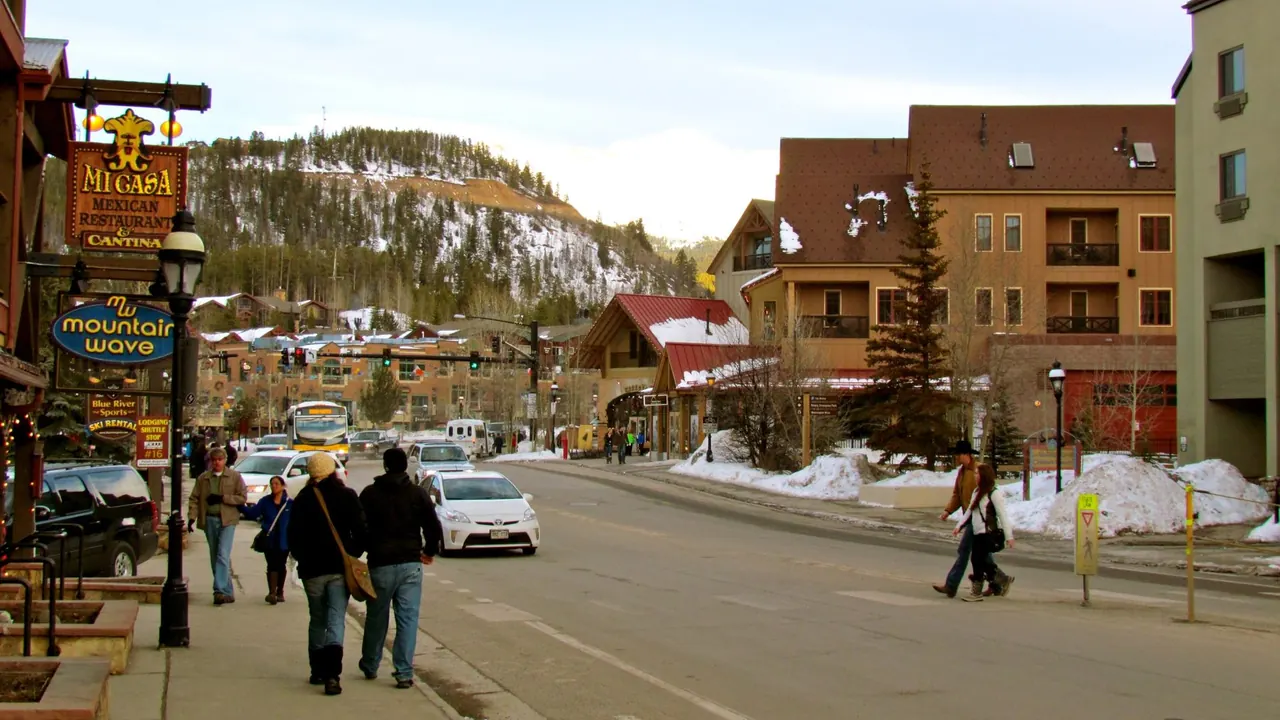
Breckenridge is the choice for a mountain vacation with momentum. It has the ski terrain of the Tenmile Range above the town, a walkable Victorian main street, free buses and a gondola that make a week without a car realistic, and enough après-ski and summer concerts to fill the evenings. It suits families who ski, groups who want a bar after the lifts close, and summer hikers who like cool air at altitude.
Choose Sedona for
- wellness
- beaches
- day trips
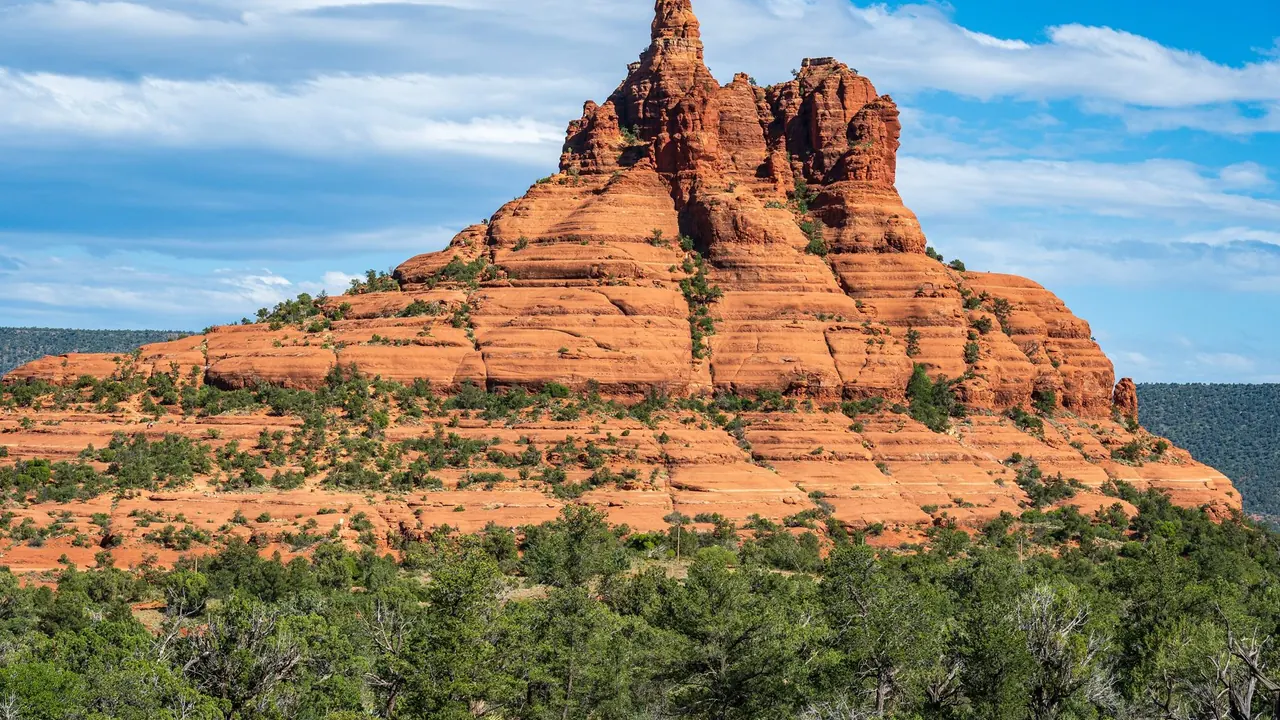
Sedona rewards people who want to slow down. The red rock buttes and canyon trails are every bit as strong as Breckenridge's peaks, but the town around them is built for spas, yoga, sunrise walks and early nights under a dark sky. Couples, retreat-seekers and drivers who want to combine the area with the Grand Canyon, Jerome and the old Sinagua cliff dwellings will get more from it, as long as they accept that nearly everything means a drive.
Scoreboard
Twelve categories on one fixed scale from 0 to 100. The shaded stretch is the gap between the two.
Your match
Pick a travel style or drag the sliders, and both match scores follow your weighting.
Too close to call, 1 point apart
Wins on getting around and nightlife with your weighting.
Wins on wellness and beaches with your weighting.
What matters to you?
Category by category
What the scores mean for a trip.
Beaches & swimming
Neither town is a swimming destination, but Sedona at least has somewhere to get in the water outdoors. Oak Creek's natural pools at Slide Rock, Grasshopper Point and Red Rock Crossing make a cool, scenic break on a hot hiking day, even if they are small and crowded on summer weekends.
In Breckenridge, Lake Dillon and the alpine lakes are for paddling and looking at, being far too cold for a swim, so swimming means the recreation centre's indoor pools or a hot tub.
Food & drink
The two eat at a similar level, comfortable resort dining rather than a food destination, but in different styles. Breckenridge leans towards hearty après-ski food, with steakhouses, Colorado elk and bison, green chile breakfast burritos and a long brewing and distilling habit.
Sedona's kitchens trade more on the view from the terrace, with Southwestern menus, plenty for vegetarians and health-minded diners, and Verde Valley wine tasting rooms just down the road.
Culture & sights
Culture is a side dish in both towns, though of a different flavour. Breckenridge's strength is its gold-rush streetscape: one of Colorado's largest historic districts, with painted Victorian storefronts, miners' cabins and a gold-mine tour.
Sedona has fewer buildings to look at but a deeper past around it. The Chapel of the Holy Cross is set into the rock, and the Sinagua cliff dwellings at Palatki and Honanki and the V Bar V petroglyphs are within a short drive into the backcountry.
Nightlife
Breckenridge has much more going on after dark. On a winter Saturday the après-ski crowd moves from the lift bases to Main Street's brewpubs and old saloons, and a couple of dance bars stay open past midnight, though it remains a small-town scene with no clubs and goes quiet out of season.
Sedona barely has a nightlife at all: a drink in a wine bar or resort lounge after dinner, then bed before a dawn hike. Its best evening activity is stargazing.
Nature & outdoors
Both are outstanding outdoor destinations, and the choice comes down to landscape and season. Breckenridge is high alpine country: ski runs above the treeline, Nordic trails through lodgepole pine, then summer hikes up Quandary Peak and bike trails through aspen and wildflowers, all at an altitude that takes a day or two to adjust to.
Sedona is desert sandstone, with Cathedral Rock, Devil's Bridge, Boynton Canyon and the West Fork of Oak Creek, famous slickrock mountain biking and the Grand Canyon's South Rim about two hours away. It is a spring and autumn landscape rather than a winter one.
Day trips
Sedona has the richer choice of outings. Within an hour lie the hillside mining town of Jerome, the Verde Canyon Railroad, the cliff dwelling at Montezuma Castle, the Tuzigoot pueblo, wine country and Flagstaff, with the Grand Canyon as a longer day.
Breckenridge has Leadville's silver-boom streets and mining museum, Georgetown's narrow-gauge railway and the hot springs at Idaho Springs. After that, the options are mostly other ski resorts, and winter weather on the passes can stretch any drive.
Good for families
Breckenridge is better set up for children. It has ski schools for the very young, gentle beginner slopes, a summer activity park on the mountain, an ice rink and pools in town, and free transport that makes getting about simple. Altitude sickness and the hard work of winter gear with small children are the real drawbacks.
Sedona suits outdoorsy families for a few days, with Slide Rock, easy paths around Bell Rock and jeep tours. Much of the hotel offer is aimed at couples, though, and the summer heat and exposed trails call for care.
Getting around
Breckenridge is far easier once you arrive. The historic centre is walkable, a free gondola links Main Street to the slopes, and free town and county buses reach the trailheads, Frisco, Keystone and Copper Mountain. Getting there from Denver's airport, though, is a long road trip over I-70.
Sedona is car country. Uptown is walkable, but Tlaquepaque, West Sedona, the trailheads and every day trip are spread along the highways, a shuttle serves only some trails, and parking at the popular ones fills early.
Shopping & style
Sedona offers the more interesting browsing. Tlaquepaque's courtyard arts village, galleries of Native American jewellery, pottery and rugs, and the town's crystal and metaphysical shops give it a distinct character.
Breckenridge's Main Street is mainly ski and outdoor gear, Western landscape galleries and souvenirs, which is useful for technical clothing but little more. Neither has fashion or department stores: from Breckenridge you would go to the Silverthorne outlets, and from Sedona you would go to Phoenix.
Affordability
Both are expensive, but Breckenridge in ski season is the harder hit, with lift tickets, equipment hire, lessons and slope-side lodging all adding up, especially over Christmas and spring break. Summer and the shoulder months are far cheaper there, and the free buses help.
Sedona is somewhat gentler, with free trails beyond a parking pass and picnic lunches, though resort rooms, jeep tours and spa treatments push up the bill. In both places, staying in a neighbouring town such as Frisco or Cottonwood saves money.
Live music & performing arts
Breckenridge has the stronger summer programme. At the Riverwalk Center by the Blue River, a festival orchestra and a national orchestra academy give symphonic and chamber concerts through July and August, and a local theatre company stages plays for much of the year.
Sedona's offer is a handful of occasions: chamber concerts, local theatre, the Sedona International Film Festival in late winter, and acoustic and Native American flute sets in resorts.
Wellness & relaxation
This is where Sedona pulls well ahead. It is a true retreat town, with destination spas facing the canyons, yoga, meditation and breathwork, alternative therapies and a slow pace shaped by its vortex walks, quiet nights and clear air.
In Breckenridge, wellness mostly means an outdoor hot tub in the snow or a massage after skiing. The natural hot springs are an hour away at Idaho Springs, and the altitude often leaves visitors tired rather than rested.
When should you go?
Pick your month. The climate figures are measured averages, not a forecast.
Breckenridge in July
Sedona in July
Daytime high, °C
Rainfall in the month, mm
Where the figures come from
Breckenridge's temperatures are measured 38 km from the centre, at Leadville / Stringtown.
Breckenridge has no rain gauge within 25 km of the centre, so its rainfall comes from a gridded climate dataset read at the city rather than from a gauge further away.
Sedona's station stands 153 m above the city centre, so the centre is likely a little warmer than the figures say.
Sedona has no rain gauge within 25 km of the centre, so its rainfall comes from a gridded climate dataset read at the city rather than from a gauge further away.
Temperature and rainfall are climate normals, averaged over the years shown. Breckenridge: 2006-2020 (rainfall 1991-2020) normals, Leadville / Stringtown (37.7 km from centre). Sedona: 2009-2025 (rainfall 1991-2020) normals, Sedona / West Sedona (1.3 km from centre).
The two towns peak at opposite times of year. Breckenridge spends December to February below freezing, with daytime highs around -2°C, which is exactly what skiers come for, and March stays cold, only just above freezing, so the winter feel lasts into spring. Its summer, from late June to early September, is the mirror image of Sedona's: mild days of about 21°C, good for hiking and cycling, with short afternoon showers in July and August. The ski season stretches beyond midwinter at both ends, with November as the early season and April bringing softer spring skiing to close it. May and October are the quiet months between seasons in the mountains: the snow is either gone or not yet settled, and the air is still too cool for summer walking.
Sedona is at its best in spring and autumn, roughly March to May and October to November, when it is warm enough to hike comfortably without the heat. From June to August highs reach 34°C, so walking means setting off at dawn, and July and August bring the summer storms, with rainfall peaking at about 56mm. Winter is mild by comparison at around 12°C, crisp and fine for walking while Breckenridge is deep in snow.
Which traveller are you?
On a relaxing and wellness trip, Sedona is the clear pick. Its destination spas, yoga and meditation sessions and quiet sunrise walks to the vortexes are built around rest, whereas Breckenridge's winter days are early starts, thin air and full days on the slopes.
On a family trip with children, Breckenridge works better. Ski schools take young children, the free gondola and town buses remove much of the driving, and summer brings an alpine coaster and climbing walls. Sedona offers Slide Rock and jeep tours, but little else made for children.
For skiers and snowboarders, only Breckenridge is in the running. Five peaks of terrain rise straight above town, with Keystone, Copper Mountain and Arapahoe Basin nearby, while Sedona's winter brings no more than the odd dusting of snow on the red rock.
Before you go
| Measure | Breckenridge | Sedona |
|---|---|---|
| Currency | US Dollar (USD) | US Dollar (USD) |
| Sockets | AB120 V, 60 Hz | AB120 V, 60 Hz |
| Driving side | Right | Right |
| Time zone | UTC-7, UTC-6 in summer | UTC-7 |
| Emergency number | 911 | 911 |
| Elevation | 2,926 m | 1,319 m |
| Main airport | Denver International Airport (DEN)124 km from centre231 non-stop destinations | Phoenix Sky Harbor International Airport (PHX)160 km from centre149 non-stop destinations |
| Public holidays this year | 12 days | 12 days |
By the numbers
| Measure | Breckenridge | Sedona |
|---|---|---|
| City population | 5,078 | 9,684 |
| People per km² | 332 | 195 |
| Museums within 10 km | 0 | 0 |
| UNESCO World Heritage sites within 50 km | 0 | 0 |
Where else could you go?
Every comparison below shares a destination with this one, so you can follow Breckenridge or Sedona somewhere new.