United States
Sedona
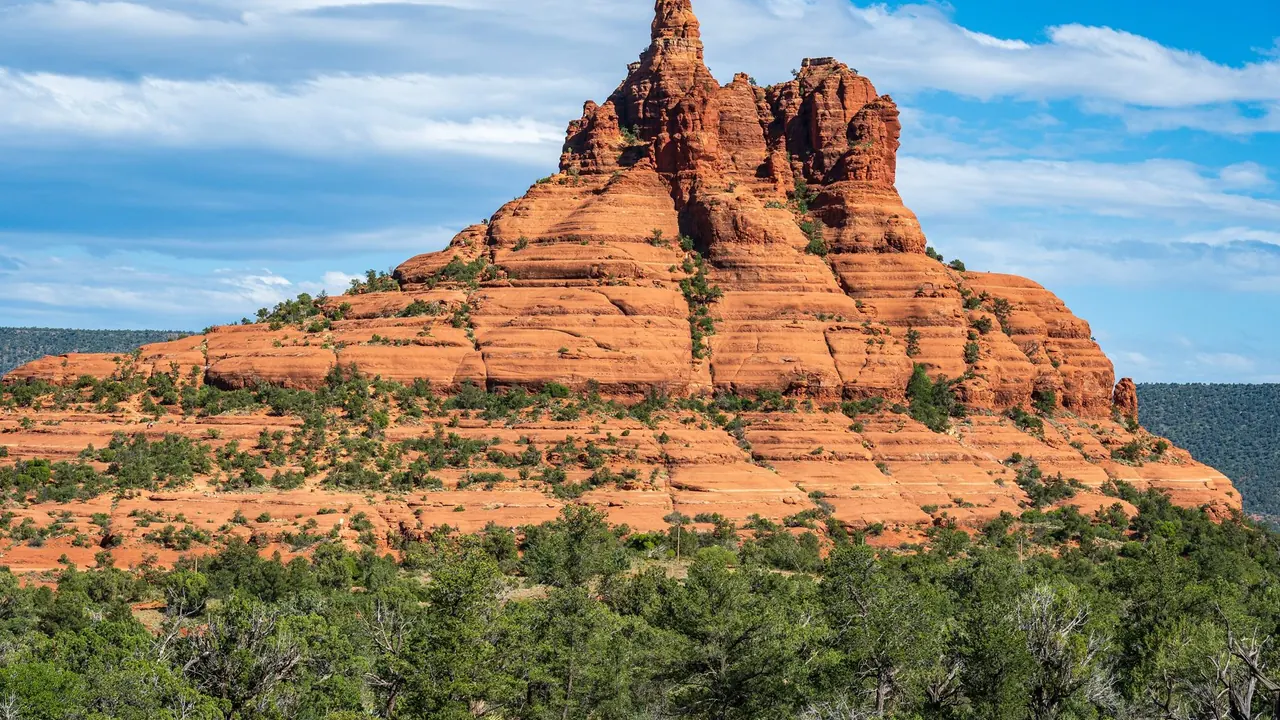
Bell Rock outside Sedona
- Nature & outdoors93
- Wellness & relaxation82
- Day trips55
Photo: dconvertini, CC BY-SA 2.0, cropped
Match
36
Every category weighted equally
- Beach & sun39
- Culture & arts31
- Food & nightlife27
- Family trip39
- Outdoors47
- Relax & unwind45
- Shopping & style33
- On a budget34
Sedona in twelve categories
Our verdict on each, scored 0 to 100 against the same fixed benchmark cities, so a score means the same thing on every page.
Beaches & swimming. Scores 16 out of 100.
Food & drink. Scores 33 out of 100.
Culture & sights. Scores 20 out of 100.
Nightlife. Scores 8 out of 100.
Nature & outdoors. Scores 93 out of 100.
Day trips. Scores 55 out of 100.
Good for families. Scores 42 out of 100.
Getting around. Scores 22 out of 100.
Shopping & style. Scores 34 out of 100.
Affordability. Scores 18 out of 100.
Live music & performing arts. Scores 13 out of 100.
Wellness & relaxation. Scores 82 out of 100.
Sedona category by category
Beaches & swimming
16Sedona is high desert, hours from any coast, and there is no beach life in the usual sense. What it has is Oak Creek. At Slide Rock State Park the creek runs over a smooth sandstone chute that people ride down into cold pools, and Grasshopper Point and Red Rock Crossing have deeper holes for a swim below the red cliffs.
The water is cool even in midsummer, the spots are small and they fill up fast on hot weekends. It is a refreshing break from a day of hiking, not a reason to come, and outside the warm months most visitors never get wet.
Food & drink
33Eating out in Sedona means resort dining rooms and terraces facing the red rocks, Southwestern menus built on chilli, corn and grilled meat, and a good number of places catering to the vegetarian and health-minded crowd the town draws. The view is often the main ingredient, and sunset tables are the ones people want.
There is no street food or market scene, and the range thins quickly once you have tried the handful of better kitchens. The Verde Valley wine country starts just down the road, and tasting rooms there and in nearby towns add a pleasant drinking angle. Breakfast and lunch before or after a hike are the meals that suit the town best.
Culture & sights
20Sedona is a small town that grew up around its landscape, and its sights are few. The best known is the Chapel of the Holy Cross, a modernist chapel built into a red rock butte in 1956, worth the visit for both the building and the view. The Sedona Heritage Museum tells the story of the orchard and ranching settlers, and the town has many art galleries focused on Western and Native American work.
The Palatki and Honanki cliff dwellings and the V Bar V petroglyphs, all left by the Sinagua people, are a short drive into the backcountry. Most visitors spend their time outdoors rather than indoors.
Nightlife
8Evenings in Sedona are quiet. There are a few brewpubs, wine bars and resort lounges, mostly in Uptown and around the larger hotels, and they suit a drink after dinner rather than a night out. The town keeps early hours because so many visitors are on the trail at dawn, and the real evening entertainment is the dark sky above the canyon, clear enough for serious stargazing.
Nature & outdoors
93Sedona sits in one of the most striking landscapes in North America. Red and orange sandstone buttes, spires and mesas rise straight out of the juniper scrub around town, and a dense network of trails reaches them: Cathedral Rock, Bell Rock, Devil's Bridge, Boynton Canyon and the long walk up West Fork of Oak Creek. The slickrock singletrack is famous among mountain bikers, and jeep roads lead into the backcountry for those who would rather ride than walk.
North of town Oak Creek Canyon climbs through pine forest to the cool Colorado Plateau, and the South Rim of the Grand Canyon is about two hours away. Spring and autumn are the best seasons; summer days are hot and walking means early starts, while winter brings crisp air and the odd dusting of snow on the red rock.
Day trips
55The Verde Valley below Sedona gives the best outings. Jerome is an old copper-mining town clinging to a mountainside, full of restored brick buildings and galleries, about forty minutes away. Cottonwood and Cornville have the region's tasting rooms, and the Verde Canyon Railroad runs from Clarkdale through a canyon with no road.
Ancient sites are the other strength. Montezuma Castle, a five-storey cliff dwelling, and the hilltop pueblo of Tuzigoot are both within half an hour, and Walnut Canyon and the Wupatki pueblos lie beyond Flagstaff, itself a pleasant old railroad and university town about forty-five minutes north. Historic Prescott and Williams are within reach too. The places are small, though, and a few days cover them.
Good for families
42Sedona works for families who like being outdoors. Slide Rock is a summer favourite with children, short trails such as Bell Rock's lower paths are manageable for young legs, and open-air jeep tours over the slickrock are a hit at most ages. The town is small, safe and relaxed.
Beyond that there is little made for children: no zoo, aquarium or theme park, and much of the hotel offer is aimed at couples and spa guests. Summer heat and steep, exposed trails call for care with small children, and everything involves a drive. Families often combine Sedona with the Grand Canyon and Flagstaff rather than staying a long time.
Getting around
22Sedona stretches along two highways meeting at a roundabout junction called the Y, with Uptown, the Tlaquepaque area and West Sedona spread out between them. Uptown is compact enough to walk, but almost everything else, from trailheads to the chapel and the day-trip towns, needs a car.
Public transport is minimal, with a shuttle serving some of the busiest trailheads. Traffic backs up on the main roads on busy weekends, and parking at popular trails fills early. Most visitors fly into Phoenix, about two hours south, and drive up.
Shopping & style
34Shopping in Sedona is about art, crafts and the town's spiritual side. Tlaquepaque, a long-established arts village built in the style of a Mexican hamlet with courtyards and fountains, holds galleries and craft studios, and many more galleries line the main road selling Western painting, sculpture and Native American jewellery, pottery and rugs.
Sedona is also known for its crystal and metaphysical shops, selling stones, books and readings. Uptown is mostly T-shirts and souvenirs. There is no fashion or department-store shopping to speak of; for that, visitors go to Phoenix.
Affordability
18Sedona is an expensive place to stay. Hotels are mostly resorts and boutique lodges with high rates, especially in spring and autumn, and restaurants charge resort-town prices. Guided jeep tours, balloon flights and spa treatments push costs up further.
The outdoors offsets some of this: most trails need only a parking pass, and picnics on the trail cost little. Visitors on a budget often stay in Cottonwood or Flagstaff, where rooms are cheaper, and drive in for the day.
Live music & performing arts
13Sedona has a small arts calendar rather than a performing scene. Chamber music concerts, local theatre and the long-running Sedona International Film Festival in late winter give a few occasions through the year, and some resorts and bars host acoustic sets and Native American flute players. There is no concert hall or regular theatre season, and visitors who want more drive to Flagstaff or Phoenix.
Wellness & relaxation
82Sedona is one of the best-known retreat towns in the US. Several destination resorts have spas set against the red rock canyons, and around them is a wide range of yoga studios, meditation and breathwork sessions, massage and alternative therapies. The town is also known for its vortexes, spots in the rocks that many visitors believe carry special energy, and quiet walks to them at sunrise are part of the local ritual.
The pace is slow, the air is clear and the nights are dark and quiet. What Sedona lacks is a bathing tradition: there are no thermal baths or hot springs, and wellness here mostly means booking treatments, often at resort prices.
When should you go?
Pick a month to see what it is like. The climate figures are measured averages, not a forecast.
Sedona in July
Daytime high, °C
Rainfall in the month, mm
The whole year
Shaded against this city’s own year: the deepest cell is its best month for that figure and the palest its weakest.
Where the figures come from
Sedona's station stands 153 m above the city centre, so the centre is likely a little warmer than the figures say.
Sedona has no rain gauge within 25 km of the centre, so its rainfall comes from a gridded climate dataset read at the city rather than from a gauge further away.
Temperature and rainfall are climate normals, averaged over the years shown. Sedona: 2009-2025 (rainfall 1991-2020) normals, Sedona / West Sedona (1.3 km from centre).
Before you go
| Measure | Sedona |
|---|---|
| Currency | US Dollar (USD) |
| Sockets | AB120 V, 60 Hz |
| Driving side | Right |
| Time zone | UTC-7 |
| Emergency number | 911 |
| Elevation | 1,319 m |
| Main airport | Phoenix Sky Harbor International Airport (PHX)160 km from centre148 non-stop destinations |
| Public holidays this year | 12 days |
By the numbers
| Measure | Sedona |
|---|---|
| City population | 9,684 |
| People per km² | 195 |
| Museums within 10 km | 0 |
| UNESCO World Heritage sites within 50 km | 0 |
Compare Sedona with
Every comparison with a written verdict behind it.