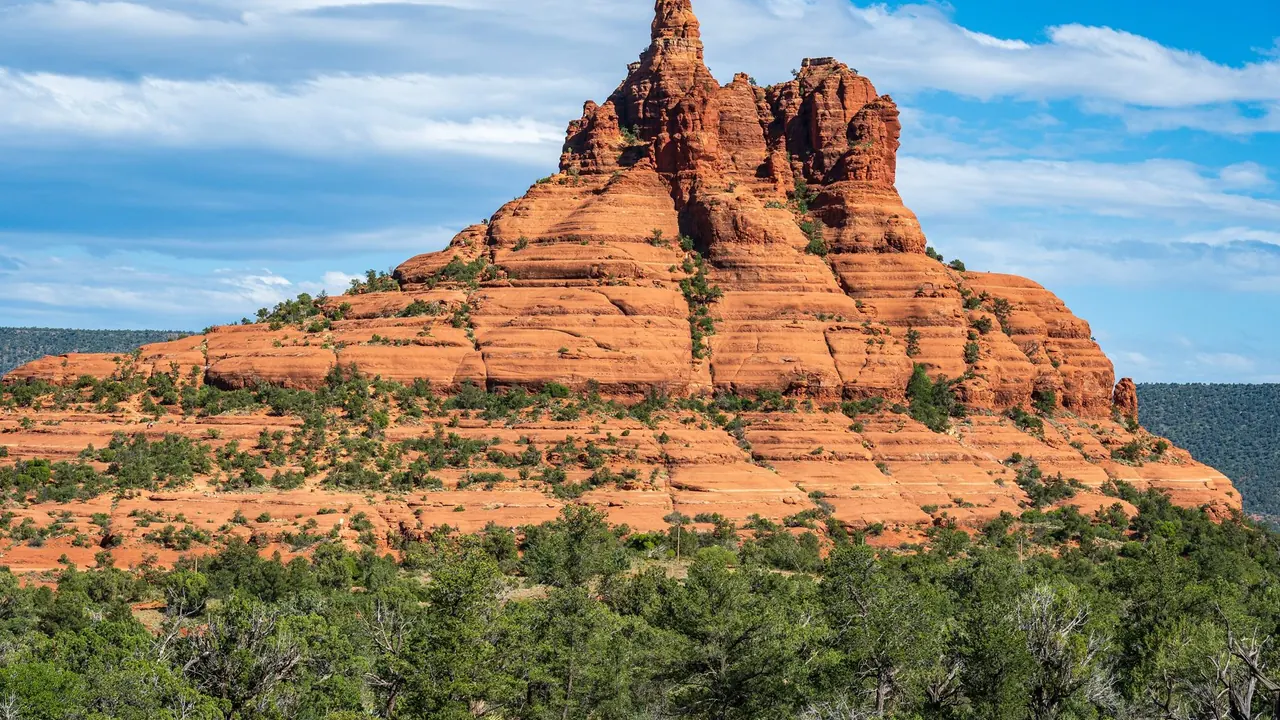
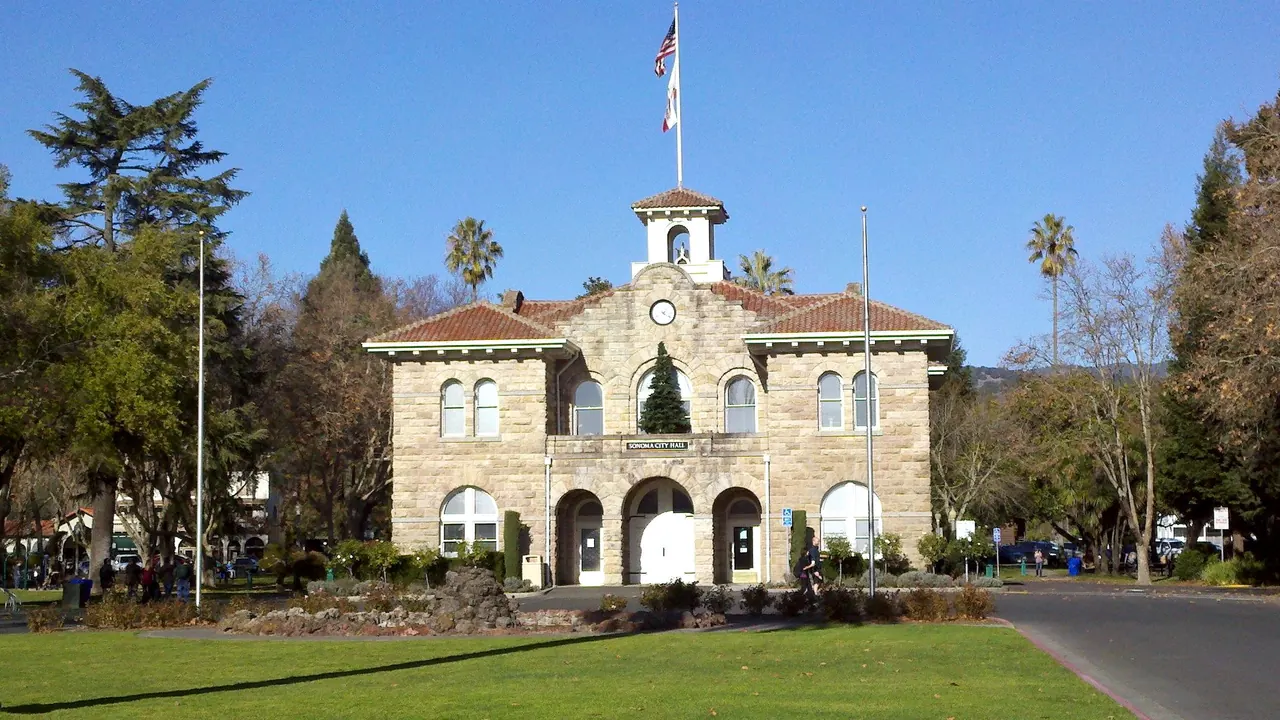
Photos: Sedona by dconvertini, CC BY-SA 2.0, cropped; Sonoma by Cullen328, CC BY-SA 3.0, cropped.
Sedona or Sonoma?
Our verdict in twelve categories, each scored against the same fixed benchmark cities, and the climate month by month, so you can choose for your trip.
Choose Sedona for
- wellness
- nature and the outdoors
- families
Sedona is for travellers who want to spend the days outside and the evenings resting. The red rock buttes, canyon trails and slickrock bike routes are the main event, and the town's spas, yoga studios and sunrise walks to the vortexes turn a hiking trip into a proper retreat. It also suits families who like scrambling and swimming in creek pools more than sitting through long lunches.
Choose Sonoma for
- food and drink
- day trips
- live music and the arts
If you travel for the table and the glass, pick Sonoma. Wine sits at the centre of the whole place, with tasting rooms around the plaza, old-vine Zinfandel and Carneros Pinot Noir close by, and seasonal Californian cooking to go with them. It has more history on its doorstep, a stronger summer concert season and better day trips, with San Francisco and Napa both within easy reach of a slow, comfortable base.
Scoreboard
Twelve categories on one fixed scale from 0 to 100. The shaded stretch is the gap between the two.
Your match
Pick a travel style or drag the sliders, and both match scores follow your weighting.
Too close to call, level with your weighting
Wins on wellness and nature and the outdoors with your weighting.
Wins on food and drink and day trips with your weighting.
What matters to you?
Category by category
What the scores mean for a trip.
Beaches & swimming
Neither town is a swimming destination, but each offers a different way to cool off. Sedona has Oak Creek, where you can ride the sandstone chute at Slide Rock or swim in the deeper pools at Grasshopper Point beneath red cliffs, cold and crowded on hot weekends but good fun.
Sonoma's coast at Bodega Bay is for walking and looking, not swimming, so summer swims there mean a hotel pool or the gravel beaches of the Russian River.
Food & drink
Sonoma is much the stronger place to eat and drink, because food and wine are what the valley is about. Tasting rooms surround the plaza, varied vineyards from the Carneros hills to Glen Ellen are a short drive away, and kitchens cook with local cheese, olive oil and coast oysters. A long lunch with a good bottle is the classic Sonoma afternoon.
In Sedona the views from the table are often better than the cooking. You can expect resort terraces, Southwestern chilli and grilled meat, and plenty of health-minded menus, and the choice runs out quickly. The Verde Valley tasting rooms add some wine, but on a much smaller scale than Sonoma's.
Culture & sights
Sonoma has more history to walk through. The large plaza where the Bear Flag Revolt took place in 1846, Mission San Francisco Solano, the adobe barracks and Vallejo's house at Lachryma Montis fill a satisfying half day.
Sedona's cultural sights are fewer and more spread out. The Chapel of the Holy Cross, built into a butte, is the highlight, and the Sinagua cliff dwellings at Palatki and Honanki need a drive into the backcountry. The galleries of Western and Native American art round out what is there.
Nightlife
Both towns are quiet by late evening, and neither has clubs. Sonoma's evenings centre on dinner, followed by a wine bar or saloon on the plaza. Sedona's few brewpubs and resort lounges close early because people are up for dawn hikes, and the best thing to do after dark is look up at its exceptionally dark sky.
Nature & outdoors
Sedona's landscape is in another league. Red sandstone spires and mesas rise straight out of the juniper scrub, a dense trail network reaches Bell Rock, Boynton Canyon and Devil's Bridge, and Oak Creek Canyon climbs into pine forest. Mountain bikers come for the slickrock and jeep roads run into the backcountry.
Sonoma's outdoors are gentler and more pastoral: vineyards between two ranges, oak-covered hills, redwood groves at Sugarloaf Ridge and quiet back roads for cycling. It is lovely for easy walks and balloon flights, but it is a setting for the trip rather than the reason to make it.
Day trips
Sonoma has the better choice of outings, mainly because San Francisco is about an hour away and makes a full city day easy. Napa, Healdsburg, Petaluma and the bay towns of Sausalito and Tiburon add variety, though many of the trips are to yet another wine valley.
From Sedona the outings are more about history and landscape. Montezuma Castle, Tuzigoot, the mining town of Jerome and the Verde Canyon Railroad are all close, and Flagstaff and Wupatki lie beyond. The places are small, though, and a few days cover most of them.
Good for families
Sedona works better with children who enjoy being outside. Sliding into the pools at Slide Rock, walking the easy lower trails around Bell Rock and riding a jeep over the slickrock all keep most ages happy, though the summer heat and exposed trails call for care.
Sonoma is built around tasting rooms and long lunches. Apart from the plaza playground, the miniature railway park and the wildlife park near Santa Rosa, there is little for children to do, so families usually do better visiting for a day from San Francisco.
Getting around
You need a car in both places, and each has only one small area you can manage on foot. Sedona sprawls along two highways that meet at the Y, and on busy weekends trailhead parking and traffic become a problem. Sonoma's centre around the plaza is easier to walk, with tasting rooms a few blocks apart, and the flat valley roads make cycling to nearby wineries a pleasant option. Many visitors book a driver for tasting days.
Shopping & style
Both towns are small for shopping, with no fashion or department stores to speak of, but what you can buy is quite different. Sedona's draw is art and the metaphysical: courtyard galleries at Tlaquepaque, Native American jewellery, pottery and rugs, and plenty of crystal shops.
Sonoma is more about food and the home. Plaza boutiques sell kitchenware, olive oil and cheese, the summer farmers' market sells local produce, and the best purchase is wine bought direct from the producers.
Affordability
Both are expensive, and Sedona is slightly kinder to the wallet. Its trails need little more than a parking pass, and budget travellers can sleep in Cottonwood or Flagstaff and drive in.
In Sonoma there are few rooms, tasting fees add up over a few days, and a car or driver is close to essential. Staying in Santa Rosa or Petaluma and choosing a few wineries is the usual way to cut costs.
Live music & performing arts
Sonoma has more live performance, though most of it comes in summer. There are outdoor shows among the ruins at Jack London State Historic Park, winery concerts and the plaza's 1930s theatre, and the Green Music Center about half an hour away hosts touring orchestras.
Sedona has chamber concerts, local theatre and its long-running film festival in late winter, with Native American flute and acoustic sets in some resorts. There is no concert hall.
Wellness & relaxation
Sedona is the stronger retreat. Destination resort spas face the canyons, and the town is full of yoga, meditation, breathwork and alternative therapies. Many visitors walk to the vortexes at sunrise, and the clear air and dark nights help them unwind.
What Sonoma has that Sedona lacks is natural hot water. The mineral springs at Boyes Hot Springs feed a historic resort spa, and Calistoga's mud baths are about an hour away. Beyond that, Sonoma's appeal for rest is its slow pace more than its range of treatments.
When should you go?
Pick your month. The climate figures are measured averages, not a forecast.
Sedona in July
Sonoma in July
Daytime high, °C
Rainfall in the month, mm
Where the figures come from
Sedona's station stands 153 m above the city centre, so the centre is likely a little warmer than the figures say.
Sedona has no rain gauge within 25 km of the centre, so its rainfall comes from a gridded climate dataset read at the city rather than from a gauge further away.
Sonoma has no rain gauge within 25 km of the centre, so its rainfall comes from a gridded climate dataset read at the city rather than from a gauge further away.
Sonoma's sunshine is measured 87 km from the centre, at Sacramento Executive Airport.
Temperature and rainfall are climate normals, averaged over the years shown. Sedona: 2009-2025 (rainfall 1991-2020) normals, Sedona / West Sedona (1.3 km from centre). Sonoma: 1991-2020 (sunshine 1981-2010) normals, Napa / Middleton (17.8 km from centre).
Sedona is best in spring and autumn, roughly March to May and late September to November, when days are warm and clear enough for long hikes. June to August is too hot for walking after mid-morning, with highs around 34°C, and July and August bring the summer storm season, the wettest stretch of the year. Winter is cool and crisp, with occasional snow on the red rock, but still fine for walking in the middle of the day.
Sonoma runs to a different rhythm. Its summers are milder, rarely far above 26°C, almost completely dry and very sunny, which makes June to October dependable for outdoor lunches and vineyard cycling. The rain comes in winter instead, with up to 169mm a month from December to February, when the hills turn green but many days are wet. Spring is the sweet spot. The nearby Pacific stays cold all year at 12°C to 14°C, too cold for a comfortable swim.
Which traveller are you?
On an outdoors trip, Sedona is the clear choice. Cathedral Rock, Devil's Bridge, West Fork and the slickrock singletrack put dramatic hiking and biking right outside town, and the Grand Canyon is close enough for a day.
For a food and nightlife trip, Sonoma is far better on the food side: wine-focused cooking, tasting rooms on the plaza and dozens of wineries close by. Evenings are early in both towns, so this works as a long-dinner trip rather than late nights.
On a relaxing and wellness trip, Sedona has the deeper offer, with destination resort spas, meditation, breathwork and massage set against the canyons. Sonoma does have real hot springs at Boyes, but beyond them it is mostly inn spas.
Before you go
| Measure | Sedona | Sonoma |
|---|---|---|
| Currency | US Dollar (USD) | US Dollar (USD) |
| Sockets | AB120 V, 60 Hz | AB120 V, 60 Hz |
| Driving side | Right | Right |
| Time zone | UTC-7 | UTC-8, UTC-7 in summer |
| Emergency number | 911 | 911 |
| Elevation | 1,319 m | 26 m |
| Main airport | Phoenix Sky Harbor International Airport (PHX)160 km from centre149 non-stop destinations | Charles M. Schulz Sonoma County Airport (STS)39 km from centre14 non-stop destinations |
| Public holidays this year | 12 days | 13 days |
By the numbers
| Measure | Sedona | Sonoma |
|---|---|---|
| City population | 9,684 | 10,739 |
| People per km² | 195 | 1,513 |
| Museums within 10 km | 0 | 7 |
| UNESCO World Heritage sites within 50 km | 0 | 0 |
| Swim season, months above 21 °C | - | None |
Where else could you go?
Every comparison below shares a destination with this one, so you can follow Sedona or Sonoma somewhere new.
- Napavs Sonoma
- Flagstaffvs Sedona
- San Franciscovs Sonoma
- San Josevs Sonoma
- Scottsdalevs Sedona
- Phoenixvs Sedona