Photos: Santa Fe by dconvertini, CC BY-SA 2.0, cropped; Sedona by dconvertini, CC BY-SA 2.0, cropped.
Santa Fe or Sedona?
Our verdict in twelve categories, each scored against the same fixed benchmark cities, and the climate month by month, so you can choose for your trip.
Choose Santa Fe for
- culture and sights
- live music and the arts
- food and drink
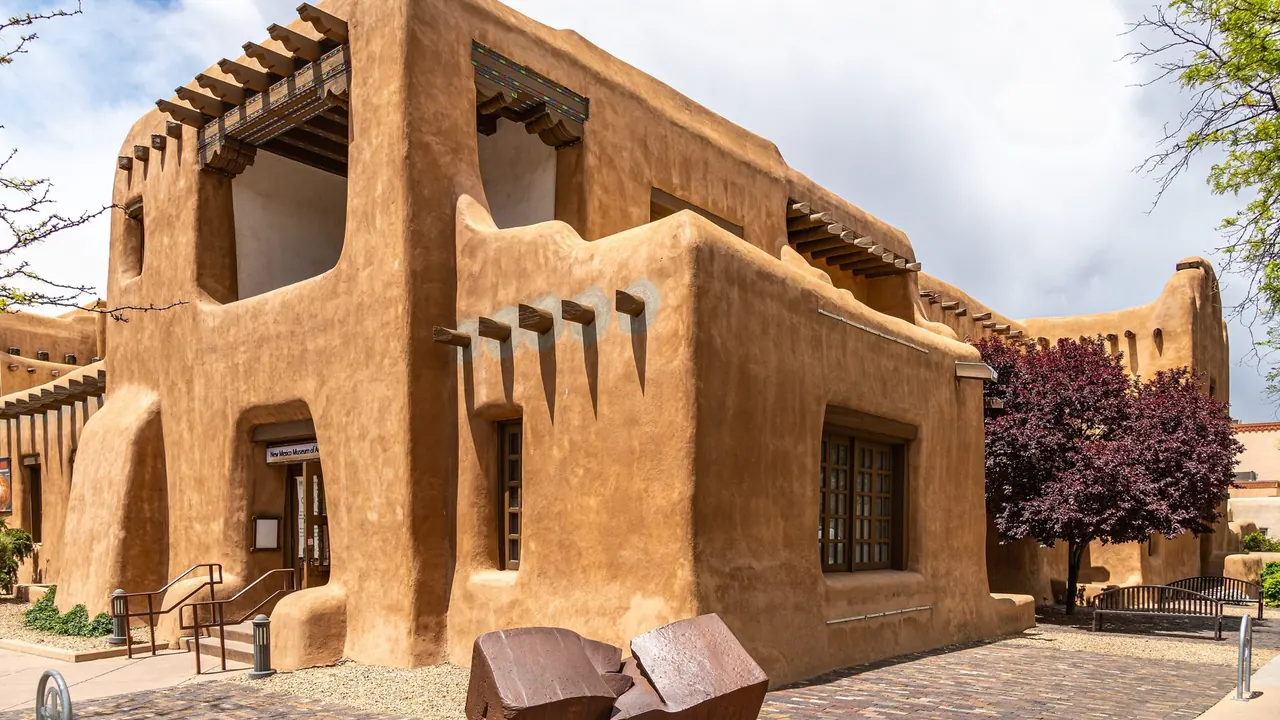
Santa Fe suits travellers who want a town with a story in its streets. It has adobe churches and the Palace of the Governors around the Plaza, Museum Hill and the galleries of Canyon Road, a regional cuisine worth the journey and, in summer, opera under the desert sky. It is also the better base for a road trip, with Taos Pueblo, Bandelier and the old Spanish villages of the High Road all within reach.
Choose Sedona for
- wellness
- nature and the outdoors
- beaches
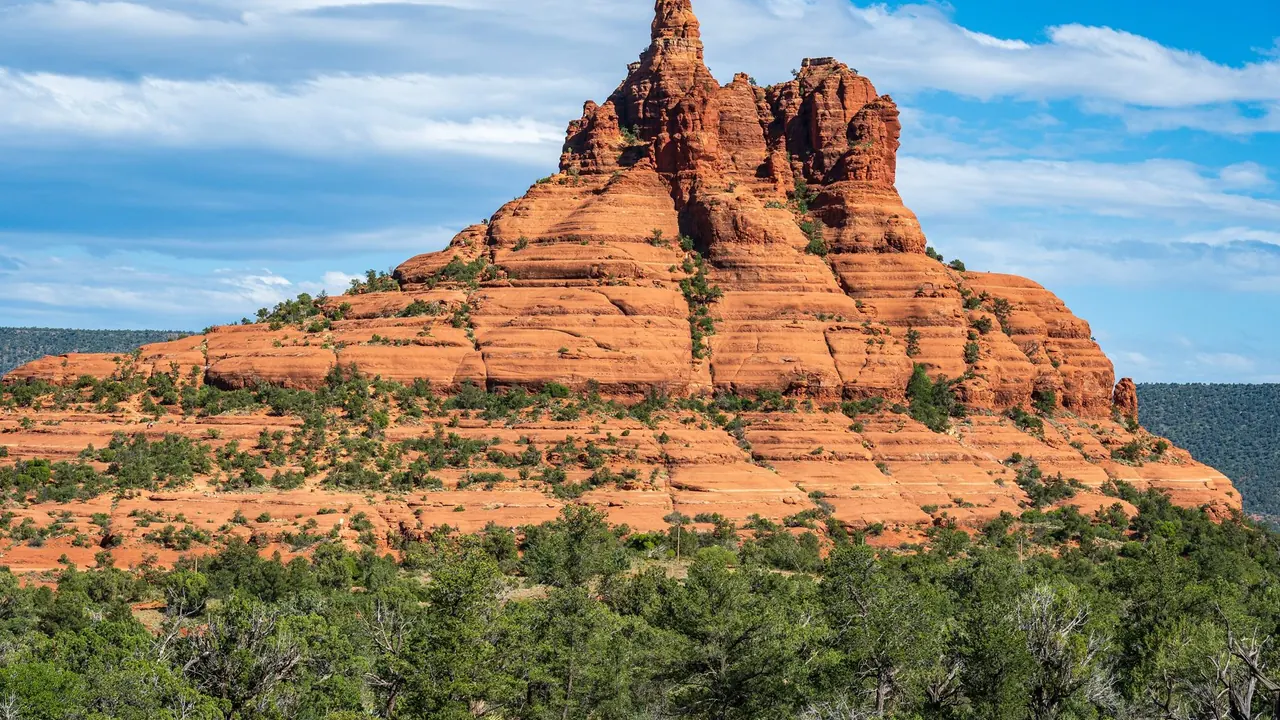
Choose Sedona if the landscape is the point of the trip. The red buttes rise at the edge of town, the trails and slickrock run right up to them, and resort spas, yoga and sunrise walks to the vortexes make it an easy retreat between hikes. There is little to see indoors and evenings are for stargazing rather than going out, so it rewards people who plan to spend their days outside.
Scoreboard
Twelve categories on one fixed scale from 0 to 100. The shaded stretch is the gap between the two.
Your match
Pick a travel style or drag the sliders, and both match scores follow your weighting.
Wins on culture and sights and live music and the arts with your weighting.
Wins on wellness and nature and the outdoors with your weighting.
What matters to you?
Category by category
What the scores mean for a trip.
Beaches & swimming
Neither town has a beach. In Santa Fe, swimming means a hotel pool, an hour's drive to Abiquiu Lake or a float on the Rio Grande, so getting in the water is a planned outing rather than a quick dip.
Sedona does better because Oak Creek runs close to town. The sandstone chute at Slide Rock and the deeper pools at Grasshopper Point and Red Rock Crossing make a cold, welcome break after a summer hike, though they fill up fast on hot weekends.
Food & drink
Santa Fe gives you a cuisine to explore, not just meals. New Mexican cooking, with red or green chile, blue corn, posole and carne adovada, is a tradition of its own. The Railyard farmers' market is among the oldest in the United States, and the town has a fine-dining tier that is unusual for its size.
In Sedona the view often matters more than what is on the plate: sunset tables on resort terraces, Southwestern menus and plenty for vegetarians. The Verde Valley tasting rooms nearby are its best card. Neither town offers much street food or international range.
Culture & sights
The gap here is wide. Santa Fe was founded as a colonial capital in 1610, and its adobe Plaza, the Palace of the Governors and the Loretto and San Miguel chapels are history you walk through. Behind them stand Museum Hill's folk art and Native American collections and the Georgia O'Keeffe Museum.
Sedona has the Chapel of the Holy Cross built into its butte, a small heritage museum and the Sinagua cliff dwellings at Palatki and Honanki out in the backcountry. That fills an afternoon or two, while Santa Fe needs two or three full days.
Nightlife
Both towns go to bed early, but Santa Fe offers a little more after dinner. There are rooftop bars for a margarita or mezcal as the sun sets over the Jemez Mountains, a few breweries around the Railyard and a livelier Plaza on summer evenings.
Sedona's brewpubs, wine bars and resort lounges are for a single drink, and the real entertainment after dark is the clear night sky. For a proper night out, Santa Fe also has Albuquerque an hour's drive away.
Nature & outdoors
Both sit in superb country, and Sedona's advantage is how close and how dramatic it is. Red sandstone buttes rise straight out of town, with Bell Rock and the walk up West Fork of Oak Creek close by. The slickrock singletrack is famous among mountain bikers, and the South Rim of the Grand Canyon is about two hours away.
Santa Fe's outdoors is more varied than spectacular. It has foothill trails into the Sangre de Cristo Mountains, golden aspens in autumn, the Pecos Wilderness and winter skiing less than an hour away, with Valles Caldera and the Rio Grande Gorge further out.
Day trips
Santa Fe has the richer surroundings. The High Road to Taos runs through Chimayo and Truchas to Taos Pueblo, and Bandelier's cliff dwellings, Los Alamos, Pecos and O'Keeffe's Ghost Ranch would fill many days. Several living pueblos also welcome visitors on feast days.
Sedona's outings are good but smaller. The choice includes the hillside mining town of Jerome, Montezuma Castle and Tuzigoot, the Verde Canyon Railroad and Flagstaff, and a few days cover most of them.
Good for families
Neither town is built for children, and both suit families who are happy outdoors more than those who need attractions. Santa Fe has a children's museum, the toys and miniatures in the folk art collection and the ladders at Bandelier, which work best for older children curious about history. The altitude can tire small ones for the first day or two.
Sedona keeps things simpler, with Slide Rock in summer, short trails around Bell Rock and jeep tours over the slickrock. Its hotels lean towards couples and spa guests.
Getting around
You will want a car in both towns, but Santa Fe's centre works on foot. The Plaza, the cathedral, Canyon Road and the Railyard are a short walk apart, and the Rail Runner reaches Albuquerque.
In Sedona, Uptown is the only walkable pocket. The rest of the town stretches along two highways that meet at the Y, and weekend traffic and full trailhead car parks are part of a stay.
Shopping & style
Both towns sell Western and Native American art, but Santa Fe is where serious buyers go. Its most distinctive purchase comes straight from the maker. Native silversmiths and potters lay out their work in the shade of the old palace on the Plaza, and strict rules on authenticity mean you know who made what you take home. Canyon Road and the Railyard add gallery after gallery, downtown dealers stock rugs, Pueblo pottery and cowboy boots, and in summer the Indian, Spanish and International Folk Art markets bring in buyers from across the country.
Sedona offers the same kind of work on a smaller scale, in the fountain courtyards of Tlaquepaque and the galleries along the main road. What it has that Santa Fe does not is its crystal and metaphysical shops, with stones, books and readings. Uptown is mostly souvenirs, and neither town suits a fashion trip. From Sedona, that means a drive to Phoenix.
Affordability
Santa Fe leaves more room to keep costs down, even though it is no bargain. Rooms along Cerrillos Road cost less than those around the Plaza, and gallery browsing and walks through the old centre are free. A hire car still adds to the bill.
Sedona costs more again, with its resorts and boutique lodges, jeep tours and spa treatments. Budget travellers often sleep in Cottonwood or Flagstaff and drive in, since the trails themselves cost little beyond a parking pass.
Live music & performing arts
Santa Fe is far ahead, especially in summer. The Santa Fe Opera then performs in its open-sided theatre as the sun sets over the desert, alongside a chamber music festival and the town's long flamenco tradition. The Lensic keeps a smaller programme going through the rest of the year.
Sedona offers occasional chamber concerts, local theatre and its film festival in late winter, plus flute players and acoustic sets in resorts and bars. It has no concert hall and no regular season.
Wellness & relaxation
Sedona is the retreat town of the two. Destination spas look out on the red canyons, yoga, meditation and breathwork sessions are easy to find, and quiet sunrise walks to the vortexes give a stay its rhythm, though treatments come at resort prices.
Santa Fe's strength is bathing, which Sedona lacks entirely. It has onsen-style outdoor tubs among the pines above town and the old mineral springs at Ojo Caliente an hour to the north. It also has plenty of spas and yoga studios for its size, but wellness is one theme among several here rather than the main reason to come.
When should you go?
Pick your month. The climate figures are measured averages, not a forecast.
Santa Fe in July
Sedona in July
Daytime high, °C
Rainfall in the month, mm
Where the figures come from
Santa Fe's station stands 199 m below the city centre, so the centre is likely a little cooler than the figures say.
Santa Fe has no rain gauge within 25 km of the centre, so its rainfall comes from a gridded climate dataset read at the city rather than from a gauge further away.
Sedona's station stands 153 m above the city centre, so the centre is likely a little warmer than the figures say.
Sedona has no rain gauge within 25 km of the centre, so its rainfall comes from a gridded climate dataset read at the city rather than from a gauge further away.
Temperature and rainfall are climate normals, averaged over the years shown. Santa Fe: 1991-2020 normals, Santa Fe / Cieneguilla (12.4 km from centre). Sedona: 2009-2025 (rainfall 1991-2020) normals, Sedona / West Sedona (1.3 km from centre).
At its altitude, Santa Fe has real seasons. Winters are cold, with daytime highs around 6°C in January, so the best walking weather runs from May to early June and again from September to October, when the aspens turn. June to August reaches about 31°C. July and August bring summer storms and are the wettest months at around 60mm each, while the rest of the year is very dry.
Sedona is warmer all year. Its winters are mild enough for hiking but noticeably wetter than Santa Fe's. From June to August highs of 33°C to 34°C mean walking only in the early morning, and the same late-summer storms arrive. Spring from March to May and autumn in October and November are its best seasons, and midsummer is the time for a cold dip in Oak Creek.
Which traveller are you?
On a culture and arts trip, Santa Fe is the clear choice. Four centuries of colonial history around the Plaza, Museum Hill, the O'Keeffe Museum and the galleries of Canyon Road fill several days, and the summer opera adds evenings Sedona cannot match.
For an outdoors trip, Sedona wins. Trails lead almost from your door to Cathedral Rock, Devil's Bridge and Boynton Canyon, and jeep roads run into the red-rock backcountry. Santa Fe has fine mountain and desert country too, but more of it needs a drive.
On a relaxing and wellness trip, Sedona is built for slowing down, with destination spas facing the canyons and yoga and meditation on every side. Santa Fe answers with onsen-style tubs and the Ojo Caliente springs, but both lie outside the centre.
Before you go
| Measure | Santa Fe | Sedona |
|---|---|---|
| Currency | US Dollar (USD) | US Dollar (USD) |
| Sockets | AB120 V, 60 Hz | AB120 V, 60 Hz |
| Driving side | Right | Right |
| Time zone | UTC-7, UTC-6 in summer | UTC-7 |
| Emergency number | 911 | 911 |
| Elevation | 2,134 m | 1,319 m |
| Main airport | Santa Fe Municipal Airport (SAF)12 km from centre5 non-stop destinations | Phoenix Sky Harbor International Airport (PHX)160 km from centre148 non-stop destinations |
| Public holidays this year | 13 days | 12 days |
By the numbers
| Measure | Santa Fe | Sedona |
|---|---|---|
| City population | 87,505 | 9,684 |
| People per km² | 645 | 195 |
| Museums within 10 km | 10 | 0 |
| UNESCO World Heritage sites within 50 km | 0 | 0 |
Where else could you go?
Every comparison below shares a destination with this one, so you can follow Santa Fe or Sedona somewhere new.