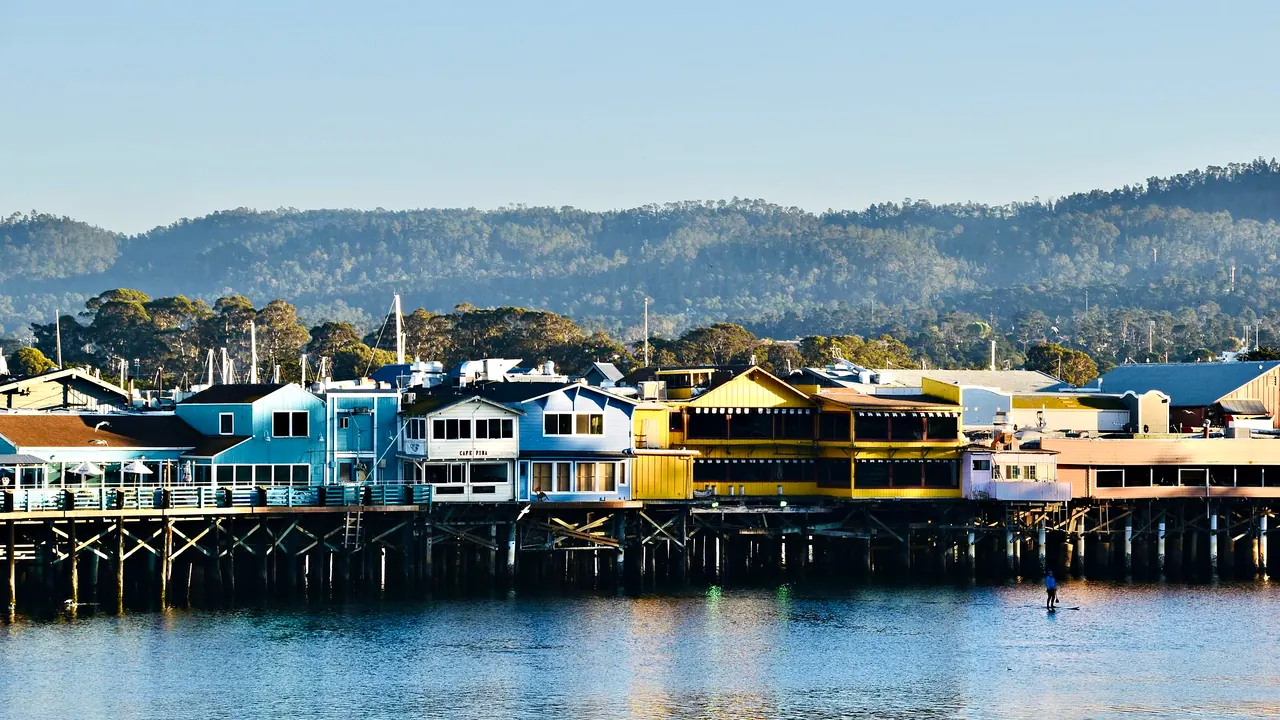
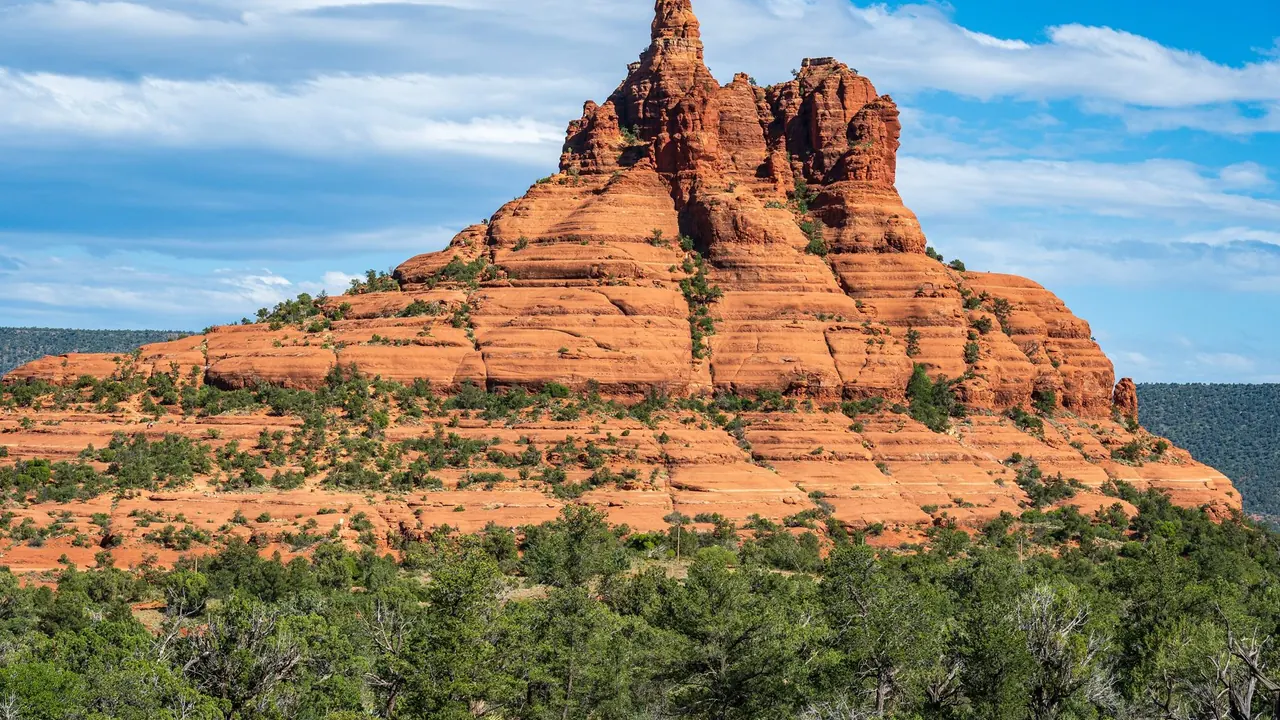
Photos: Monterey by Lesli Whitecotton, Pexels License; Sedona by dconvertini, CC BY-SA 2.0, cropped.
Monterey or Sedona?
Our verdict in twelve categories, each scored against the same fixed benchmark cities, and the climate month by month, so you can choose for your trip.
Choose Monterey for
- families
- culture and sights
- live music and the arts
Monterey suits travellers who want a gentle coastal stay with plenty to fill the days. The aquarium, the adobes of the old Spanish and Mexican capital, otters and whales seen from the waterfront, a flat trail linking the main sights and a good seafood dinner at the end of it make it the better pick for families and for anyone who likes some history with their scenery.
Choose Sedona for
- wellness
- nature and the outdoors
Sedona is for people who want the landscape and a slower pace to be the whole trip. Its red rock trails are even more striking than the Big Sur coast, and the town is built around spas, yoga and sunrise walks to the vortexes, with dark starry skies taking the place of evenings out. Expect to drive everywhere and to find little to do indoors.
Scoreboard
Twelve categories on one fixed scale from 0 to 100. The shaded stretch is the gap between the two.
Your match
Pick a travel style or drag the sliders, and both match scores follow your weighting.
Wins on families and culture and sights with your weighting.
Wins on wellness and nature and the outdoors with your weighting.
What matters to you?
Category by category
What the scores mean for a trip.
Beaches & swimming
Neither is a swimming destination, but Monterey at least has real beaches: the white sand and cypresses of Carmel Beach, the dunes at Asilomar and the long strand of Del Monte Beach. They are for walks and picnics, though, because the bay is cold and rip currents are common.
Sedona has no coast at all. Its version of a beach day is Oak Creek, sliding down the sandstone chute at Slide Rock or swimming in the pools at Grasshopper Point, which is fun after a hike but small and quickly crowded.
Food & drink
Monterey eats better, mainly because of what lies close by: squid, Dungeness crab and sand dabs from the bay, artichokes and greens from the Salinas Valley, and Pinot Noir from the Santa Lucia Highlands. Skip the chowder bowls on the wharf and look in Old Monterey, Pacific Grove and Carmel.
In Sedona the setting often matters more than the cooking. Menus lean Southwestern or health-minded, sunset terraces are the prize, and the Verde Valley tasting rooms give it a wine angle of its own.
Culture & sights
Monterey has much more history to walk through. The Custom House, Colton Hall and the Royal Presidio Chapel survive from its time as capital of Alta California, the Carmel Mission is ten minutes away, and Cannery Row keeps Steinbeck's canneries in outline.
Sedona's sights fit into an afternoon: the Chapel of the Holy Cross set into its butte, a small heritage museum and galleries of Western art. Its most memorable history lies in the Sinagua cliff dwellings at Palatki and Honanki, out in the red rock backcountry.
Nightlife
Monterey gives you more of an evening. Downtown's Alvarado Street has a short run of pubs, wine bars and brewpubs where students from the language and naval schools drink alongside visitors, and Cannery Row's hotel bars liven up a little at weekends. There are no clubs, though, and the town is mostly quiet well before midnight.
Sedona keeps even earlier hours. A drink means a resort lounge or an Uptown brewpub, most people turn in early before a dawn start on the trail, and the clear desert air makes stargazing the real entertainment after dark.
Nature & outdoors
Both are superb, but Sedona's red rock country edges ahead for anyone who travels to be outside. Trails lead straight from town to Cathedral Rock, Devil's Bridge and Boynton Canyon, the slickrock singletrack draws mountain bikers, Oak Creek Canyon climbs into pine forest, and the Grand Canyon is close enough for a day.
Monterey's strength is the sea. Whales come in over the submarine canyon, otters float in the kelp beside the shoreline path, and divers and kayakers head straight into the bay, while Point Lobos and Big Sur add cliff walks and redwoods to the south.
Day trips
The outings are about equal in number but very different in character. From Monterey they are seaside and literary: Carmel's cottages and galleries, Victorian Pacific Grove, Steinbeck's Salinas and the surf town of Santa Cruz, with San Francisco possible but a long day.
From Sedona they lead into the deep past and the mining West: Montezuma Castle and Tuzigoot within half an hour, the hillside copper town of Jerome, the Verde Canyon Railroad and Flagstaff's old railroad streets. In both places a few days cover the best of it.
Good for families
Monterey is much the better family base. The aquarium alone takes up a day, and children can also watch otters from the waterfront path, poke around the tide pools at Pacific Grove and run around Dennis the Menace Park, with the Santa Cruz rides under an hour away.
Sedona works for active families who enjoy Slide Rock, jeep tours and the gentler trails around Bell Rock. However, it has no attractions built for children, the summer heat and exposed trails need care, and many hotels are aimed at couples.
Getting around
Monterey's main sights are strung along a flat coastal trail, so the wharf, downtown, Cannery Row, the aquarium and Pacific Grove can all be reached on foot or by bike. You need a car only for Carmel Valley, Point Lobos and Big Sur.
In Sedona the car is needed almost from the start. The town spreads along two highways from the Y, only Uptown is walkable, trailhead parking fills early and the nearest major airport is in Phoenix, about two hours' drive away.
Shopping & style
Neither is a shopping destination, and the interest lies in art rather than fashion in both. Monterey's own shops sell taffy and otter souvenirs, so the real browsing is in Carmel's galleries and boutiques and Pacific Grove's antique shops. Sedona offers courtyard studios at Tlaquepaque, Native American jewellery, pottery and rugs, and a crystal and metaphysical trade you will not find on the peninsula.
Affordability
Both are costly. Monterey's rooms are priced for the Californian weekend market, while Sedona's are mostly resorts and boutique lodges. In Monterey the aquarium tickets add up, and in Sedona the jeep tours, balloon flights and spa bookings do.
The ways of saving differ. In Monterey you stay in Seaside or Marina, come midweek or in winter, and spend the days on the free coastal trail and at the tide pools. In Sedona you sleep in Cottonwood or Flagstaff, drive in for the day and hike trails that need only a parking pass.
Live music & performing arts
Monterey has a real place in music history. The jazz festival has been held every September since 1958, the 1967 Pop Festival took place on the same fairgrounds, and in summer the Carmel Bach Festival and the open-air Forest Theater add more, with the Golden State Theatre for touring acts.
Sedona offers occasional chamber concerts, local theatre and its film festival in late winter, with Native American flute players in resort lounges, and serious performances mean a drive to Flagstaff or Phoenix.
Wellness & relaxation
This is where Sedona leads by a long way. Its destination resorts have spas facing the canyons, there is a wide choice of yoga, meditation, breathwork and massage, and sunrise walks to the vortexes are part of a stay, all in clear, quiet desert air.
Monterey relaxes you through its pace instead: fog lifting off the bay, evening walks at Pacific Grove and a resort spa in the sunnier Carmel Valley or at Pebble Beach. Neither town has thermal baths.
When should you go?
Pick your month. The climate figures are measured averages, not a forecast.
Monterey in July
Sedona in July
Daytime high, °C
Rainfall in the month, mm
Where the figures come from
Sedona's station stands 153 m above the city centre, so the centre is likely a little warmer than the figures say.
Sedona has no rain gauge within 25 km of the centre, so its rainfall comes from a gridded climate dataset read at the city rather than from a gauge further away.
Temperature and rainfall are climate normals, averaged over the years shown. Monterey: 1991-2020 normals, Monterey / Pacific Grove Acres (5 km from centre). Sedona: 2009-2025 (rainfall 1991-2020) normals, Sedona / West Sedona (1.3 km from centre).
Monterey hardly changes through the year. Daytime highs stay in the high teens and low twenties, peaking around 23°C from August to October, which makes those months the most pleasant for walking the shore. Rain falls mainly from December to March, with about 86mm in January, and late spring through early autumn is almost completely dry. The sea never warms up, staying near 14°C even at its best, so it is never really swimming weather.
Sedona swings much more. Spring from March to May and autumn from September to November are ideal for hiking, warm without being harsh. June to August reaches about 34°C, so walking means very early starts, and July and August also bring summer storms with around 56mm of rain a month. Winters are cool and crisp, which makes Sedona the colder choice from December to February and the much hotter one in summer.
Which traveller are you?
On a family trip with children, Monterey is the easier choice. The aquarium, the tide pools, sea lions on the wharf and a playground by the lake fill several days, while Sedona offers little for children beyond creek swimming and jeep tours.
For a relaxing and wellness trip, Sedona is the clear winner. It has destination resort spas facing the canyons, yoga and meditation on every side and quiet sunrise walks to the vortexes, where Monterey offers a slow pace and a few resort spas.
On a culture and arts trip, Monterey gives you more. The adobes of California's first capital, the Carmel Mission, Steinbeck's Cannery Row and the September jazz festival outweigh Sedona's single chapel and the cliff dwellings out in its backcountry.
Before you go
| Measure | Monterey | Sedona |
|---|---|---|
| Currency | US Dollar (USD) | US Dollar (USD) |
| Sockets | AB120 V, 60 Hz | AB120 V, 60 Hz |
| Driving side | Right | Right |
| Time zone | UTC-8, UTC-7 in summer | UTC-7 |
| Emergency number | 911 | 911 |
| Elevation | 8 m | 1,319 m |
| Main airport | Mineta San Jose International Airport (SJC)85 km from centre38 non-stop destinations | Phoenix Sky Harbor International Airport (PHX)160 km from centre149 non-stop destinations |
| Public holidays this year | 13 days | 12 days |
By the numbers
| Measure | Monterey | Sedona |
|---|---|---|
| City population | 30,218 | 9,684 |
| People per km² | 991 | 195 |
| Museums within 10 km | 5 | 0 |
| UNESCO World Heritage sites within 50 km | 0 | 0 |
| Swim season, months above 21 °C | None | - |
Where else could you go?
Every comparison below shares a destination with this one, so you can follow Monterey or Sedona somewhere new.
- Flagstaffvs Sedona
- San Josevs Monterey
- San Franciscovs Monterey
- Scottsdalevs Sedona
- Phoenixvs Sedona
- Napavs Monterey