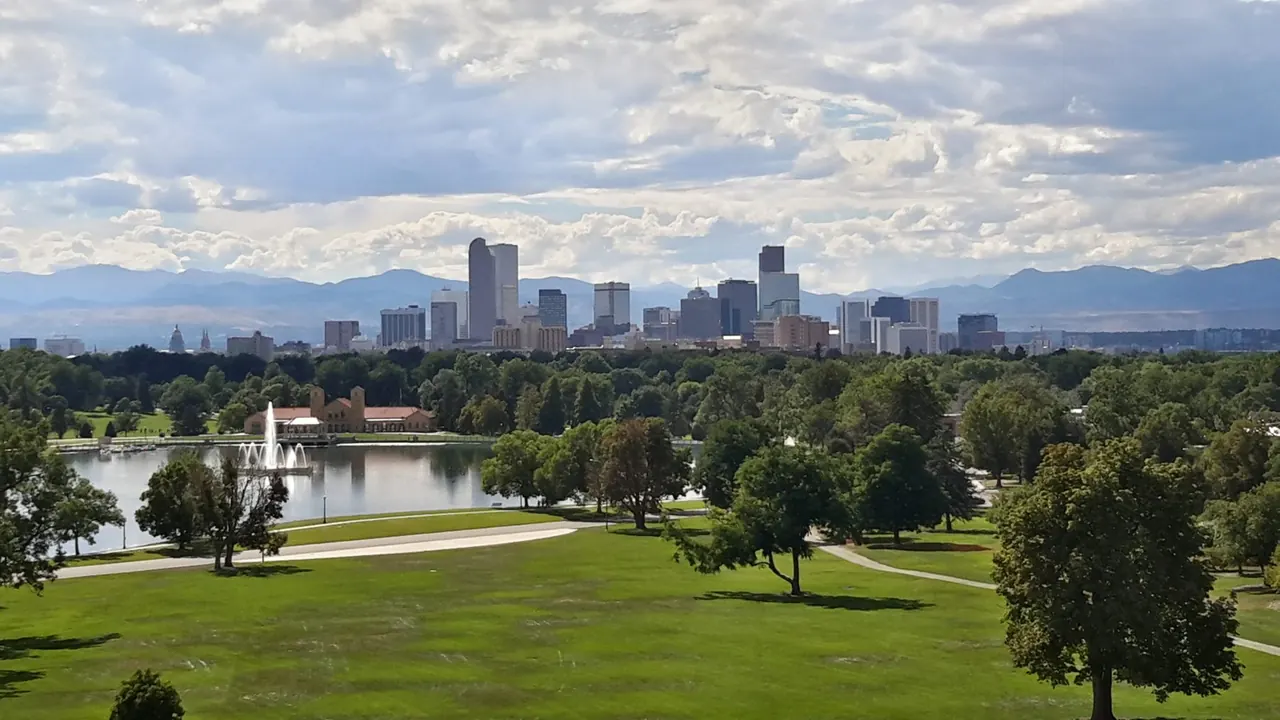
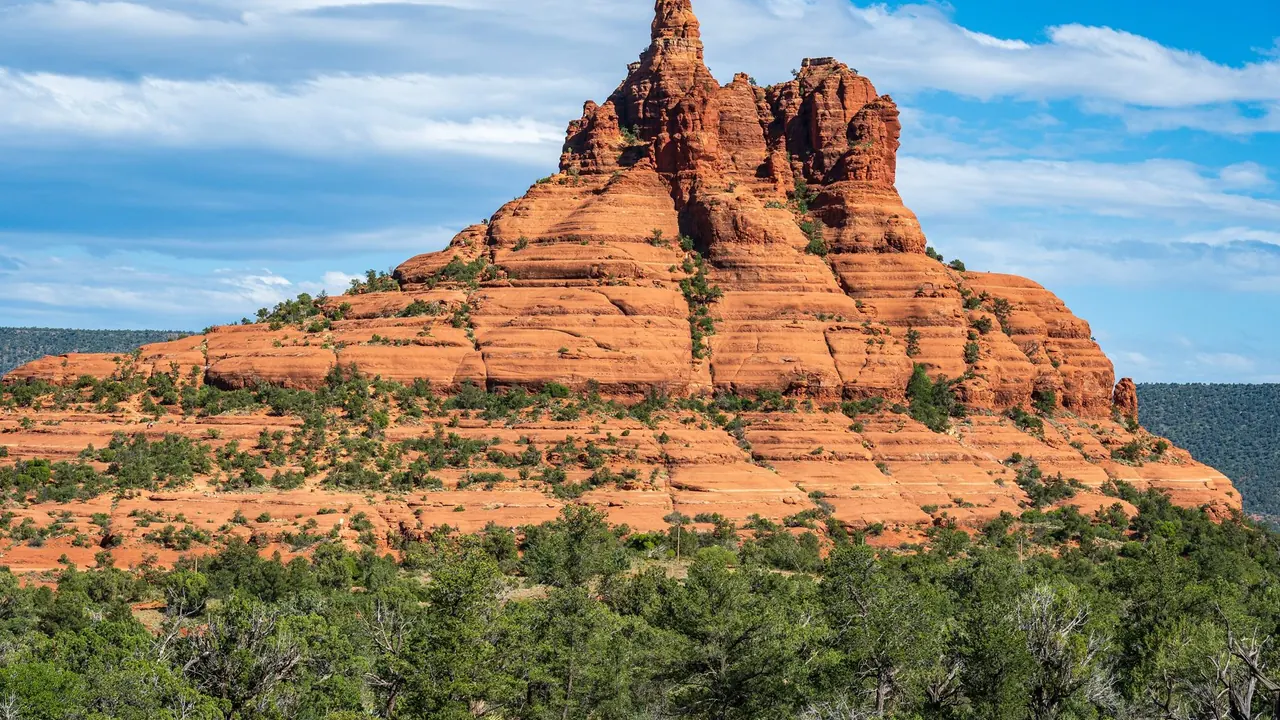
Photos: Denver by Zenhaus, CC BY-SA 4.0, cropped; Sedona by dconvertini, CC BY-SA 2.0, cropped.
Denver or Sedona?
Our verdict in twelve categories, each scored against the same fixed benchmark cities, and the climate month by month, so you can choose for your trip.
Choose Denver for
- live music and the arts
- nightlife
- families
Denver is the better base for a trip that mixes city life with mountains. It has a proper downtown with museums around Civic Center Park and breweries and bars for the evenings. Red Rocks and a full performing arts centre cover the shows, and there is enough for children to fill a week. The Rockies are on the horizon, so hikers and skiers give up little, and a stay costs less than in Sedona.
Choose Sedona for
- wellness
- beaches
- nature and the outdoors
Choose Sedona when the landscape and slowing down are the point. The red rock buttes rise at the edge of town and the trails reach right into them. The spas, yoga and sunrise walks to the vortexes make it a natural retreat. Couples and walkers who are happy with quiet evenings and dark skies will be content. Anyone after nightlife, culture or a varied table will run out of things to do within a few days.
Scoreboard
Twelve categories on one fixed scale from 0 to 100. The shaded stretch is the gap between the two.
Your match
Pick a travel style or drag the sliders, and both match scores follow your weighting.
Wins on live music and the arts and nightlife with your weighting.
Wins on wellness and beaches with your weighting.
What matters to you?
Category by category
What the scores mean for a trip.
Beaches & swimming
Neither place suits a swimming vacation, but Sedona's water makes more of an outing. Oak Creek runs past town. Riding the sandstone chute at Slide Rock or swimming in the pools below the cliffs at Red Rock Crossing is a cooling end to a hike in the warm months.
Denver's options are more ordinary: sandy beaches on the Cherry Creek and Chatfield reservoirs at the city's edge, outdoor public pools and hotel pools. In both places the natural water stays cold even in high summer.
Food & drink
Denver gives you far more to eat and drink. Its brewing culture fills the RiNo warehouses and the streets around Coors Field. The green chile, breakfast burritos and Vietnamese and Mexican cooking along Federal Boulevard reward a few days of exploring.
Sedona's choice is narrower: Southwestern resort menus, places for health-minded diners and terraces where the sunset matters as much as the plate. Its pleasant extra is the Verde Valley wine country nearby, a gentler kind of drinking than Denver's taprooms.
Culture & sights
Denver has a real city's worth of sights, if a young one. Around Civic Center Park are the Denver Art Museum, the Clyfford Still Museum, the gold-domed Capitol and History Colorado. The brick warehouses of LoDo add the old commercial city, and together they fill two or three days well.
Sedona has far less indoors. The Chapel of the Holy Cross, built into a red butte, is the highlight, with the Heritage Museum and plenty of galleries besides. Its most striking history lies outside town at the Sinagua cliff dwellings of Palatki and Honanki, older than anything Denver can show.
Nightlife
Of the two, only Denver offers a real night out. There are breweries and cocktail bars in RiNo, game-night crowds in LoDo and the dive bars of East Colfax, though clubs are few.
Sedona goes to bed early. A handful of brewpubs, wine bars and resort lounges serve a drink after dinner. Its real evening draw is the dark sky, clear enough for serious stargazing.
Nature & outdoors
Both are superb for the outdoors, and Sedona has the edge because the scenery starts where the town ends. Trails to Cathedral Rock, Devil's Bridge and Boynton Canyon, the slickrock bike routes and Oak Creek Canyon are minutes away, and the Grand Canyon's South Rim is about two hours' drive.
Denver's mountains are bigger but further off. Red Rocks and the Golden foothills are close, while the high peaks, Rocky Mountain National Park and the ski resorts take an hour or two by car. In return Denver offers what Sedona cannot: a proper ski season and alpine tundra on summits over 4,000m.
Day trips
The two are evenly matched for outings, but the destinations differ in kind. From Denver they are Western towns: Boulder under the Flatirons, Georgetown with its narrow-gauge railway, Manitou Springs and the ski town of Breckenridge, nearly all needing a car.
Sedona's strength is ancient sites, with Montezuma Castle and Tuzigoot within half an hour and Wupatki beyond Flagstaff. The mining town of Jerome and the Verde Canyon Railroad add variety. Its places are smaller and a few days cover them, while Denver's are spread over a wider area.
Good for families
Denver is far easier with children. City Park pairs the zoo with the Museum of Nature & Science and its dinosaurs. The Children's Museum, an aquarium and an amusement park sit together by the South Platte, so tired or rainy days are covered.
Sedona suits active families for a short stay. Slide Rock, the gentle paths around Bell Rock and jeep tours go down well, but little beyond that is built for children, and the summer heat and exposed trails need care. Many families fold it into a Grand Canyon trip.
Getting around
Denver is the easier place to manage on foot, at least in the centre. Its flat downtown puts LoDo, Union Station and the Civic Center museums within walking distance. A free shuttle runs along the 16th Street Mall, and a train links the airport with the centre.
In Sedona only Uptown is walkable. Trailheads, the chapel and the Verde Valley towns all mean driving, the shuttle reaches only some trailheads and parking fills early. Most visitors arrive by road from Phoenix, about two hours south.
Shopping & style
Denver has the broader range. Cherry Creek has a large upscale mall and blocks of boutiques, and South Broadway has vintage clothes and records. Its flagship outdoor-gear stores and Western wear, from boots to hats, are the real draw.
Sedona is narrower but more particular. The courtyards of Tlaquepaque and the galleries along the main road sell Western art and Native American jewellery, pottery and rugs. The crystal and metaphysical shops are part of the town's character, but for clothes or department stores visitors drive to Phoenix.
Affordability
Denver is the lighter of the two on a budget. Rooms along the light rail, taqueria and brewery meals and free parks and trails keep costs in hand, though the hired car adds up.
Sedona is mostly resorts and boutique lodges with resort-town restaurants. Extras such as jeep tours, balloon flights and spa treatments add up quickly. Budget travellers often sleep in Cottonwood or Flagstaff and drive in, leaning on trails that need only a parking pass.
Live music & performing arts
Denver is far ahead here. Red Rocks Amphitheatre puts summer concerts between giant sandstone monoliths. The Denver Center for the Performing Arts spreads over several blocks, with theatre, touring musicals, the Colorado Symphony, opera and ballet, and Five Points keeps its jazz rooms.
Sedona has occasional events rather than a season: chamber concerts, local theatre and the long-running film festival in late winter. Some resorts and bars host acoustic sets and Native American flute players. There is no concert hall, so anyone wanting a show drives to Flagstaff or Phoenix.
Wellness & relaxation
In Denver, wellness is something you add to a city stay rather than the reason for coming: a hotel spa or a yoga class, and sunny parks for an idle afternoon. Its real asset is natural hot water, which Sedona lacks. The historic mineral pools and steam caves of Idaho Springs are under an hour west, and larger hot-spring resorts deeper in the mountains make a restful overnight.
Sedona offers a different kind of wellness, centred on treatments rather than bathing. Breathwork, alternative therapies and resort spa programmes are joined by a spiritual side, with the vortexes drawing visitors who believe the rocks carry special energy. It is calmer and more absorbing than anything in Denver, but most of it is booked and paid for at resort prices.
When should you go?
Pick your month. The climate figures are measured averages, not a forecast.
Denver in July
Sedona in July
Daytime high, °C
Rainfall in the month, mm
Where the figures come from
Sedona's station stands 153 m above the city centre, so the centre is likely a little warmer than the figures say.
Sedona has no rain gauge within 25 km of the centre, so its rainfall comes from a gridded climate dataset read at the city rather than from a gauge further away.
Temperature and rainfall are climate normals, averaged over the years shown. Denver: 1991-2020 normals, Denver / Stapleton International, Co. (11.2 km from centre). Sedona: 2009-2025 (rainfall 1991-2020) normals, Sedona / West Sedona (1.3 km from centre).
Denver has four real seasons. Winters are cold but dry, with daytime highs around 7°C in December and January, fine for the ski resorts but brisk for walking the streets. Spring warms quickly. June to August bring hot days of up to 32°C, the season for the reservoir beaches and outdoor concerts, and May and July are the wettest months. September and early October are the most comfortable time for both the city and the trails.
Sedona is warmer and gentler in winter, with days around 12°C, though winter is also when much of its rain falls. Spring is its finest season: April and May are warm and fairly dry, and October is just as good. From June to August the heat climbs to 34°C, so hikes have to start early, and July and August bring summer storms. Broadly, Denver is at its best from summer into early autumn. Sedona suits spring, autumn and a mild winter break.
Which traveller are you?
For a culture and arts trip, Denver is the clear choice. You can spend mornings in a museum and evenings at a concert or play, with something to see on most nights. In Sedona the galleries and chapel take one afternoon, and shows are occasional.
On a relaxing and wellness trip, Sedona is the better pick. Here the whole stay can be the retreat, with days built around a treatment, an easy walk and an early night, and the landscape does much of the work. In Denver, a spa is an extra on a city break.
On a food and nightlife trip, Denver wins easily. A long weekend can go from a slow brewery lunch to dinner in another neighbourhood and a late bar, without running short of choices. In Sedona the evening winds down after dinner, and the stars are the main entertainment.
Before you go
| Measure | Denver | Sedona |
|---|---|---|
| Currency | US Dollar (USD) | US Dollar (USD) |
| Sockets | AB120 V, 60 Hz | AB120 V, 60 Hz |
| Driving side | Right | Right |
| Time zone | UTC-7, UTC-6 in summer | UTC-7 |
| Emergency number | 911 | 911 |
| Elevation | 1,609 m | 1,319 m |
| Main airport | Denver International Airport (DEN)30 km from centre231 non-stop destinations | Phoenix Sky Harbor International Airport (PHX)160 km from centre148 non-stop destinations |
| Public holidays this year | 12 days | 12 days |
By the numbers
| Measure | Denver | Sedona |
|---|---|---|
| City population | 715,522 | 9,684 |
| People per km² | 1,783 | 195 |
| Museums within 10 km | 26 | 0 |
| UNESCO World Heritage sites within 50 km | 0 | 0 |
Where else could you go?
Every comparison below shares a destination with this one, so you can follow Denver or Sedona somewhere new.