Photos: Santa Monica by Domenico Convertini, CC BY-SA 2.0, cropped; Sedona by dconvertini, CC BY-SA 2.0, cropped.
Santa Monica or Sedona?
Our verdict in twelve categories, each scored against the same fixed benchmark cities, and the climate month by month, so you can choose for your trip.
Choose Santa Monica for
- beaches
- nightlife
- getting around
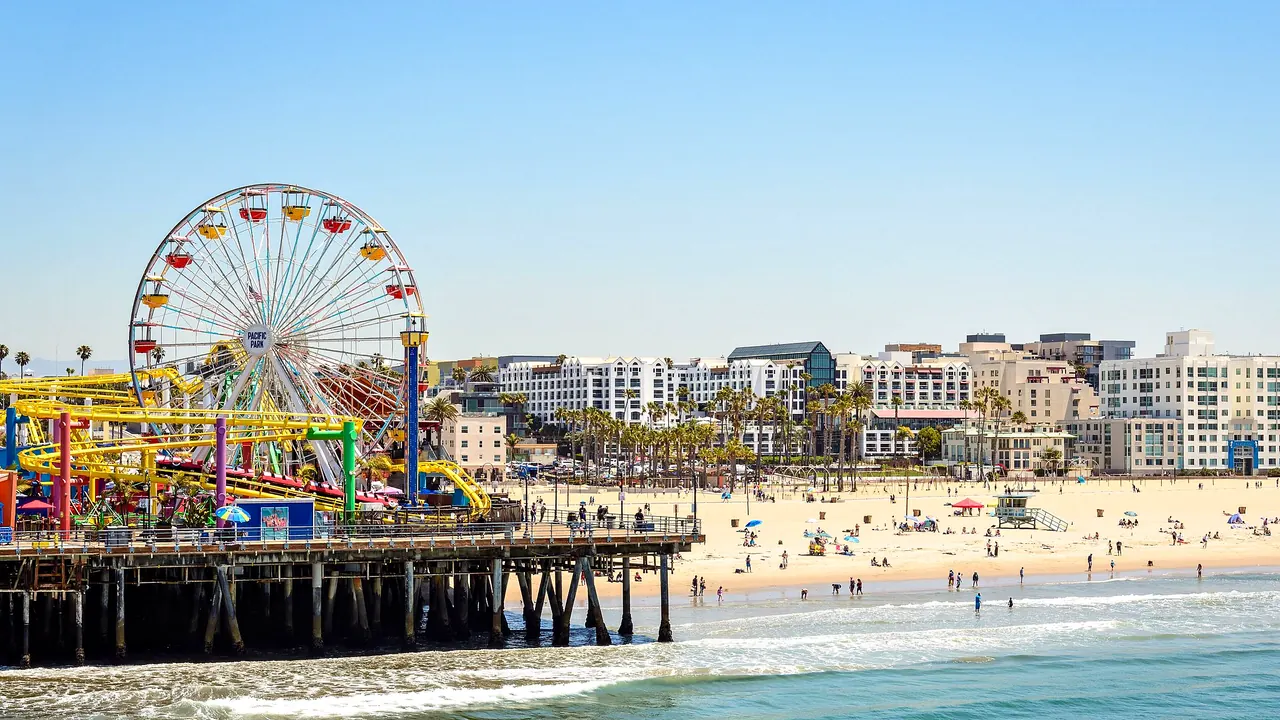
Santa Monica is the pick for a seaside city vacation. It has a long sandy beach, a shore that is easy with children, better places to eat and a few bars for the evening, and the rest of Los Angeles is close enough for museums, concerts or a bigger night out. It suits travellers who want the outdoors as one part of the trip rather than the whole of it.
Choose Sedona for
- wellness
- nature and the outdoors
- prices
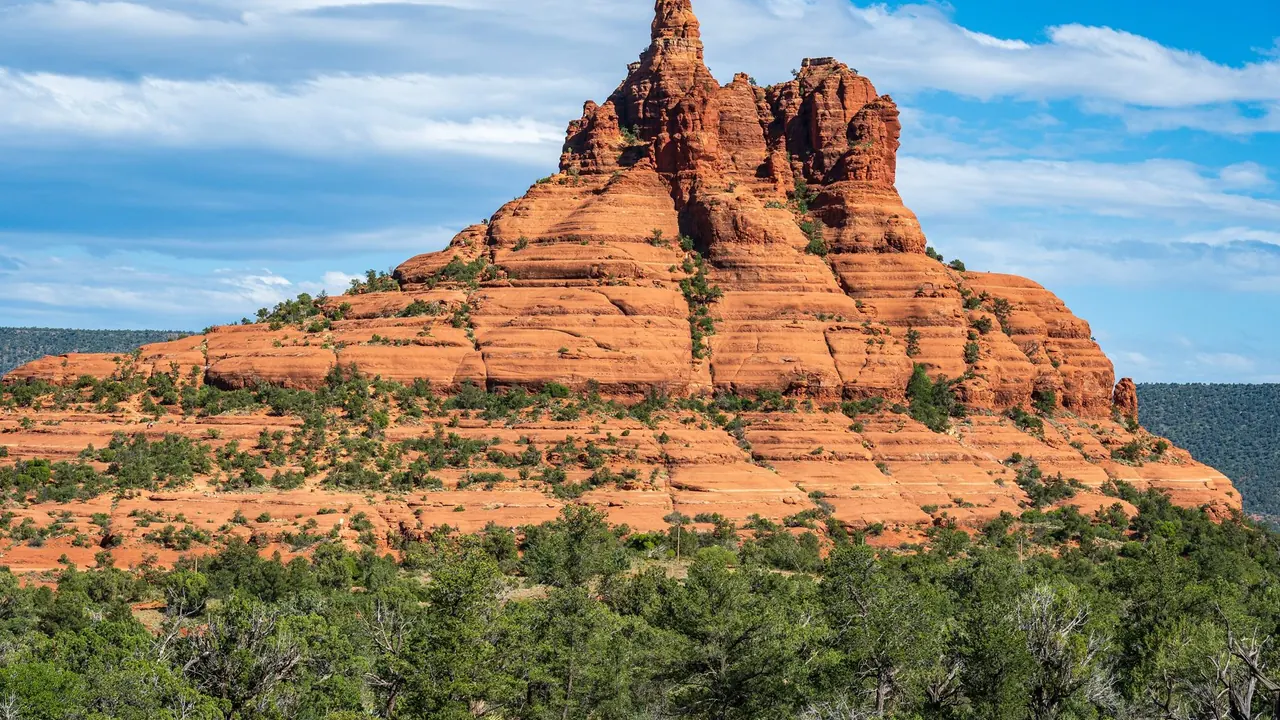
Choose Sedona if the landscape is the point. Its red rock buttes and canyon trails are on another level from anything in the Santa Monica Mountains, and the town runs on slow mornings, spa treatments, yoga and dark, quiet nights. It rewards hikers, mountain bikers and couples looking for a retreat. In return, evenings end early, there is little to see indoors and nearly everything means a drive.
Scoreboard
Twelve categories on one fixed scale from 0 to 100. The shaded stretch is the gap between the two.
Your match
Pick a travel style or drag the sliders, and both match scores follow your weighting.
Wins on beaches and nightlife with your weighting.
Wins on wellness and nature and the outdoors with your weighting.
What matters to you?
Category by category
What the scores mean for a trip.
Beaches & swimming
This is where the two differ most. Santa Monica has a wide band of pale sand the length of the town, with lifeguard towers, the pier in the middle, and more scenic, quieter coves at Zuma, El Matador and Point Dume to the north. The Pacific is cool, though, and many people wade rather than swim.
Sedona is high desert with no coast at all. Swimming there means Oak Creek: sliding down the sandstone chute at Slide Rock, or dropping into the deeper pools at Grasshopper Point and Red Rock Crossing. The water is cold and welcome after a hike, but the spots are small and fill up on hot weekends.
Food & drink
Santa Monica eats better and with more variety. The Wednesday farmers market feeds its seasonal Californian cooking, and you will find good seafood, polished brunch and solid Italian and Japanese kitchens along Main Street and Montana Avenue, with more casual places over the line in Venice. What it lacks is the cheap immigrant food of eastern Los Angeles.
Sedona's dining is narrower: resort terraces facing the red rocks, Southwestern plates of chilli, corn and grilled meat, and plenty for vegetarians. The choice runs out after a few good meals, although tasting rooms in the Verde Valley add wine to the trip.
Culture & sights
Neither is a sightseeing town, but Santa Monica has more within reach. The pier and its Route 66 sign, the galleries at Bergamot Station and the Art Deco buildings near the ocean fill an afternoon. The Getty Center and the Getty Villa, both a short drive away, add serious European art and ancient antiquities.
Sedona's sights in town are the Chapel of the Holy Cross, built into its butte, a heritage museum and many galleries of Western and Native American work. Its most memorable history is out in the backcountry: the Sinagua cliff dwellings at Palatki and Honanki and the petroglyphs at V Bar V.
Nightlife
Santa Monica offers a modest evening of wine bars and rooftop drinks around the Third Street Promenade, pubs on Main Street and a looser crowd in Venice next door, though anyone who wants clubs has to go to Hollywood. Sedona barely has a night out. There are a few brewpubs and resort lounges, the town goes to bed early because hikers are up at dawn, and the main evening show is a sky dark enough for stargazing.
Nature & outdoors
Sedona has the more remarkable landscape. Red sandstone buttes and spires rise all around the town, trails lead to Cathedral Rock and Devil's Bridge and up West Fork, the slickrock draws mountain bikers, and the South Rim of the Grand Canyon is about two hours north. Summer heat means early starts.
Santa Monica is a strong outdoor base of a different kind, with mountains on one side and the sea on the other. Trails in Temescal Canyon and Topanga climb through chaparral to views over the bay. The 35km beach path is made for cycling, and there are surfing lessons, winter whale watching and dolphins seen from the shore.
Day trips
Santa Monica's day trips cover more ground. You can follow the Malibu coast, drive about two hours north to Santa Barbara's mission and wine country, head south to Laguna Beach or take the ferry to Catalina. Within Los Angeles there are the Huntington Library and Hollywood. Traffic decides how much you see.
Sedona's outings are smaller and lean towards history. Jerome's old mining-town streets, the Verde Canyon Railroad from Clarkdale, Montezuma Castle and Tuzigoot are all an easy drive across the Verde Valley. Flagstaff and Walnut Canyon are further out to the north. A few days covers most of them.
Good for families
Santa Monica is the easier place with children. It has a lifeguarded beach, the Ferris wheel, roller coaster, carousel and small aquarium at the pier, and a flat path for family bike rides, all in a compact town. Theme parks are a long drive away, and the visible homelessness downtown bothers some parents.
Sedona works for outdoor families for a few days. Slide Rock, the lower Bell Rock paths and jeep tours go down well with children. Beyond those there is little for them, hotels are aimed at couples, and summer heat on exposed trails calls for care.
Getting around
In Santa Monica the centre is walkable, the beach path suits bikes, the blue buses cover the rest of town and the E Line light rail runs to downtown Los Angeles. You still need a car or ride-hailing for the Getty, Malibu and Hollywood.
Sedona is much harder without a car. Only Uptown is walkable, and a shuttle serves just a few of the busiest trailheads. Most visitors fly into Phoenix, about two hours away, and then drive everywhere, between parts of a spread-out town and to trailheads where parking fills early.
Shopping & style
Santa Monica has proper shopping streets. There are chains and flagships on the Third Street Promenade, boutiques and children's shops on Montana Avenue, surf shops on Main Street and design-led stores on Abbot Kinney in Venice, and Rodeo Drive is a drive away for luxury labels.
Sedona's shopping is specialist rather than broad. The courtyards of Tlaquepaque and the galleries along the main road sell Western art and Native American jewellery, pottery and rugs, and the crystal and metaphysical shops are a draw of their own. There is no fashion shopping.
Affordability
Both are expensive, so the real difference is where the money goes. In Santa Monica it goes on ocean-view hotels, restaurant bills once tax and tip are added, and parking or car hire. Free beaches, the bike path and cheap buses and light rail soften the cost.
In Sedona the costs are resort rooms, especially in spring and autumn, plus paid extras such as jeep tours, balloon flights and spa treatments. Trails cost little beyond a parking pass, and staying in Cottonwood or Flagstaff brings room costs down.
Live music & performing arts
Santa Monica has more for an evening out. The Broad Stage puts on chamber music, dance and theatre, there is a long-standing folk and acoustic scene in small rooms, and the pier hosts free concerts in summer. Beyond it, Los Angeles has the Philharmonic at Walt Disney Concert Hall and the Hollywood Bowl, though each is a long drive.
Sedona has occasional events rather than a season: a few chamber concerts, local theatre, the Sedona International Film Festival in late winter, and acoustic or Native American flute sets in resorts and bars.
Wellness & relaxation
Sedona is built for this. Destination resorts set their spas against the red canyons, yoga, meditation, breathwork and massage are offered all over town, and sunrise walks to the vortexes set a slow, quiet rhythm under very dark night skies.
Santa Monica's version is more active: yoga on the sand, juice bars, runs along the ocean and polished hotel spas, with sunset over the bay as the daily pause. Neither town has hot springs or a bathing culture.
When should you go?
Pick your month. The climate figures are measured averages, not a forecast.
Santa Monica in July
Sedona in July
Daytime high, °C
Rainfall in the month, mm
Where the figures come from
Sedona's station stands 153 m above the city centre, so the centre is likely a little warmer than the figures say.
Sedona has no rain gauge within 25 km of the centre, so its rainfall comes from a gridded climate dataset read at the city rather than from a gauge further away.
Temperature and rainfall are climate normals, averaged over the years shown. Santa Monica: 1991-2020 normals, Los Angeles Airport (13.4 km from centre). Sedona: 2009-2025 (rainfall 1991-2020) normals, Sedona / West Sedona (1.3 km from centre).
The weather in Santa Monica changes little through the year. Days stay mild from winter through autumn, and most of the rain falls between December and March, with February the wettest month at about 76mm. From late spring to early autumn it is almost completely dry. The sea is what limits the beach. It only warms to about 20°C from July to September, so late summer is the time to swim, and early summer mornings are often grey until the cloud burns off.
Sedona's weather changes much more through the year. Midsummer highs reach 34°C, so walks have to start early, and July and August bring a second wet season, with about 56mm in August. Winter days drop to around 12°C and the air is crisp. April, May and October are the best months for walking. Santa Monica is warm and mostly dry in those months too, so either city works then.
Which traveller are you?
For a beach and sun trip, Santa Monica is the only real choice. It has a broad, lifeguarded sandy shore with the Malibu coves just up the coast. Sedona's swimming is limited to cold creek pools at Slide Rock and Grasshopper Point.
On a relaxing and wellness trip, Sedona is the clear winner. Destination spas look out on the red rock, yoga, meditation and massage are everywhere, and sunrise walks to the vortexes set the pace. Santa Monica offers beach yoga and hotel spas, but it still feels like a city.
On a family trip with children, Santa Monica is far easier. The pier has rides, a carousel and a small aquarium, playgrounds line the sand and the flat path suits bikes. Sedona has Slide Rock and jeep tours, but little else made for children.
Before you go
| Measure | Santa Monica | Sedona |
|---|---|---|
| Currency | US Dollar (USD) | US Dollar (USD) |
| Sockets | AB120 V, 60 Hz | AB120 V, 60 Hz |
| Driving side | Right | Right |
| Time zone | UTC-8, UTC-7 in summer | UTC-7 |
| Emergency number | 911 | 911 |
| Elevation | 32 m | 1,319 m |
| Main airport | Los Angeles International Airport (LAX)11 km from centre177 non-stop destinations | Phoenix Sky Harbor International Airport (PHX)160 km from centre149 non-stop destinations |
| Public holidays this year | 13 days | 12 days |
By the numbers
| Measure | Santa Monica | Sedona |
|---|---|---|
| City population | 93,076 | 9,684 |
| People per km² | 4,270 | 195 |
| Museums within 10 km | 19 | 0 |
| UNESCO World Heritage sites within 50 km | 1 | 0 |
| Swim season, months above 21 °C | None | - |
Where else could you go?
Every comparison below shares a destination with this one, so you can follow Santa Monica or Sedona somewhere new.