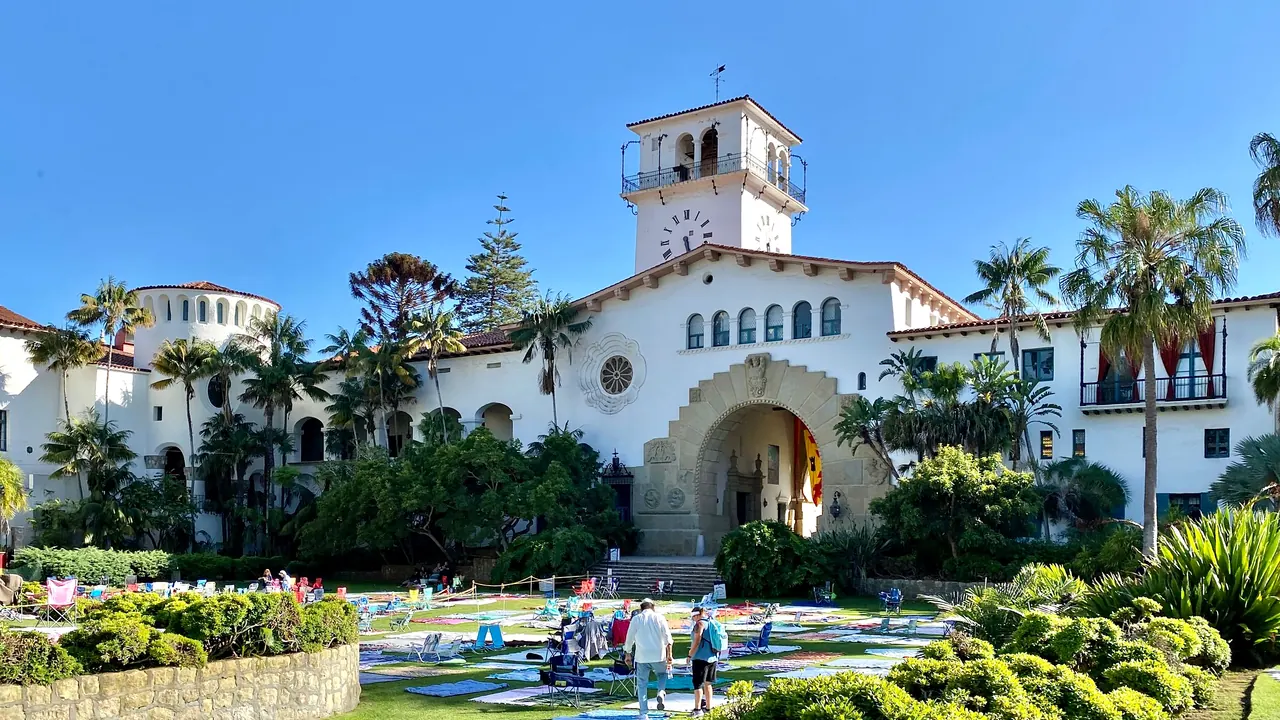
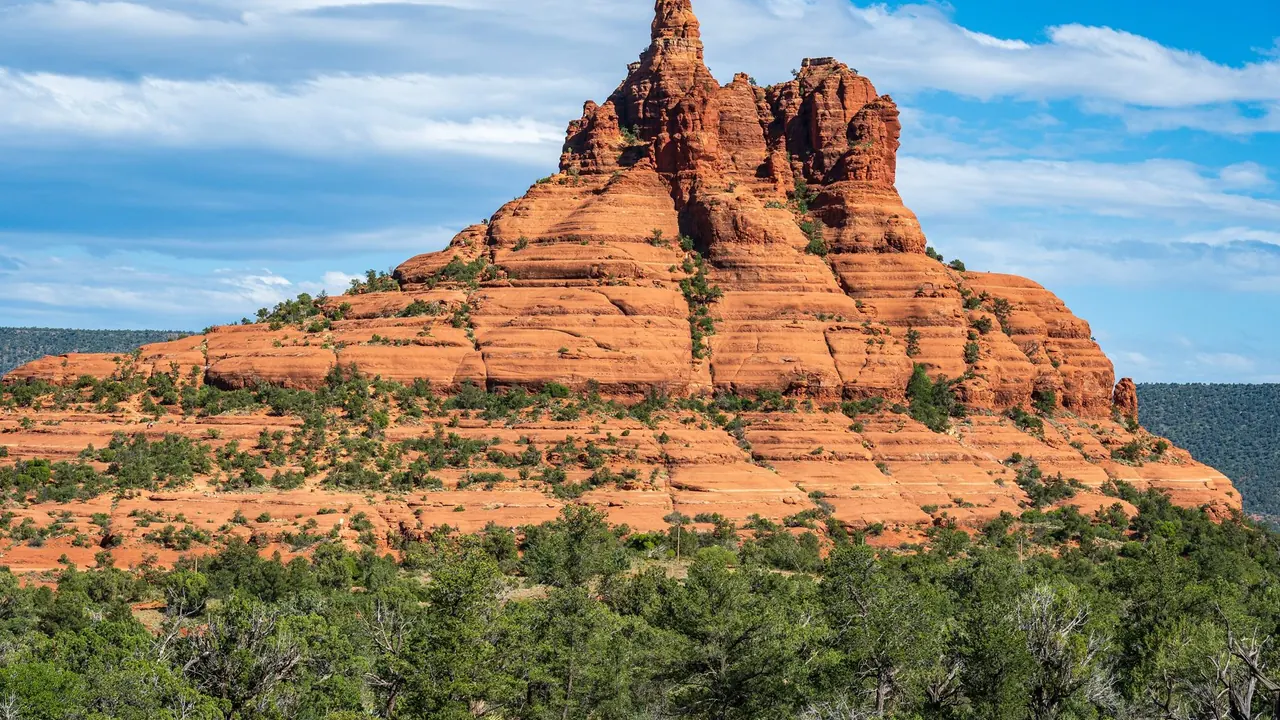
Photos: Santa Barbara by Warren LeMay, CC BY-SA 2.0, cropped; Sedona by dconvertini, CC BY-SA 2.0, cropped.
Santa Barbara or Sedona?
Our verdict in twelve categories, each scored against the same fixed benchmark cities, and the climate month by month, so you can choose for your trip.
Choose Santa Barbara for
- beaches
- live music and the arts
- food and drink
Santa Barbara suits travellers who want a rounded coastal town: mild sea air, a walkable Spanish Colonial centre, wine and seafood at dinner, a proper theatre or concert in the evening and a beach within reach of most hotels. It is the easier pick for families, for anyone arriving without a car, and for couples who want the mountains and the sea in the same stay.
Choose Sedona for
- wellness
- nature and the outdoors
- prices
Sedona is for people who come for the land itself. The red rock buttes, canyon trails and slickrock rides are among the finest in the country, and the town is built around slow mornings, spa treatments, meditation and dark, silent nights. Pick it for a hiking or retreat vacation, ideally as part of a longer drive through northern Arizona, and accept that evenings, museums and restaurants count for little here.
Scoreboard
Twelve categories on one fixed scale from 0 to 100. The shaded stretch is the gap between the two.
Your match
Pick a travel style or drag the sliders, and both match scores follow your weighting.
Wins on beaches and live music and the arts with your weighting.
Wins on wellness and nature and the outdoors with your weighting.
What matters to you?
Category by category
What the scores mean for a trip.
Beaches & swimming
Santa Barbara has an actual coastline, and that settles it. East and West Beach lie on either side of Stearns Wharf, Arroyo Burro and Leadbetter are a short drive west, and Carpinteria's long, shallow beach is ideal for small children. The cool water keeps most swims brief.
Sedona is high desert, and its swimming is Oak Creek: the sandstone chute at Slide Rock and deeper holes at Grasshopper Point and Red Rock Crossing. They are cold, small and crowded on hot weekends, a break during a day of hiking rather than a beach day.
Food & drink
Santa Barbara eats noticeably better. Spot prawns and sea urchin come off the harbour boats, the farmers' markets are superb, and you can walk between tasting rooms in the Funk Zone pouring Santa Rita Hills pinot noir. The taquerias of Milpas Street give it an honest, everyday side as well.
Sedona's kitchens lean on the view: resort terraces facing the red rock, Southwestern plates of chilli and grilled meat, and plenty for vegetarians. The choice runs out after a few good meals, and the hearty breakfast before a hike is the meal it does best. Verde Valley tasting rooms add some interest.
Culture & sights
Santa Barbara's main sight is its centre: whitewashed stucco and red tile rebuilt after the 1925 earthquake, the County Courthouse with its clock tower view, the Old Mission above town and the Presidio. Add the art and natural history museums and you have two or three full days.
Sedona's sights fit into an afternoon. The Chapel of the Holy Cross, set into a butte, is the highlight, and the Sinagua cliff dwellings at Palatki and Honanki are older than anything in Santa Barbara but sit out in the backcountry. Most of the town's galleries are commercial rather than museums.
Nightlife
Neither is a party town, but Santa Barbara at least has an evening. Funk Zone breweries and tasting rooms fill up after work, and lower State Street has bars and a few small dance floors where students gather at weekends.
In Sedona, a brewpub or a resort lounge after dinner is about all there is, and the town goes to bed early because hikers set off at dawn. The best thing to do after dark is look up at a sky dark enough for serious stargazing.
Nature & outdoors
Both towns sit at the foot of great walking country, but Sedona's is the more extraordinary. Trails lead straight to Cathedral Rock, Bell Rock, Devil's Bridge and Boynton Canyon, the slickrock singletrack draws mountain bikers from far away, and Oak Creek Canyon and the Grand Canyon's South Rim extend the range.
Santa Barbara's strength is variety rather than spectacle. Canyon trails such as Rattlesnake and Seven Falls climb the Santa Ynez Mountains to views over the channel, and the sea adds whale watching, kayaking, the surf at Rincon and boats to the Channel Islands, none of which Sedona can offer.
Day trips
The outings are about equally good, and both regions lead with wine. From Santa Barbara the drive over the mountains to the Santa Ynez Valley takes in tasting rooms, Danish Solvang and the restored mission at La Purisima, with Ojai and Ventura as quieter extras.
Sedona's outings lean more on history and landscape. The mining town of Jerome on its mountainside, the cliff dwelling at Montezuma Castle, the Tuzigoot pueblo and the Verde Canyon Railroad through a roadless canyon are all close, and Flagstaff opens up Walnut Canyon and Wupatki beyond.
Good for families
Santa Barbara is far easier with children. The small hillside zoo, the touch tanks at the Sea Center on the wharf, the MOXI science museum and the planetarium give them plenty for rainy or tired days, and Carpinteria's shallow water is safe for little ones.
Sedona works for active families who enjoy Slide Rock, jeep tours and short trails, but there is little made for children beyond that, and summer heat and exposed paths need care. It suits a stop on a Grand Canyon road trip better than a long family base.
Getting around
In Santa Barbara you can manage without a car for the core of a stay. State Street runs flat from the centre to the sea, a shoreline path links the wharf, harbour and East Beach, buses and a downtown shuttle cover the middle, and the coastal train stops near the beach. The wine country and outlying beaches still mean driving.
Sedona is spread along two highways meeting at the Y, and only Uptown is walkable. Trailheads, the chapel and every day trip need a car, weekend traffic and full trailhead car parks are common, and the journey up from Phoenix takes about two hours.
Shopping & style
Santa Barbara gives you more variety: chains and independents on State Street, boutiques and galleries around the fountain courtyards of La Arcada, upmarket fashion in Montecito and design shops in the Funk Zone. Wine and market produce are the best things to take home.
Sedona's shopping is narrower but more distinctive. Tlaquepaque's courtyards and the galleries along the main road sell Western art and Native American jewellery, pottery and rugs, and the crystal and metaphysical shops are part of the town's character. There is no fashion shopping at all.
Affordability
Both are costly places to stay, with little to choose between them. Santa Barbara's beachfront and Montecito rooms are among the dearest on the coast, though taquerias, farmers' markets and free beaches and hikes help, as does staying in Goleta or Ventura.
Sedona charges resort rates, especially in spring and autumn, and jeep tours, balloon flights and spa treatments add up quickly. Its relief is the trails, which need little more than a parking pass, and cheaper beds in Cottonwood or Flagstaff.
Live music & performing arts
Santa Barbara has a genuine stage life for a town of its size. The restored Granada hosts the local symphony, opera and ballet, the historic Lobero has chamber music and jazz, the Santa Barbara Bowl brings major touring bands into a canyon amphitheatre, and the Music Academy of the West fills summer with concerts.
Sedona has no concert hall or theatre season. Its calendar is a few chamber concerts, local theatre, acoustic sets and Native American flute in resort bars, and its long-running film festival in late winter.
Wellness & relaxation
Sedona is built for this kind of trip. Destination resorts with spas facing the canyons, yoga, meditation, breathwork and alternative therapies are everywhere, and sunrise walks to the vortexes are a local ritual. Treatments are expensive, and there are no thermal baths.
Santa Barbara is restful mainly because of its pace and mild weather. It has resort spas in Montecito and many yoga studios, plus a hike up to small hot pools in the hills. For a dedicated retreat, people there usually drive to the Ojai Valley.
When should you go?
Pick your month. The climate figures are measured averages, not a forecast.
Santa Barbara in July
Sedona in July
Daytime high, °C
Rainfall in the month, mm
Where the figures come from
Sedona's station stands 153 m above the city centre, so the centre is likely a little warmer than the figures say.
Sedona has no rain gauge within 25 km of the centre, so its rainfall comes from a gridded climate dataset read at the city rather than from a gauge further away.
Temperature and rainfall are climate normals, averaged over the years shown. Santa Barbara: 1991-2020 normals, Santa Barbara / La Patera (11.7 km from centre). Sedona: 2009-2025 (rainfall 1991-2020) normals, Sedona / West Sedona (1.3 km from centre).
Santa Barbara barely changes through the year. Daytime highs stay in the high teens through winter and reach about 24°C from July to September, which is the beach season, although the sea never gets far beyond 18°C and a wetsuit helps. Rain falls almost entirely between December and March, with January the wettest at about 99mm, while the summer months are practically dry. Walking the town is comfortable in any month.
Sedona swings much harder. Spring and autumn are its best seasons, with April and October warm and dry enough for long hikes. From June to August highs reach the low to mid 30s, so walking means dawn starts, and July and August bring summer storms with more rain than any other month. Winter is crisp, around 12°C in January, and fine for shorter walks among the red rock if you dress for cold mornings.
Which traveller are you?
On a beach and sun trip, Santa Barbara is the only real choice. It has sheltered sandy beaches in town and calm, shallow ones nearby, while Sedona offers creek pools and a natural rock slide, pleasant after a hike but no substitute for a coast.
For a culture and arts trip, Santa Barbara wins clearly. The Mission, the Courthouse and a whole rebuilt Spanish Colonial centre sit alongside a symphony, opera and ballet at the Granada. Sedona has a fine chapel, galleries and ancient cliff dwellings, but no stage season.
On a relaxing and wellness trip, Sedona is the stronger retreat. Its destination resorts, yoga and meditation sessions, massage and sunrise walks to the vortexes form a whole culture of slowing down. Santa Barbara is restful in a gentler way, and many visitors there drive to Ojai for the same.
Before you go
| Measure | Santa Barbara | Sedona |
|---|---|---|
| Currency | US Dollar (USD) | US Dollar (USD) |
| Sockets | AB120 V, 60 Hz | AB120 V, 60 Hz |
| Driving side | Right | Right |
| Time zone | UTC-8, UTC-7 in summer | UTC-7 |
| Emergency number | 911 | 911 |
| Elevation | 15 m | 1,319 m |
| Main airport | Santa Barbara Municipal Airport (SBA)12 km from centre13 non-stop destinations | Phoenix Sky Harbor International Airport (PHX)160 km from centre149 non-stop destinations |
| Public holidays this year | 13 days | 12 days |
By the numbers
| Measure | Santa Barbara | Sedona |
|---|---|---|
| City population | 88,665 | 9,684 |
| People per km² | 816 | 195 |
| Museums within 10 km | 10 | 0 |
| UNESCO World Heritage sites within 50 km | 0 | 0 |
| Swim season, months above 21 °C | None | - |
Where else could you go?
Every comparison below shares a destination with this one, so you can follow Santa Barbara or Sedona somewhere new.