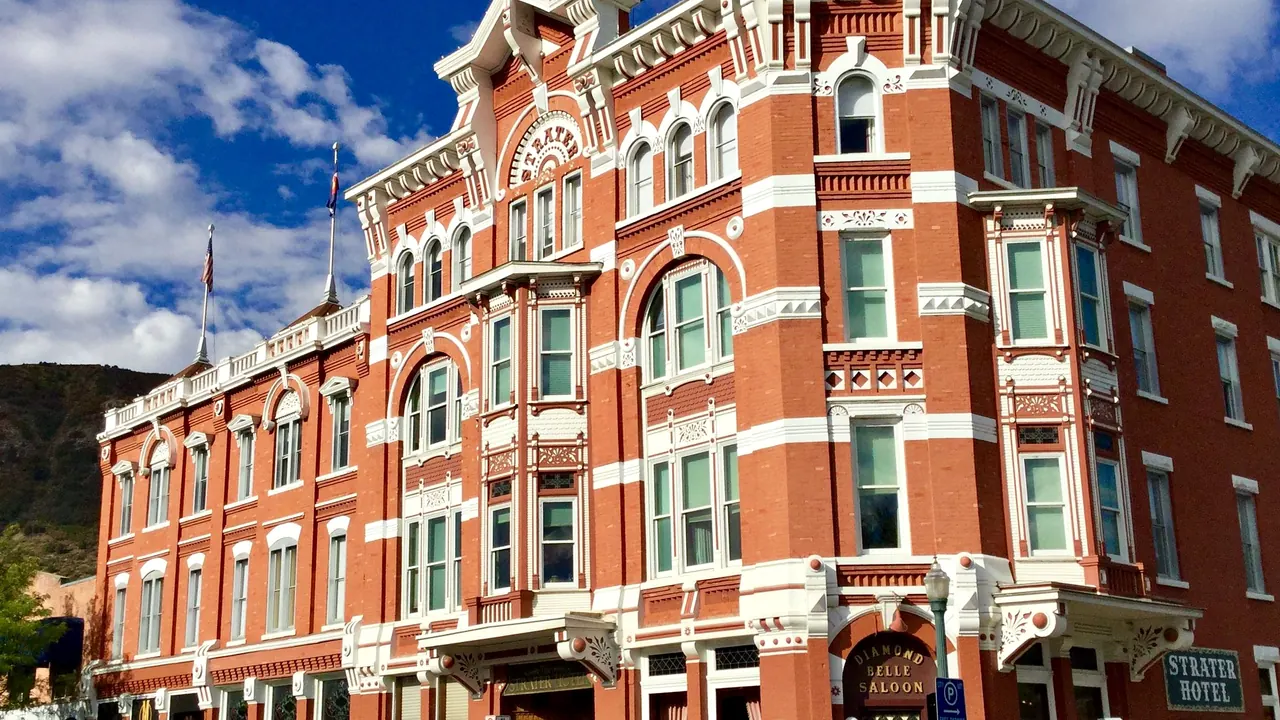
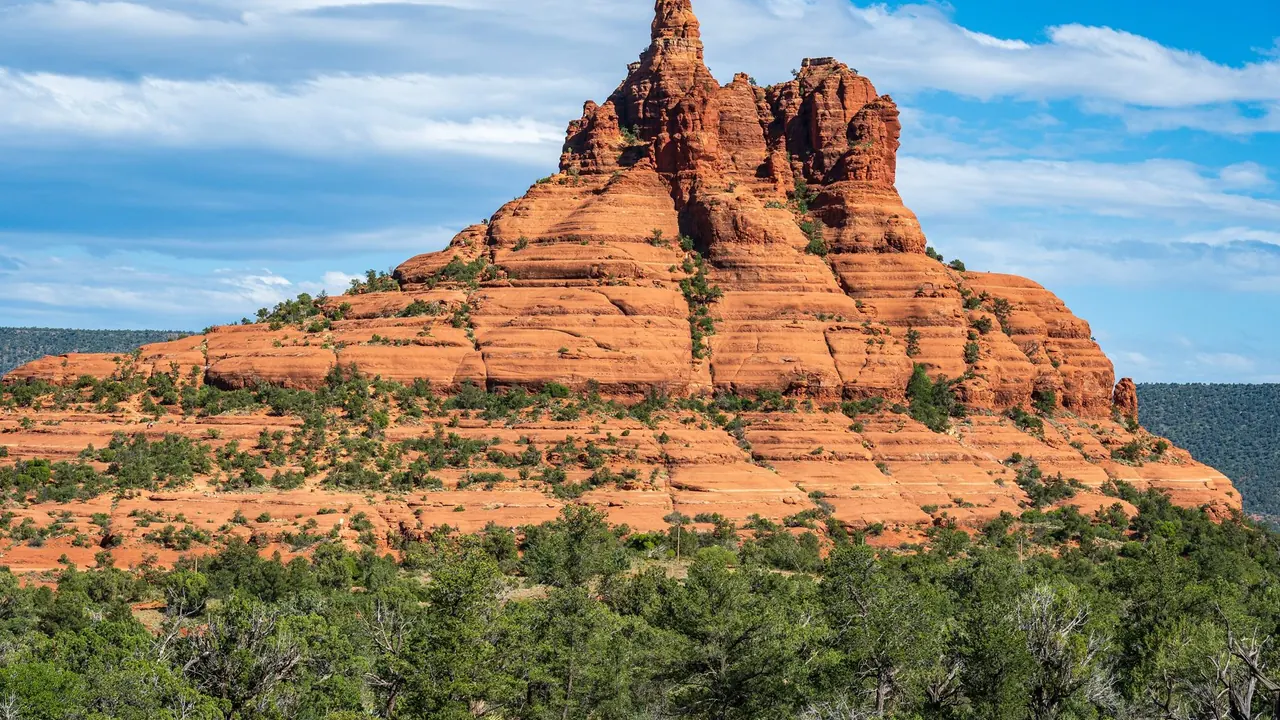
Photos: Durango, Colorado by Adeledstarr, CC BY-SA 4.0, cropped; Sedona by dconvertini, CC BY-SA 2.0, cropped.
Durango, Colorado or Sedona?
Our verdict in twelve categories, each scored against the same fixed benchmark cities, and the climate month by month, so you can choose for your trip.
Choose Durango, Colorado for
- prices
- nightlife
- live music and the arts
Durango is the better choice if you want mountain adventure with a real town attached. The San Juans give you hiking, biking and rafting in summer and proper skiing in winter. The steam railway, the Victorian main street and the brewery taprooms keep evenings lively enough, Mesa Verde is close, and the town is easier on families and on the budget.
Choose Sedona for
- wellness
- beaches
- shopping
Sedona suits travellers who want slow days among some of the most striking scenery in the country. Walk out to the red rock buttes at sunrise, book a spa treatment or a yoga class in the afternoon, and spend the evening under a dark desert sky. It costs more and has little to do after dark, but for a restorative couples' trip it has the edge.
Scoreboard
Twelve categories on one fixed scale from 0 to 100. The shaded stretch is the gap between the two.
Your match
Pick a travel style or drag the sliders, and both match scores follow your weighting.
Wins on prices and nightlife with your weighting.
Wins on wellness and beaches with your weighting.
What matters to you?
Category by category
What the scores mean for a trip.
Beaches & swimming
Neither town is a beach destination, and in both, swimming is a cold summer dip after a day outdoors. Sedona's Oak Creek holes are a little more memorable. Riding the sandstone chute at Slide Rock or swimming below the red cliffs at Red Rock Crossing is an outing in itself, although the spots are small and crowded on hot weekends.
Durango's version is floating the Animas through town on an inner tube or swimming at Lake Nighthorse and the sandy edges of Vallecito Lake. The water is mountain-cold, and the season is shorter.
Food & drink
Durango eats a little better and with more personality. Green-chile plates, Colorado lamb and trout, and a remarkable number of craft breweries for a town its size make Main Avenue a good place for dinner after a long day out.
In Sedona, the setting often counts for more than the cooking. Resort terraces facing the red rocks and plenty of vegetarian and health-minded menus make up most of the choice, and the better kitchens are soon used up. Its strength is wine rather than beer, with Verde Valley tasting rooms just down the road.
Culture & sights
Durango has more to see in town. The narrow-gauge railway, its depot, the roundhouse museum and blocks of Victorian brick and sandstone tell a clear mining-boom story, and the college collection of Native American material adds depth.
Sedona's highlight is the Chapel of the Holy Cross, built into a butte, along with a small heritage museum and many galleries. The Sinagua cliff dwellings and petroglyphs out in the backcountry are its most rewarding history, and you need a car to reach them.
Nightlife
Neither town keeps late hours, but Durango has some evening life. Taprooms fill with cyclists and rafters, old saloons have piano players, and college students keep a few bars busy at weekends.
Sedona is quieter still, with a handful of brewpubs, wine bars and resort lounges that suit one drink after dinner. Its best evening entertainment is the stargazing.
Nature & outdoors
Both are first-class outdoor bases, but the landscapes are very different. Durango is alpine: jagged San Juan peaks above 4,000m, the Weminuche Wilderness, the start of the Colorado Trail, whitewater on the Animas and a full ski resort half an hour away. That makes it a place for all four seasons, with high-country hiking in summer and aspens turning gold in autumn.
Sedona has the edge for sheer spectacle within reach of town. Red sandstone formations such as Cathedral Rock, Bell Rock and Devil's Bridge sit at the end of short trails, the slickrock riding is famous, and Oak Creek Canyon and the Grand Canyon add pine forest and scale. There is no skiing, and summer walking means very early starts.
Day trips
Durango has the stronger day trips. Mesa Verde's cliff dwellings are among the great sights of the Southwest, the steam train to Silverton is a full day out, and Ouray, Aztec and the hot springs at Pagosa Springs fill several more days.
From Sedona, the outings are smaller but well varied: the mountainside mining town of Jerome, the Verde Canyon Railroad, wine tasting around Cottonwood, and the Montezuma Castle and Tuzigoot ruins nearby. A few days cover them, and the Grand Canyon is the big drive.
Good for families
Durango is easier with children. The steam train, gentle rafting and tubing, beginner slopes in winter and an alpine coaster and ziplines in summer cover most ages, and Mesa Verde's ladders bring history to life. The altitude of about 2,000m can tire young children for the first day or two.
Sedona has Slide Rock and jeep tours over the slickrock, which children love, but much of its hotel offer is aimed at couples and spa guests. Summer heat on exposed trails also needs care.
Getting around
You will want a car in both towns, but Durango's centre is easier on foot. It takes about a quarter of an hour to walk from the train depot to the top of Main Avenue, and a riverside trail and a trolley cover the main corridor.
Sedona is spread along two highways meeting at the Y, with only Uptown walkable. Weekend traffic and full trailhead car parks are common, and most visitors drive about two hours up from Phoenix.
Shopping & style
Sedona offers more for browsing. Tlaquepaque's courtyards and fountains hold galleries and craft studios, more galleries selling Western art and Native American pottery line the main road, and the crystal and metaphysical shops are unlike anything in Durango.
Durango's Main Avenue is a pleasant hour or two of outdoor gear, Western boots and turquoise silver. It is good for practical kit, but there is less to linger over.
Affordability
Durango is the cheaper of the two, although it is still a US mountain resort, with rooms in short supply at peak times and a hire car to pay for. Spring and late autumn bring prices down noticeably.
Sedona is expensive. Most of the rooms are in resorts and boutique lodges, the restaurants charge resort prices, and jeep tours, balloon flights and spa treatments add up quickly. Many budget travellers sleep in Cottonwood or Flagstaff and drive in.
Live music & performing arts
Durango has more going on, especially in summer. A long-running chamber and orchestral festival, a college concert hall with touring acts, a melodrama where the audience boos the villain, and chuckwagon cowboy shows give you options on most summer nights.
Sedona's calendar is thinner: the film festival in late winter, occasional chamber concerts, and acoustic sets or Native American flute in resort bars. It has no concert hall.
Wellness & relaxation
Sedona is the place for a retreat. Destination spas look out over the canyons, yoga, meditation and breathwork are everywhere, and sunrise walks to the vortexes set the slow pace of the town. There are no hot springs, though, and most of the wellness on offer is paid treatments.
Durango has what Sedona lacks: natural mineral pools a few minutes north of town, with more at Pagosa Springs and Ouray. A soak after riding or skiing is the main way to unwind, and there is little beyond hotel massages.
When should you go?
Pick your month. The climate figures are measured averages, not a forecast.
Durango, Colorado in July
Sedona in July
Daytime high, °C
Rainfall in the month, mm
Where the figures come from
Durango, Colorado has no weather station within reach, so its figures come from a gridded climate model rather than a measured record, and read a broad area rather than the city itself.
Sedona's station stands 153 m above the city centre, so the centre is likely a little warmer than the figures say.
Sedona has no rain gauge within 25 km of the centre, so its rainfall comes from a gridded climate dataset read at the city rather than from a gauge further away.
Temperature and rainfall are climate normals, averaged over the years shown. Durango, Colorado: 1991-2020 normals, TerraClimate 4 km grid at the town, no weather station within 90 km. Sedona: 2009-2025 (rainfall 1991-2020) normals, Sedona / West Sedona (1.3 km from centre).
The two towns have opposite seasons. Durango is at its best from June to September, when days reach about 30°C in July and the mountain trails, the river and the high passes are all open. June is the driest month, and afternoon storms pick up in August. Winter highs of around 5°C bring the snow that makes it a ski town, but it is too cold for long walks around the streets.
Sedona is warmer all year and is best in spring and autumn, from March to May and from October to November, when hiking among the red rocks is comfortable. By July, highs of around 34°C mean starting trails at dawn, and late summer brings the wettest spell, with about 56mm in August, mostly in storms. Winter days of around 12°C are mild enough to hike, so Sedona works in the months when Durango is a ski destination.
Which traveller are you?
On a relaxing and wellness trip, Durango's hot springs are mostly a reward after an active day, while Sedona is built around slowing down. Quiet evenings, dark skies, easy morning walks among the red rocks and a wide choice of treatments fill a restful week there.
On a tight budget, Durango makes your money go further. The walkable centre and the trolley mean less driving, taprooms and green-chile plates make for honest dinners, and the trails and river are free. In Sedona, almost everything beyond the trails comes at resort prices.
On a family trip with children, Durango will keep them interested for longer. Mesa Verde and Silverton make big days out, the melodrama where the audience boos the villain fills a summer evening, and winter brings skiing. Sedona works best as a short stop on a Grand Canyon trip.
Before you go
| Measure | Durango, Colorado | Sedona |
|---|---|---|
| Currency | US Dollar (USD) | US Dollar (USD) |
| Sockets | AB120 V, 60 Hz | AB120 V, 60 Hz |
| Driving side | Right | Right |
| Time zone | UTC-7, UTC-6 in summer | UTC-7 |
| Emergency number | 911 | 911 |
| Elevation | 1,988 m | 1,319 m |
| Main airport | Durango La Plata County Airport (DRO)18 km from centre4 non-stop destinations | Phoenix Sky Harbor International Airport (PHX)160 km from centre149 non-stop destinations |
| Public holidays this year | 12 days | 12 days |
By the numbers
| Measure | Durango, Colorado | Sedona |
|---|---|---|
| City population | 19,071 | 9,684 |
| People per km² | 739 | 195 |
| Museums within 10 km | 2 | 0 |
| UNESCO World Heritage sites within 50 km | 1 | 0 |
Where else could you go?
Every comparison below shares a destination with this one, so you can follow Durango, Colorado or Sedona somewhere new.
- Flagstaffvs Sedona
- Telluridevs Durango, Colorado
- Scottsdalevs Sedona
- Phoenixvs Sedona
- Moabvs Durango, Colorado
- Taosvs Durango, Colorado