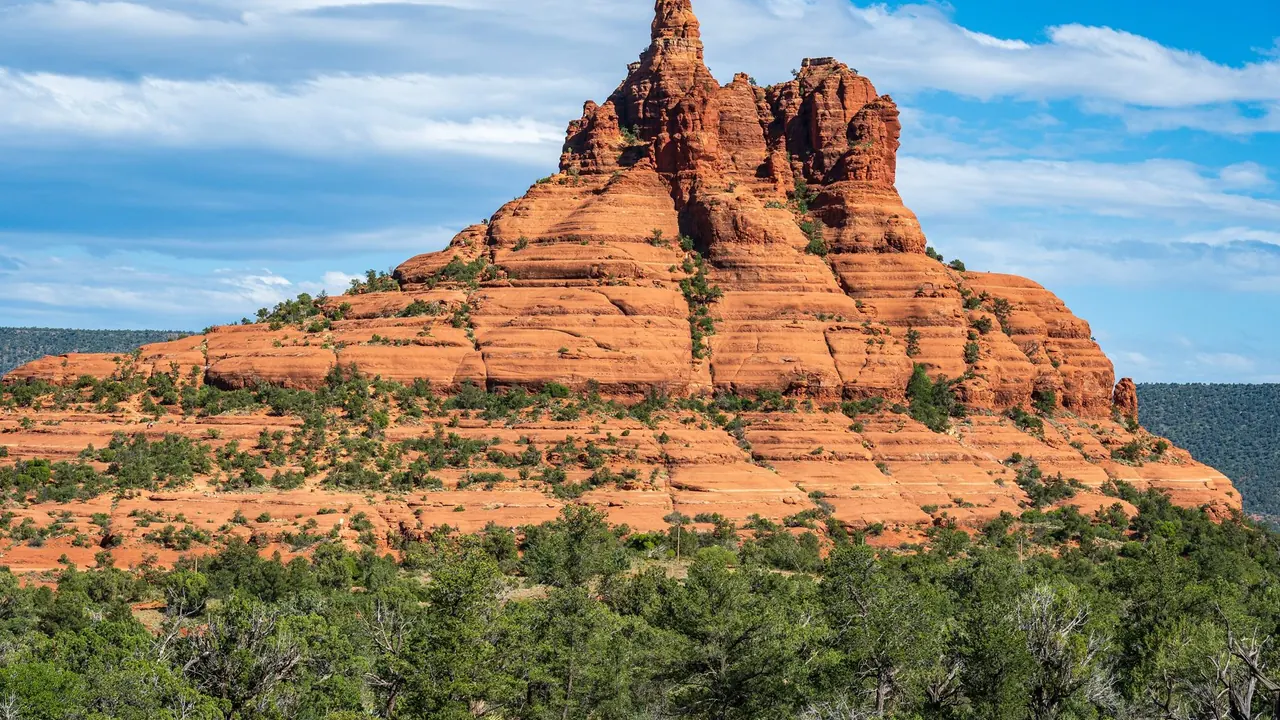
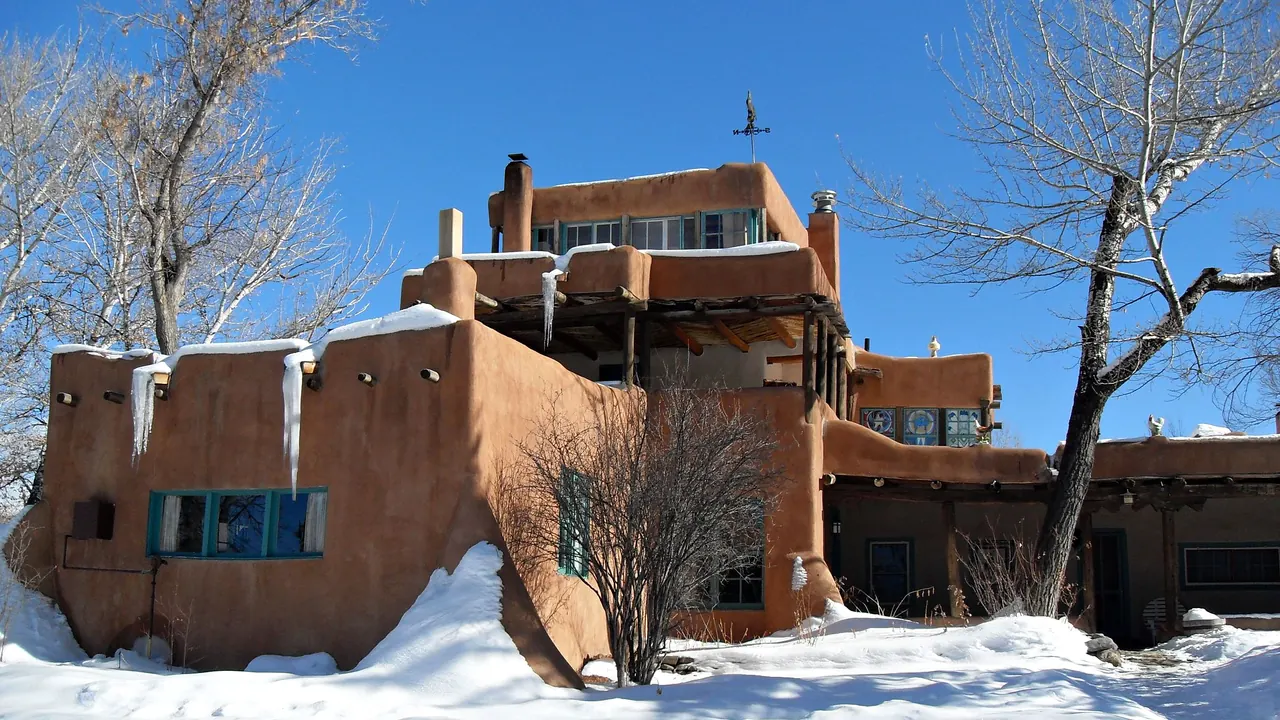
Photos: Sedona by dconvertini, CC BY-SA 2.0, cropped; Taos by PhictureGal, CC BY-SA 3.0, cropped.
Sedona or Taos?
Our verdict in twelve categories, each scored against the same fixed benchmark cities, and the climate month by month, so you can choose for your trip.
Choose Sedona for
- wellness
- beaches
- nature and the outdoors
Sedona is for travellers who want to spend the day outside and the evening being looked after. The red rock buttes start at the edge of town, the trails and slickrock bike routes are among the best in the American Southwest, and the resort spas, yoga studios and sunrise vortex walks turn a hiking trip into a proper retreat. It suits couples and active travellers who can afford resort prices, and its milder winters let you walk the trails in months when Taos is under snow.
Choose Taos for
- culture and sights
- prices
- live music and the arts
Taos rewards people who want a place with deep roots as well as a view. Taos Pueblo, the art-colony museums and the chile kitchens give it a character Sedona's handful of sights cannot match. Santa Fe and the old High Road villages are within a day's drive, and in winter the ski valley adds a whole second kind of trip. It also costs noticeably less to stay, which makes it the better choice for a longer stay or a tighter budget.
Scoreboard
Twelve categories on one fixed scale from 0 to 100. The shaded stretch is the gap between the two.
Your match
Pick a travel style or drag the sliders, and both match scores follow your weighting.
Wins on wellness and beaches with your weighting.
Wins on culture and sights and prices with your weighting.
What matters to you?
Category by category
What the scores mean for a trip.
Beaches & swimming
Neither town is a place for a beach, but Sedona at least gives you somewhere to swim. Oak Creek runs over the sandstone chute at Slide Rock and pools at Grasshopper Point and Red Rock Crossing, all cold and good for cooling off after a summer hike.
Taos has nothing comparable. The Rio Grande in its gorge is for rafting, the mountain lakes are too cold, and a dip means a hotel pool or one of the hot springs.
Food & drink
The two are roughly level, but the cooking is quite different. Sedona eats on resort terraces facing the red rocks, with Southwestern menus, plenty for vegetarians and the health-minded, and the Verde Valley tasting rooms close by for wine.
Taos has a stronger regional identity: northern New Mexican food built around red and green chile, served in old family places near the plaza and towards Ranchos, plus horno bread from the Pueblo. Go to Sedona for a view with dinner and to Taos for posole and carne adovada.
Culture & sights
Here Taos is far ahead. Taos Pueblo, its adobe houses lived in for about a thousand years, is one of the most remarkable places in the United States. Add the buttressed church at Ranchos de Taos and the small museums of the art colony, from the Harwood to the Millicent Rogers, and you have two or three full days.
Sedona's culture is mostly its scenery. The Chapel of the Holy Cross, built into the rock, is the one landmark, alongside a heritage museum and many galleries. The Sinagua cliff dwellings at Palatki and Honanki are the more memorable outing.
Nightlife
Both towns are quiet after dark and keep early hours. Sedona's evenings mean a brewpub, wine bar or resort lounge in Uptown, then the stars over the canyon. In Taos you are more likely to find a saloon with a live band or a margarita in an old adobe hotel bar, and in winter there is an après-ski crowd up at the ski valley.
Nature & outdoors
Both are superb, but Sedona has the edge because the scenery begins at the edge of town. Cathedral Rock, Bell Rock, Devil's Bridge and Boynton Canyon are all minutes away, the slickrock singletrack draws mountain bikers, and Oak Creek Canyon and the Grand Canyon are within reach.
Taos is wilder and higher. It has serious skiing, the climb up Wheeler Peak at 4,013m, alpine lakes, and whitewater in the Rio Grande gorge. The altitude takes a day or two to get used to, but anyone wanting snow, mountains or rafting will find more of it here.
Day trips
Taos has the stronger day trips, mainly because a real city is in range. Santa Fe, with its plaza, galleries and O'Keeffe museum, is reached along the High Road through Truchas, Las Trampas and Chimayó. O'Keeffe country at Abiquiu and Ghost Ranch is another strong pull.
Sedona's outings are good but smaller. You can visit Jerome on its mountainside, ride the Verde Canyon Railroad, or see Montezuma Castle and Tuzigoot, with Flagstaff and the Grand Canyon further north. A few days cover most of it.
Good for families
Families fare about the same in both, and in both the appeal lies outdoors rather than in attractions built for children. Sedona works best in summer, with Slide Rock, jeep tours over the slickrock and short trails, though the heat calls for care.
Taos shines in winter with its ski school. In summer it has gentle float trips, horse riding and a recreation centre pool, but the altitude can tire young children at first.
Getting around
You need a car in either town. In Sedona the routes funnel through the junction known as the Y, a shuttle reaches only some trailheads, and weekend traffic and full trail car parks are the main frustrations. You drive up from Phoenix, about two hours away.
Taos is more spread out across its valley, with a basic bus and a walkable core around the plaza. It is also a longer drive from the airport, about two and a half hours from Albuquerque.
Shopping & style
Taos edges ahead for anyone who buys craft. Turquoise and silver, micaceous pottery, Rio Grande weaving and carved santos are local traditions, and you can buy directly from makers at the Pueblo.
Sedona's offer is more varied in mood than in depth. There are courtyard galleries at Tlaquepaque, Western painting and Native jewellery along the main road, and a large crop of crystal and metaphysical shops that Taos cannot match. Neither town has fashion shopping.
Affordability
Taos is clearly the easier town on the wallet. It has simple motels and casual diners at fair prices, and resort rates apply mainly at the historic inns and in ski season. Spring and late autumn are the cheapest times.
Sedona is expensive almost throughout, with resort and boutique lodging, resort-town restaurants, and jeep tours, balloon flights and spa bookings on top. Free trails help, but many budget travellers sleep in Cottonwood or Flagstaff and drive in.
Live music & performing arts
Taos offers more worth attending, and some of it is unique. The traditional dances at Taos Pueblo on feast days such as San Gerónimo in late September may be watched under strict rules. There is also a summer chamber music festival, and a community arts centre programmes theatre and film.
Sedona's calendar is thinner. Its long-running film festival in late winter is the main event, alongside occasional chamber concerts and Native American flute played at resorts.
Wellness & relaxation
Sedona is the stronger retreat town by some way. Destination spas sit against the canyons, and yoga, meditation, breathwork and alternative therapies fill the town, with sunrise walks to the vortexes as a local ritual.
Taos is more modest but has the one thing Sedona lacks, natural hot water. You can soak in the mineral pools at Ojo Caliente or walk down to the primitive springs beside the Rio Grande, and the silence of the plateau does the rest.
When should you go?
Pick your month. The climate figures are measured averages, not a forecast.
Sedona in July
Taos in July
Daytime high, °C
Rainfall in the month, mm
Where the figures come from
Sedona's station stands 153 m above the city centre, so the centre is likely a little warmer than the figures say.
Sedona has no rain gauge within 25 km of the centre, so its rainfall comes from a gridded climate dataset read at the city rather than from a gauge further away.
Taos has no rain gauge within 25 km of the centre, so its rainfall comes from a gridded climate dataset read at the city rather than from a gauge further away.
Temperature and rainfall are climate normals, averaged over the years shown. Sedona: 2009-2025 (rainfall 1991-2020) normals, Sedona / West Sedona (1.3 km from centre). Taos: 2006-2020 (rainfall 1991-2020) normals, Taos / Los Cordovas (10.5 km from centre).
Sedona is at its best in April, May and October, when the days are warm enough to hike in shirtsleeves and the rain is light. May and June are the driest months of all. From June onwards the heat takes over, with highs near 34°C in July, and walking means early starts rather than midday outings. July and August bring afternoon storms and the heaviest rain of the year, around 55mm in August. Winter is cool rather than cold and mild enough for the lower trails, but it is not a dry season. December to February are nearly as wet as late summer, and the red rock sometimes gets a light dusting of snow.
Taos sits much higher, so it is colder all year. Winter highs stay around 4°C, which suits the ski valley but makes the plaza a chilly place to wander, and its winters are much drier than Sedona's. May, September and early October are the most comfortable months for walking and sightseeing, and even high summer peaks at about 29°C, so it is warm rather than scorching. July and August are the wettest months here too, with the rain falling mostly in short afternoon thunderstorms.
Which traveller are you?
On a culture and arts trip, Taos is the clear choice. Taos Pueblo is a living World Heritage site, and with the art-colony museums, the Ranchos church and Santa Fe within reach, it fills days that Sedona's chapel and galleries cannot.
For a relaxing and wellness trip, Sedona is the better base. Its destination resorts set their spas against red canyons, and yoga, meditation, massage and quiet vortex walks at sunrise fill the days. Taos offers hot springs, but its treatment scene is far smaller.
On a trip with a tight budget, Taos goes further. Simple motels and family-run New Mexican diners are fairly priced, and the quieter seasons between skiing and summer are gentle. Sedona's resort rates push budget travellers into nearby Cottonwood or Flagstaff.
Before you go
| Measure | Sedona | Taos |
|---|---|---|
| Currency | US Dollar (USD) | US Dollar (USD) |
| Sockets | AB120 V, 60 Hz | AB120 V, 60 Hz |
| Driving side | Right | Right |
| Time zone | UTC-7 | UTC-7, UTC-6 in summer |
| Emergency number | 911 | 911 |
| Elevation | 1,319 m | 2,124 m |
| Main airport | Phoenix Sky Harbor International Airport (PHX)160 km from centre149 non-stop destinations | Santa Fe Municipal Airport (SAF)99 km from centre5 non-stop destinations |
| Public holidays this year | 12 days | 13 days |
By the numbers
| Measure | Sedona | Taos |
|---|---|---|
| City population | 9,684 | 6,474 |
| People per km² | 195 | 415 |
| Museums within 10 km | 0 | 4 |
| UNESCO World Heritage sites within 50 km | 0 | 1 |
Where else could you go?
Every comparison below shares a destination with this one, so you can follow Sedona or Taos somewhere new.
- Flagstaffvs Sedona
- Santa Fevs Taos
- Scottsdalevs Sedona
- Phoenixvs Sedona
- Telluridevs Taos
- Colorado Springsvs Taos