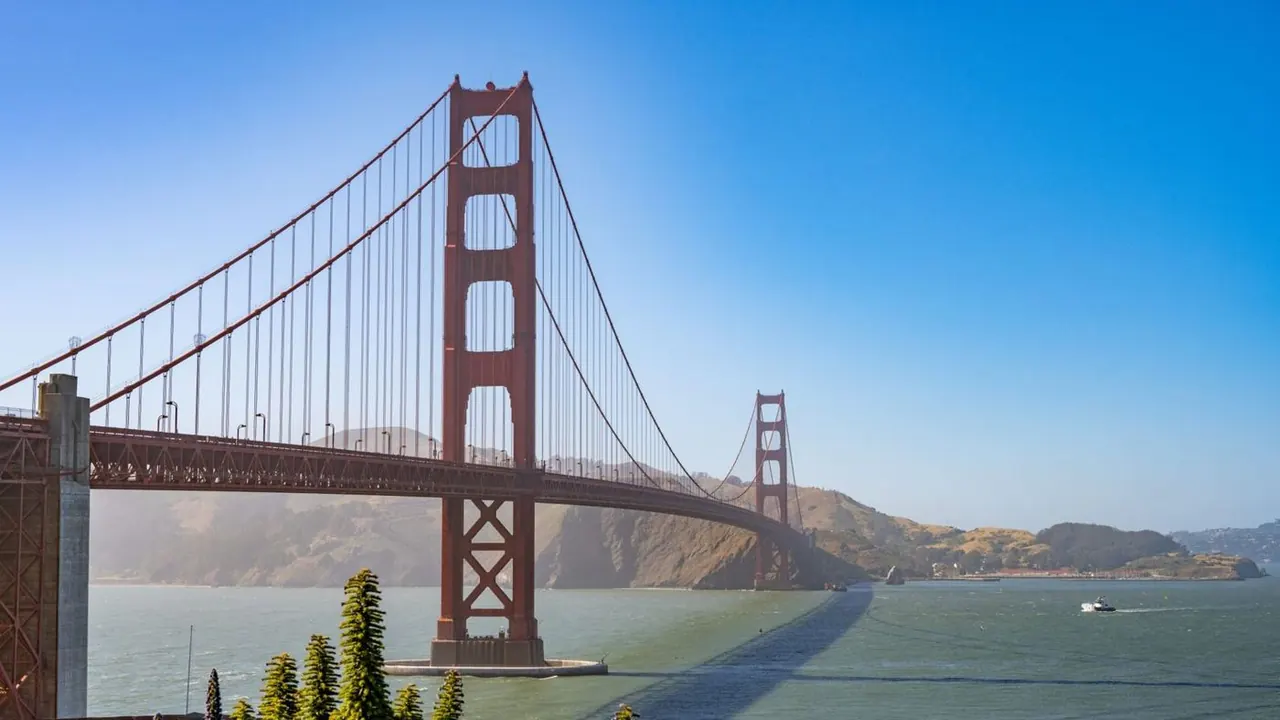
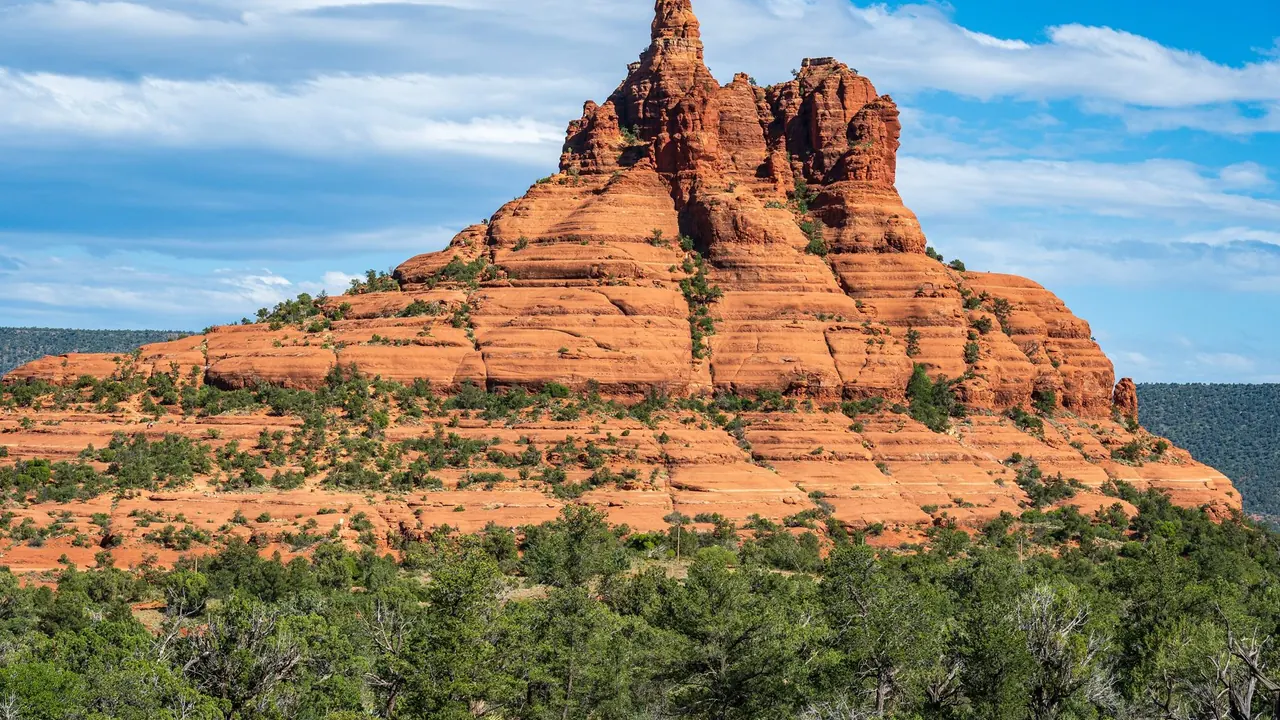
Photos: San Francisco by Elijah Cobb, Pexels License; Sedona by dconvertini, CC BY-SA 2.0, cropped.
San Francisco or Sedona?
Our verdict in twelve categories, each scored against the same fixed benchmark cities, and the climate month by month, so you can choose for your trip.
Choose San Francisco for
- live music and the arts
- nightlife
- food and drink
San Francisco is the pick for travellers who want a city to eat, look and listen their way through. It offers produce-led cooking from Mission taquerias to tasting menus, landmark sights and strong museums, a full season of opera, ballet and symphony, and evenings out spread across several districts. You can do it all without a car, and the redwoods and coastal trails are just across the bridge.
Choose Sedona for
- wellness
- nature and the outdoors
- prices
Choose Sedona if the trip is about landscape and slowing down. Red rock trails start at the edge of town, the spa resorts and retreat culture are a real draw, and the nights are dark and still. Expect to need a car, to start early and to spend quiet evenings, with little to do indoors.
Scoreboard
Twelve categories on one fixed scale from 0 to 100. The shaded stretch is the gap between the two.
Your match
Pick a travel style or drag the sliders, and both match scores follow your weighting.
Wins on live music and the arts and nightlife with your weighting.
Wins on wellness and nature and the outdoors with your weighting.
What matters to you?
Category by category
What the scores mean for a trip.
Beaches & swimming
Neither is a swimming destination, but San Francisco at least has a real shoreline. Ocean Beach gives you miles to walk, Baker Beach looks at the Golden Gate Bridge and China Beach is a small sheltered cove. The Pacific is cold and the currents are dangerous, so the shore is for sunsets and bonfires.
Sedona has no coast at all. Its version is Oak Creek, where the sandstone chute at Slide Rock and the pools at Grasshopper Point make a cold, crowded break after a summer hike, and nothing more.
Food & drink
This is one of the widest gaps between the two. San Francisco cooks with produce from Northern California farms and seafood from the bay. Expect Mission burritos, sourdough and Dungeness crab, the Ferry Building market, Cantonese cooking in Chinatown and the Richmond, Italian bakeries in North Beach and a serious fine-dining tier.
Sedona mostly means resort terraces facing the red rock, Southwestern plates of chilli and grilled meat, and plenty for vegetarians. The few good kitchens are soon exhausted, although the Verde Valley tasting rooms nearby add interest, and a big breakfast before a hike suits the town best.
Culture & sights
San Francisco has far more to see. There is Alcatraz, the cable cars on Nob Hill and the Victorians of Alamo Square, museums such as SFMOMA, the de Young and the Asian Art Museum, and neighbourhood history in Chinatown, the Mission and the Castro.
Sedona's list is short: the Chapel of the Holy Cross built into a butte, a small heritage museum and many galleries of Western and Native American art. Its most striking history lies out of town, at the Sinagua cliff dwellings of Palatki and Honanki.
Nightlife
After dark the two could hardly be further apart. San Francisco gives you a real night out, though it is spread across several districts. There are mezcal and cocktail bars in the Mission, old saloons in North Beach, the Castro's gay bars and warehouse clubs in SoMa. Last orders come fairly early for a big city, and many neighbourhoods are quiet on weeknights.
Sedona barely has a night out at all. Visitors are on the trail at dawn, so a brewpub or resort lounge after dinner is about the limit. The better show is the star-filled sky over the canyon.
Nature & outdoors
Both are superb for time outdoors, but in Sedona the landscape is the main event. Trails run straight from town to Cathedral Rock, Bell Rock and Devil's Bridge, the slickrock singletrack draws mountain bikers, Oak Creek Canyon climbs into pine forest, and the South Rim of the Grand Canyon is about two hours away.
San Francisco's strength is variety right beside a city. Lands End, Golden Gate Park and the Presidio are inside the city, while Muir Woods and the Marin Headlands are just across the bridge. Sailing, kayaking and whale watching are all there too, though fog and wind come with them.
Day trips
San Francisco has the richer choice. Napa and Sonoma wine country is about an hour north, ferries cross to Sausalito, the coast road leads to Santa Cruz, and Monterey and Carmel are two hours south.
Sedona's outings are smaller but older. There are the Sinagua sites of Montezuma Castle and Tuzigoot, the mining town of Jerome on its mountainside and the Verde Canyon Railroad, and a few days covers them.
Good for families
San Francisco gives children much more to do. The Exploratorium can fill a whole day, the California Academy of Sciences puts an aquarium, a planetarium and a rainforest under one roof, and the sea lions at Fisherman's Wharf and the cable cars are easy treats. Steep hills and some rough downtown streets are the drawbacks.
Sedona suits outdoorsy families for a few days in a small, safe town, with Slide Rock in summer, short trails around Bell Rock and jeep tours. There is no zoo or aquarium, and the heat and exposed trails need care with small children.
Getting around
San Francisco is compact, about 11km across. Muni, BART, the cable cars and the ferries all run on one Clipper card, so a car is more trouble than help, although the hills make walking hard work.
Sedona is the opposite. Only Uptown is walkable, and the trailheads, the chapel and every day trip need a car. Most visitors drive up from Phoenix, about two hours away.
Shopping & style
Only one of the two has fashion shopping. In San Francisco, department stores and flagship brands ring Union Square. Hayes Valley's independent boutiques and the vintage clothes and bookshops on Valencia Street and in Haight-Ashbury make for better browsing.
Sedona's shopping is narrower and more particular. It centres on the galleries and craft studios of Tlaquepaque, Native American jewellery, pottery and rugs, and the town's crystal and metaphysical shops. For clothes, visitors drive to Phoenix.
Affordability
Neither is a cheap trip, and the gap between them is small. In San Francisco the money goes on hotels, sit-down meals with tax and tipping added, and drinks. Cheap taquerias and dim sum, inexpensive transport, free parks and free museum days soften the bill.
Sedona's costs come from resort lodging and paid extras such as jeep tours, balloon flights and spa treatments. Trails cost little beyond a parking pass, and staying in Cottonwood or Flagstaff brings the room bill down.
Live music & performing arts
San Francisco has a full calendar. The War Memorial Opera House hosts the opera and the country's oldest professional ballet company, and the Symphony plays at Davies Hall. On top of that there is drama at the American Conservatory Theater, jazz at SFJAZZ and rock at the Fillmore.
Sedona offers occasional chamber concerts, local theatre, a long-running film festival in late winter and acoustic sets in resort bars. For anything bigger, people drive to Phoenix or Flagstaff.
Wellness & relaxation
Sedona is built for this. Destination spas look over the red canyons, yoga, meditation and breathwork sessions are everywhere, and sunrise walks to the vortex sites set a slow rhythm. Treatments come at resort prices, though, and there are no hot springs.
San Francisco moves at a work-driven pace. It has day spas, yoga studios and a Japanese-style bathhouse in Japantown, and the Japanese Tea Garden is good for a quiet hour. For a proper soak, Calistoga's mud baths are about two hours away.
When should you go?
Pick your month. The climate figures are measured averages, not a forecast.
San Francisco in July
Sedona in July
Daytime high, °C
Rainfall in the month, mm
Where the figures come from
Sedona's station stands 153 m above the city centre, so the centre is likely a little warmer than the figures say.
Sedona has no rain gauge within 25 km of the centre, so its rainfall comes from a gridded climate dataset read at the city rather than from a gauge further away.
Temperature and rainfall are climate normals, averaged over the years shown. San Francisco: 1981-2010 normals, Alameda Naval Air Station (9.1 km from centre). Sedona: 2009-2025 (rainfall 1991-2020) normals, Sedona / West Sedona (1.3 km from centre).
San Francisco is mild all year and never hot, with daytime highs reaching only about 23°C in late summer and early autumn. Rain falls from November to March and is heaviest in January at around 105mm, while June to September is almost completely dry. Walking the streets is comfortable in any month, but it is never beach weather, because the sea stays at roughly 12-14°C. Autumn is often the clearest time of year.
Sedona's year swings much further. Spring and autumn are its best seasons, with good hiking days in April, May and October. From June to August highs reach 34°C, so walks need dawn starts, and July and August bring summer storms that make them the wettest months. Winters are crisp and fairly damp rather than truly cold.
Which traveller are you?
On a culture and arts trip, San Francisco wins easily. Alcatraz, the cable cars and museums such as SFMOMA and the Legion of Honor fill the days, and the opera, ballet, symphony and SFJAZZ fill the evenings. Sedona has nothing on that scale.
For a food and nightlife trip, San Francisco is the clear choice. You can move from Mission taquerias, dim sum in the Richmond and serious fine dining to cocktail bars, North Beach saloons and SoMa clubs. In Sedona the evening usually means a resort dinner and an early night.
On a relaxing and wellness trip, Sedona is the better base. Its spa resorts face the red rock, yoga and meditation are part of everyday life there, and the nights are dark and quiet. San Francisco's pace is set by work and the tech economy.
Before you go
| Measure | San Francisco | Sedona |
|---|---|---|
| Currency | US Dollar (USD) | US Dollar (USD) |
| Sockets | AB120 V, 60 Hz | AB120 V, 60 Hz |
| Driving side | Right | Right |
| Time zone | UTC-8, UTC-7 in summer | UTC-7 |
| Emergency number | 911 | 911 |
| Elevation | 16 m | 1,319 m |
| Main airport | San Francisco International Airport (SFO)18 km from centre142 non-stop destinations | Phoenix Sky Harbor International Airport (PHX)160 km from centre148 non-stop destinations |
| Public holidays this year | 13 days | 12 days |
By the numbers
| Measure | San Francisco | Sedona |
|---|---|---|
| City population | 873,965 | 9,684 |
| People per km² | 1,455 | 195 |
| Museums within 10 km | 51 | 0 |
| UNESCO World Heritage sites within 50 km | 0 | 0 |
| Swim season, months above 21 °C | None | - |
Where else could you go?
Every comparison below shares a destination with this one, so you can follow San Francisco or Sedona somewhere new.