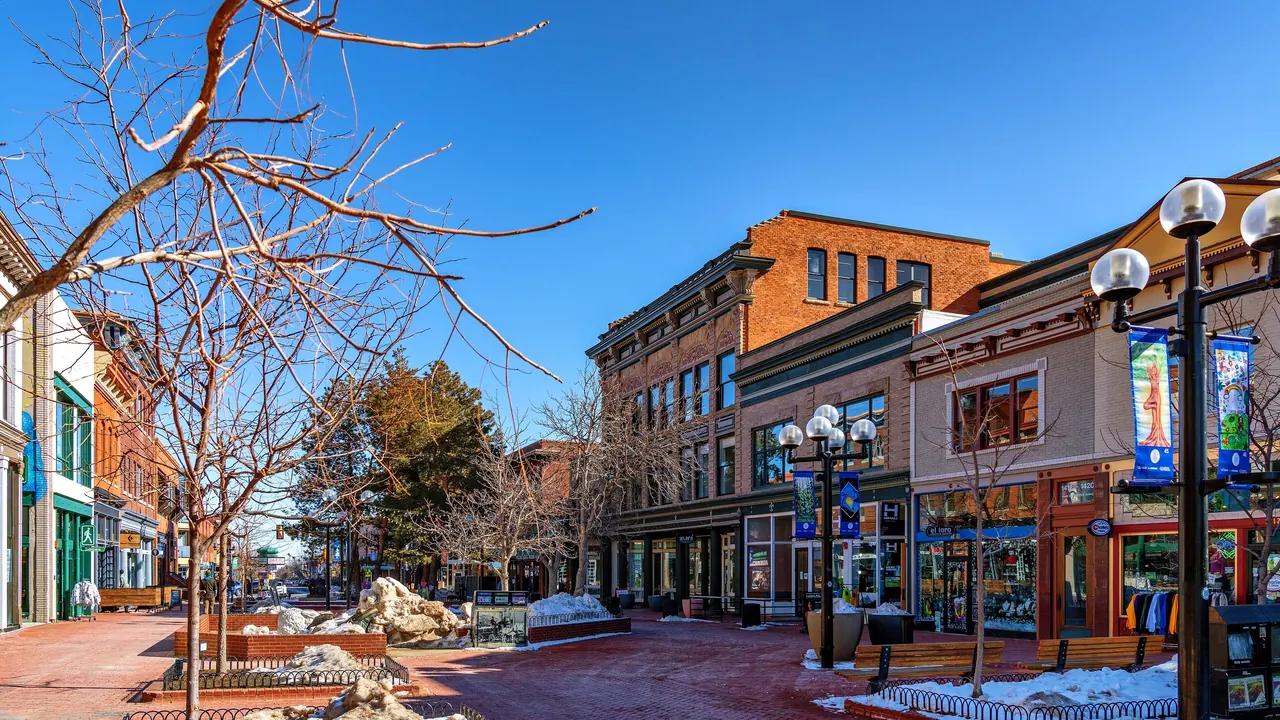
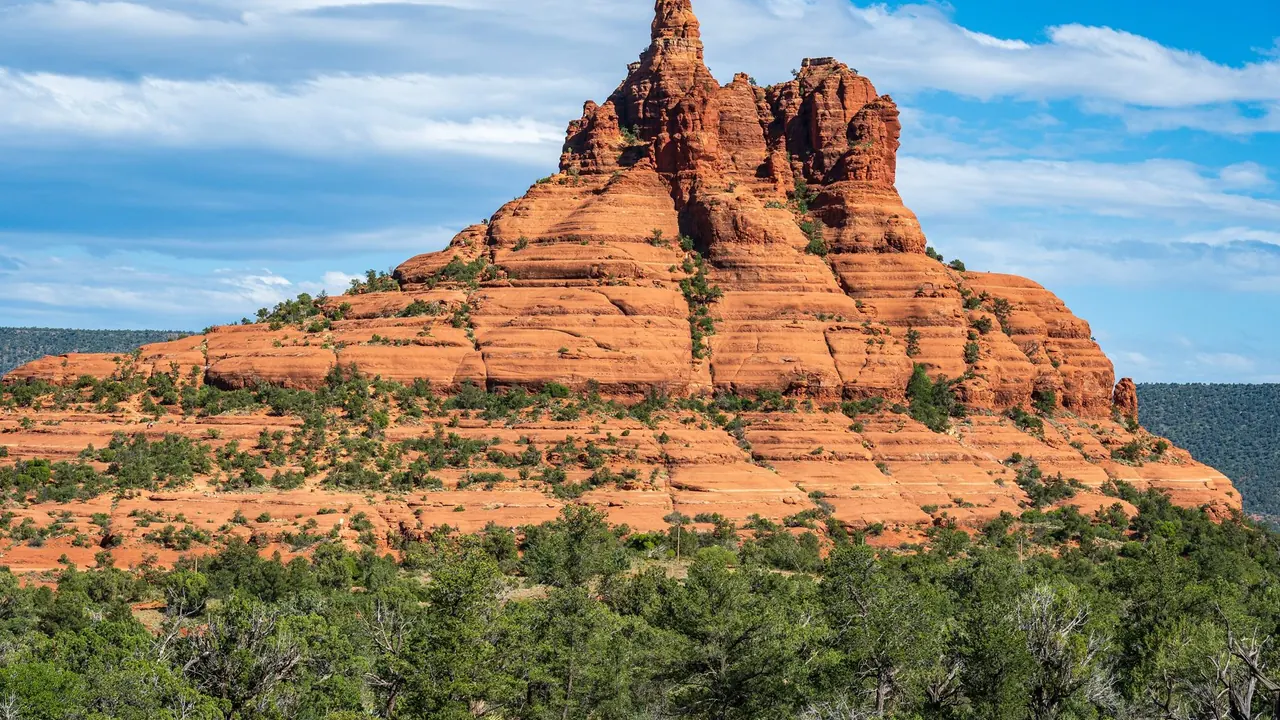
Photos: Boulder by Tony Webster, CC BY 2.0, cropped; Sedona by dconvertini, CC BY-SA 2.0, cropped.
Boulder or Sedona?
Our verdict in twelve categories, each scored against the same fixed benchmark cities, and the climate month by month, so you can choose for your trip.
Choose Boulder for
- getting around
- live music and the arts
- nightlife
Boulder suits travellers who want mountains and a lively small town on the same trip. You can start on the trails at the Chautauqua meadow and spend the evening in taprooms, at a bluegrass gig or at a summer concert in the old wooden auditorium. It is easier with children and easier to get around without a car in town. Denver is close by when you want a bigger city.
Choose Sedona for
- wellness
- beaches
- day trips
Sedona is the pick for a slower, quieter trip built around the red rock itself. People come for sunrise walks to Cathedral Rock or Bell Rock, resort spas and yoga, and nights under a properly dark sky. In return, evenings end early and a car is essential. It also fits well into a longer route with the Grand Canyon and the ancient Sinagua sites.
Scoreboard
Twelve categories on one fixed scale from 0 to 100. The shaded stretch is the gap between the two.
Your match
Pick a travel style or drag the sliders, and both match scores follow your weighting.
Wins on getting around and live music and the arts with your weighting.
Wins on wellness and beaches with your weighting.
What matters to you?
Category by category
What the scores mean for a trip.
Beaches & swimming
Neither town is anywhere near a coast, so this is about cooling off rather than beaches. Boulder offers the small sandy swim area at Boulder Reservoir and tubing on the creek in summer.
Sedona's Oak Creek is the better swim. Slide Rock has a natural sandstone chute to ride down, and Grasshopper Point and Red Rock Crossing have deep pools below red cliffs. The water is cold and the spots fill up on hot weekends, but it is the more memorable dip.
Food & drink
Both towns lean towards healthy, vegetarian-friendly cooking, but Boulder has more to offer. It has seasonal Front Range menus, good bakeries and coffee roasters, the farmers' market by the creek, a long list of brewery taprooms, and tea in the hand-carved Dushanbe Teahouse.
In Sedona the setting matters more than the cooking: Southwestern plates on resort terraces facing the rock at sunset, and the choice runs out sooner. Its real bonus is the Verde Valley wine country just down the road. Neither town has street food, and for more variety Boulder also has Denver nearby.
Culture & sights
Neither is a sightseeing town, and a day covers either one. Boulder has a little more to show: the 1898 Chautauqua colony under the Flatirons, the university campus of sandstone walls and red-tile roofs, I.M. Pei's atmospheric research laboratory on the mesa and a few small museums.
Sedona's highlight is the Chapel of the Holy Cross, built into a butte, along with its Western and Native American galleries. Its most interesting history lies outside town, at the Sinagua cliff dwellings of Palatki and Honanki and the V Bar V petroglyphs.
Nightlife
Boulder has a real night out, if a modest one. There are taprooms, cocktail bars and pubs around Pearl Street, loud student bars on University Hill during term, and Denver forty minutes away for clubs.
Sedona has very little nightlife. A brewpub, a wine bar or a resort lounge after dinner is about all there is, and the best evening entertainment is the starry sky.
Nature & outdoors
This is the main reason to visit either town, and they are about equal in appeal, but the landscapes are very different. Boulder is mountain country. The Flatirons rise behind town, a ring of open space holds well over 200km of trails, Eldorado Canyon offers world-class climbing, and cyclists come for the roads at altitude. Rocky Mountain National Park, with its tundra and elk, is about an hour away.
Sedona is red-rock desert, with buttes and spires such as Cathedral Rock and Bell Rock, Devil's Bridge, the shaded West Fork of Oak Creek, and slickrock trails for mountain bikers. The Grand Canyon's South Rim is about two hours away. Pick Boulder for peaks, pine forest and climbing, and Sedona for sculpted sandstone and wide desert views.
Day trips
The day trips are fairly evenly matched, with Sedona's a little more unusual. From Boulder the big draw is Denver by express bus, with its art museum and restored Union Station. After that come smaller places such as Golden, Fort Collins and the old silver towns of Georgetown and Idaho Springs.
Sedona has no big city nearby, but its loop of outings has plenty of character: Jerome on its hillside, the Verde Canyon Railroad and wine tasting in Cottonwood. There are also ancient sites such as Montezuma Castle and Tuzigoot, with Flagstaff and Walnut Canyon to the north. In both places nearly everything needs a car, except Boulder's bus to Denver.
Good for families
Boulder is the easier base for a family. Children can walk or cycle the creek path, tube the creek, swim at the reservoir beach and watch the street performers on Pearl Street. On a rainy day there are the planetarium, the natural history museum and the atmospheric research centre, and Denver's zoo and aquarium are close.
Sedona works for a few days with children who like the outdoors, thanks to Slide Rock, short trails and jeep tours. But much of what it offers is aimed at couples, the summer heat and exposed trails need care, and every outing is a drive.
Getting around
Boulder is far easier to manage without a car. Downtown, the university and Chautauqua are all within a walk or a short bike ride of each other, linked by off-street paths along the creek, with bike share, local buses and an express bus to Denver. You still need a car for the national park and the trailheads outside town.
In Sedona a car is close to essential. The town stretches along two highways from the junction known as the Y, and only Uptown is walkable. A shuttle covers some trailheads, and weekend traffic and full trailhead parking are part of a visit. Most visitors drive up from Phoenix.
Shopping & style
Neither is a shopping destination, but they sell quite different things. Boulder's Pearl Street Mall has independent bookshops, toy shops and boutiques on brick-paved blocks, and its shops for climbing, running and cycling gear are a real strength. Sedona's shopping is about art and the spiritual side: galleries around the courtyards of Tlaquepaque, Native American jewellery, pottery and rugs, and crystal shops, while Uptown is mostly souvenirs.
Affordability
Both are expensive, and neither is much cheaper than the other. Boulder is a wealthy town with few hotel rooms, and prices are highest on graduation and football weekends and in summer. Sedona's cost comes from its resorts and boutique lodges, plus the jeep tours, balloon flights and spa treatments that tempt visitors.
In both, the trails cost next to nothing, and Boulder's reasonably priced buses help a little. The way to save is the same in each: stay elsewhere and drive in, from Denver for Boulder or from Cottonwood or Flagstaff for Sedona.
Live music & performing arts
Boulder has far more live music than its size suggests. Downtown venues book touring rock, bluegrass and roots acts most nights. In summer the Colorado Music Festival plays in the 1898 Chautauqua Auditorium and there is outdoor Shakespeare on campus, and Red Rocks Amphitheatre is about 45 minutes away.
Sedona has occasional chamber concerts, local theatre, its long-running film festival in late winter and acoustic sets in the resorts. Anyone who travels for live performance will find much more on in Boulder.
Wellness & relaxation
Both towns attract the health-minded, but Sedona is the true retreat destination. It has resort spas set against the canyon walls, yoga, breathwork and alternative therapies all around, and the sunrise walks to the vortexes that many visitors come for.
In Boulder, wellness is more a part of everyday life. There are yoga studios, meditation with roots in the town's Buddhist-inspired university, and massage is easy to find, but there are fewer places to be pampered. Neither has a real bathing culture, though from Boulder the hot springs at Idaho Springs are about an hour's drive.
When should you go?
Pick your month. The climate figures are measured averages, not a forecast.
Boulder in July
Sedona in July
Daytime high, °C
Rainfall in the month, mm
Where the figures come from
Boulder has no rain gauge within 25 km of the centre, so its rainfall comes from a gridded climate dataset read at the city rather than from a gauge further away.
Sedona's station stands 153 m above the city centre, so the centre is likely a little warmer than the figures say.
Sedona has no rain gauge within 25 km of the centre, so its rainfall comes from a gridded climate dataset read at the city rather than from a gauge further away.
Temperature and rainfall are climate normals, averaged over the years shown. Boulder: 2010-2025 (rainfall 1991-2020) normals, Boulder / Valmont (6.1 km from centre). Sedona: 2009-2025 (rainfall 1991-2020) normals, Sedona / West Sedona (1.3 km from centre).
Boulder is at its best in summer and early autumn. Winter highs sit around 7°C, dry but chilly, and spring is the wettest stretch, with the most rain in May. From June to September days are warm to hot, reaching about 31°C in July. That is the season for the reservoir swim area and tubing on Boulder Creek, with afternoon thunderstorms on the high trails. September and October are perhaps the finest months for walking in town and on the mesas.
Sedona's calendar runs almost the other way. Winters are mild enough for hiking, though damp spells come through from December to March. April and May are the best time, warm and increasingly dry. June is the driest month of all, with barely 6mm of rain, but it is already hot. High summer reaches around 34°C, too hot for walking in the middle of the day, and July and August bring the heaviest storm rains of the year. October and November are excellent again. For a winter or spring trip Sedona is the warmer choice, and in July Boulder is the cooler one.
Which traveller are you?
On a relaxing and wellness trip, Sedona is the clear choice. Spas facing the canyons, yoga and breathwork sessions, sunrise walks to the vortexes and silent dark nights make for a restful stay. Boulder has the studios and the slow mornings but less of the retreat feel.
For a food and nightlife trip, Boulder is far ahead. It has farm-to-table kitchens, the Saturday farmers' market and deep craft-beer roots, then taprooms on Pearl Street and live music on the Hill. In Sedona, evenings end at a wine bar or with the stars.
On a family trip with children, Boulder is easier. The creek path, tubing, the reservoir beach and the Pearl Street street performers fill the days on foot or by bike, with the planetarium for wet hours. Sedona has Slide Rock and jeep tours, but every outing means a drive.
Before you go
| Measure | Boulder | Sedona |
|---|---|---|
| Currency | US Dollar (USD) | US Dollar (USD) |
| Sockets | AB120 V, 60 Hz | AB120 V, 60 Hz |
| Driving side | Right | Right |
| Time zone | UTC-7, UTC-6 in summer | UTC-7 |
| Emergency number | 911 | 911 |
| Elevation | 1,655 m | 1,319 m |
| Main airport | Denver International Airport (DEN)56 km from centre231 non-stop destinations | Phoenix Sky Harbor International Airport (PHX)160 km from centre149 non-stop destinations |
| Public holidays this year | 12 days | 12 days |
By the numbers
| Measure | Boulder | Sedona |
|---|---|---|
| City population | 108,250 | 9,684 |
| People per km² | 1,628 | 195 |
| Museums within 10 km | 4 | 0 |
| UNESCO World Heritage sites within 50 km | 0 | 0 |
Where else could you go?
Every comparison below shares a destination with this one, so you can follow Boulder or Sedona somewhere new.