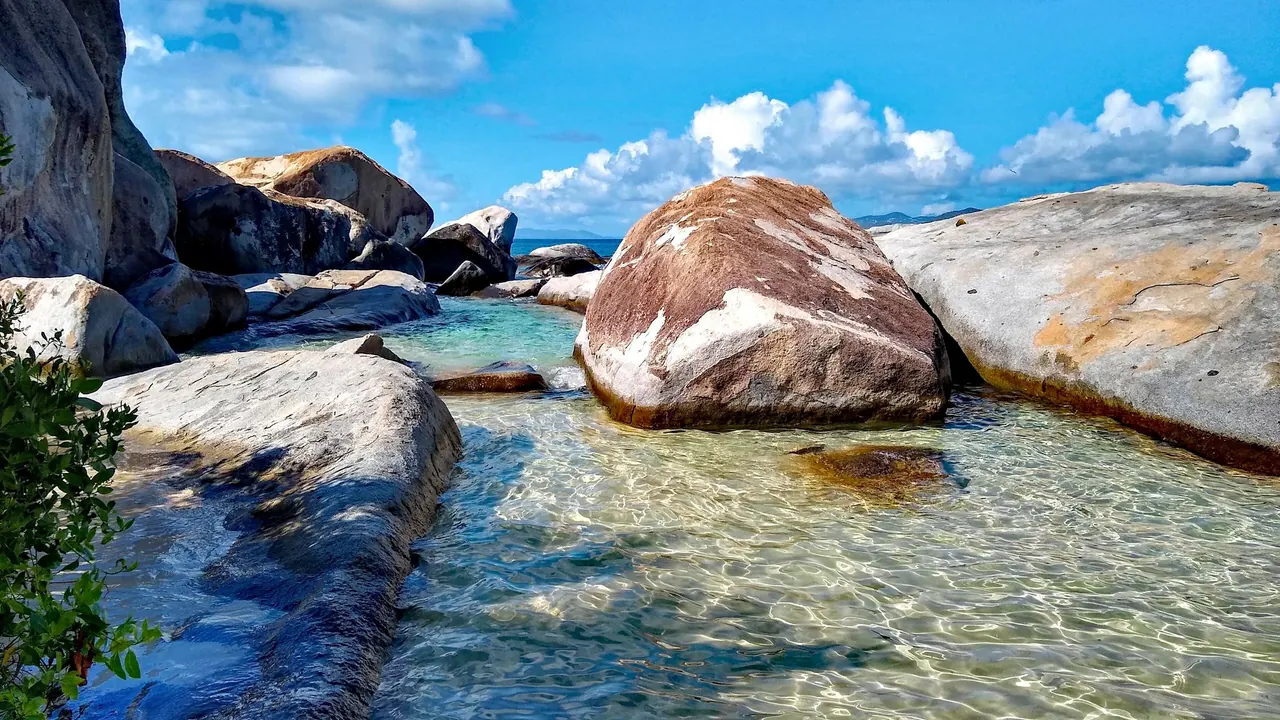
Photos: British Virgin Islands by P. Hughes, CC BY-SA 4.0, cropped.
British Virgin Islands or St Barts?
Our verdict in twelve categories, each scored against the same fixed benchmark cities, and the climate month by month, so you can choose for your trip.
Choose British Virgin Islands for
- nature and the outdoors
- prices
- wellness
The British Virgin Islands suit a trip spent moving across the water. Dozens of small islands sit around one sheltered channel, so the days can go on sailing between anchorages, snorkelling the wreck of the Rhone or Anegada's reef, and wading ashore to beach bars. It is expensive, though a little less so than its neighbour, and the secluded resorts of the outer islands make it the better choice for real rest.
Choose St Barts for
- shopping
- food and drink
- nightlife
Pick St Barts if you want one small island with a French accent: proper bread and wine, long lunches on the sand, harbour boutiques in Gustavia and a glamorous winter social life. Every beach is a short drive from your villa, which makes a stay simple. In return you give up the island-hopping and the wider sailing waters of the BVI, and you pay even more for the privilege.
Scoreboard
Twelve categories on one fixed scale from 0 to 100. The shaded stretch is the gap between the two.
Your match
Pick a travel style or drag the sliders, and both match scores follow your weighting.
Wins on nature and the outdoors and prices with your weighting.
Wins on shopping and food and drink with your weighting.
What matters to you?
Category by category
What the scores mean for a trip.
Beaches & swimming
The beaches are equally strong but differ in kind. The BVI spread theirs across many islands. You get the granite boulders and pools of The Baths on Virgin Gorda, the anchored boats off White Bay on Jost Van Dyke and the long, empty reef beaches of Anegada, many of them best reached by boat.
St Barts packs its beaches into one small island, all within a short drive of each other. They are small coves rather than long strands, ranging from the wild, shadeless surf beaches of Saline and Gouverneur to the reef-sheltered lagoons of Grand Cul-de-Sac. St Jean adds the odd sight of planes landing over the swimmers.
Food & drink
St Barts eats noticeably better. Its French side shows in morning croissants, supermarkets stocked with cheese and wine for villa cooking, long lunches on the sand and polished dinners above the Gustavia harbour. The range is narrow, though, and almost all of it is expensive.
The BVI keep things casual and West Indian: rotis and conch fritters in Road Town, lobster grilled over oil drums on Anegada's beaches, and a painkiller cocktail at a Jost Van Dyke bar. It is enjoyable, but choice thins out quickly away from Road Town.
Culture & sights
Neither is a place for sightseeing, and each offers an afternoon at most. The BVI's relics are industrial and colonial: the roofless Cornish engine house of the Copper Mine on Virgin Gorda, a working rum distillery at Cane Garden Bay and plantation ruins in the hills. St Barts has the unusual Swedish legacy of Gustavia, with its clock tower and the small museum in the Wall House, plus the old fishing village of Corossol.
Nightlife
St Barts has more of a scene. From Christmas into spring, lunches at St Jean turn into afternoon parties, and the evenings move to Gustavia's harbour bars, a couple of late clubs and the decks of superyachts. It goes very quiet in late summer, when many places close.
In the BVI, going out means taking the dinghy between beach bars at Great Harbour, White Bay and the Bight at Norman Island, with full-moon parties at Trellis Bay as a highlight. There are no clubs, and most nights end early.
Nature & outdoors
The BVI offer more to do outdoors, and most of it is at sea. Dozens of islands in calm water make this one of the classic places to sail. The wreck of the RMS Rhone is a well-known dive, and Norman Island's caves and Anegada's reef are good for snorkelling.
On land, Sage Mountain on Tortola rises to about 520m with short forest trails, and Anegada has flamingos on its salt ponds. St Barts gives you turtles in its marine reserve, kitesurfing on the Grand Cul-de-Sac lagoon and a cliff path to Colombier, but a few days is enough to cover it.
Day trips
Both have only a few day trips, but the BVI have more choice. Ferries reach the small settlements of Virgin Gorda and Jost Van Dyke. The best day out is across the border in the US Virgin Islands, so bring a passport: Charlotte Amalie has Danish warehouses and a fort, and St John has the ruins of the Annaberg plantation.
From St Barts there is really only the ferry to St Martin, about an hour across. There you can visit Marigot and Grand Case on the French side or the busier Philipsburg on the Dutch side.
Good for families
Both work about as well for families, and neither has anything built for children, so no aquarium or park for a rainy day. In the BVI, children can snorkel over reefs a few strokes from shore, and a charter yacht makes a real adventure for older children, though boat transfers and winding roads take some managing with toddlers.
St Barts is easier with small children because the distances are tiny. A villa pool and the shallow lagoons at Grand Cul-de-Sac and Shell Beach fill the days, but the island is aimed at adults, and teenagers may get bored.
Getting around
St Barts is easier to get around once you have arrived, simply because it is so small. In a hire car, every beach is minutes away, and Gustavia and St Jean are easy on foot. The roads are steep and full of hairpins, and getting there means a small plane or the ferry from St Martin.
In the BVI you have to plan more. Tortola's roads are steep and you drive on the left, ferries link only some islands, and Anegada needs a longer crossing or a short flight. That is why many visitors either charter a yacht or stay put at one resort.
Shopping & style
St Barts is far better for shopping. Duty-free status has filled the streets around the Gustavia harbour with luxury fashion, watch and jewellery boutiques, and St Jean adds resort wear. Beyond that, it is aimed almost entirely at a well-off vacation wardrobe.
The BVI have little more than a few shops on Road Town's Main Street and marina stores selling swimwear and sailing gear. Woven baskets and island paintings make the best souvenirs.
Affordability
Both are expensive, but St Barts is in a league of its own, ranking among the costliest places in the world for a vacation. Even the small-plane flight and the hire car add up, and cooking in your villa only softens the bill.
The BVI give you a little more room. Small guesthouses on Tortola and food stands in Road Town cut costs, and sharing a charter yacht among a group spreads the price of beds and transport.
Live music & performing arts
Neither has a theatre or a regular concert season, but the music they do have is very different. The BVI's sound is fungi, played by scratch bands on washboards and gourds, and it peaks at the Emancipation Festival in Road Town and a beach festival at Cane Garden Bay. St Barts leans classical: each January a long-established festival brings musicians, opera singers and dancers to Gustavia's churches, and carnival before Lent adds steel bands.
Wellness & relaxation
The BVI are slightly better for a restful trip, mostly because of their seclusion. The resorts on Virgin Gorda's North Sound and on the private islands offer yoga on decks above the sea and days with no traffic at all.
St Barts makes up for it with well-run hotel spas and therapists who come to your villa, and the island is very quiet in spring. Around New Year, though, the harbour is full and calm is hard to find. Neither has thermal baths or a spa tradition of its own.
When should you go?
Pick your month. The climate figures are measured averages, not a forecast.
British Virgin Islands in July
St Barts in July
Daytime high, °C
Rainfall in the month, mm
Where the figures come from
British Virgin Islands's temperatures are measured 40 km from the centre, at C. Amalie / St. Thomas Airport.
British Virgin Islands has no rain gauge within 25 km of the centre, so its rainfall comes from a gridded climate dataset read at the destination rather than from a gauge further away.
Temperature and rainfall are climate normals, averaged over the years shown. British Virgin Islands: 1991-2020 normals, C. Amalie / St. Thomas Airport (39.7 km from centre). St Barts: 1991-2020 (sunshine 1961-1990) normals, Gustavia, Saint Barthelemy (0.5 km from centre).
Both are warm enough for the beach every month, with daytime highs that rarely leave the high 20s and low 30s and a sea that runs from about 26°C in late winter to 29°C in late summer. From June to September the afternoons reach about 32°C on both, which is hot for walking around Road Town or Gustavia but fine if the day is spent in the water. The best stretch on both is the dry run from February to April.
The difference is in the rain. In the BVI it picks up from August and stays heavy right through to December, peaking at about 154mm in November. St Barts is drier for most of the year, with the wet weather concentrated in September to November, and it keeps plenty of sunshine even then. That makes it the safer choice for a December trip.
Which traveller are you?
On an outdoors trip, the British Virgin Islands are the clear choice. The sheltered Sir Francis Drake Channel makes for easy sailing, the Rhone wreck and Anegada's reef offer far more diving and snorkelling, and Sage Mountain adds a forest walk.
For a food and nightlife trip, St Barts comes out ahead. French bakeries, long rosé lunches at St Jean and polished harbour dinners lead into afternoon parties, Gustavia's bars and a couple of late clubs, while the BVI offers beach bars and early nights.
On a shopping trip, St Barts is the only real option. Gustavia's duty-free harbour streets are lined with luxury fashion, watch and jewellery boutiques. Road Town has just a few small craft and rum shops, so serious shoppers there end up crossing to St Thomas.
Before you go
| Measure | British Virgin Islands | St Barts |
|---|---|---|
| Official language | English | French |
| Currency | US Dollar (USD) | Euro (EUR) |
| Sockets | AB110 V, 60 Hz | - |
| Driving side | Left | Right |
| Time zone | UTC-4 | UTC-4 |
| Emergency number | 999 | - |
| Main airport | Terrance B. Lettsome International Airport (EIS)8 non-stop destinations | Princess Juliana International Airport (SXM)44 non-stop destinations |
| Public holidays this year | 14 days | 12 days |
By the numbers
| Measure | British Virgin Islands | St Barts |
|---|---|---|
| Population | 39,369 | 10,124 |
| People per km² | 257 | 405 |
| Swim season, months above 21 °C | 12 months | 12 months |
Where else could you go?
Every comparison below shares a destination with this one, so you can follow British Virgin Islands or St Barts somewhere new.
- St Johnvs British Virgin Islands
- Sint Maartenvs St Barts
- Saint-Martinvs St Barts
- St Thomasvs British Virgin Islands
- US Virgin Islandsvs British Virgin Islands
- Anguillavs St Barts