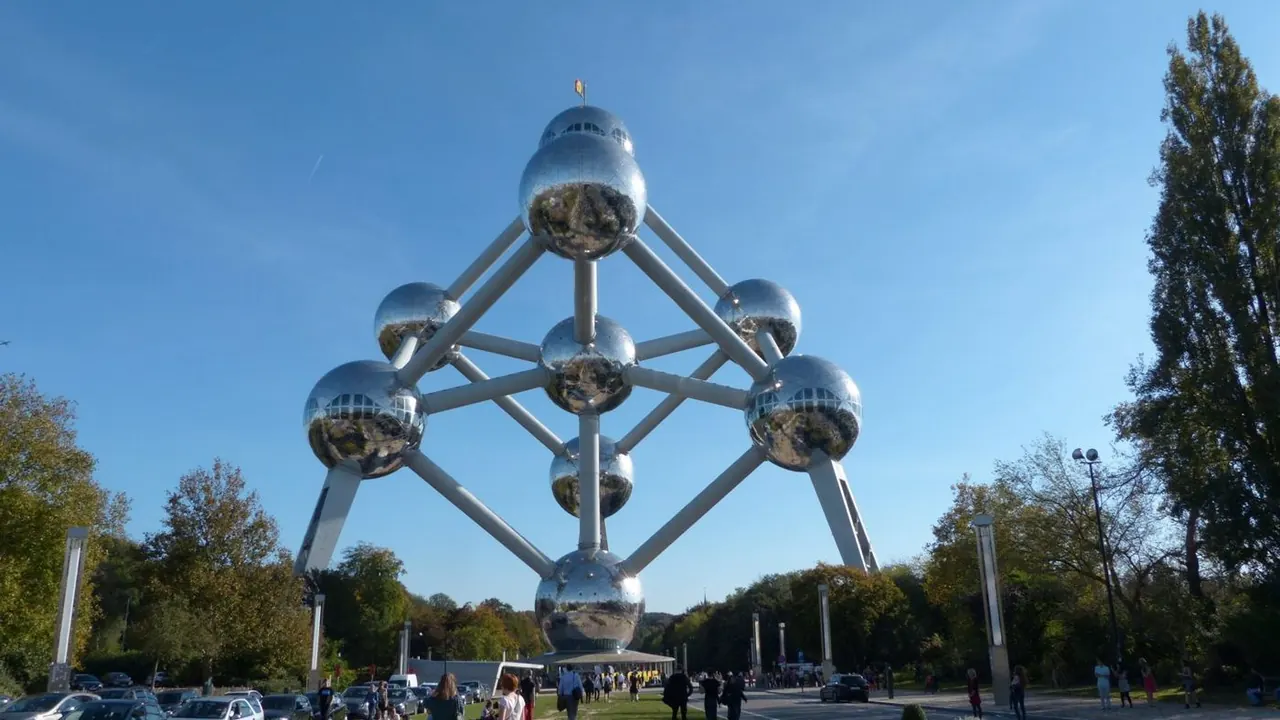
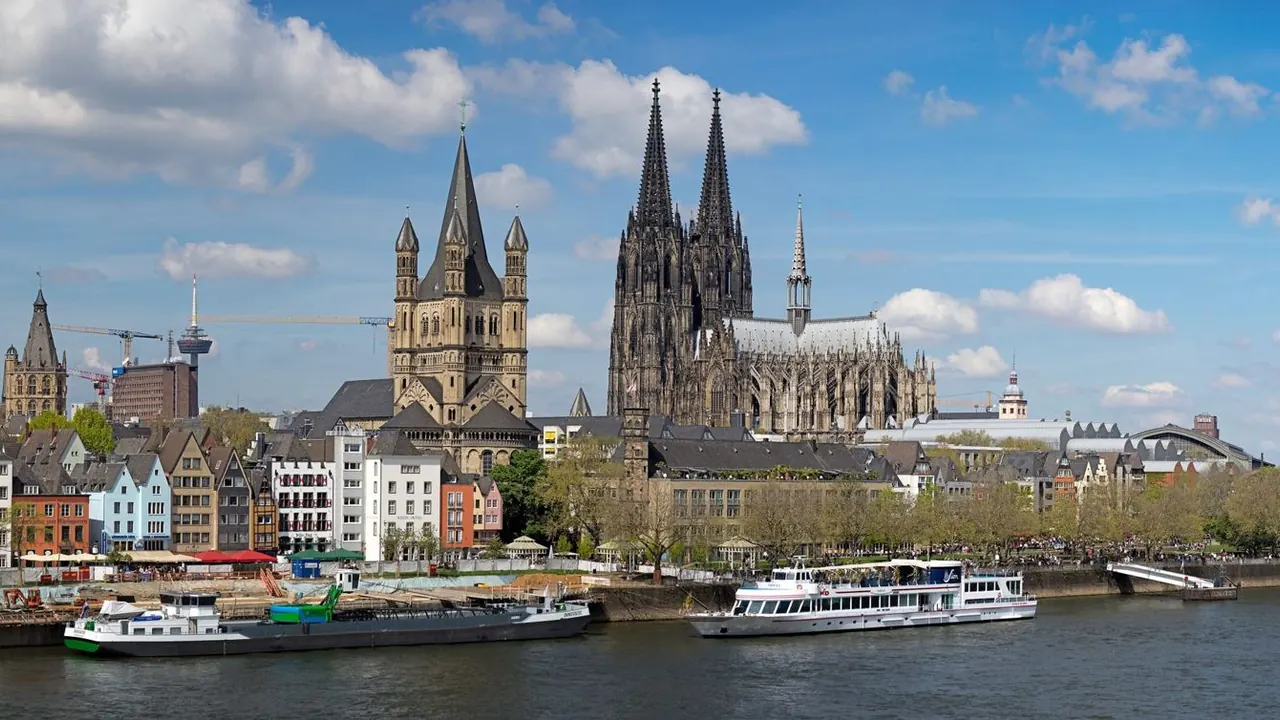
Photos: Brussels by Ettanghe, CC BY-SA 4.0, cropped; Cologne by Jörg Braukmann, CC BY-SA 4.0, cropped.
Brussels or Cologne?
Our verdict in twelve categories, each scored against the same fixed benchmark cities, and the climate month by month, so you can choose for your trip.
Choose Brussels for
- food and drink
- day trips
- culture and sights
Brussels is the better pick for travellers who plan their days around eating, drinking and looking at art. The beer cafés and lambics, the mussels and pralines, the Grand-Place and the Horta houses make it a richer city to spend time in. It is also an unusually good base: Ghent, Bruges and Antwerp are close enough to see on separate days without changing hotels.
Choose Cologne for
- wellness
- nature and the outdoors
- families
Families, walkers and anyone who wants an easy, sociable stay will be happier in Cologne. Children have more to do and the centre is flat, the hills and vineyards start close to the city, and the German sauna habit gives you somewhere to unwind after sightseeing. Evenings out are livelier too, and a little cheaper, with the cathedral at the centre of it all.
Scoreboard
Twelve categories on one fixed scale from 0 to 100. The shaded stretch is the gap between the two.
Your match
Pick a travel style or drag the sliders, and both match scores follow your weighting.
Too close to call, level with your weighting
Wins on food and drink and day trips with your weighting.
Wins on wellness and nature and the outdoors with your weighting.
What matters to you?
Category by category
What the scores mean for a trip.
Beaches & swimming
Neither city is a place for a swimming vacation, but what they offer is different. From Brussels, a train reaches the wide sandy North Sea beaches at Ostend or De Haan in a little over an hour. That makes a good windy day on the promenade, though the water stays cool. Cologne has no sea within a day's reach. Instead, the lakes in its old gravel pits, such as Fühlinger See on the city's edge, give you a warm summer afternoon of swimming in calm water.
Food & drink
Brussels is the much better city to eat in. Its range runs from frites at a corner friterie to mussels, waterzooi and carbonnade, and it adds lambics and gueuzes brewed only in its region, pralines around the Sablon and Congolese cooking in Matonge.
Cologne's strength is narrower: the Brauhaus ritual of Kölsch glasses topped up by the Köbes, with Himmel un Ääd or a Halve Hahn alongside. It makes for a fun evening, and the Turkish food on Venloer Strasse is worth the trip out to Ehrenfeld, but few people plan a visit around eating there.
Culture & sights
Brussels has the wider spread of sights. The Grand-Place is among the finest squares in Europe. The Horta houses in Saint-Gilles and Ixelles, the Bruegels and the Magritte museum then carry the city from Gothic through Art Nouveau to surrealism.
Cologne has one overwhelming monument, the cathedral, along with twelve Romanesque churches, Roman remains and the Pop Art of Museum Ludwig. Both cities share the same weakness: the streets between the highlights are broken up, by office blocks in Brussels and by hasty post-war rebuilding in Cologne.
Nightlife
Cologne is the livelier place to go out, and it offers more variety from one night to the next. You can drink Kölsch in the Altstadt brewhouses, cocktails in the Belgian Quarter, join the students on Zülpicher Strasse or go to the factory clubs of Ehrenfeld. Carnival, when the whole city sings in costume for days, has nothing to match it in Brussels.
Brussels is a bar city first. It is at its best in the wood-panelled taverns and around Saint-Géry and Place Flagey, and it has one techno club in the Marolles known across Europe. Both have large, open gay scenes, around Rudolfplatz in Cologne and Rue du Marché au Charbon in Brussels.
Nature & outdoors
Cologne gets you into proper walking country faster. The wooded volcanic hills of the Siebengebirge and the Drachenfels crag are about forty minutes away, and the Eifel national park and the Ahr vineyards about an hour. In the city itself, the Grüngürtel parks and the long cycle paths along the Rhine are there every day.
Brussels has one outstanding green space, the tall beech stands of the Sonian Forest. Beyond it the land is flat farmland, and for real hills you go to the Meuse valley around Dinant, a longer trip of up to two hours.
Day trips
Both are excellent bases, but Brussels has the stronger set of destinations. Ghent in half an hour, Antwerp in forty minutes and Bruges in an hour are three of the finest historic towns in northern Europe, and Paris is close enough by high-speed train for a long day.
Cologne's list is more varied than grand: the rococo palaces at Brühl, Beethoven's birthplace in Bonn, Charlemagne's chapel in Aachen and the castle-lined Rhine Gorge. It suits travellers who want river scenery and wine villages more than a run of medieval town centres.
Good for families
Cologne is the easier city with children. The zoo with its elephant park, the working production line at the Chocolate Museum, the cable car over the Rhine and the traffic-free promenades fill the days without much planning, and Phantasialand is a short trip south.
Brussels has good single attractions, such as the Iguanodons at the Natural Sciences museum and the Atomium beside Mini-Europe. But the cobbles, heavy traffic and frequent rain make days harder to organise. In Cologne the one time to avoid with small children is Carnival.
Getting around
Both centres are compact enough to see most sights on foot, and neither needs a car. Cologne has the edge in ease: the centre is flat, the main station opens straight onto the cathedral and cycling along the river is simple. Its tram and Stadtbahn map does take some learning.
Brussels makes you climb steeply between the lower and upper town, and its pavements are rough on a pushchair. Its trams, though, are a pleasant way out to Saint-Gilles and Ixelles, and you pay by tapping a bank card.
Shopping & style
Neither is a major fashion destination, and the difference is in what you go for. Brussels is better for browsing: the chocolatiers of the Galeries Royales and the Sablon, the antiques dealers, the early-morning flea market on Place du Jeu de Balle and the Belgian designers on Rue Antoine Dansaert.
Cologne is the practical high-street city, with Schildergasse and Hohe Strasse among Germany's busiest shopping streets and independent shops on Ehrenstrasse. Its things to take home are Eau de Cologne from the historic perfume houses and, in Advent, finds from the Christmas markets.
Affordability
Cologne is the somewhat cheaper stay. A brewhouse dinner with a few Kölsch is good value, and the cathedral and many churches are free to enter. The catch is hotels during the trade fairs and Carnival, so check the dates before booking.
Brussels is dearer, mainly for sit-down restaurants and weekday hotels aimed at EU and business travellers. A weekend visit softens that, and frites and the cooking in the immigrant neighbourhoods keep daily costs down.
Live music & performing arts
Both cities have a full stage life, but their strengths differ. Brussels leans towards opera, dance and theatre: La Monnaie is known for adventurous productions, Bozar and Flagey host fine concerts, and contemporary dance and theatre play in both French and Dutch.
Cologne's strengths are orchestral music and small gigs. The Philharmonie by the cathedral is home to two major orchestras, the city has a long tradition of electronic music, and small venues in Ehrenfeld and the Südstadt have gigs most nights. Its Carnival sessions with dialect bands are found nowhere else.
Wellness & relaxation
Cologne is clearly the better choice for unwinding. Saunas are part of ordinary German life there, the thermal baths in the Rheinpark look across the river to the cathedral, and Aachen's hot springs are under forty minutes away.
Brussels has no bathing tradition, just a few hammams, hotel spas and its Art Deco pools, and the town of Spa itself is a long trip. Its slow pleasures are a long lunch or an afternoon on a café terrace in Ixelles.
When should you go?
Pick your month. The climate figures are measured averages, not a forecast.
Brussels in July
Cologne in July
Daytime high, °C
Rainfall in the month, mm
Temperature and rainfall are climate normals, averaged over the years shown. Brussels: 1991-2020 normals, Uccle (5.2 km from centre). Cologne: 1991-2020 normals, Köln-Stammheim (5.4 km from centre).
The two share a mild, damp climate with no real beach season, and the best months for walking either city run from May to September. Cologne is a little warmer in high summer, reaching about 25°C in July and August against 23°C in Brussels, which is just enough for an afternoon at its lakes. Rain falls in every month in both cities, and the late summer is among the wettest times. Brussels is noticeably wetter in winter, with about 89mm in December.
From November to February both are cold, grey and short on sunshine, with highs around 6°C. These months suit museums, brewhouses and beer cafés more than long walks. Spring brings the biggest change: by April both cities get far more sun and highs in the mid-teens, good weather for walking the streets and taking day trips by train.
Which traveller are you?
For a culture and arts trip, Brussels gives you more to fill a week. Flemish painting, Gothic squares and Art Nouveau houses are all in town, and a spare day brings the Van Eyck altarpiece in Ghent by train.
On a family trip with young children, Cologne makes the days easier to run. The centre is flat for a pushchair, a theme park day is close at hand, and brewhouses and cafés are happy to have children at the table.
For a relaxing and wellness trip, Cologne lets you pair sightseeing with rest: mornings at the sights, afternoons in the sauna and warm water as the locals do. Brussels, a busy working capital, is a harder place to slow down.
Before you go
| Measure | Brussels | Cologne |
|---|---|---|
| Official language | French, German, Dutch | German |
| Currency | Euro (EUR) | Euro (EUR) |
| Sockets | CE230 V, 50 Hz | CF230 V, 50 Hz |
| Driving side | Right | Right |
| Time zone | UTC+1, UTC+2 in summer | UTC+1, UTC+2 in summer |
| Emergency number | 112 | 112 |
| Elevation | 70 m | 59 m |
| Main airport | Brussels Airport (BRU)11 km from centre191 non-stop destinations | Cologne Bonn Airport (CGN)15 km from centre115 non-stop destinations |
| Public holidays this year | 14 days | 11 days |
By the numbers
| Measure | Brussels | Cologne |
|---|---|---|
| City population | 195,546 | 1,025,523 |
| People per km² | 5,908 | 2,532 |
| Museums within 10 km | 106 | 40 |
| UNESCO World Heritage sites within 50 km | 10 | 3 |
Where else could you go?
Every comparison below shares a destination with this one, so you can follow Brussels or Cologne somewhere new.