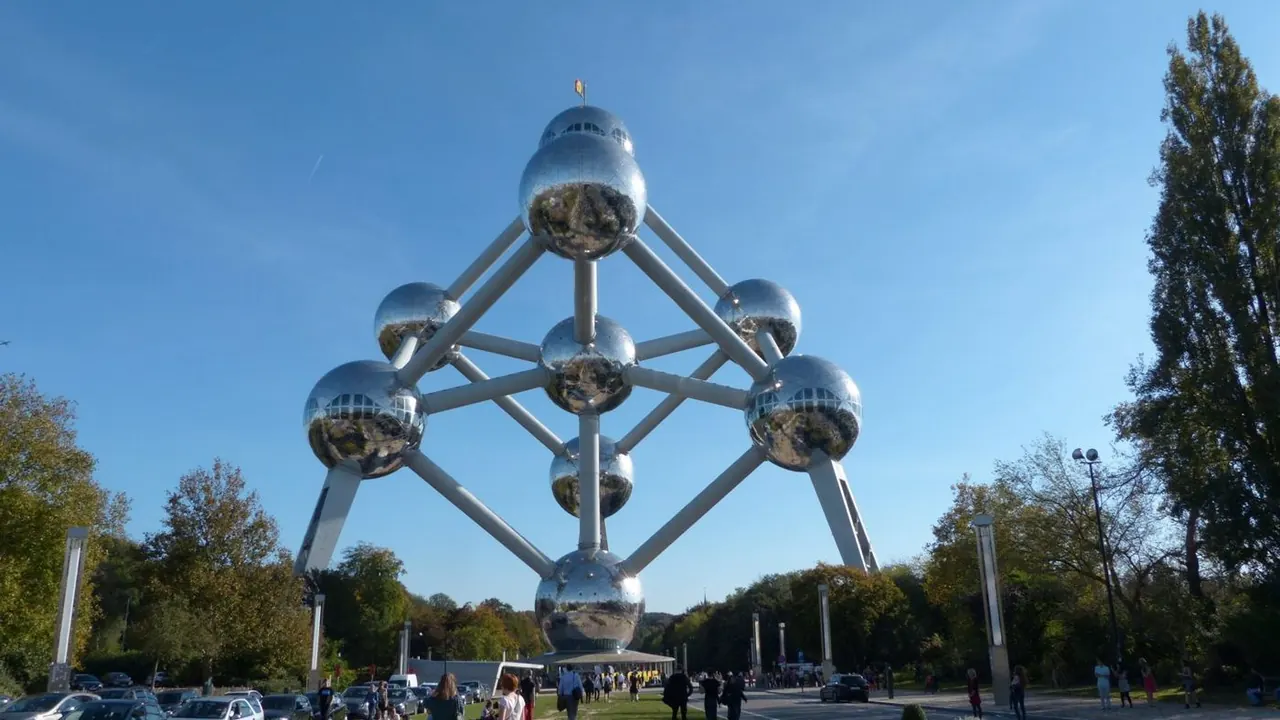
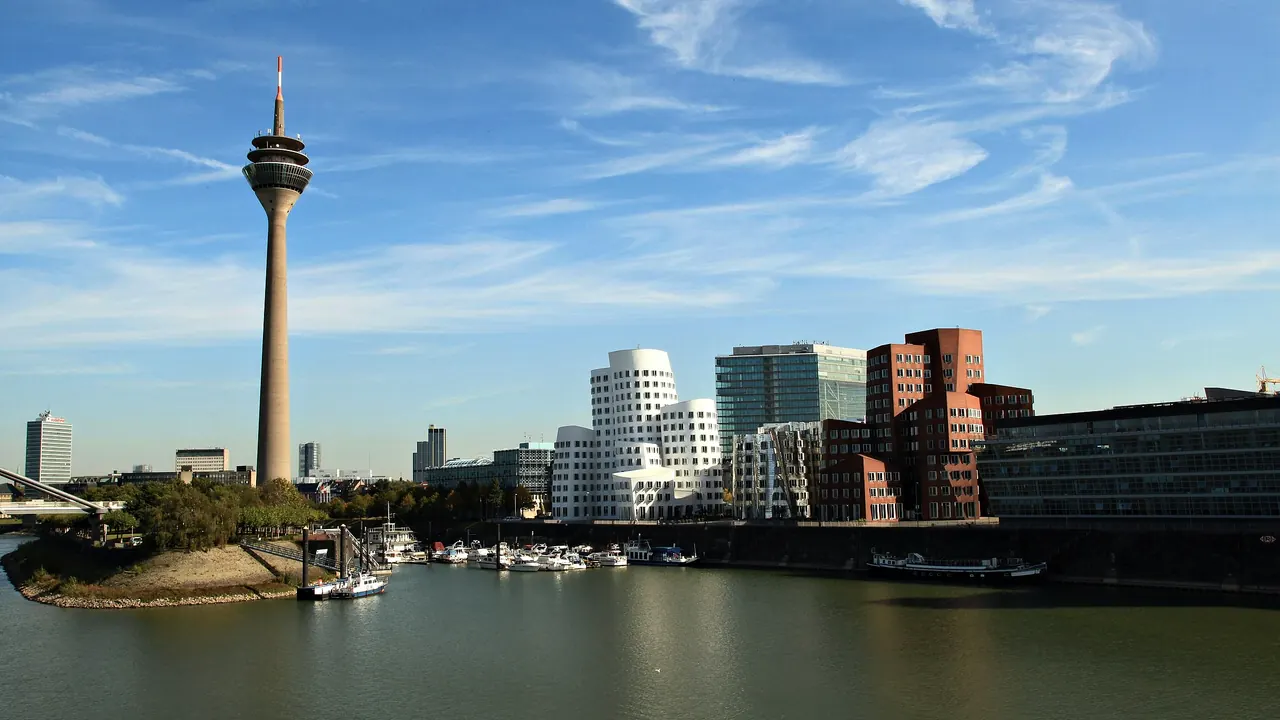
Photos: Brussels by Ettanghe, CC BY-SA 4.0, cropped; Dusseldorf by Frank Vincentz, CC BY-SA 3.0, cropped.
Brussels or Dusseldorf?
Our verdict in twelve categories, each scored against the same fixed benchmark cities, and the climate month by month, so you can choose for your trip.
Choose Brussels for
- culture and sights
- food and drink
- day trips
Brussels suits the traveller who wants more to see and eat. The Grand-Place, Horta's Art Nouveau houses and the Bruegel and Magritte collections give it the deeper sightseeing, and its beer culture and Belgian cooking make meals part of the plan. It is also hard to beat as a base: Ghent, Bruges and Antwerp are all within an hour by train.
Choose Dusseldorf for
- wellness
- shopping
- getting around
Düsseldorf is the better choice for a calmer, more polished stay built around modern art, the Königsallee and long walks on the Rhine meadows. The flat, compact centre is easy to get around, and the German sauna habit gives it more ways to unwind. It works well for shoppers and anyone who prefers an orderly city to a grand but patchy one.
Scoreboard
Twelve categories on one fixed scale from 0 to 100. The shaded stretch is the gap between the two.
Your match
Pick a travel style or drag the sliders, and both match scores follow your weighting.
Too close to call, 2 points apart
Wins on culture and sights and food and drink with your weighting.
Wins on wellness and shopping with your weighting.
What matters to you?
Category by category
What the scores mean for a trip.
Beaches & swimming
Neither city is a beach destination, but Brussels is a little better placed. Long sandy beaches at Ostend and De Haan are a little over an hour away by train, although the North Sea there is cool and windy.
From Düsseldorf the coast is a full day's travel away, and the Rhine is too dangerous for swimming. A summer swim there means Unterbacher See or a gravel-pit lake, which is pleasant enough but hardly a reason to go.
Food & drink
Brussels is the stronger city for food. It has Belgian classics such as mussels, carbonnade and waterzooi, plenty of frites and pralines, and a beer culture built on lambic and gueuze brewed only in and around the city. Matonge, Saint-Josse and Saint-Gilles add Congolese, Moroccan and Turkish cooking, which gives it real range.
Düsseldorf eats well in two main ways: Altbier and sauerbraten in the Altstadt brewhouses, and ramen and izakaya around Immermannstrasse. Both are good, and the Japanese quarter is something Brussels lacks, but there is less variety beyond them.
Culture & sights
Brussels has much more to see. The Grand-Place is one of Europe's great squares, Horta's Art Nouveau houses are UNESCO listed, and the Royal Museums hold Bruegel, Rubens and Magritte. The Cinquantenaire museums and the comics murals fill further days, even if the streets between these sights are often dull.
Düsseldorf's strength is modern art. The Kunstsammlung splits its collection between K20, with its Klee works, and K21, with a net slung under its dome, and the Kunstpalast adds more. The Altstadt was largely rebuilt after the war, though, and its finest historic building, Benrath Palace, lies out in the suburbs.
Nightlife
The two cities are about equal after dark, but the nights feel different. Brussels is a city of beer bars: wood-panelled taverns pouring lambics, terraces around Saint-Géry, and a more local crowd at Flagey and Châtelain. It also has a respected techno club in the Marolles and a queer scene around Rue du Marché au Charbon.
Düsseldorf's Altstadt packs a few hundred pubs into a few streets, and at weekends it turns into a loud street party where stag groups are part of the crowd. Carnival, when the whole city goes out in costume for days, has no real equivalent in Brussels.
Nature & outdoors
Both cities sit in flat country and offer gentle green space rather than scenery. Brussels has the Sonian Forest, a UNESCO-listed beech forest with tall trees right on its edge, and the Ardennes valleys around Dinant are about two hours away for hills and kayaking.
Düsseldorf's outdoors is the river itself: grassy Rhine meadows and long cycle paths to Kaiserswerth. The wooded Bergisches Land and the Neandertal are within half an hour, so gentle hill walking is closer to hand.
Day trips
Both are excellent bases, but Brussels has the better list. Ghent, Bruges and Antwerp are all within an hour, each a first-rank historic town, and Paris is about an hour and a half by high-speed train.
Düsseldorf has Cologne cathedral less than half an hour away, plus Bonn, the Brühl palaces and the Ruhr's industrial heritage at Zollverein. Aachen, Maastricht and the Middle Rhine castles make good longer days out, though they take more time to reach than the Flemish towns do from Brussels.
Good for families
Both work about equally well with children, but for different reasons. Brussels has more to see for children: the Atomium and Mini-Europe side by side, the Iguanodon hall at the Natural Sciences museum, and comic murals all over the centre. Its cobbles, heavy traffic and rain can make the days hard work, though.
Düsseldorf is easier day to day. It is orderly, trams take buggies without fuss, and the free game park in Grafenberg forest and the Rhine meadows give space to run. Phantasialand is within an hour for a bigger day out.
Getting around
Both centres are easy to explore on foot, but Düsseldorf's is flat. The Altstadt, the Königsallee and the Rhine promenade connect without effort, and the S-Bahn reaches the airport in minutes. One regional network also runs on to Cologne and the Ruhr.
In Brussels, the walk between the lower and upper town is steep and the pavements are rough. Still, metro and trams cover the city well, you can tap a bank card to pay, and the trams are a pleasant way to reach Ixelles and Saint-Gilles.
Shopping & style
Düsseldorf is the better city for buying clothes. The Königsallee has luxury flagships and jewellers along its canal, and big department stores and Schadowstrasse are nearby. Flingern's design shops and the Japanese quarter's stationery add some independent character.
Brussels is better for browsing than for fashion: chocolatiers in the Galeries Royales, antiques on the Sablon, and the morning flea market on Place du Jeu de Balle. Rue Dansaert is the street for Belgian designers.
Affordability
Both cities cost what a prosperous Western European city costs, so neither is a budget choice. What differs is the hotels. Brussels empties out at weekends as business travellers leave, which makes a Friday-to-Sunday stay noticeably better value.
In Düsseldorf, hotel prices can multiply during the big trade fairs, so check the fair calendar before booking. Brewhouse meals and noodle bars keep daily costs reasonable in Düsseldorf, much as frites and the immigrant neighbourhoods do in Brussels.
Live music & performing arts
Brussels has the stronger evening programme, and it is easier for visitors to follow. La Monnaie is known for adventurous opera productions, and Bozar and Flagey host top orchestras. Dance and theatre run in both French and Dutch, and the Queen Elisabeth Competition is a fixture of the classical year.
Düsseldorf has the Deutsche Oper am Rhein and the domed Tonhalle, but much of its best theatre and cabaret is in German. Its own claim is electronic music, as the city where Kraftwerk began.
Wellness & relaxation
Düsseldorf is the more restful of the two. Saunas are part of local routine at the public pools, the thermal baths of Aachen and other large complexes are within reach, and the Japanese garden in Nordpark and the Rhine meadows make slow days easy.
Brussels has no bathing culture beyond a few North African hammams and hotel spas. Unwinding there means a long lunch, an afternoon on a café terrace in Ixelles or a walk in the Sonian Forest.
When should you go?
Pick your month. The climate figures are measured averages, not a forecast.
Brussels in July
Dusseldorf in July
Daytime high, °C
Rainfall in the month, mm
Temperature and rainfall are climate normals, averaged over the years shown. Brussels: 1991-2020 normals, Uccle (5.2 km from centre). Dusseldorf: 1991-2020 normals, Düsseldorf (8.3 km from centre).
Brussels and Düsseldorf have much the same climate. Both are cold and grey from December to February, with highs of about 6°C, and November is only a little milder. The best months for walking the streets run from May to September, and May to August are the sunniest. Brussels reaches about 23°C in July and August. Düsseldorf is slightly warmer at about 25°C in July, which is warm enough for a swim at Unterbacher See, but neither city gets warm enough for a beach trip.
Both cities get rain in every month. Brussels is the wetter of the two, with about 90mm in both August and December, while Düsseldorf stays a little drier all year. April is the driest month in both, with mild days and longer sunshine. September is a good second choice: it is still pleasantly warm and less wet than high summer.
Which traveller are you?
On a culture and arts trip, Brussels is the clear choice. The Grand-Place, Horta's UNESCO-listed houses and the Royal Museums of Fine Arts go much further than Düsseldorf's modern art. La Monnaie and Bozar add a stronger evening programme in a language most visitors can follow.
For a shopping trip, Düsseldorf has the edge. The Königsallee has luxury flagships and big department stores, which Brussels cannot quite match, and Flingern and the Japanese quarter add independent shops. Brussels is better for chocolate, antiques and flea-market browsing than for fashion.
On a relaxing and wellness trip, Düsseldorf is the easier place to slow down. Its public pools have sauna areas, larger thermal complexes are within about an hour, and the Rhine meadows are quiet. Brussels has no bathing tradition and the pace of a busy capital.
Before you go
| Measure | Brussels | Dusseldorf |
|---|---|---|
| Official language | French, German, Dutch | German |
| Currency | Euro (EUR) | Euro (EUR) |
| Sockets | CE230 V, 50 Hz | CF230 V, 50 Hz |
| Driving side | Right | Right |
| Time zone | UTC+1, UTC+2 in summer | UTC+1, UTC+2 in summer |
| Emergency number | 112 | 112 |
| Elevation | 70 m | 38 m |
| Main airport | Brussels Airport (BRU)11 km from centre191 non-stop destinations | Düsseldorf Airport (DUS)7 km from centre182 non-stop destinations |
| Public holidays this year | 14 days | 11 days |
By the numbers
| Measure | Brussels | Dusseldorf |
|---|---|---|
| City population | 195,546 | 619,444 |
| People per km² | 5,908 | 2,849 |
| Museums within 10 km | 106 | 25 |
| UNESCO World Heritage sites within 50 km | 10 | 4 |
Where else could you go?
Every comparison below shares a destination with this one, so you can follow Brussels or Dusseldorf somewhere new.