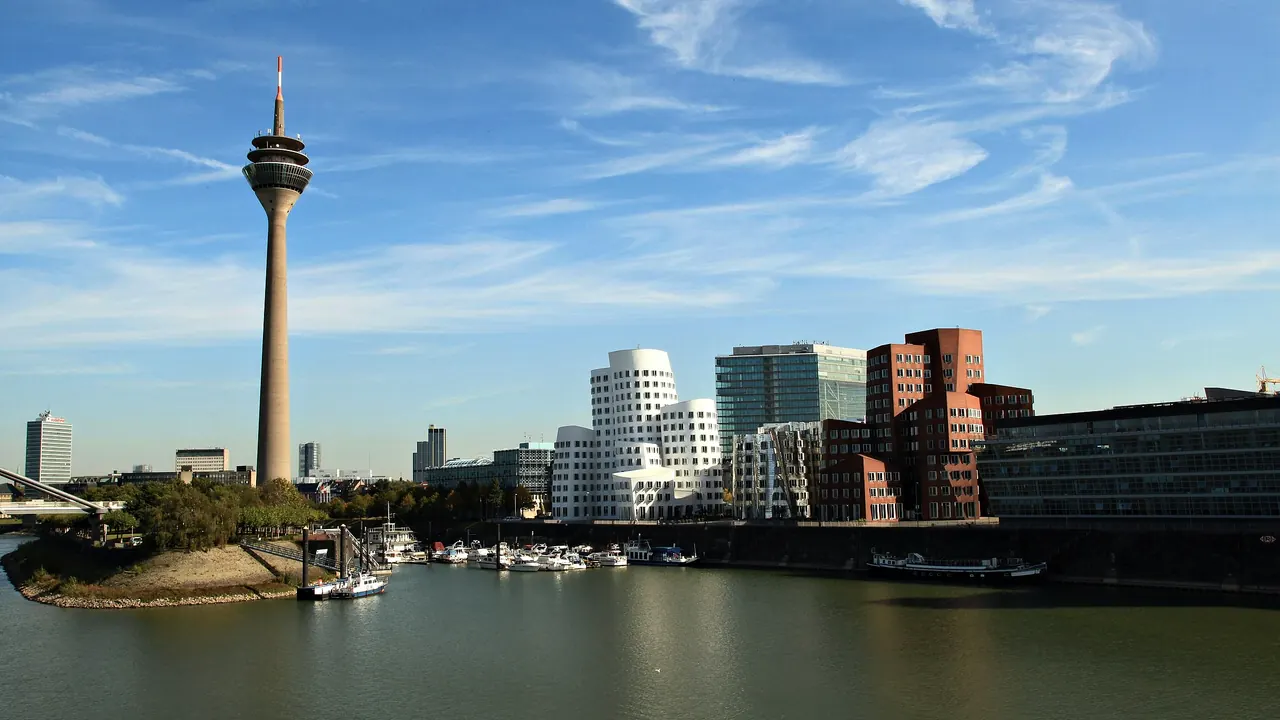
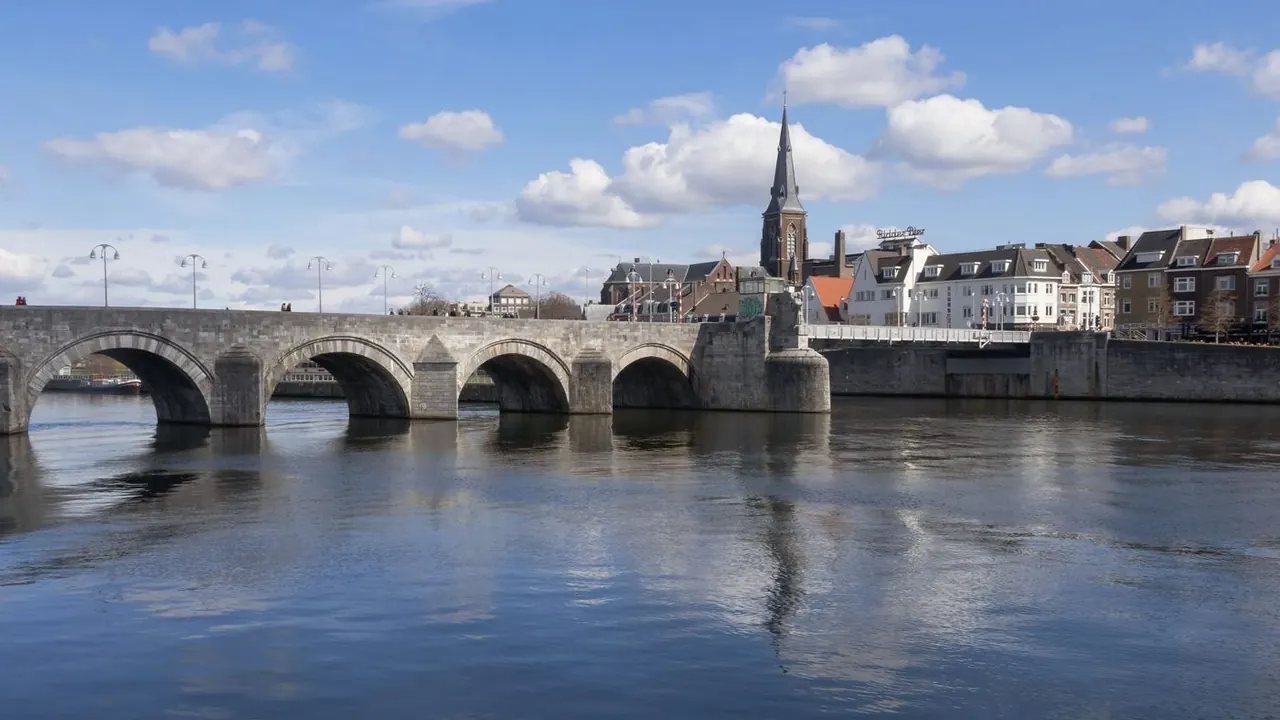
Photos: Dusseldorf by Frank Vincentz, CC BY-SA 3.0, cropped; Maastricht by Michielverbeek, CC BY-SA 4.0, cropped.
Dusseldorf or Maastricht?
Our verdict in twelve categories, each scored against the same fixed benchmark cities, and the climate month by month, so you can choose for your trip.
Choose Dusseldorf for
- live music and the arts
- nightlife
- shopping
Düsseldorf suits travellers who want the evenings and range of a bigger city. You get the brewhouse lanes of the Altstadt, opera and ballet by the Hofgarten, concerts in the Tonhalle and the Königsallee for shopping. It is also the easier choice with children, and its trams and trains link you straight into Cologne and the Ruhr.
Choose Maastricht for
- nature and the outdoors
- wellness
- culture and sights
Maastricht is for a slower trip, in an older town where Romanesque basilicas, medieval walls and the terraces of the Vrijthof set the pace. Walkers and cyclists will like it because the Sint-Pietersberg and the Heuvelland start at its edge. Couples wanting a restful short break have thermal baths at Valkenburg, Aachen and Spa close by. Nights here are quieter, spent in brown cafés rather than along a long strip of bars.
Scoreboard
Twelve categories on one fixed scale from 0 to 100. The shaded stretch is the gap between the two.
Your match
Pick a travel style or drag the sliders, and both match scores follow your weighting.
Wins on live music and the arts and nightlife with your weighting.
Wins on nature and the outdoors and wellness with your weighting.
What matters to you?
Category by category
What the scores mean for a trip.
Beaches & swimming
Neither city is a place to swim, and the Rhine at Düsseldorf is dangerous despite its inviting sandy banks. In Düsseldorf a summer swim means Unterbacher See, a lake with lawns on the south-eastern edge of the city. In Maastricht it means the old gravel-pit lakes along the Maas on both sides of the border, which have small sandy shores and lifeguards. Either makes a good afternoon out but is no reason to choose the city.
Food & drink
The two eat equally well, but differently. Düsseldorf has two kitchens. One is the Altstadt brewhouse food of sauerbraten, pork knuckle and Halve Hahn, eaten with dark Altbier and the city's spicy mustard. The other is the Japanese quarter around Immermannstrasse, where ramen counters and izakaya give it an international range.
Maastricht keeps to its region, with zuurvlees, vlaai, asparagus and game in season, plus Belgian beer and white wine from local hillsides. Its strength is the long meal on a terrace on the Vrijthof or in Wyck, and its fine dining is strong for a city of its size.
Culture & sights
The two are close here but opposite in kind. Düsseldorf is an art city, with Klee and classic modern art in the state collection, the net slung under the glass dome of K21, the Kunstpalast and galleries shaped by its academy. Its Altstadt, though, is largely a postwar rebuild, and its finest historic site, Benrath Palace, is out in the suburbs.
Maastricht has the old buildings Düsseldorf lost. There are two Romanesque basilicas, medieval walls along the Jeker, the Helpoort and a medieval bridge over the Maas, plus the tunnels of the Sint-Pietersberg. Art lovers will get more from Düsseldorf, and people who like wandering an old town will get more from Maastricht.
Nightlife
Düsseldorf offers the far bigger night out. The Altstadt packs a few hundred pubs and brewhouses into a handful of streets, with crowds drinking outside well past midnight. When you want something quieter, there are cocktail bars in Carlstadt and the Medienhafen.
In Maastricht, evenings centre on brown cafés and the terraces around the Markt and the Vrijthof. They are lively with students in term time, but there are few clubs. Both cities give their streets over to carnival before Lent, and during those days the gap largely closes.
Nature & outdoors
Maastricht has the better countryside on its doorstep, because this is where the Netherlands gets its hills. Walking paths on the marl cliffs of the Sint-Pietersberg start at the city's edge, the Jeker valley runs green into Belgium, and road cyclists love the sunken lanes and orchards of the Heuvelland.
Düsseldorf's outdoors are flatter. It has Rhine meadows with long cycle paths to Kaiserswerth, shaded walks in Grafenberg forest, and the Neandertal and Bergisches Land a short ride away. It is pleasant for a walk or a ride but offers less variety.
Day trips
Both are excellent bases, and the difference is which way you head. Düsseldorf looks into Germany's dense Rhine and Ruhr region. Cologne is under half an hour away, and Bonn, the Brühl palaces, the Zollverein colliery and the Middle Rhine gorge are all served by fast, frequent trains.
Maastricht looks across borders. Aachen and Liège are about half an hour away, Tongeren and Valkenburg are nearer still, and Brussels and Leuven are within reach. You change country and language more often from Maastricht, though some smaller places, such as Thorn, are easier by car.
Good for families
Düsseldorf is the easier city with children, because more of the fun is in town. There is the Aquazoo Löbbecke with its aquarium, the tilted windows of the Rheinturm, and wild boar and deer up close in the Grafenberg game park. Phantasialand and Movie Park Germany are within an hour for a bigger day out.
Maastricht is calm and safe enough for children to roam the squares. Apart from the Sint-Pietersberg tunnels, though, its children's attractions are out of town: the show caves and fairy-tale park at Valkenburg and the zoo at Kerkrade.
Getting around
Both centres are compact and flat enough to walk. Düsseldorf adds trams, underground light rail and a regional network that reaches Cologne and the Ruhr, and the airport is minutes away by train, though the fare zones take some learning.
Maastricht is smaller and best seen on foot or by bike. Almost everything is within fifteen minutes' walk, and the cobbles are the only nuisance. Buses to the countryside are thinner, so the hill villages are easier to reach with a bike or a car.
Shopping & style
Düsseldorf has the deeper shopping. The Königsallee, with its canal, luxury flagships and arcades, is worth a trip in itself. Behind it are big department stores, Schadowstrasse and the Kö-Bogen, while Flingern and the Japanese quarter have smaller, more unusual shops.
Maastricht is more about the pleasure of browsing. There are designer boutiques in the restored houses of the Stokstraat quarter, high-street brands on the Grote Staat, independent interiors and vintage shops in Wyck, and a weekly market on the Markt. It is a charming place to shop but cannot match the Kö for luxury.
Affordability
Neither is cheap, and both charge prosperous Northern European prices. Düsseldorf's trap is the trade fairs, when hotel rooms cost several times the usual rate and are hard to find, so check the fair calendar before booking. Brewhouse meals and Japanese noodle bars help keep daily spending down.
In Maastricht the pressure comes at weekends, when short-break visitors fill the hotels, so staying from Sunday to Thursday helps most. Because the centre is walkable, you will spend almost nothing on transport.
Live music & performing arts
Düsseldorf has far more on stage. The Deutsche Oper am Rhein puts on opera and ballet, the domed Tonhalle is home to the symphony orchestra, and the Schauspielhaus is among the leading German-language theatres. The city where Kraftwerk began also has small jazz and live-music venues in the Altstadt and Flingern.
In Maastricht, most performances take place in the one theatre on the Vrijthof, alongside conservatory recitals and organ concerts in the churches. Its big moment comes in summer, when large open-air concerts fill the square.
Wellness & relaxation
Maastricht is the more restful choice. The thermal spa above Valkenburg is about twenty minutes away, Aachen's baths about half an hour, and Spa in Belgium within an hour. At home, unhurried squares and walks along the Maas and the Jeker set an easy pace.
Düsseldorf has no springs of its own. Instead it has the sauna areas of public pools, usually mixed and without swimwear, and large thermal complexes about an hour away. The Hofgarten and the Japanese garden in Nordpark are calm, but the Altstadt is loud at weekends.
When should you go?
Pick your month. The climate figures are measured averages, not a forecast.
Dusseldorf in July
Maastricht in July
Daytime high, °C
Rainfall in the month, mm
Temperature and rainfall are climate normals, averaged over the years shown. Dusseldorf: 1991-2020 normals, Düsseldorf (8.3 km from centre). Maastricht: 1991-2020 normals, Maastricht Airport Zuid Limburg (10 km from centre).
The two cities share almost the same climate. Late May to September is the best time for walking the streets and sitting on terraces, with highs of about 20°C rising to 25°C at Düsseldorf in July. Neither city gets too hot for sightseeing. Only July and August are warm enough for an afternoon at a lake. Rain falls steadily all year with no dry season, and summer is actually the wettest stretch, peaking at 84mm in Maastricht in August. April is the driest month in both.
Winters are grey, with highs around 6°C and short, dim days from November to February. The differences are small. Düsseldorf is a degree warmer at the height of summer, and Maastricht gets a little more sunshine almost every month, most noticeably in spring.
Which traveller are you?
For a food and nightlife trip, Düsseldorf gives far more choice. In Maastricht, evenings tend to wind down over Belgian beer in a café. In Düsseldorf you can go from a brewhouse supper to Japanese food to a cocktail bar without leaving the centre.
On an outdoors trip, Maastricht puts real hills and countryside on both sides of the border within cycling distance. Düsseldorf's river meadows suit an easy ride, but from there a proper hill walk usually starts with a train journey rather than at the hotel door.
For a relaxing and wellness trip, Maastricht asks less of you. A small town you can walk means few decisions and almost no transport, and a warm pool is a short hop away. From Düsseldorf a spa day takes longer to reach, and weekend nights downtown are rarely quiet.
Before you go
| Measure | Dusseldorf | Maastricht |
|---|---|---|
| Official language | German | Dutch |
| Currency | Euro (EUR) | Euro (EUR) |
| Sockets | CF230 V, 50 Hz | CF230 V, 50 Hz |
| Driving side | Right | Right |
| Time zone | UTC+1, UTC+2 in summer | UTC+1, UTC+2 in summer |
| Emergency number | 112 | 112 |
| Elevation | 38 m | 49 m |
| Main airport | Düsseldorf Airport (DUS)7 km from centre182 non-stop destinations | Maastricht Aachen Airport (MST)9 km from centre5 non-stop destinations |
| Public holidays this year | 11 days | 11 days |
By the numbers
| Measure | Dusseldorf | Maastricht |
|---|---|---|
| City population | 619,444 | 120,227 |
| People per km² | 2,849 | 2,000 |
| Museums within 10 km | 25 | 21 |
| UNESCO World Heritage sites within 50 km | 4 | 5 |
Where else could you go?
Every comparison below shares a destination with this one, so you can follow Dusseldorf or Maastricht somewhere new.