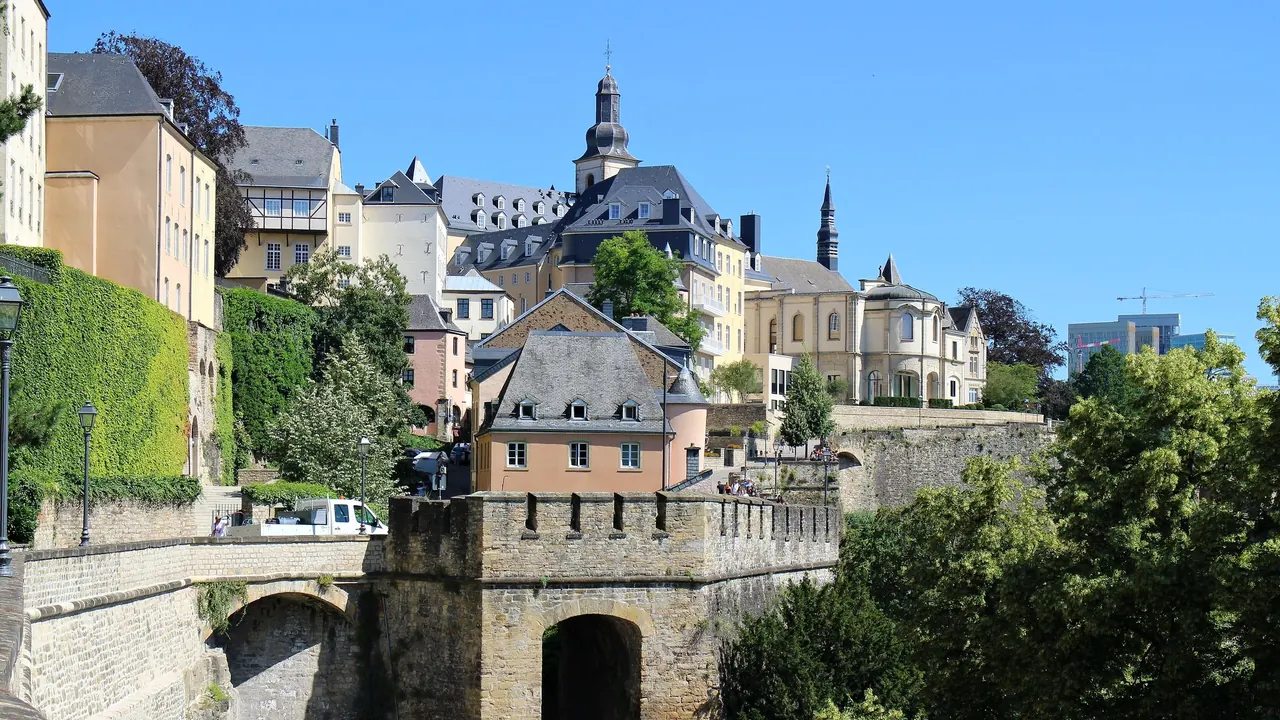
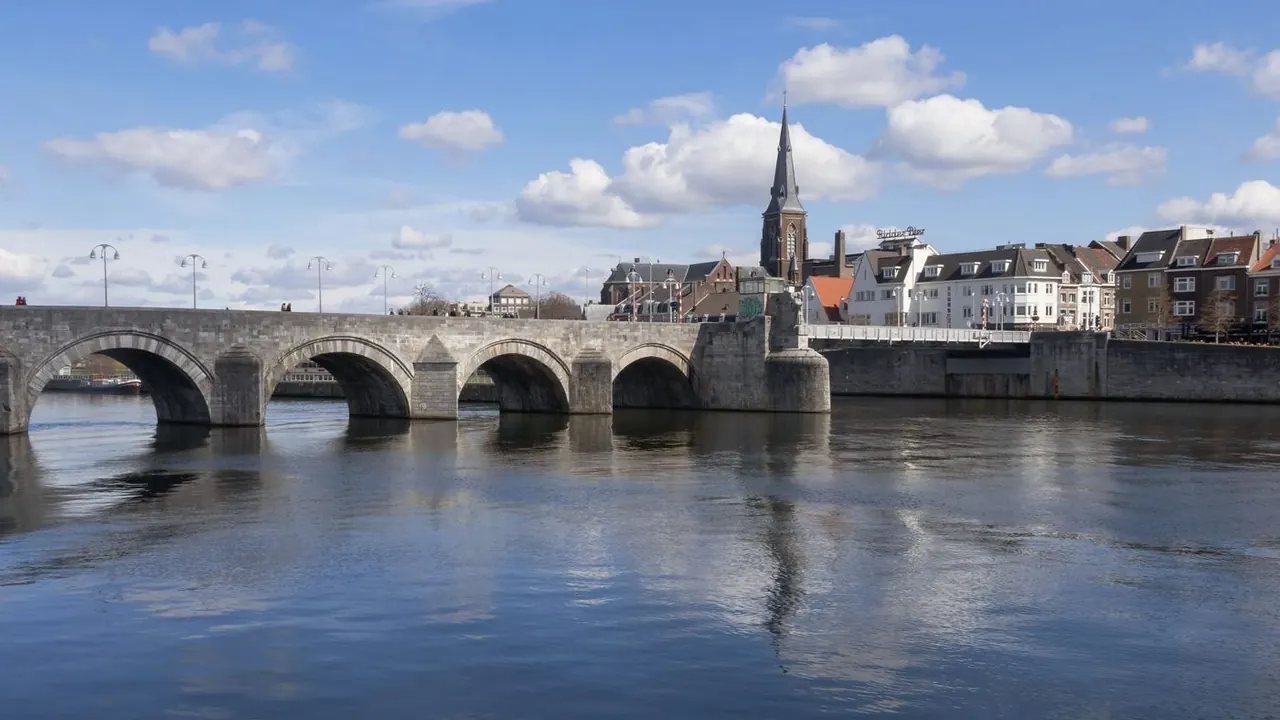
Photos: Luxembourg by Suicasmo, CC BY-SA 4.0, cropped; Maastricht by Michielverbeek, CC BY-SA 4.0, cropped.
Luxembourg or Maastricht?
Our verdict in twelve categories, each scored against the same fixed benchmark cities, and the climate month by month, so you can choose for your trip.
Choose Luxembourg for
- live music and the arts
- getting around
- beaches
Luxembourg suits travellers who are drawn by setting and want everything to run smoothly. The old town stands on a rock above wooded gorges and is wrapped in fortress walls. The concert programme is stronger, and free trams, buses and trains reach castles and wine villages without a car. It works best for a short stay where the budget is not the main worry, because staying and eating there are expensive.
Choose Maastricht for
- prices
- shopping
- nightlife
Maastricht is the better choice for long lunches, browsing boutiques and evenings in brown cafés, and it costs noticeably less. The centre is flat and walkable, its streets are older and more lived-in, and the students keep the squares busy after dark. Come in carnival week and the whole city is out partying in the streets.
Scoreboard
Twelve categories on one fixed scale from 0 to 100. The shaded stretch is the gap between the two.
Your match
Pick a travel style or drag the sliders, and both match scores follow your weighting.
Wins on live music and the arts and getting around with your weighting.
Wins on prices and shopping with your weighting.
What matters to you?
Category by category
What the scores mean for a trip.
Beaches & swimming
Neither city has the sea. Luxembourg has the better places for a summer swim, though. The Upper Sûre reservoir, about an hour north, has bathing spots along wooded shores, and the flooded gravel pits at Remerschen are an easy trip into the Moselle valley.
Maastricht's swimming means gravel-pit lakes along the Maas, with small sandy shores and lifeguards. They are fine for an hour or two, but they are not a reason to visit, and a hotel pool may be the more practical choice.
Food & drink
Maastricht is the better food city of the two, though Luxembourg has strengths of its own. French cooking shapes its better restaurants, and the Moselle vineyards supply crisp Riesling and crémant, poured by the glass almost everywhere. Its own dishes, such as smoked pork collar with broad beans, are hearty but few. Cheap, casual eating is thin, so lunch is the meal to aim for.
Maastricht is good at every level. Its fine dining is strong for a city of its size, and the everyday eating is just as satisfying: Limburg zuurvlees with fries, vlaai from any bakery, asparagus and game in season, and brown cafés and terraces on the Vrijthof and the Markt. The range is narrow, with little street food or international cooking.
Culture & sights
These two are evenly matched, and each needs about two days, but the sightseeing feels different. Luxembourg's main sight is its setting: fortress walls above the Alzette and Pétrusse gorges, the Bock casemates to walk through yourself, and the views from the Chemin de la Corniche down into the Grund. MUDAM and the Fortress Museum on Kirchberg add a modern side.
In Maastricht, the age of the city shows in the streets. The basilicas of Saint Servatius and Our Lady, the Helpoort gate and the medieval Sint Servaasbrug sit within a short stroll of each other. The Bonnefanten museum and the Dominican church turned bookshop are the other highlights, and the tunnels under the Sint-Pietersberg can only be seen with a guide.
Nightlife
Maastricht has the livelier evenings, largely thanks to its students. The brown cafés around the Markt and the Platielstraat are busy late at weekends during term, and Belgian beer is what most people drink. Carnival turns the whole city into a street party for several days.
Luxembourg's nightlife is limited to a few pockets: the old brewery site at Clausen, the riverside pubs in the Grund and the later venues around Hollerich. Thursday and Friday are the busy nights, because many residents leave for the weekend. Neither city is a place for serious clubbing.
Nature & outdoors
Both cities have green countryside close by, but it differs in character. Luxembourg's is more rugged. Wooded gorges run through the city itself, and half an hour away the Müllerthal has mossy sandstone gorges and narrow rock passages. The Ardennes hills lie further north and vineyard cycle paths follow the Moselle.
Maastricht's surroundings are gentler. The marl cliffs of the Sint-Pietersberg begin at the edge of town, and the Heuvelland has sunken lanes, orchards and short climbs that road cyclists love. The heath and forest of the Hoge Kempen are across the border in Belgium.
Day trips
Both cities sit right on a border and make equally good bases, but they look towards different countries. From Luxembourg, Trier's Roman remains are under an hour by train, Metz's Gothic cathedral is about as close in France, and Nancy's grand eighteenth-century squares are a little further. Within the country, Clervaux holds The Family of Man photography exhibition, and over the German border the Völklingen ironworks is an impressive industrial heritage site.
Maastricht faces Belgium and Germany. Aachen and Liège are each about half an hour away, and Valkenburg and Tongeren are even closer. On a longer day you can reach bigger cities, since Cologne, Brussels and Leuven are all within about two hours.
Good for families
Both are calm, safe and easy with children for a few days. In Luxembourg, lifts and a funicular take buggies down to the river, the casemate tunnels feel like an adventure, and the natural history museum is aimed at younger visitors. But the Parc Merveilleux is the only attraction built for families.
Maastricht's flat streets suit small legs. The real family outings are just outside: Valkenburg's show caves, cable car and fairy-tale park, and the zoo at Kerkrade, which Luxembourg cannot match.
Getting around
Luxembourg is the easier place to get around. Trams, buses and second-class trains are free across the whole country. A tram runs from the station to Kirchberg, trains reach Clervaux and the Moselle, and free buses go on to Vianden. Public lifts and a funicular link the upper town with the valley quarters.
In Maastricht you mostly walk. The flat centre takes about a quarter of an hour to cross, bikes make the riverside paths easy, and trains run to Liège and Aachen. Getting out to the hill villages is slower, because regional buses are limited and a car or bike makes it much easier.
Shopping & style
Maastricht is the better place to shop, and visitors from three countries come for that alone. The Stokstraat quarter's restored houses hold fashion boutiques, the Grote Staat covers the big brands, and Wyck has independent shops for interiors, vintage and food.
Luxembourg offers more luxury but less variety. Premium labels line the Grand-Rue for a wealthy local crowd, and the Villeroy & Boch outlet and a few bottles of crémant are the best things to take home. There is little independent design to browse.
Affordability
Maastricht is much easier on the budget. Prices are normal for the Netherlands and lower than in the big Dutch cities. Bakery lunches and beer in a brown café cost little, and staying from Sunday to Thursday brings rooms down further.
Luxembourg is among the most expensive places to stay in Western Europe, as hotels and restaurants are priced for business travellers and EU staff. Free transport, free museums and lunch menus help. Some visitors simply sleep in Trier or Metz and come in by train.
Live music & performing arts
For concerts, Luxembourg has the edge. The Philharmonie on Kirchberg has excellent acoustics and attracts touring orchestras and soloists. The Grand Théâtre brings visiting opera and dance, and the Rotondes and summer concerts at Neimënster fill out the year.
Maastricht's performing arts centre on the theatre on the Vrijthof, with the regional orchestra and opera, plus organ concerts in the churches and conservatory recitals. The big open-air summer concerts on the Vrijthof and the brass bands at carnival bring large crowds, but the rest of the year feels more local.
Wellness & relaxation
The two are level here, and neither has a bathing tradition of its own, so spa days mean a short trip out. From Luxembourg that means Mondorf-les-Bains, a nineteenth-century thermal spa set in a park half an hour away.
Maastricht has more choice. The thermal pools above Valkenburg, the Roman-era baths at Aachen and the town of Spa itself are all within an hour. Both cities are quiet places to slow down, with walks through the Grund in Luxembourg and along the Jeker in Maastricht.
When should you go?
Pick your month. The climate figures are measured averages, not a forecast.
Luxembourg in July
Maastricht in July
Daytime high, °C
Rainfall in the month, mm
Temperature and rainfall are climate normals, averaged over the years shown. Luxembourg: 1991-2020 normals, Luxembourg / Luxembourg (6.3 km from centre). Maastricht: 1991-2020 normals, Maastricht Airport Zuid Limburg (10 km from centre).
The two climates are close, both mild and damp, and both are at their best from May to September, when highs reach about 24°C in July and August. That is the only stretch when the lakes are warm enough for a swim. Summer in Luxembourg is noticeably sunnier, which suits walking the ramparts and the Müllerthal trails. Maastricht's wettest month is August at 84mm, so a summer trip there needs a little more luck with the weather. Spring and early autumn are good for walking in both, and in Luxembourg the October harvest in the woods and vineyards is worth the extra rain.
Winter is grey in both, and Luxembourg's is the harder of the two. It is colder, with January highs near 4°C against 6°C in Maastricht, it gets less winter sunshine, and December is its wettest month at 89mm. Maastricht's short days are made livelier by carnival, while in Luxembourg the cold months are better for concerts and museums than for sightseeing outside.
Which traveller are you?
On a tight budget, Maastricht leaves far more of the money for the trip itself. In Luxembourg even a modest stay means planning around the bill, while in Maastricht a relaxed long weekend of eating out and evenings in cafés stays within reach.
For a shopping trip, choose Maastricht, where browsing is a pastime in its own right and a short walk covers fashion, big names and small independents. Luxembourg suits someone after a particular luxury label but gives much less to casual browsing.
Travellers on a culture and arts trip who also want good evenings should lean towards Luxembourg. The daytime sights are a fair match, but Luxembourg's concert hall has an international programme, so the evenings can be as rewarding as the days.
Before you go
| Measure | Luxembourg | Maastricht |
|---|---|---|
| Official language | French, German, Luxembourgish | Dutch |
| Currency | Euro (EUR) | Euro (EUR) |
| Sockets | CF230 V, 50 Hz | CF230 V, 50 Hz |
| Driving side | Right | Right |
| Time zone | UTC+1, UTC+2 in summer | UTC+1, UTC+2 in summer |
| Emergency number | 112 | 112 |
| Elevation | 300 m | 49 m |
| Main airport | Luxembourg-Findel International Airport (LUX)6 km from centre115 non-stop destinations | Maastricht Aachen Airport (MST)9 km from centre5 non-stop destinations |
| Public holidays this year | 12 days | 11 days |
By the numbers
| Measure | Luxembourg | Maastricht |
|---|---|---|
| City population | 137,678 | 120,227 |
| People per km² | 2,663 | 2,000 |
| Museums within 10 km | 19 | 21 |
| UNESCO World Heritage sites within 50 km | 4 | 6 |
Where else could you go?
Every comparison below shares a destination with this one, so you can follow Luxembourg or Maastricht somewhere new.
- Dusseldorfvs Maastricht
- Colognevs Maastricht
- Brusselsvs Maastricht
- Antwerpvs Maastricht
- Ghentvs Maastricht
- Utrechtvs Maastricht