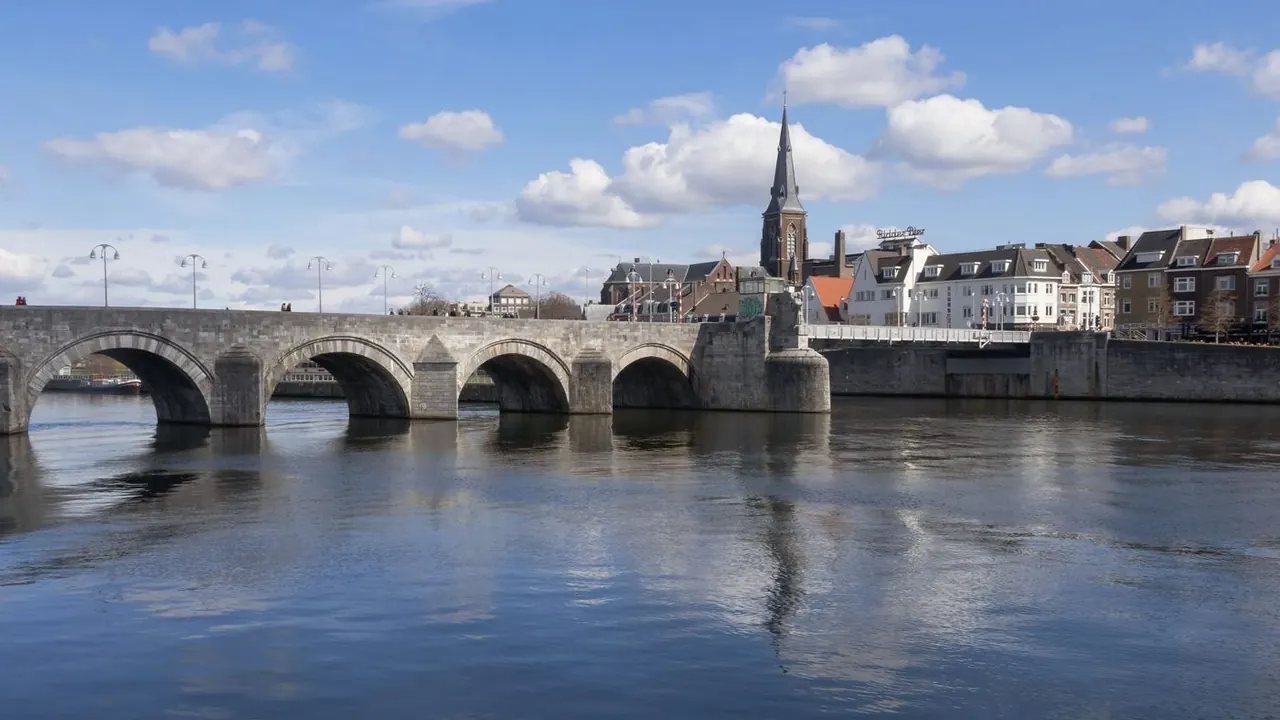
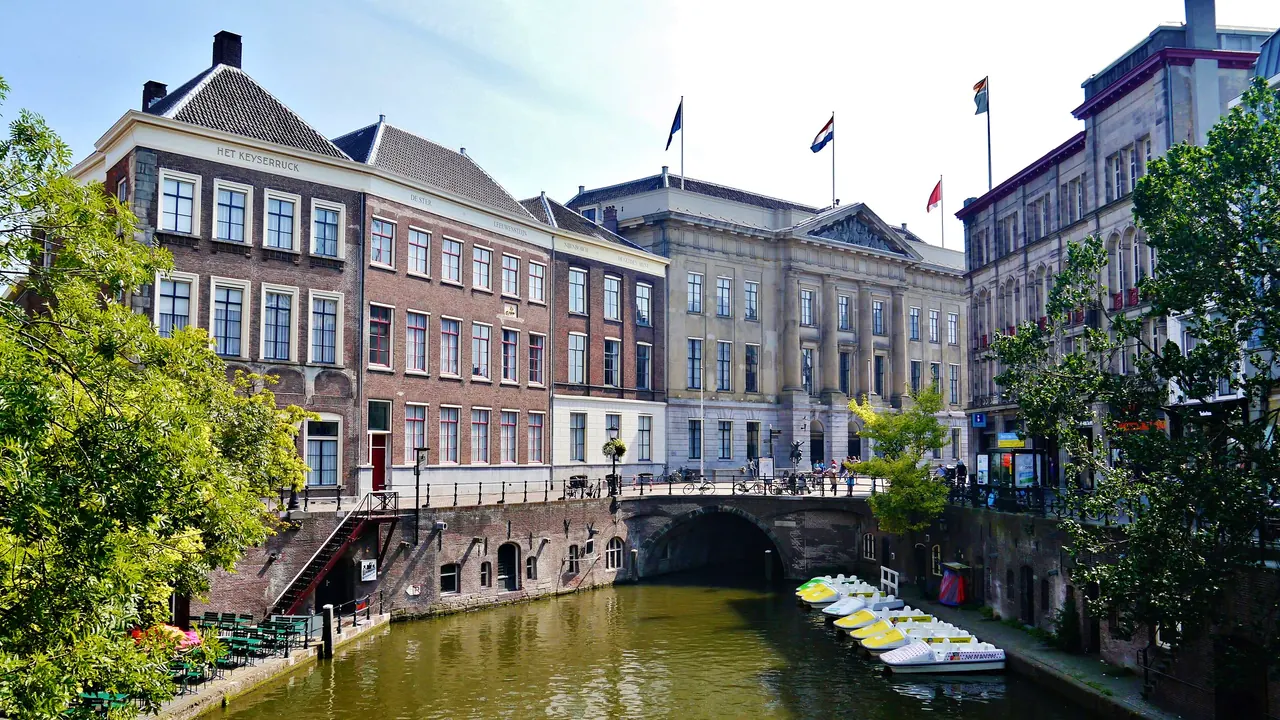
Photos: Maastricht by Michielverbeek, CC BY-SA 4.0, cropped; Utrecht by Zairon, CC BY-SA 4.0, cropped.
Maastricht or Utrecht?
Our verdict in twelve categories, each scored against the same fixed benchmark cities, and the climate month by month, so you can choose for your trip.
Choose Maastricht for
- food and drink
- wellness
- nature and the outdoors
Maastricht suits travellers who want to eat well and slow down. Its Limburg cooking, terraces on the Vrijthof and a fine-dining tier unusual for its size outdo Utrecht's tables. The hilly South Limburg countryside and the thermal baths of Valkenburg and Aachen make it a gentler, more restful short break, with Belgium and Germany on either side.
Choose Utrecht for
- live music and the arts
- families
- getting around
Utrecht is the better choice if you want a base for seeing the whole country. Amsterdam, Rotterdam, Delft and Haarlem are easy train rides from the busiest station in the Netherlands. The city is also easier with children, and its concert life, centred on TivoliVredenburg and the early-music festival, goes well beyond Maastricht's provincial stage.
Scoreboard
Twelve categories on one fixed scale from 0 to 100. The shaded stretch is the gap between the two.
Your match
Pick a travel style or drag the sliders, and both match scores follow your weighting.
Too close to call, 1 point apart
Wins on food and drink and wellness with your weighting.
Wins on live music and the arts and families with your weighting.
What matters to you?
Category by category
What the scores mean for a trip.
Beaches & swimming
Neither city is a place to swim, but Utrecht at least has the coast within reach, with Zandvoort and Scheveningen an hour or so away by train, though the North Sea stays cool. Maastricht is a long day's journey from any sea. In a warm spell both fall back on lakes: the old gravel pits along the Maas, or the Maarsseveense Plassen and Loosdrecht around Utrecht.
Food & drink
Maastricht is the better place to eat. It has a regional cuisine of its own, with zuurvlees and fries, vlaai in every bakery, asparagus and game in season and white wine from the nearby hills. It also has more fine dining than you would expect in a city this small.
Utrecht has no cuisine to compare, and its appeal is the setting, with meals on the Oudegracht wharves at the water's edge. The large student population does give it more casual variety, with Indonesian and Surinamese kitchens and bistros around Lombok and the Twijnstraat, something Maastricht's narrower scene lacks.
Culture & sights
Both are old, well-kept cities with two or three days of sights, so the difference is in character. Maastricht's heritage is Romanesque and medieval: the basilicas of Saint Servatius and Our Lady, the Helpoort gate and the guided tunnels under the Sint-Pietersberg, with old masters and contemporary art at the Bonnefanten.
Utrecht centres on the Dom Tower, which you can climb, and the two-level Oudegracht. Its museums lean towards modern design, with De Stijl at the Centraal Museum and the UNESCO-listed Rietveld Schröder House.
Nightlife
In both student towns a night out means Belgian beer in brown cafés rather than clubs, and anyone after a big night leaves town. Utrecht keeps going on weeknights too, with drinks at the edge of the Oudegracht and Amsterdam a short train ride away. Maastricht's great exception is carnival, when the whole city dresses up and parties in the streets for days before Lent.
Nature & outdoors
Maastricht has the more interesting countryside, because this is where the Netherlands stops being flat. Paths climb the Sint-Pietersberg straight from the city, and the Heuvelland has sunken lanes, orchards and the steep little climbs of the cycling classics. Hoge Kempen and the Ardennes are just over the border.
Utrecht's surroundings are flat polders and the banks of the Vecht, best seen by bike. The wooded ridges of the Utrechtse Heuvelrug and sailing on the Loosdrecht lakes add some variety.
Day trips
Both make excellent bases, but Utrecht has the reach. Because it sits at the hub of the Dutch rail network, Amsterdam, Rotterdam, The Hague, Delft, Leiden and Gouda are all short, simple rides, with Kinderdijk and the Kröller-Müller Museum a little further out.
Maastricht offers variety more than volume. Aachen, Liège and Tongeren put Germany and Belgium on the doorstep, and Cologne and Brussels are possible on a longer day. You give up the Dutch classics in exchange for three countries and languages.
Good for families
Utrecht is easier with children because the best outings are in town: the Railway Museum in an old station, the Miffy museum for toddlers and the Speelklok's music boxes. The constant flow of bikes needs some care.
In Maastricht the main in-town outing is the tunnel tour under the Sint-Pietersberg. Most other children's attractions, such as Valkenburg's caves and cable car or the zoo in Kerkrade, mean leaving the city.
Getting around
Utrecht is the easier of the two to move around and travel out of, though on foot there is little between them. Maastricht's centre is flat, compact and largely pedestrianised, cobbles aside, and the riverside paths make cycling easy. Its station in Wyck is a short walk over the bridge. Buses to the hill villages are thinner, though, and the countryside is much easier with a car or bike.
In Utrecht, Centraal sits right beside the old town, so the Dom and the canals are a short walk from the platform. Trams and buses use the same tap-in card as the trains, and a car is never needed.
Shopping & style
The two are close, and neither has much luxury. Maastricht draws weekend shoppers from three countries to the designer boutiques in the restored houses of the Stokstraat quarter. Utrecht's strength is independent shops on small streets like the Twijnstraat and along the Oudegracht wharves, with the chains gathered in Hoog Catharijne by the station and a flower market on the Janskerkhof.
Affordability
Neither city is cheap, and meals and drinks cost the Dutch norm in both. The pressure on rooms comes from different places: Utrecht has few hotels in its historic centre, while in Maastricht the demand from weekend visitors pushes prices up, so a Sunday-to-Thursday stay saves the most there. Both centres are walkable, and Utrecht's university quarter makes cheap lunches a little easier to find.
Live music & performing arts
Utrecht is clearly the stronger music city. TivoliVredenburg puts classical, pop, jazz and experimental acts under one roof, often on the same evening, and the Festival Oude Muziek draws early-music lovers from across Europe. Theatre is mostly in Dutch, and there is no opera house.
Maastricht has the opera Utrecht lacks, at the theatre on the Vrijthof alongside the regional orchestra, plus organ concerts in its churches and large open-air summer concerts on the square. Week to week, though, there is much less on.
Wellness & relaxation
Maastricht is the better place to unwind because the region has a long bathing tradition: the thermal spa above Valkenburg, Aachen's Roman-era baths and the town of Spa itself are all within an hour. Utrecht has Dutch sauna complexes in its green belt, which need a drive or bus ride, and quiet evenings on the canal wharves or in the Pandhof cloister garden.
When should you go?
Pick your month. The climate figures are measured averages, not a forecast.
Maastricht in July
Utrecht in July
Daytime high, °C
Rainfall in the month, mm
Temperature and rainfall are climate normals, averaged over the years shown. Maastricht: 1991-2020 normals, Maastricht Airport Zuid Limburg (10 km from centre). Utrecht: 1991-2020 normals, De Bilt (4.3 km from centre).
The two share almost the same climate, so the best season is the same for both. From May to September the weather suits terraces, cycling and long walks. Summer highs reach about 24°C in Maastricht and a degree lower in Utrecht, and both get their longest sunny spells in early summer. From November to February the days are short, grey and around 6°C. That is fine for museums and cafés but not for the countryside.
Where they differ is the autumn rain. Maastricht dries out a little in September and October, while Utrecht stays wet from July right through December at around 80mm a month, so a late-season trip leans towards Maastricht. The North Sea near Utrecht is warmest in August at about 19°C, which is enough for a quick dip and not much more.
Which traveller are you?
For a food and nightlife trip, Maastricht is the better pick. Its Limburg dishes, Belgian beer and strong fine dining give evenings more substance, and at carnival the streets party for days. Utrecht's bars are livelier midweek, but its food is plainer.
On a family trip with young children, Utrecht makes life easier. The Railway Museum, the Miffy museum and the Speelklok are all in town and walkable from the station, and Kasteel de Haar is a fairy-tale outing close by.
For a relaxing and wellness trip, Maastricht is the better choice. The thermal pools above Valkenburg and in Aachen are half an hour away or less, the hills and the Maas invite gentle walks, and long lunches on quiet squares set a slow pace.
Before you go
| Measure | Maastricht | Utrecht |
|---|---|---|
| Official language | Dutch | Dutch |
| Currency | Euro (EUR) | Euro (EUR) |
| Sockets | CF230 V, 50 Hz | CF230 V, 50 Hz |
| Driving side | Right | Right |
| Time zone | UTC+1, UTC+2 in summer | UTC+1, UTC+2 in summer |
| Emergency number | 112 | 112 |
| Elevation | 49 m | 5 m |
| Main airport | Maastricht Aachen Airport (MST)9 km from centre5 non-stop destinations | Amsterdam Airport Schiphol (AMS)34 km from centre287 non-stop destinations |
| Public holidays this year | 11 days | 11 days |
By the numbers
| Measure | Maastricht | Utrecht |
|---|---|---|
| City population | 120,227 | 359,370 |
| People per km² | 2,000 | 3,619 |
| Museums within 10 km | 21 | 28 |
| UNESCO World Heritage sites within 50 km | 5 | 5 |
| Swim season, months above 21 °C | - | None |
Where else could you go?
Every comparison below shares a destination with this one, so you can follow Maastricht or Utrecht somewhere new.