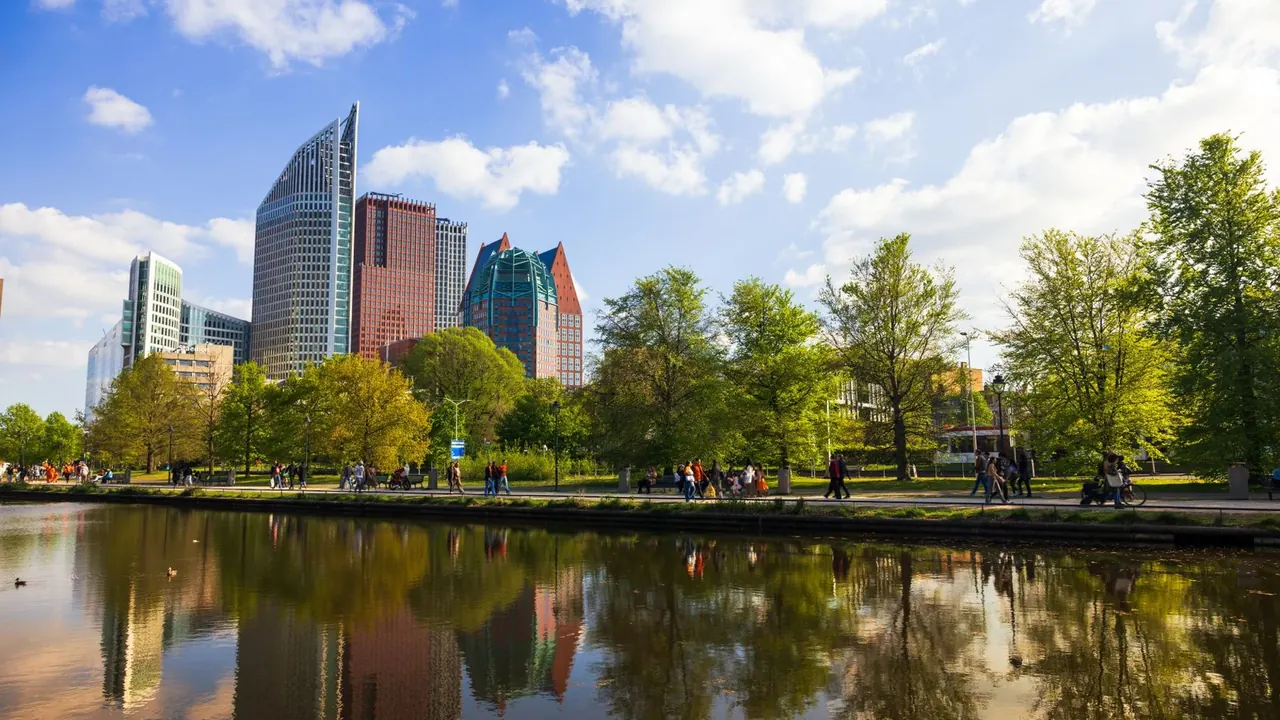
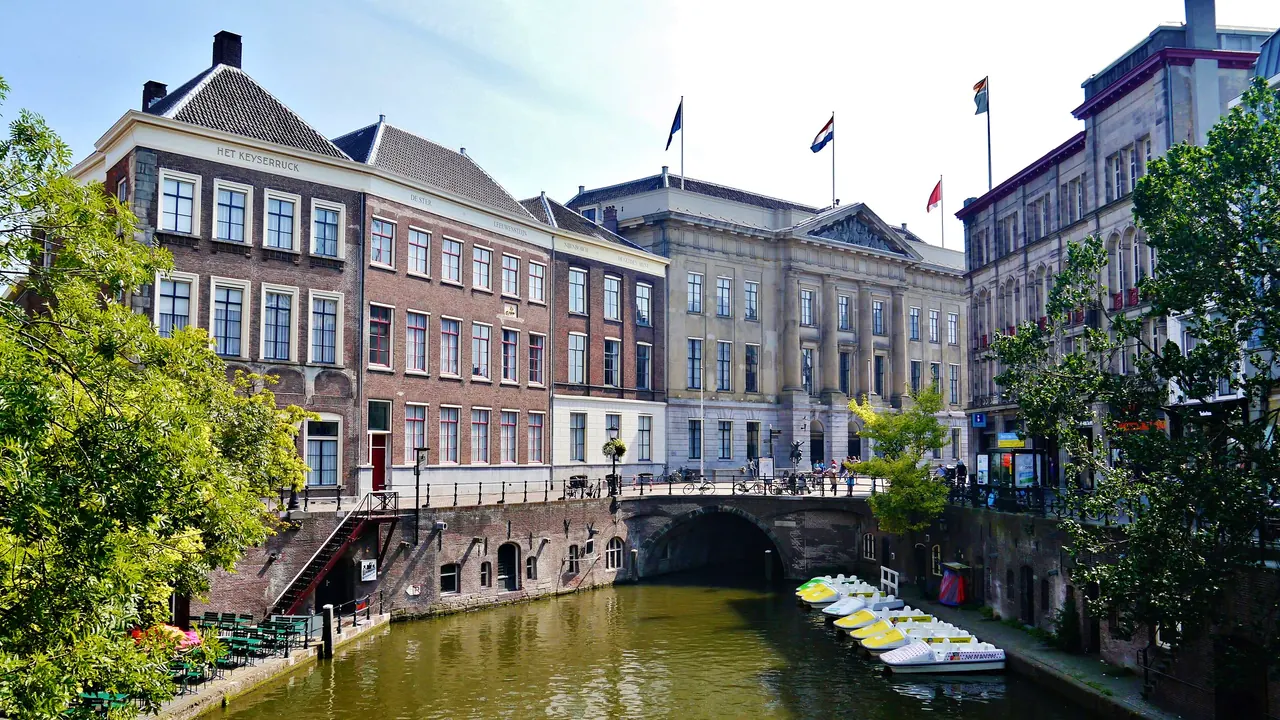
Photos: The Hague by Bráulio jardim, Pexels License; Utrecht by Zairon, CC BY-SA 4.0, cropped.
The Hague or Utrecht?
Our verdict in twelve categories, each scored against the same fixed benchmark cities, and the climate month by month, so you can choose for your trip.
Choose The Hague for
- beaches
- food and drink
- culture and sights
The Hague suits travellers who want the sea and a dose of grandeur on the same trip. Scheveningen's sand is a short tram ride from the Binnenhof and the Mauritshuis, families get Madurodam and the beach in one stay, and evenings are quiet and orderly. It is the better choice for a slower, broader stay that mixes Golden Age painting, dune walks and children's outings.
Choose Utrecht for
- nightlife
- getting around
Utrecht is for people who like a compact old town with more life after dark. Its medieval core around the Dom Tower and the two-level Oudegracht wharves is a few minutes' walk from the country's busiest station, and a large student population keeps canal-side terraces full on weeknights. There is no beach, but for a walkable city stay with an easy evening scene, it has the edge.
Scoreboard
Twelve categories on one fixed scale from 0 to 100. The shaded stretch is the gap between the two.
Your match
Pick a travel style or drag the sliders, and both match scores follow your weighting.
Wins on beaches and food and drink with your weighting.
Wins on nightlife and getting around with your weighting.
What matters to you?
Category by category
What the scores mean for a trip.
Beaches & swimming
The Hague has a real beach and Utrecht does not. Scheveningen's long, wide sand, with its pier and summer pavilions, is about a quarter of an hour from the centre by tram, and Kijkduin, backed by dunes, is a calmer alternative. The North Sea stays cold, so it is a beach for sunbathing and short swims.
From Utrecht, that same coast is an hour or more away by train. On hot days locals cool off instead at the Maarsseveense Plassen or the Loosdrecht lakes, which are pleasant but not something to plan a trip around.
Food & drink
The Hague has the edge, almost entirely thanks to its Indonesian kitchen. Long-established families from the former Dutch East Indies mean a rijsttafel or a plate of rendang here is unusually good, and Scheveningen harbour adds fish and raw herring.
In Utrecht the setting counts for more than what is on the plate. Eating on the old Oudegracht wharves at water level is the memorable part, while student-driven lunch cafés and the bistros around the Twijnstraat and Lombok keep everyday meals casual and varied.
Culture & sights
The Hague has the stronger collections. The Mauritshuis holds Vermeer's Girl with a Pearl Earring and Rembrandt's Anatomy Lesson, the Kunstmuseum has the world's largest Mondrian collection, and the Binnenhof and Peace Palace give the city a stately, governmental character.
Utrecht's appeal lies more in its townscape than its galleries. The free-standing Dom Tower, which you can climb, and the two-level Oudegracht make a medieval centre unlike any other in the country, and the Rietveld Schröder House is a small modernist landmark. The museums themselves are good but modest.
Nightlife
Utrecht is the livelier of the two, because its students fill the bars around the Neude, the Janskerkhof and the canal edge on weeknights as well as weekends. Brown cafés and beer bars set the tone rather than clubs.
The Hague goes to bed earlier. After-work terraces on the Plein and the weekend bars on the Grote Markt are the core, with beach pavilions at Scheveningen adding music and dancing in summer. In both cities, a serious night out means a train to Amsterdam or Rotterdam.
Nature & outdoors
Both are flat and green and roughly level overall, but the scenery differs. The Hague looks to the coast: the Meijendel dunes, the Westduinpark, the Haagse Bos forest and year-round beach walks, with kitesurfing when the wind picks up.
Utrecht's countryside lies inland. You can cycle along the Vecht past country estates, walk on the heath and wooded ridges of the Utrechtse Heuvelrug, or sail on the Loosdrecht lakes.
Day trips
The Hague and Utrecht make equally strong bases, but they lead to different outings. From The Hague, Delft and Leiden are about fifteen minutes away and Gouda about twenty, and the Keukenhof bulb fields and the windmills of Kinderdijk are within easy reach. That puts the old coastal-province towns almost on the doorstep, with Amsterdam under an hour by train.
Utrecht sits at the hub of the rail network, so Amsterdam is under half an hour away and a wider spread of the country opens up. Close to home are the neo-Gothic Kasteel de Haar and the fortified town of Naarden. Further afield, and easier from here than from The Hague, are the Kröller-Müller Museum, the open-air museum near Arnhem and the old centre of Den Bosch.
Good for families
The Hague gives children more to do. Madurodam's miniature Netherlands, the beach, pier and sea aquarium at Scheveningen, and the Duinrell water park nearby fill several days, though rain pushes everything indoors.
Utrecht is gentler and centres on museums. The Railway Museum is among the country's best for children, and Miffy has her own museum for toddlers. The main watch-point is the stream of bikes in the narrow streets.
Getting around
Utrecht is easier on foot. Utrecht Centraal sits right at the edge of the old town, so the Dom, the canals and even the Railway Museum are a short walk on flat streets.
The Hague's sights are more spread out. The Binnenhof area is compact, but the beach, Madurodam and the Peace Palace need the tram, which is frequent and simple. Both cities are made for cycling, and in neither is a car any help.
Shopping & style
Both are about equal, offering independent boutiques but no real luxury. The Hague leans refined, with antique dealers and galleries on the Denneweg and Noordeinde, the 1880s Passage and the large Haagse Markt full of fabrics and spices. Utrecht leans towards design and books along the Oudegracht wharves and the Twijnstraat, with the Hoog Catharijne mall for chains and a flower market on the Janskerkhof.
Affordability
Neither city is cheap, but the costs fall differently. In The Hague, government and business travellers fill central hotels from Monday to Thursday, so a weekend outside the beach season is the easiest time to find a reasonable room. Indonesian and Surinamese eateries and picnics from the Haagse Markt keep meals cheap.
In Utrecht the expensive part is the bed. The historic centre has few hotels, and weekends and festival weeks cost more, the reverse of The Hague's pattern. After that, the compact centre costs almost nothing to get around, and the student cafés and snack bars near the university keep lunches cheap.
Live music & performing arts
The two are level overall, but each has a different strength. The Hague's highlight is dance: seeing Nederlands Dans Theater at home is the reason to book, and the Residentie Orkest adds a full symphony season.
Utrecht is stronger on music. TivoliVredenburg stacks classical, pop and jazz halls in one building, and the Festival Oude Muziek is a major draw for early-music lovers. Theatre in both cities is mostly in Dutch, and neither has an opera company of its own.
Wellness & relaxation
The Hague is a little better for unwinding. Its large Dutch sauna complexes are closer to hand, and the seaside setting at Scheveningen, with the Kurhaus as a reminder of its bathing-resort past, adds a sense of calm. Expect nudity in most saunas.
In Utrecht the saunas sit out in the green belt and need a bus or a drive. Relaxing there means slow evenings on the canal wharves and the quiet of the Pandhof cloister garden beside the Dom.
When should you go?
Pick your month. The climate figures are measured averages, not a forecast.
The Hague in July
Utrecht in July
Daytime high, °C
Rainfall in the month, mm
Where the figures come from
The Hague has no rain gauge within 25 km of the centre, so its rainfall comes from a gridded climate dataset read at the city rather than from a gauge further away.
The Hague's sunshine is measured 60 km from the centre, at De Bilt.
Temperature and rainfall are climate normals, averaged over the years shown. The Hague: 1991-2020 normals, Valkenburg (13.6 km from centre). Utrecht: 1991-2020 normals, De Bilt (4.3 km from centre).
Both cities are at their best from May to September, when afternoons are mild and the days are longest, with more than 200 hours of sunshine a month from May to July. Utrecht, being inland, runs a little warmer in high summer, reaching about 23°C in July and August, while sea breezes keep The Hague a couple of degrees cooler. That makes Utrecht slightly more comfortable for terrace evenings and The Hague fresher for walking the streets.
Beach days only matter in The Hague, and only in July and August, when the North Sea reaches about 19°C at best: fine for a quick dip, not for long swims. Autumn is where the two part ways. The Hague turns wet sooner and harder, with October its rainiest month at 104mm, while Utrecht's autumn rain is steadier and lighter. Winters are grey, cold and damp in both, with highs around 6°C, better suited to museums than to the outdoors.
Which traveller are you?
On a beach and sun trip, The Hague is the only real option of the two. Scheveningen and Kijkduin offer wide sand within the city, while Utrecht has only recreation lakes and lies an hour or more from the coast.
On a family trip with children, The Hague has more to fill the days. Madurodam, the sea aquarium, Museon and the beach all sit within tram range, though Utrecht's Railway Museum and Miffy museum make it a calm second choice.
For a short city break, Utrecht is easier to get the most from. You step off the train almost into the medieval centre, the Dom and the canals are a short walk away, and the student bars keep evenings lively.
Before you go
| Measure | The Hague | Utrecht |
|---|---|---|
| Official language | Dutch | Dutch |
| Currency | Euro (EUR) | Euro (EUR) |
| Sockets | CF230 V, 50 Hz | CF230 V, 50 Hz |
| Driving side | Right | Right |
| Time zone | UTC+1, UTC+2 in summer | UTC+1, UTC+2 in summer |
| Emergency number | 112 | 112 |
| Elevation | 1 m | 5 m |
| Main airport | Rotterdam The Hague Airport (RTM)16 km from centre53 non-stop destinations | Amsterdam Airport Schiphol (AMS)34 km from centre287 non-stop destinations |
| Public holidays this year | 11 days | 11 days |
By the numbers
| Measure | The Hague | Utrecht |
|---|---|---|
| City population | 548,320 | 359,370 |
| People per km² | 5,589 | 3,619 |
| Museums within 10 km | 54 | 28 |
| UNESCO World Heritage sites within 50 km | 4 | 5 |
| Swim season, months above 21 °C | None | None |
Where else could you go?
Every comparison below shares a destination with this one, so you can follow The Hague or Utrecht somewhere new.