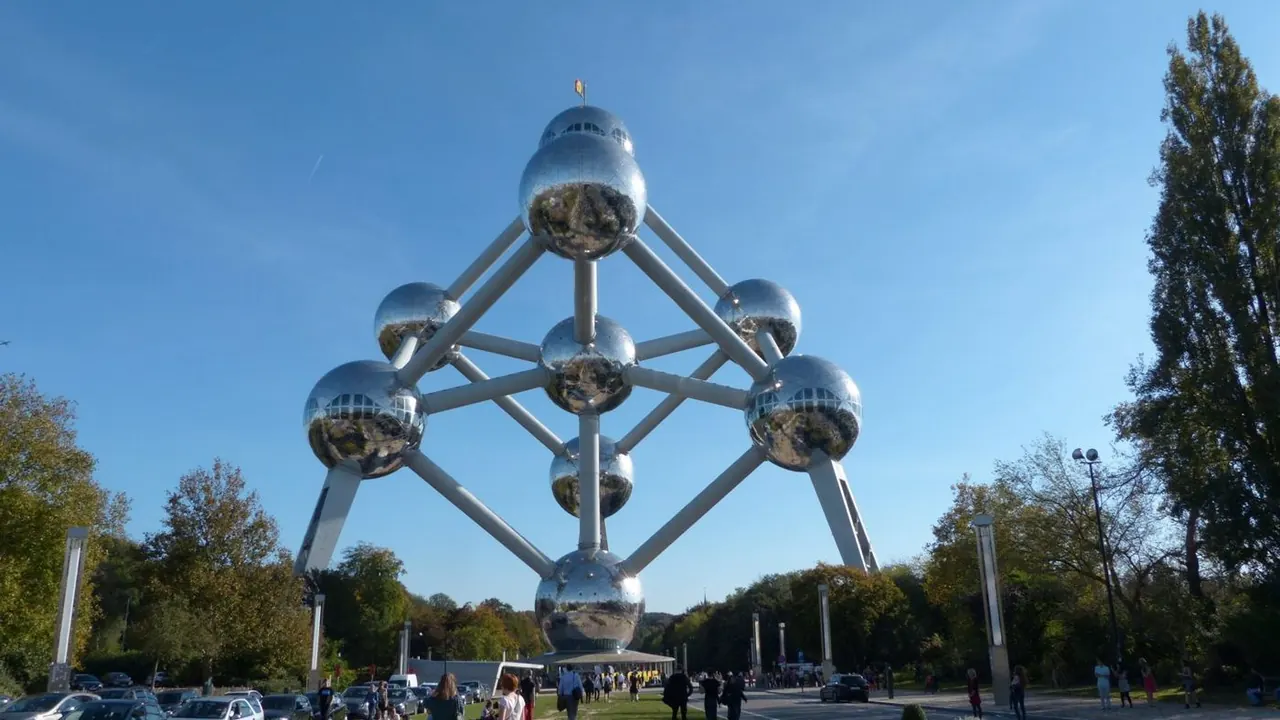
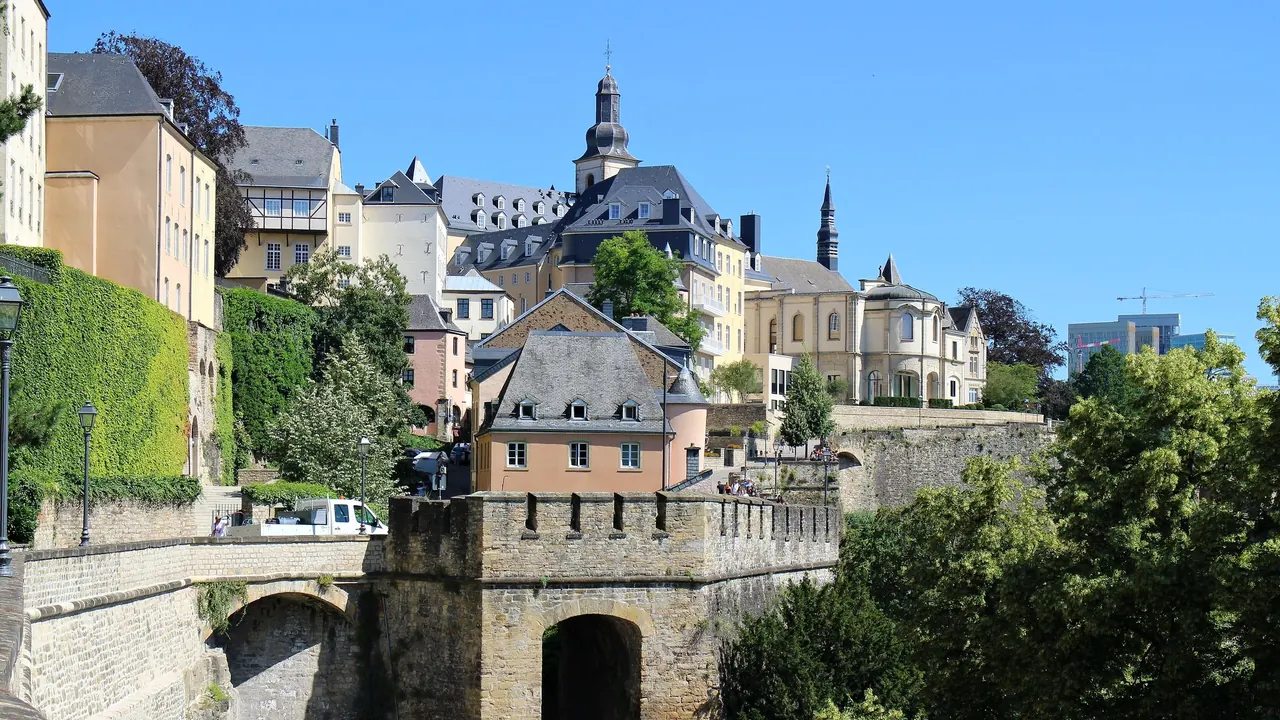
Photos: Brussels by Ettanghe, CC BY-SA 4.0, cropped; Luxembourg by Suicasmo, CC BY-SA 4.0, cropped.
Brussels or Luxembourg?
Our verdict in twelve categories, each scored against the same fixed benchmark cities, and the climate month by month, so you can choose for your trip.
Choose Brussels for
- nightlife
- prices
- food and drink
Brussels suits the traveller who wants a full city to work through: great paintings and Art Nouveau houses, a beer culture with few equals, food from frites to Congolese cooking in Matonge, and bars that stay busy late. It is also the better base for seeing more of Europe, with Ghent, Bruges, Antwerp and even Paris close by rail, and it is the less punishing of the two on the budget.
Choose Luxembourg for
- wellness
- nature and the outdoors
- getting around
Luxembourg is for a quieter, more scenic stay. Its fortress old town sits above wooded gorges, the Müllerthal and the Moselle vineyards are close, and free public transport, lifts and calm evenings make it easy and restful. It rewards a short, unhurried trip with good walking and a glass of crémant, provided the high cost of staying there is accepted.
Scoreboard
Twelve categories on one fixed scale from 0 to 100. The shaded stretch is the gap between the two.
Your match
Pick a travel style or drag the sliders, and both match scores follow your weighting.
Wins on nightlife and prices with your weighting.
Wins on wellness and nature and the outdoors with your weighting.
What matters to you?
Category by category
What the scores mean for a trip.
Beaches & swimming
Neither city is a place to swim, and the choice is about what kind of water you want on a hot day. From Brussels the train reaches the long sandy North Sea beaches at Ostend or De Haan in a little over an hour, but the sea stays cold and the wind is often up. Luxembourg has no coast, only lakes such as the Upper Sûre reservoir and the old gravel pits at Remerschen, which warm up more in midsummer and suit a quiet afternoon on a wooded shore.
Food & drink
Brussels is the far better city to eat in. Mussels, carbonnade, shrimp croquettes and frites are only the start, with sour lambics brewed nowhere else, praline makers around the Sablon, and Congolese, Moroccan and Turkish cooking in Matonge, Saint-Josse and Schaerbeek. Its range runs from street food to serious tables.
Luxembourg has a narrower kitchen of its own, with smoked pork and broad beans and river fish in Riesling, and its strength lies at the top end, in French-led fine dining for a well-paid crowd. Casual eating is thin there, so the real local pleasure is Moselle wine and crémant by the glass.
Culture & sights
Brussels has much more to see. The gilded Grand-Place, Bruegel and Rubens in the Royal Museums, a whole museum for Magritte and Victor Horta's UNESCO-listed Art Nouveau houses would fill several days, even if office blocks break up the old quarters between them.
Luxembourg's appeal is its setting rather than its collections. The fortress walls, the Bock casemates cut into the rock and the view down to the Grund make a striking whole, but with the palace, cathedral and MUDAM added it is seen in about two days.
Nightlife
After dark Brussels is clearly the livelier of the two. Bars around Saint-Géry and the Bourse fill on warm evenings, Flagey and Châtelain draw a local crowd, and wood-panelled taverns serve strong ales. There is also a techno club in the Marolles with a Europe-wide name and a queer scene around Rue du Marché au Charbon.
Luxembourg goes out mainly on Thursdays and Fridays, before residents leave for the weekend. The Rives de Clausen and the riverside pubs of the Grund have a pleasant, international crowd, but most nights end early.
Nature & outdoors
Luxembourg has the countryside on its doorstep. The Pétrusse and Alzette gorges cut through the centre with paths along the valley floor, the mossy rock passages of the Müllerthal are about half an hour away, and the Ardennes hills and Moselle vineyards are within easy reach.
Brussels has one fine place to walk, the tall beech stands of the Sonian Forest, plus parks such as the Bois de la Cambre. Beyond them the land is flat, and real hills mean a longer trip to Dinant and the Meuse valley.
Day trips
Both are good bases, but Brussels has more great towns closer by. Ghent and the Van Eyck altarpiece are half an hour away, Antwerp and Bruges not much further, and Mechelen and Leuven closer still, with Paris and Amsterdam reachable for a long day.
Luxembourg's strength is its position between three countries. Roman Trier and Gothic Metz are each under an hour, and Vianden's castle, Echternach and the Moselle wine villages make gentler outings, but fewer of them are in the same league as Bruges or Ghent.
Good for families
Brussels gives children more to do. The Atomium and Mini-Europe at Heysel, the Iguanodon hall at the Natural Sciences museum, the comic murals, and Walibi and Pairi Daiza within an hour can fill a week, though traffic, cobbles and rain make days tiring.
Luxembourg is the calmer and easier of the two, with lifts and a funicular for pushchairs and fortress tunnels that feel like an adventure. With no zoo or theme park and only the small Parc Merveilleux, it suits two or three days rather than a school vacation.
Getting around
Luxembourg is the simpler place to move around, mostly because buses, trams and second-class trains across the country are free. Public lifts and a funicular take the strain out of a city on several levels, and trains reach Vianden and the Moselle without a car.
Brussels works well too. Its main sights sit a short walk apart, trams and metro cover the rest with tap-to-pay bank cards, and its stations link directly to the airport. Expect a steep climb to the upper town and rough pavements, though.
Shopping & style
Chocolate, antiques, flea-market finds and Belgian design are what Brussels sells best, and there is far more of it to browse. Master chocolatiers line the Galeries Royales Saint-Hubert, the Sablon holds an antiques market at weekends, the flea market on the Place du Jeu de Balle runs every morning in the Marolles, and Rue Antoine Dansaert shows off the country's own designers.
Luxembourg sells mostly international luxury and premium labels along the Grand-Rue, aimed at a wealthy local clientele, with little independent design or bargain hunting. Its own specialities are porcelain made in the country for centuries and Moselle wine and crémant, which are the best things to carry home.
Affordability
Brussels costs a good deal less, even though it is far from a budget city. Weekend hotel rates drop as business travellers leave, and cheap meals are easy to find in the immigrant neighbourhoods and at the friteries.
Luxembourg is among the most expensive stays in Europe, with hotels and restaurants priced for finance and the EU institutions. Free transport, free museums and good-value lunch menus help, and many visitors save by sleeping in Trier or Metz.
Live music & performing arts
Brussels has a deeper performing arts scene with its own tradition behind it. La Monnaie is known for daring opera and for the 1830 performance that sparked the Belgian revolution, Bozar and Flagey host top orchestras, and contemporary dance and theatre thrive in both French and Dutch.
Luxembourg's Philharmonie is a superb hall with a resident orchestra, and the Grand Théâtre and the Rotondes keep the calendar full. Most of what plays there has come on tour, though Neimënster's summer concerts in the Grund are a pleasant local touch.
Wellness & relaxation
Brussels keeps the pace of a working capital, and unwinding there takes some effort: a hammam run by the North African community, a swim in an Art Deco pool or a long lunch on an Ixelles café terrace, with heavy traffic never far away. The town of Spa, which gave the idea its name, is a long trip from the city.
Slowing down comes much more easily in Luxembourg. The warm mineral spring at Mondorf-les-Bains, with pools and saunas in a landscaped park, is about half an hour away, and the city's quiet evenings and weekends and its calm riverside walks set a gentle rhythm.
When should you go?
Pick your month. The climate figures are measured averages, not a forecast.
Brussels in July
Luxembourg in July
Daytime high, °C
Rainfall in the month, mm
Temperature and rainfall are climate normals, averaged over the years shown. Brussels: 1991-2020 normals, Uccle (5.2 km from centre). Luxembourg: 1991-2020 normals, Luxembourg / Luxembourg (6.3 km from centre).
The two share a similar climate, mild and changeable with rain in every month, so neither has a beach season worth planning around. Summer peaks at about 23°C in Brussels and 24°C in Luxembourg, comfortable for walking all day and never too hot. The real difference is light: from April to September Luxembourg is clearly the sunnier of the two, while Brussels stays greyer and has its wettest month in August, at around 90mm.
Late spring and early autumn are the best times for both, with mild days and long light for walking and day trips, and September is especially good in Luxembourg for forest trails and the vineyard harvest. Winter is dark and damp in both from November to February, a little colder in Luxembourg, where January highs sit around 4°C, so a cold-season visit leans on museums, cafés and concert halls.
Which traveller are you?
For a food and nightlife trip, Brussels is the clear choice. Its brown cafés pour lambics and Trappist ales, the immigrant quarters widen the menu, and Saint-Géry, Ixelles and Saint-Gilles stay lively late, while Luxembourg's evenings are short and quiet.
On a trip on a tight budget, Brussels is the more forgiving city. It is not cheap, but frites, sandwiches and neighbourhood cooking keep costs down, whereas Luxembourg's hotels and restaurants are among the dearest anywhere, even with its free public transport.
On an outdoors trip, Luxembourg wins. Wooded gorges run through the city itself, the sandstone passages of the Müllerthal are half an hour away and the Moselle has vineyard cycle paths, while Brussels has flat country beyond the Sonian Forest.
Before you go
| Measure | Brussels | Luxembourg |
|---|---|---|
| Official language | French, German, Dutch | French, German, Luxembourgish |
| Currency | Euro (EUR) | Euro (EUR) |
| Sockets | CE230 V, 50 Hz | CF230 V, 50 Hz |
| Driving side | Right | Right |
| Time zone | UTC+1, UTC+2 in summer | UTC+1, UTC+2 in summer |
| Emergency number | 112 | 112 |
| Elevation | 70 m | 300 m |
| Main airport | Brussels Airport (BRU)11 km from centre191 non-stop destinations | Luxembourg-Findel International Airport (LUX)6 km from centre115 non-stop destinations |
| Public holidays this year | 14 days | 12 days |
By the numbers
| Measure | Brussels | Luxembourg |
|---|---|---|
| City population | 195,546 | 137,678 |
| People per km² | 5,908 | 2,663 |
| Museums within 10 km | 106 | 19 |
| UNESCO World Heritage sites within 50 km | 11 | 4 |
Where else could you go?
Every comparison below shares a destination with this one, so you can follow Brussels or Luxembourg somewhere new.
- Antwerpvs Brussels
- Ghentvs Brussels
- Brugesvs Brussels
- Maastrichtvs Brussels
- Lillevs Brussels
- Rotterdamvs Brussels