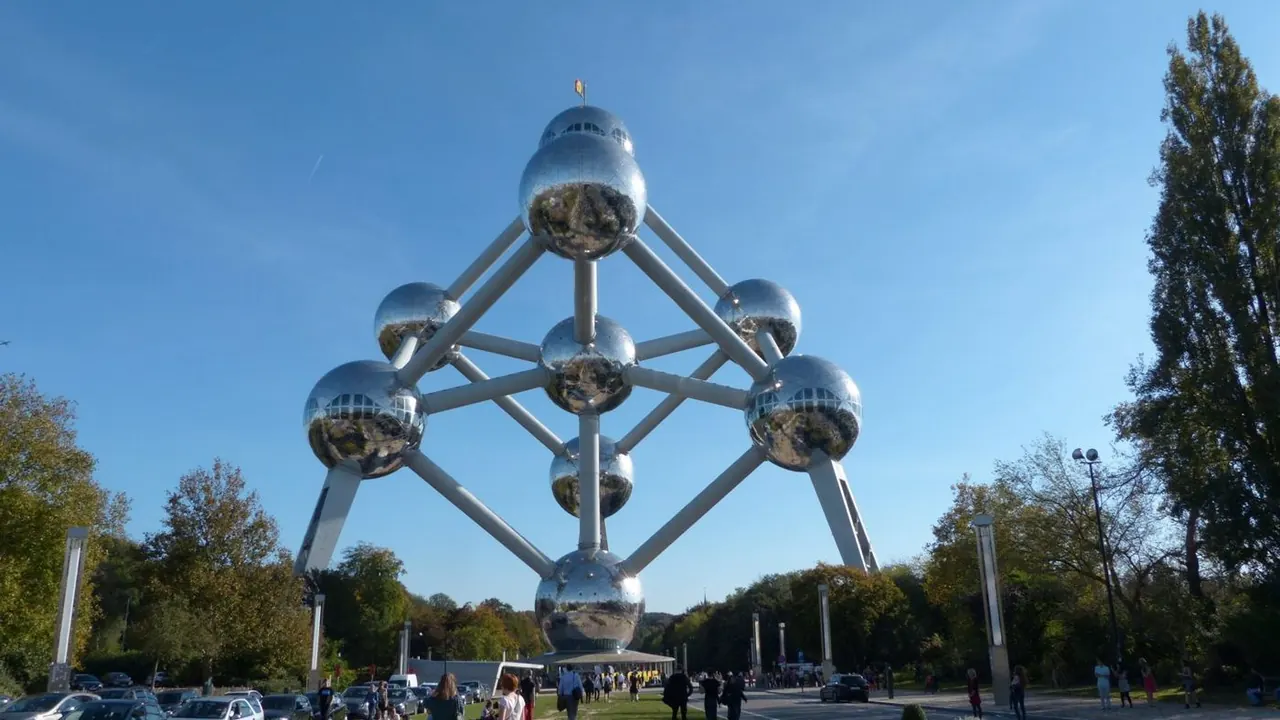
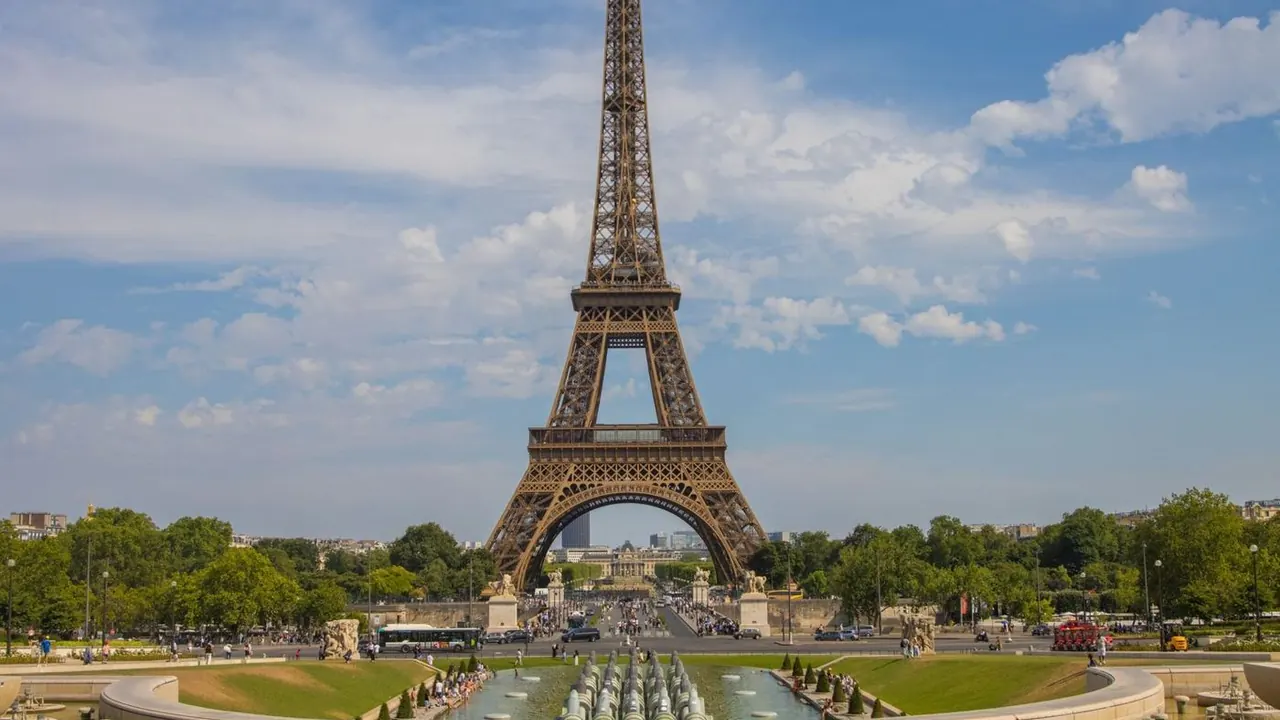
Photos: Brussels by Ettanghe, CC BY-SA 4.0, cropped; Paris by Efrem Efre, Pexels License.
Brussels or Paris?
Our verdict in twelve categories, each scored against the same fixed benchmark cities, and the climate month by month, so you can choose for your trip.
Choose Brussels for
- prices
- beaches
Brussels suits a traveller who would rather spend less and see more of the region. It costs less than Paris, its business hotels empty at weekends, and its beer culture of lambics and Trappist ales is unlike anything elsewhere. Horta's Art Nouveau houses and the Grand-Place make a rewarding two or three days, and Ghent, Bruges and Antwerp are so close by train that the city works best as a base for exploring Flanders.
Choose Paris for
- shopping
- food and drink
- culture and sights
Paris is the stronger choice for a first big city trip, or for anyone whose priorities are museums, eating and shopping. The Louvre, Orsay and a long list of smaller collections sit inside a centre that is a pleasure to walk. Every neighbourhood has bistros and markets, the luxury houses and department stores are there, and opera, ballet and jazz fill the evenings. It costs more and it is more crowded, but on almost every count of a classic city vacation it gives more.
Scoreboard
Twelve categories on one fixed scale from 0 to 100. The shaded stretch is the gap between the two.
Your match
Pick a travel style or drag the sliders, and both match scores follow your weighting.
Wins on prices and beaches with your weighting.
Wins on shopping and food and drink with your weighting.
What matters to you?
Category by category
What the scores mean for a trip.
Beaches & swimming
Neither city is a beach destination, but Brussels has a real coast within easy reach. Trains reach Ostend, De Haan or Knokke in a little over an hour, with wide sandy beaches and promenades. The North Sea stays cold and windy even in summer, so this is a bracing day out rather than a swimming vacation.
Paris offers summer sand and deckchairs on the Seine embankments and swimming in the Bassin de la Villette, which are fine for cooling off but are not the sea. Normandy's beaches at Deauville and Trouville are about two hours away, which makes them a longer outing.
Food & drink
Brussels eats heartily and drinks brilliantly. Mussels, carbonnade stewed in beer, shrimp croquettes and frites from a friterie are the staples, washed down with lambics, gueuzes and Trappist ales in old brown cafés, a beer culture few places can match. Add the praline makers of the Sablon and the Congolese cooking of Matonge, and it is a fine city to eat in.
Paris is in another league. Boulangeries, cheese shops and markets such as Aligre make good food part of every day, and the choice runs from zinc-counter bistros and the inventive neo-bistros of the east up to haute cuisine. Natural wine bars, patisserie, Belleville couscous and the pho of the 13th add even more range.
Culture & sights
Brussels has one supreme set piece in the Grand-Place, plus Bruegel, Rubens and Magritte in the Royal Museums and Horta's UNESCO-listed Art Nouveau houses in Saint-Gilles and Ixelles. These are worth the trip, but they are scattered across a city where office blocks break up the old fabric between the highlights.
Paris offers more of everything. The Louvre, Orsay, the Pompidou, the Rodin and Cluny museums, Sainte-Chapelle and Notre-Dame would each anchor a lesser city. The setting holds together too: Haussmann's cream boulevards, the Marais townhouses and the UNESCO-listed Seine banks mean the walks between sights are part of the culture.
Nightlife
Brussels is a city for long evenings in bars. Crowds gather around Saint-Géry and the Bourse, locals drink at Flagey and Châtelain, and century-old taverns pour strong ales. A respected techno club in the Marolles and a queer scene on Rue du Marché au Charbon add some late options, but the city rarely stays out all night.
Paris has more range and more stamina. The east, from Oberkampf and the Canal Saint-Martin to Belleville, is packed with bars, South Pigalle does cocktails and the Marais has a large gay scene. After the bars close, house and techno clubs and riverside barges keep going until dawn, though doors can be selective and drinks cost more.
Nature & outdoors
Paris has a small edge, mostly because of what lies just beyond it. The Buttes-Chaumont, the Bois de Boulogne and Vincennes give space in town, and Fontainebleau, about forty minutes away, has forest trails and sandstone boulders loved by climbers.
The Sonian Forest gives Brussels tall beech woods for walking and cycling right on its edge, but the country around is flat farmland. Real hills and kayaking mean a longer trip to the Meuse valley around Dinant.
Day trips
Both are outstanding bases, and the difference is in what you go out to see. From Brussels, the trips are to compact historic towns: Ghent's canals and the Van Eyck altarpiece, medieval Bruges, Antwerp's Rubens house, and Leuven and Mechelen even closer. Fast trains also put Paris, Amsterdam and Cologne within a day, which makes cross-border trips easy.
From Paris, the outings are grander and more rural. Versailles, Fontainebleau and Chantilly are palaces and parks, while Chartres, Monet's Giverny and Champagne around Reims and Épernay take you out into the countryside. The Loire châteaux beyond Tours are possible as a long day out.
Good for families
Brussels has fewer big attractions but some memorable ones. Children love the Iguanodon herd at the Natural Sciences museum, the Atomium beside Mini-Europe and the comic murals, and Walibi and Pairi Daiza are close enough for a day out. Cobbled streets and frequent rain mean more time spent indoors.
Paris gives children more to do. Disneyland is a short RER ride out and Parc Astérix is about the same distance, while the Cité des Sciences can fill a whole day of hands-on fun. The Luxembourg pond, the carousels and the puppet shows suit younger ones. The downside is stair-only metro stations and small hotel rooms.
Getting around
Paris is easier to move around. Its centre is a long, flat, beautiful walk along the Seine, and the metro is dense enough that a station is almost always close, though corridors, stairs and rush-hour crowds take some patience.
Brussels keeps its main sights within a short stroll, but the climb from the Grand-Place to the upper town is steep and the pavements are rough. Trams to Ixelles and Saint-Gilles are pleasant, and direct trains from the main stations to the airport help.
Shopping & style
This is where the two differ most. Paris has the flagships of the great fashion houses, the historic department stores, Marais boutiques, the covered passages, the vast Saint-Ouen flea market and the bouquinistes on the Seine. You could spend a whole trip shopping there.
Brussels is better for small finds. Chocolatiers in the Galeries Royales and the Sablon, weekend antiques, early-morning bargains at the Jeu de Balle flea market and Belgian designers on Rue Antoine Dansaert reward browsing, but big-name fashion is thin.
Affordability
Brussels is the cheaper stay, though not a budget one. Because so much of its hotel trade serves EU and business travellers, weekends bring real savings, and frites, immigrant cooking and beer keep daily spending modest.
Paris costs more at almost every turn: small, expensive hotel rooms, full-price museum tickets and terrace drinks that add up. Picnics by the river, bakery lunches, the free collections of the city museums and a room in the outer arrondissements soften the bill.
Live music & performing arts
Paris has the deeper calendar. Ballet at the Palais Garnier, opera at the Bastille, orchestras at the Philharmonie and Radio France, and concerts in Sainte-Chapelle make an evening easy to fill. There is also cellar jazz around the rue des Lombards and cabaret in Pigalle, though most theatre is in French.
Brussels is smaller but adventurous. La Monnaie is known for bold productions, Bozar and Flagey host fine concerts, and the city is strong in contemporary dance in two languages. An old marionette theatre performing in local dialect is a rare oddity.
Wellness & relaxation
Neither city is made for unwinding, and Paris does only a little better. The tiled steam rooms and mint tea of the Grande Mosquée hammam are a genuine experience, and a chair in the Luxembourg gardens offers a quiet hour.
Brussels has a few North African hammams, day spas and Art Deco pools. Its best rest is a slow lunch in Ixelles or a walk in the Sonian Forest, since the town of Spa is far away.
When should you go?
Pick your month. The climate figures are measured averages, not a forecast.
Brussels in July
Paris in July
Daytime high, °C
Rainfall in the month, mm
Temperature and rainfall are climate normals, averaged over the years shown. Brussels: 1991-2020 normals, Uccle (5.2 km from centre). Paris: 1991-2020 normals, Paris-Montsouris (4.6 km from centre).
Neither city is a sun destination, and both are at their best from late spring to early autumn, when the streets are comfortable for long walks and terraces fill up. Paris is the warmer and drier of the two. Summer days reach about 26°C, which can feel close in the stone streets, and rain is spread fairly evenly through the year, with May the wettest month. Brussels peaks at a milder 23°C in July and August and is wet in every season. August, at around 90mm, is among its rainiest months, so pack a layer and an umbrella even in summer.
In winter the difference sharpens. Brussels turns grey and short of light, with only about 45 hours of sunshine in December, and days stay cool and damp from November to March, so museums and brown cafés take over the day. Paris is a couple of degrees warmer then and less rainy, which makes a winter city break there the easier bet. For the Belgian coast, only July and August are really warm enough to enjoy a day on the sand.
Which traveller are you?
For a culture and arts trip, Paris is the clear pick. The Louvre, Orsay, the Orangerie and Sainte-Chapelle offer more than any one stay can cover, and the Garnier, the Philharmonie and the Comédie-Française fill the evenings. Brussels has fine collections, but on a smaller scale.
On a shopping trip, choose Paris. It has the couture flagships on Avenue Montaigne, Galeries Lafayette and Le Bon Marché, Marais designers and the Saint-Ouen flea market. Brussels is good for chocolate, antiques and Belgian designers on Rue Antoine Dansaert, but has far less depth.
On a trip with a tight budget, Brussels makes more sense. Weekend hotel rooms fall in price once business travellers leave, frites and the cooking of Matonge and Saint-Josse keep meals cheap, and good beer is good value. Paris rewards thrift too, but its hotels stay costly.
Before you go
| Measure | Brussels | Paris |
|---|---|---|
| Official language | French, German, Dutch | French |
| Currency | Euro (EUR) | Euro (EUR) |
| Sockets | CE230 V, 50 Hz | CE230 V, 50 Hz |
| Driving side | Right | Right |
| Time zone | UTC+1, UTC+2 in summer | UTC+1, UTC+2 in summer |
| Emergency number | 112 | 112 |
| Elevation | 70 m | 27 m |
| Main airport | Brussels Airport (BRU)11 km from centre191 non-stop destinations | Charles de Gaulle International Airport (CDG)22 km from centre277 non-stop destinations |
| Public holidays this year | 14 days | 11 days |
By the numbers
| Measure | Brussels | Paris |
|---|---|---|
| City population | 195,546 | 2,103,778 |
| People per km² | 5,908 | 19,960 |
| Museums within 10 km | 106 | 251 |
| UNESCO World Heritage sites within 50 km | 10 | 4 |
Where else could you go?
Every comparison below shares a destination with this one, so you can follow Brussels or Paris somewhere new.