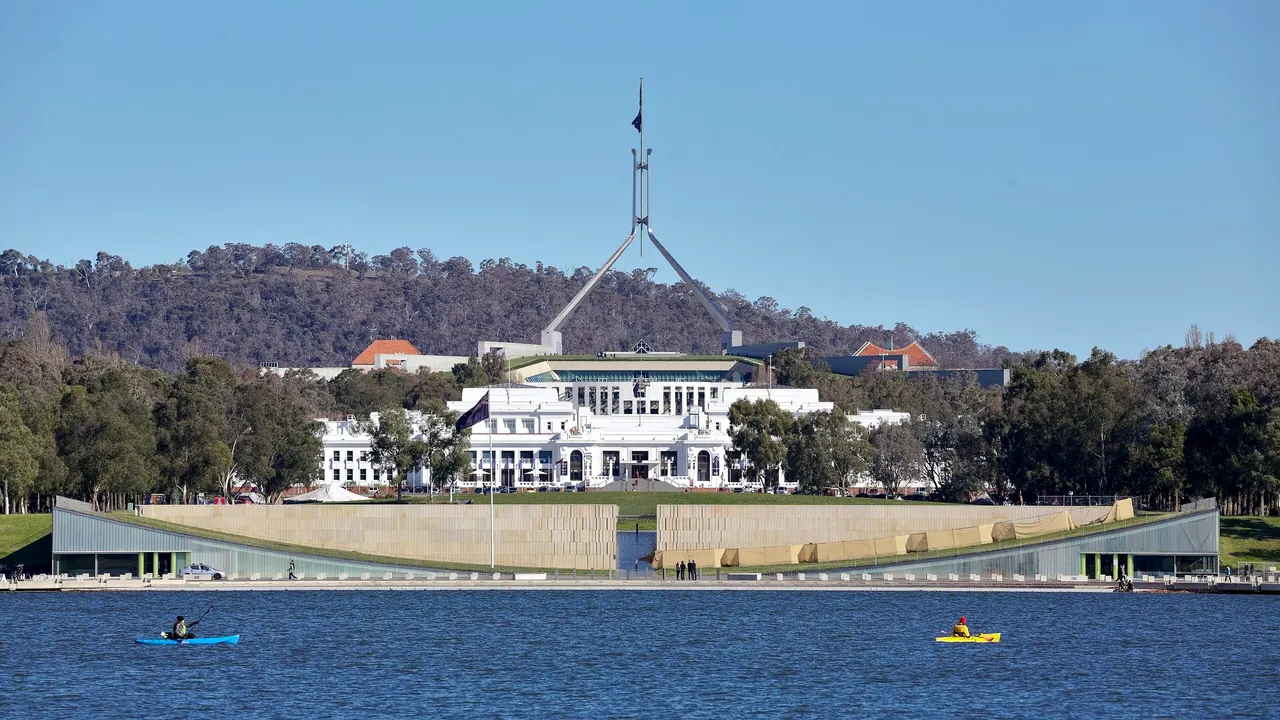
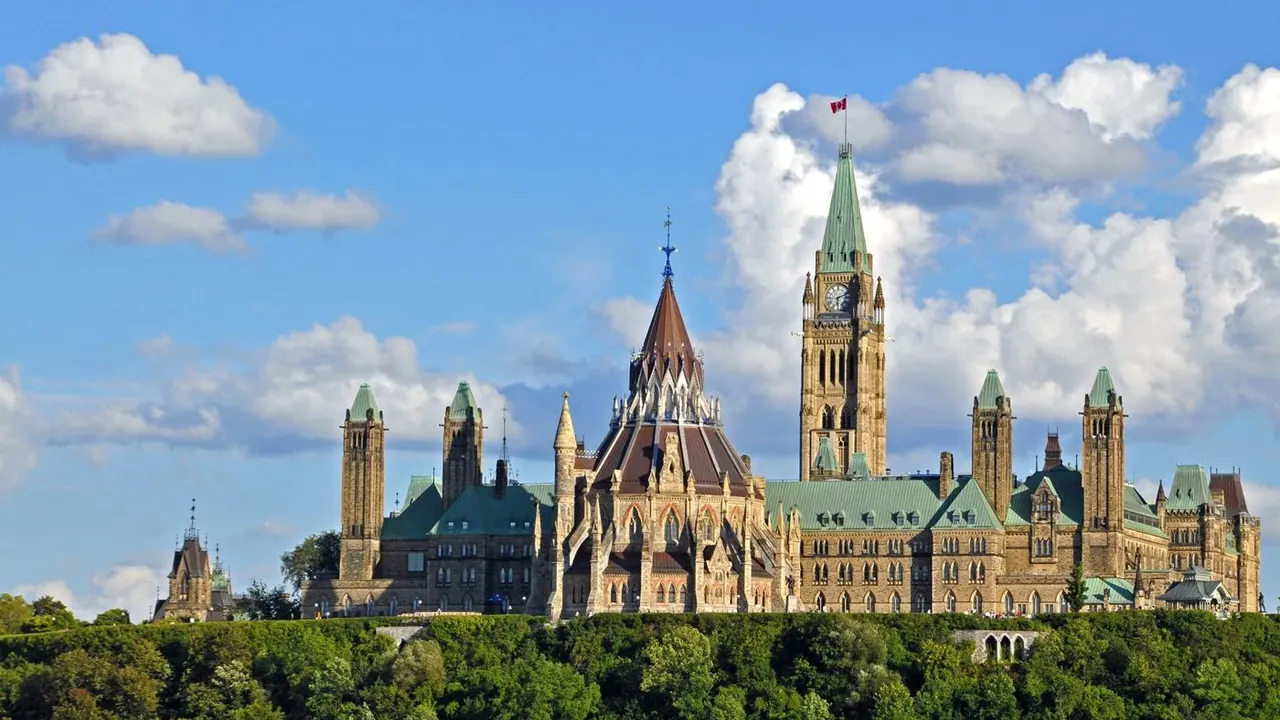
Photos: Canberra by Thennicke, CC BY-SA 4.0, cropped; Ottawa by Dennis G. Jarvis, CC BY-SA 2.0, cropped.
Canberra or Ottawa?
Our verdict in twelve categories, each scored against the same fixed benchmark cities, and the climate month by month, so you can choose for your trip.
Choose Canberra for
Canberra does not lead in any category we score.
Canberra suits a traveller who wants a quiet, sunny capital with mild winters, its big national institutions mostly free to enter, and the outdoors starting at the edge of the suburbs. Kangaroos on the hills at dusk, granite peaks in Namadgi and cool-climate wineries a short drive out make it a good fit for someone with a car, a taste for wine and no need for a lively evening.
Choose Ottawa for
- wellness
- getting around
- beaches
Ottawa is the better all-round pick for most city visitors. Its core of Parliament Hill, the ByWard Market, the National Gallery and the canal is walkable, the arts calendar is fuller and Montreal is close enough for a day out. It also has a real winter season, with skating on the canal, cross-country skiing in Gatineau Park and a Nordic spa in the woods, though only for those who are happy in deep cold.
Scoreboard
Twelve categories on one fixed scale from 0 to 100. The shaded stretch is the gap between the two.
Your match
Pick a travel style or drag the sliders, and both match scores follow your weighting.
Has no clear advantage with the weighting you have chosen.
Wins on wellness and getting around with your weighting.
What matters to you?
Category by category
What the scores mean for a trip.
Beaches & swimming
Neither city is on the coast, but Ottawa offers much more summer swimming. In Canberra you swim in the rivers at Casuarina Sands, Kambah Pool or Pine Island, with no lifeguards, while algae often closes Lake Burley Griffin. The sea at Batemans Bay is a two-hour drive over the mountain.
Ottawa runs supervised sandy river beaches at Mooney's Bay, Westboro and Petrie Island. Better still, the clear, forest-ringed lakes of Gatineau Park, such as Meech Lake, are a short trip across the river. The season is only about two months long, but within it a swim is an easy afternoon out.
Food & drink
For food the two are much the same: good neighbourhood eating with no local cuisine and few top-end tables. Canberra's strengths are weekend brunch in Braddon, the Asian kitchens along Dickson's Woolley Street, and cool-climate shiraz-viognier and riesling from cellar doors less than an hour out.
Ottawa has more of a street-food side, with the ByWard Market's stalls and fried-dough pastries and the shawarma brought by its Lebanese community. Crossing into Gatineau adds Québécois dishes such as poutine and tourtière, and in late winter there are maple-syrup feasts at the sugar shacks.
Culture & sights
Both capitals are built around national institutions, but Ottawa offers more to see and a stronger sense of history. Canberra's highlights are the Australian War Memorial, Parliament House with its grass-covered roof, and the National Gallery's large Aboriginal and Torres Strait Islander collection. Griffin's geometric plan, seen from Mount Ainslie, is itself the sight, as there is almost no old streetscape.
Ottawa adds Gothic Revival architecture to the museums. Parliament Hill stands above the river, the Rideau Canal with its hand-worked locks is a UNESCO World Heritage Site, and the Museum of History's hall of totem poles looks back across the water. The National Gallery of Canada, the War Museum and the Museum of Nature make a longer list than Canberra can match.
Nightlife
Both are government and university towns that go to bed early, but Ottawa offers a little more. Canberra's evenings mean cocktail bars and small breweries on Lonsdale Street and in the Civic laneways, and outside term and sitting weeks they can feel very still.
Ottawa has dance clubs and summer patios in the ByWard Market and a long run of pubs on Elgin Street. Anyone who wants to stay out late can cross to Gatineau, where last call comes later.
Nature & outdoors
Canberra's bush and Ottawa's forest are equally close at hand. What differs is the kind of landscape and the season it suits. In Canberra, open eucalypt hills such as Black Mountain and Red Hill rise between the suburbs, with walking and mountain-bike trails, and kangaroos come out to graze on the reserves at dusk. Further out, the Brindabellas and Namadgi offer long hikes to granite summits above 1,800m, past Aboriginal rock-art sites. Winters are frosty but clear, so you can walk there all year.
Ottawa's wild country is Gatineau Park, with maple and pine forest, lakes and lookouts such as the Champlain Lookout, starting just across the river. Its autumn colour is superb. Summer brings riverside cycling and whitewater rafting upstream. In winter the cold becomes the point of going, with groomed cross-country ski trails in the park and a skating route nearly 8km long on the frozen canal.
Day trips
Ottawa has much better day trips, chiefly because Montreal is about two hours away by train. Kingston and the Thousand Islands, Upper Canada Village and the canal towns such as Merrickville add variety.
Canberra's outings are quieter and need a car. The choices are a wine day around Murrumbateman, the gold-rush streets of Braidwood, the galleries of Bungendore or the Southern Highlands villages, all pleasant but none a reason to plan the trip.
Good for families
With children the two are evenly matched, and in each the national museums carry most family days. Canberra has the hands-on science floors at Questacon, a zoo and aquarium where children get close to big cats, and Tidbinbilla, where short walks give a good chance of seeing kangaroos, emus and koalas. The playground at the National Arboretum comes with wide views. The distances, though, make a car a real help with small children.
Ottawa has no zoo or aquarium in town. Instead it has the dinosaurs at the Museum of Nature, the Children's Museum inside the Museum of History and the hangar of aircraft at the Aviation and Space Museum. Winter adds skating on the canal and tobogganing, and the bison and wolves of Parc Omega are about an hour's drive away.
Getting around
Ottawa is far easier to get around. Its main sights form a compact centre you can cover on foot, the Museum of History is a walk across the Alexandra Bridge, and a light rail line and bike-share fill most gaps. A car is only needed for the further lakes and towns.
Canberra was laid out for driving. Civic, Braddon and the Parliamentary Triangle are each walkable, but the distances between them are long in the heat or the wind. Buses thin out in the evenings, so the lakeside cycle paths or a hire car are the practical answer.
Shopping & style
Neither is a shopping destination, but Ottawa has more worth browsing. Bank Street in the Glebe and Wellington West have independent bookshops and boutiques, the ByWard Market has Indigenous art galleries, and maple syrup and Canadian outdoor gear make natural purchases.
In Canberra the best stop is the Sunday Old Bus Depot Markets in Kingston, along with the national gallery and museum shops for Aboriginal art prints. Beyond those, it is mostly the chains in the Canberra Centre.
Affordability
Both cities cost about the same and are fairly expensive, with weekend hotel rates easing in each once government travellers leave. Canberra's main saving is that almost all its major institutions are free to enter, though Questacon, the zoo and a hire car add up.
In Ottawa, meals cost more than the menu shows once tax and tip are added, but Parliament tours are free and several museums have free hours. Skating and cycling by the canal cost nothing, and meals across the river in Gatineau tend to be a little cheaper.
Live music & performing arts
Ottawa has the richer stage, based at the National Arts Centre beside the canal, with its orchestra and English, French and Indigenous theatre companies. In summer there is Bluesfest at LeBreton Flats, a jazz festival and Chamberfest.
Canberra has touring shows at the Canberra Theatre Centre and the symphony orchestra's season. Its one big event is the National Folk Festival at Easter. Many national tours skip the city, so most of the time you take what is on.
Wellness & relaxation
Ottawa has something to plan around. The outdoor Nordic spa in Chelsea, about fifteen minutes away, has hot pools, saunas and cold plunges among the trees, and is at its best when snow is falling.
Canberra has only a few day spas and hotel wellness centres. Its restful quality is the calm itself: quiet lakeside mornings and early nights, which suit a gentle break but not a wellness trip.
When should you go?
Pick your month. The climate figures are measured averages, not a forecast.
Canberra in July
Ottawa in July
Daytime high, °C
Rainfall in the month, mm
Temperature and rainfall are climate normals, averaged over the years shown. Canberra: 1991-2020 normals, Canberra (6.7 km from centre). Ottawa: 1991-2020 normals, Ottawa CDA RCS (5.3 km from centre).
The two capitals sit in opposite hemispheres, so their seasons run in reverse. Canberra is hottest from December to February, with January highs around 30°C. That is warm enough for river swimming but tiring for walking between its spread-out sights. It is very sunny in summer, and its driest weather comes in April and May, when the cool autumn days are ideal for the hills and the museums. Winter, from June to August, is crisp and clear, with July highs near 12°C, frosty mornings and still a fair amount of sun.
Ottawa's winter is much harder. January highs sit around -5°C, and the city is frozen from December to February, which suits skaters and skiers but few others. Summer runs from June to August, with July near 27°C, and that is the short swimming season at the river beaches and the Gatineau lakes. Rain is spread through the year, peaking around 94mm in October, but late September and early October still bring the autumn colour and comfortable walking weather.
Which traveller are you?
For a short city break, Ottawa makes better use of a few days. Parliament Hill, the ByWard Market, the National Gallery and the canal sit within walking distance of each other, while Canberra's institutions are spread along wide avenues that eat up time without a car.
On a relaxing and wellness trip, Ottawa has the one real draw: the outdoor Nordic spa at Chelsea, with hot pools and saunas in the woods by Gatineau Park. Canberra offers calm lakeside mornings and early evenings, but only a few day spas.
For an outdoors trip outside the northern winter, Canberra is the easier choice. Its eucalypt hills with kangaroos begin between the suburbs, and Namadgi's granite summits make for long hikes in mild, dry weather. Ottawa is better if skiing and skating are the point.
Before you go
| Measure | Canberra | Ottawa |
|---|---|---|
| Official language | English | French, English |
| Currency | Australian Dollar (AUD) | Canadian Dollar (CAD) |
| Sockets | I230 V, 50 Hz | AB120 V, 60 Hz |
| Driving side | Left | Right |
| Time zone | UTC+10, UTC+11 in summer | UTC-5, UTC-4 in summer |
| Emergency number | 000 | 911 |
| Elevation | 578 m | 70 m |
| Main airport | Canberra Airport (CBR)6 km from centre11 non-stop destinations | Ottawa Macdonald-Cartier International Airport (YOW)12 km from centre46 non-stop destinations |
| Public holidays this year | 13 days | 11 days |
By the numbers
| Measure | Canberra | Ottawa |
|---|---|---|
| City population | 381,488 | 1,017,449 |
| People per km² | 809 | 366 |
| Museums within 10 km | 20 | 19 |
| UNESCO World Heritage sites within 50 km | 0 | 1 |
Where else could you go?
Every comparison below shares a destination with this one, so you can follow Canberra or Ottawa somewhere new.
- Montrealvs Ottawa
- Sydneyvs Canberra
- Torontovs Ottawa
- Niagara Fallsvs Ottawa
- Quebec Cityvs Ottawa
- Melbournevs Canberra