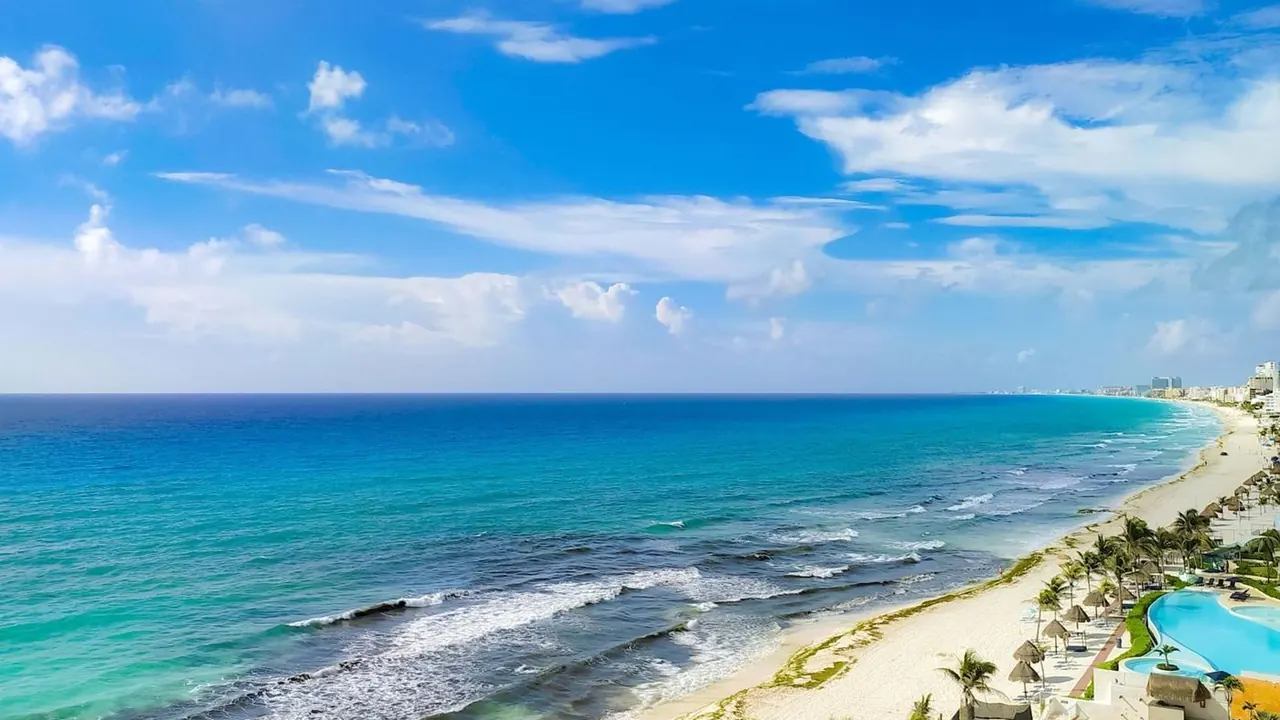
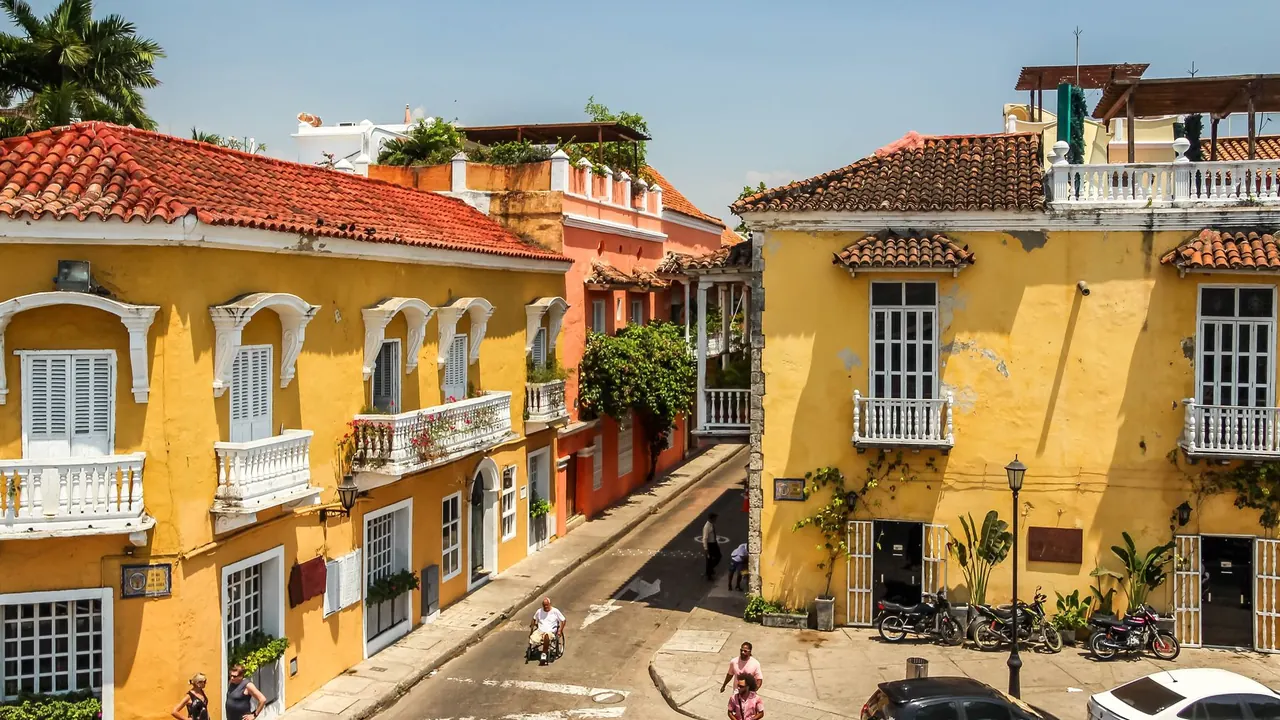
Photos: Cancun by Tellez Erik, Pexels License; Cartagena by Dr. Thomas Liptak, CC BY-SA 4.0, cropped.
Cancun or Cartagena?
Our verdict in twelve categories, each scored against the same fixed benchmark cities, and the climate month by month, so you can choose for your trip.
Choose Cancun for
- families
- day trips
- beaches
Cancun suits a trip built around the sea. Long pale sand runs straight from the hotel door, the bay side is calm enough for small children, and the reef, cenotes and whale sharks are close by. All-inclusive resorts make a family stay easy. The city has little history of its own, but it is the better base for travelling out to Chichen Itza, Coba, Tulum and Isla Mujeres.
Choose Cartagena for
- culture and sights
- getting around
- live music and the arts
Choose Cartagena if you want the place itself to be the point. The walled city's colonial streets, ramparts and hilltop fortress, the Caribbean street food, and the salsa and champeta of Getsemaní give it a character Cancun lacks, and the old quarters are compact enough to walk. The best beaches mean a boat out to the Rosario Islands, and it is harder going with small children.
Scoreboard
Twelve categories on one fixed scale from 0 to 100. The shaded stretch is the gap between the two.
Your match
Pick a travel style or drag the sliders, and both match scores follow your weighting.
Too close to call, 1 point apart
Wins on families and day trips with your weighting.
Wins on culture and sights and getting around with your weighting.
What matters to you?
Category by category
What the scores mean for a trip.
Beaches & swimming
Cancun is built on its beach: some 22km of pale coral sand along the Hotel Zone, with calm, shallow water on the bay side and open Caribbean surf along the eastern shore. You step out of the hotel straight onto the postcard version, and Playa Norte on Isla Mujeres is a short ferry ride away. The one thing to work around is the sargassum seaweed that reaches the eastern beaches in some summers.
Cartagena's sea is just as warm, but its city beaches at Bocagrande have darker sand, cloudy water and plenty of vendors. The turquoise water is out at the Rosario Islands and Playa Blanca on Baru, an hour or less away by boat, so a good beach day here is an outing rather than a morning.
Food & drink
Cartagena eats better on an ordinary day. Fried fish with coconut rice, arepas de huevo, ceviche from street carts and the coconut sweets of the Portal de los Dulces are all on the streets of the old town. Restored colonial houses inside the walls hold a polished tier of modern Colombian restaurants, and Getsemaní is cheaper and more casual.
Cancun's best food is Yucatecan, such as cochinita pibil, sopa de lima and panuchos. To find it you have to leave the buffets and steakhouses of the Hotel Zone and go downtown, to Parque de las Palapas or the Mercado 28 food halls.
Culture & sights
This is where the two cities differ most. Cartagena's walled city is a complete colonial townscape of balconied houses, churches, the Palace of the Inquisition and kilometres of ramparts, with the Castillo San Felipe on its hill just outside. Two or three days there are spent walking rather than visiting museums.
Cancun was laid out as a resort in the 1970s and has almost nothing historic to wander through. The Maya Museum and the San Miguelito ruins in its grounds fill an afternoon. The real Maya heritage lies hours away inland.
Nightlife
Both cities stay up late, in very different ways. Cancun's nights are concentrated at the Party Center, with huge clubs, stage shows, open-bar wristbands and a spring-break crowd that stays until dawn. Downtown, around Avenida Tulum, has cheaper bars where locals drink.
Cartagena's nights are smaller and sound more local: people drink on the steps of Plaza de la Trinidad in Getsemaní, couples dance in salsa bars, champeta plays at neighbourhood parties, there are rooftop bars over the domes and chiva buses with a band on board. Choose Cancun for spectacle and Cartagena for dancing in the street.
Nature & outdoors
Cancun has more to do outdoors, and nearly all of it is in the water: the Mesoamerican Reef off Puerto Morelos and Isla Mujeres, the MUSA underwater sculptures, freshwater cenotes along the Ruta de los Cenotes, whale sharks in summer and kayaking through the Nichupte mangroves.
Cartagena's version is the Corales del Rosario reefs, which show more wear from boat traffic, canoe trips through the mangroves at La Boquilla and a mud bath at Totumo. Neither city has any real hiking, but Cancun's cenotes add a second, inland landscape that Cartagena lacks.
Day trips
Cancun is much the better base. Chichen Itza with Valladolid, or Coba with Ek Balam, make long but straightforward days. Isla Mujeres, Playa del Carmen and the clifftop ruins at Tulum are all closer.
From Cartagena there are fewer easy outings. San Basilio de Palenque, a village with its own language and music, makes a half day, and Barranquilla is two hours along the coast. Mompox and Santa Marta are worth seeing but need a night away.
Good for families
Cancun is much easier with children. All-inclusive resorts have kids' clubs and shallow pools, the bay beaches at Playa Langosta and Playa Tortugas are calm, and the aquarium and the eco-parks down the coast, built around underground rivers, can fill a week. Watch for the heat and the strong currents on the eastern shore.
Cartagena gives families pleasant hours in the plazas and on the ramparts, plus the National Aviary and calm island beaches, but not much else made for children. Boat rides, uneven pavements and constant heat soon wear small children out.
Getting around
Cartagena is far easier on foot. The walled city, San Diego and Getsemaní are a few minutes' walk apart, the Castillo can be reached on foot from Getsemaní, and cheap taxis cover Bocagrande and anywhere else. Midday heat and narrow pavements are what slow you down.
Cancun stretches along a single long boulevard, and walking only works near your hotel. Frequent buses run through the Hotel Zone and on to downtown, ADO coaches reach the coast and Valladolid, and most visitors take tours or hire a car for the ruins and cenotes.
Shopping & style
Cartagena is the more interesting place to shop. Las Bóvedas, built into the city walls, sells Wayuu mochila bags, sombreros vueltiaos and hand-painted ceramics, there are emerald jewellers around the Plaza de Bolívar, and a cluster of Colombian designers sell linen resortwear and swimwear.
Cancun's shopping is mostly air-conditioned malls in the Hotel Zone, with international labels and duty-free. Mercado 28 has huipiles, hammocks and silver, but the same stock repeats from stall to stall.
Affordability
Cartagena goes further on a modest budget. Guesthouses in Getsemaní, set lunches in local canteens, street food and cheap taxis keep costs down. The mansion hotels inside the walls come close to European rates, especially at Christmas and Easter.
Cancun's Hotel Zone is priced for international visitors, and tours to the ruins and eco-parks add up quickly. To save money, stay downtown, eat at taco stands and use the ADO coaches, or book an all-inclusive package so the cost is fixed in advance.
Live music & performing arts
Neither city is a destination for the stage, but Cartagena has more to hear. The Teatro Adolfo Mejía hosts concerts and dance, a classical music festival fills churches and courtyards each January, and salsa bands and cumbia dancers perform in the plazas in the evening.
In Cancun the performances are staged for visitors: folkloric dinner shows with mariachi, resort entertainment and the evening spectacles at the eco-parks.
Wellness & relaxation
Cancun is the better choice for doing nothing in comfort. The big Hotel Zone resorts have full spas with hydrotherapy circuits and massages on the sand, and the Maya temazcal sweat lodge is a genuine local ritual. For real quiet, go to the southern end of the strip or to Puerto Morelos.
In Cartagena, relaxing means a plunge pool in a colonial courtyard, a cheap massage on the beach or a mud soak at Totumo, which is more fun than restful. The old town is noisy, and the calmest way to spend the stay is a few nights out on the islands.
When should you go?
Pick your month. The climate figures are measured averages, not a forecast.
Cancun in July
Cartagena in July
Daytime high, °C
Rainfall in the month, mm
Where the figures come from
Cancun has no weather station within reach, so its figures come from a gridded climate model rather than a measured record, and read a broad area rather than the city itself.
Temperature and rainfall are climate normals, averaged over the years shown. Cancun: 2001-2020 normals, NASA POWER reanalysis grid, no weather station within 90 km. Cartagena: 1991-2020 normals, Cartagena / Rafael Nunez (3.1 km from centre).
Cancun is warm all year. Highs run from about 26°C in January to 30°C from May to September, and the sea is warm enough to swim in every month. February to April are the driest months and the most comfortable, both for beach days and for long hours walking around the ruins. Rain builds from May, with a first peak in June and the wettest month in October, at around 224mm. November stays wet too.
Cartagena is hotter and more even, at around 30°C to 31°C in every month, so the streets are tiring at midday in any season and walking works best early or late. Its sea is a little warmer than Cancun's through most of the year. The main change through the year is the rain. January to March are almost completely dry, and January is the sunniest month. April and December bring some rain, but not much. May to November is the wet season, and October is the wettest month. In both cities the first months of the year are the safest choice: Cartagena is at its driest then, and Cancun is a few degrees cooler.
Which traveller are you?
On a beach and sun trip, Cancun is the clear pick. You walk from the hotel onto pale coral sand and turquoise water, the bay side is calm, and reef snorkelling and cenotes are close by. Cartagena's good beaches need a boat out to the islands.
For a culture and arts trip, Cartagena wins easily. Its walled colonial city, ramparts and fortress reward days of walking, and salsa and cumbia fill the plazas in the evening. Cancun has only the Maya Museum, and the great Maya sites are hours away.
On a family trip with young children, Cancun is far simpler. Resorts with kids' clubs and shallow pools, calm bay beaches, an aquarium and eco-parks keep children busy. In Cartagena the heat, uneven pavements and long boat rides tire small children quickly.
Before you go
| Measure | Cancun | Cartagena |
|---|---|---|
| Official language | Spanish, Nahuatl, Yucatec Maya | Spanish |
| Currency | Mexican Peso (MXN) | Colombian Peso (COP) |
| Sockets | AB127 V, 60 Hz | AB110 V, 60 Hz |
| Driving side | Right | Right |
| Time zone | UTC-5 | UTC-5 |
| Emergency number | 911 | 123 |
| Elevation | 5 m | 2 m |
| Main airport | Cancún International Airport (CUN)14 km from centre137 non-stop destinations | Rafael Nuñez International Airport (CTG)2 km from centre26 non-stop destinations |
| Public holidays this year | 9 days | 19 days |
By the numbers
| Measure | Cancun | Cartagena |
|---|---|---|
| City population | 888,797 | 914,552 |
| People per km² | - | 1,599 |
| Museums within 10 km | 1 | 2 |
| UNESCO World Heritage sites within 50 km | 0 | 1 |
| Swim season, months above 21 °C | 12 months | 12 months |
Where else could you go?
Every comparison below shares a destination with this one, so you can follow Cancun or Cartagena somewhere new.