Photos: Canmore by Jack Borno, CC BY-SA 3.0, cropped; Kelowna by Joli Rumi, CC BY-SA 4.0, cropped.
Canmore or Kelowna?
Our verdict in twelve categories, each scored against the same fixed benchmark cities, and the climate month by month, so you can choose for your trip.
Choose Canmore for
- nature and the outdoors
- getting around
- wellness
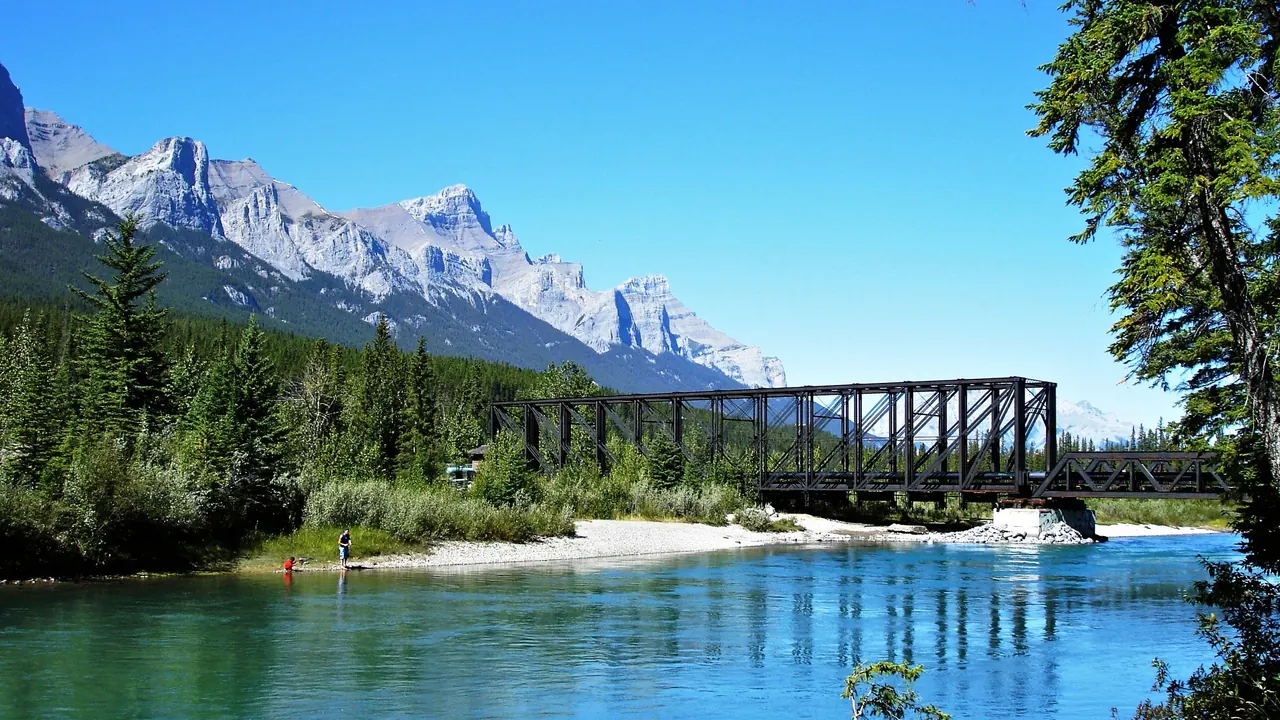
Canmore is for people who measure a trip in summits, trails and ski tracks. The peaks rise straight out of town, Banff National Park and Kananaskis Country are on the doorstep, and the evenings are calm, with a pub meal and an early night. If your days are spent scrambling up Ha Ling, cycling the Nordic Centre trails or ski touring, little else matters, and the town is small enough to walk once you are back.
Choose Kelowna for
- beaches
- food and drink
- nightlife
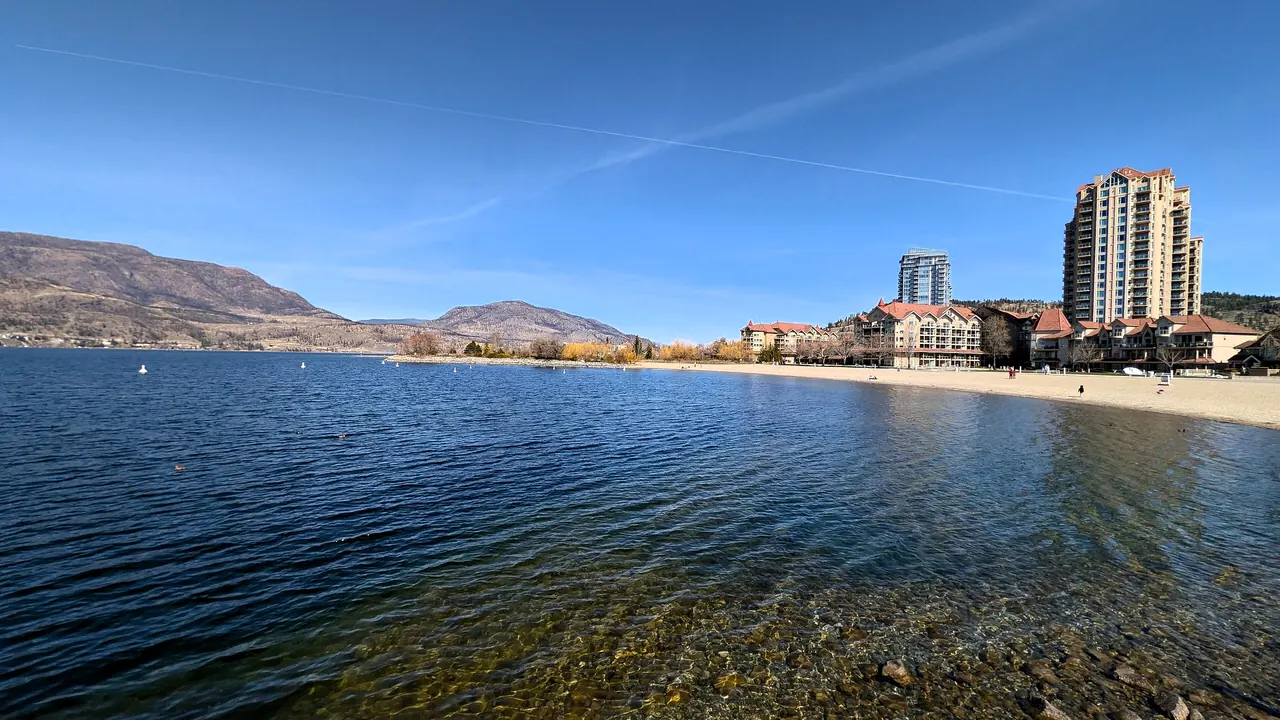
Kelowna makes more sense when the trip is about warm water, wine and long summer evenings. Okanagan Lake gives it real sand beaches and swimming, the vineyards on the benches above supply the best eating and drinking of the two, and Bernard Avenue keeps going later at night. It has good outdoor days too, but they are gentler, built around the lake and the Myra Canyon trestles, and you will need a car to reach most of them.
Scoreboard
Twelve categories on one fixed scale from 0 to 100. The shaded stretch is the gap between the two.
Your match
Pick a travel style or drag the sliders, and both match scores follow your weighting.
Wins on nature and the outdoors and getting around with your weighting.
Wins on beaches and food and drink with your weighting.
What matters to you?
Category by category
What the scores mean for a trip.
Beaches & swimming
This is where the two towns differ most. Canmore has no beach to speak of. Quarry Lake and a few other mountain lakes give a cold, quick plunge on a hot afternoon, and the snowmelt keeps them chilly even in July.
Kelowna is a proper lake resort in summer. Okanagan Lake warms enough for long swims, with sandy beaches at City Park, Gyro and Rotary, and paddleboarders and windsurfers out on the water. The season is short, though, and the beaches near downtown fill up on summer weekends.
Food & drink
Neither is a restaurant city, but Kelowna has the stronger table. Canmore does hearty breakfasts, bakeries and après-hike brewpub meals well, with a few kitchens cooking Alberta beef, bison and game, and little range beyond that.
Kelowna's eating comes from the valley around it: winery terraces above the lake, summer farm stands piled with cherries and peaches, cideries and distilleries. Away from the wine country, downtown is limited and the highway strips are chains, so the best meals here involve a drive.
Culture & sights
Culture is thin in both, and neither is worth choosing for it. Kelowna has a little more, with the Okanagan Heritage Museum on Syilx Okanagan and settler history, a small art gallery and the 1860s log buildings of Father Pandosy Mission. Canmore's story is coal mining, told by a small museum, miners' cottages and the old police barracks, and for anything more it sends you to the museums in Banff.
Nightlife
Kelowna has more of a night out. In summer the patio bars and taprooms on Bernard Avenue fill with students, stag and hen groups and lake-weekend crowds, and there are a couple of clubs, though it all goes quiet once the season ends.
Canmore's evenings are a pint in a brewpub with climbers and locals, maybe with a band, and most places close well before midnight. Anyone wanting a later night has to head up the valley to Banff.
Nature & outdoors
Canmore has the more dramatic landscape. The Three Sisters and Mount Rundle stand right above the streets, elk and bighorn sheep wander through town, and real hiking, scrambling and climbing start at the edge of town. Lake Louise, Moraine Lake and the Icefields Parkway are within reach, and in winter there is ski touring and ice climbing.
Kelowna's outdoors is gentler and centred on the water: boating and kayaking on the lake, the short climb up Knox Mountain and the ride across the Myra Canyon trestles. It has good mountain biking and Big White's powder snow in winter, but in some years late-summer wildfire smoke can cut outdoor days short.
Day trips
Kelowna has the slightly wider choice of outings, nearly all of them wine country. Penticton and the Naramata Bench, the vineyards around Oliver and Osoyoos, the Nk'Mip desert centre and O'Keefe Ranch make a pleasant circuit by car.
From Canmore the choice is narrower but has more character: Banff with its hot springs and Whyte Museum is twenty minutes away, and Calgary, a little over an hour east, offers proper museums, Heritage Park and the Stampede. After that it is mostly mountains.
Good for families
Both suit families who like being outdoors, and neither has a zoo or theme park. The difference is the kind of day. Canmore gives you short walks to waterfalls, elk sightings, riverside bike paths and sledding in winter, with bears to keep in mind on the trails.
Kelowna is built around summer at the lake, with shallow beaches, playgrounds, mini-golf and pick-your-own orchards, and Big White's ski-in, ski-out lodgings in winter. Its attractions are spread out along the highway, so expect more driving.
Getting around
Canmore is the easier of the two without a car. Its compact centre is walkable, local buses cover the town, a regional bus runs to Banff, and seasonal shuttles reach the busiest lakes. Kananaskis and the Icefields Parkway still really need a car, and winter mountain roads need care.
Kelowna's walkable part is limited to downtown and the waterfront, plus a cycle path to the beaches. The rest of the city sprawls along Highway 97, and the wineries, Myra Canyon and the ski hill all depend on driving or a tour.
Shopping & style
Nobody travels to either for shopping, though Kelowna has a little more. Bernard Avenue has a few independent boutiques, Orchard Park mall has the usual chains, and the most rewarding buys are wine from the cellar door, cider and fruit preserves. Canmore's Main Street is mostly outdoor gear, gift shops and galleries selling mountain landscapes and Indigenous art, handy for replacing a waterproof.
Affordability
Both are costly, but Canmore usually more so. Its rooms are priced like those of a resort next to a famous national park, and most visitors also pay for a hire car and park passes. Self-catering condos and visits in spring or late autumn help.
Kelowna is expensive in July and August, when tastings, boat rentals and car hire all add up. Outside summer, apart from ski weeks, its rooms ease off more noticeably.
Live music & performing arts
The two are much the same here, with enough to fill an evening but rarely worth planning a trip around. Canmore's highlight is a single event, its long-running Folk Music Festival in August, with the Banff Centre's concerts and Mountain Film Festival up the valley. Kelowna has a steadier year-round programme, including the Okanagan Symphony Orchestra, community theatre and touring acts at the arena, plus music on winery patios in summer.
Wellness & relaxation
Canmore is the better place to rest. The quiet streets and mountain views set a slow pace, the historic Banff Upper Hot Springs are about half an hour away, and Kananaskis Village has a large Nordic-style spa with outdoor pools beneath the peaks.
Kelowna has no hot springs and depends on hotel and day spas. Its kind of relaxation is long vineyard lunches and calm mornings on the lake, and it is easiest outside the peak summer weeks.
When should you go?
Pick your month. The climate figures are measured averages, not a forecast.
Canmore in July
Kelowna in July
Daytime high, °C
Rainfall in the month, mm
Temperature and rainfall are climate normals, averaged over the years shown. Canmore: 1991-2020 normals, Banff (18.1 km from centre). Kelowna: 1991-2020 normals, Kelowna Mws0 (8.4 km from centre).
Canmore is at its best from late June to early September, when daytime highs reach around 23°C and the trails are clear of snow. June is its wettest month, at about 66mm, so July and August are the safer bet for long hikes. Late September still suits walking in cool, crisp weather, and from November to March daytime highs stay around or below freezing, which suits skiing and ice climbing rather than strolling the streets.
Kelowna runs several degrees warmer all year. It is lake weather from late June to early September, with July highs near 30°C, hot enough that the middle of the day is better spent in the water than on a trail. May, June and September give warm, comfortable days for vineyard visits and cycling. Winters are mild by Canadian standards but still cold, hovering just above freezing, and rainfall stays modest in every month in both places.
Which traveller are you?
On a beach and sun trip, Kelowna is the clear choice. Okanagan Lake warms enough in midsummer for long swims off the sandy beaches at City Park and Rotary Beach, while Canmore offers only a brief, bracing dip in Quarry Lake.
For an outdoors trip, Canmore wins. Serious hiking, scrambling and climbing begin at the edge of town, Banff and Kananaskis are within easy reach, and winter brings ski touring and ice climbing. Kelowna's lake sports and Myra Canyon are good, but more modest.
On a food and nightlife trip, Kelowna gives you more. Winery terraces, orchard produce and cideries make for better meals, and the patios and couple of clubs around Bernard Avenue stay busy on summer nights, while Canmore's pubs wind down well before midnight.
Before you go
| Measure | Canmore | Kelowna |
|---|---|---|
| Official language | French, English | French, English |
| Currency | Canadian Dollar (CAD) | Canadian Dollar (CAD) |
| Sockets | AB120 V, 60 Hz | AB120 V, 60 Hz |
| Driving side | Right | Right |
| Time zone | UTC-7, UTC-6 in summer | UTC-8, UTC-7 in summer |
| Emergency number | 911 | 911 |
| Elevation | 1,310 m | 344 m |
| Main airport | Calgary International Airport (YYC)93 km from centre102 non-stop destinations | Kelowna International Airport (YLW)10 km from centre24 non-stop destinations |
| Public holidays this year | 13 days | 11 days |
By the numbers
| Measure | Canmore | Kelowna |
|---|---|---|
| City population | 15,990 | 144,576 |
| People per km² | 230 | 683 |
| Museums within 10 km | 1 | 0 |
| UNESCO World Heritage sites within 50 km | 1 | 0 |
Where else could you go?
Every comparison below shares a destination with this one, so you can follow Canmore or Kelowna somewhere new.
- Banffvs Canmore
- Lake Louisevs Canmore
- Calgaryvs Canmore
- Whistlervs Kelowna
- Jaspervs Canmore
- Vancouvervs Kelowna