Photos: Cannes by qwesy qwesy, CC BY 3.0, cropped; Chamonix by Tiia Monto, CC BY-SA 3.0, cropped.
Cannes or Chamonix?
Our verdict in twelve categories, each scored against the same fixed benchmark cities, and the climate month by month, so you can choose for your trip.
Choose Cannes for
- beaches
- shopping
- day trips
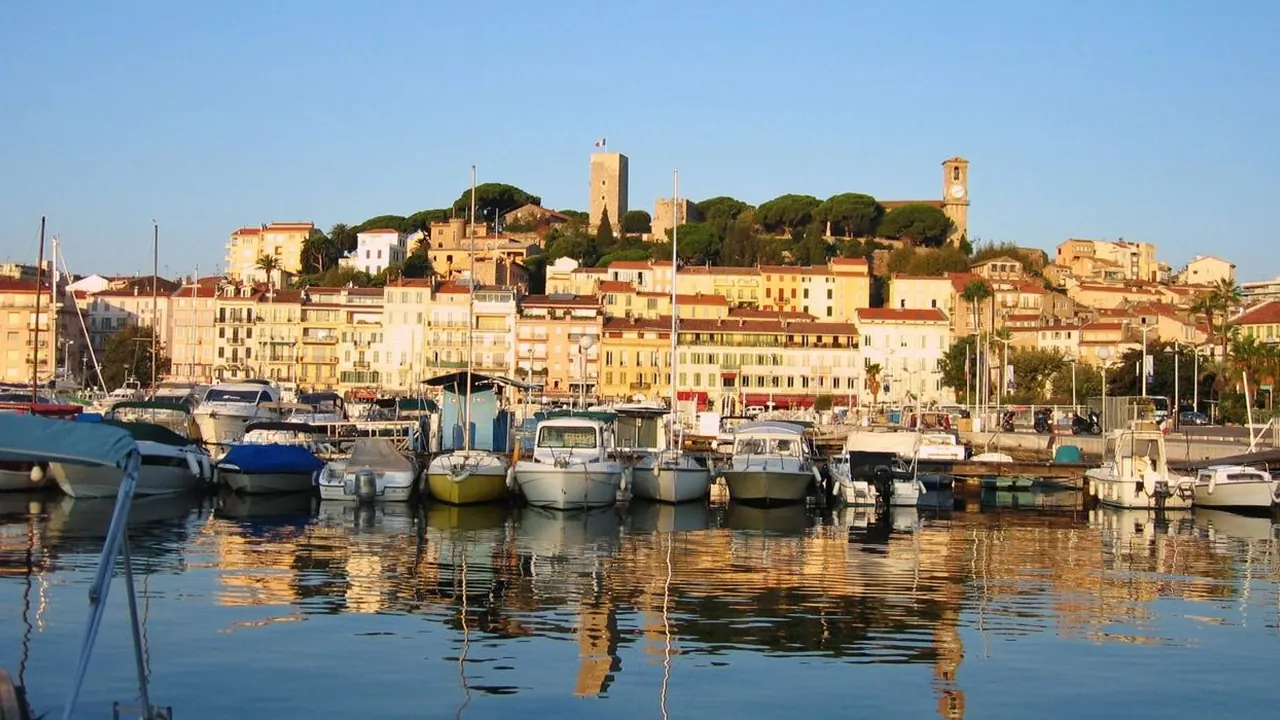
Cannes suits a summer trip built around sea and sun. You get sandy beaches on calm water along the Croisette, long lunches on terraces, and the whole Riviera by train when you want a day in Antibes, Nice or Monaco. It is the better pick for a couple who want to mix swimming with some luxury shopping and evenings out, and it has more to see than Chamonix, even though the town's own sights fit into a morning.
Choose Chamonix for
- nature and the outdoors
- wellness
- families
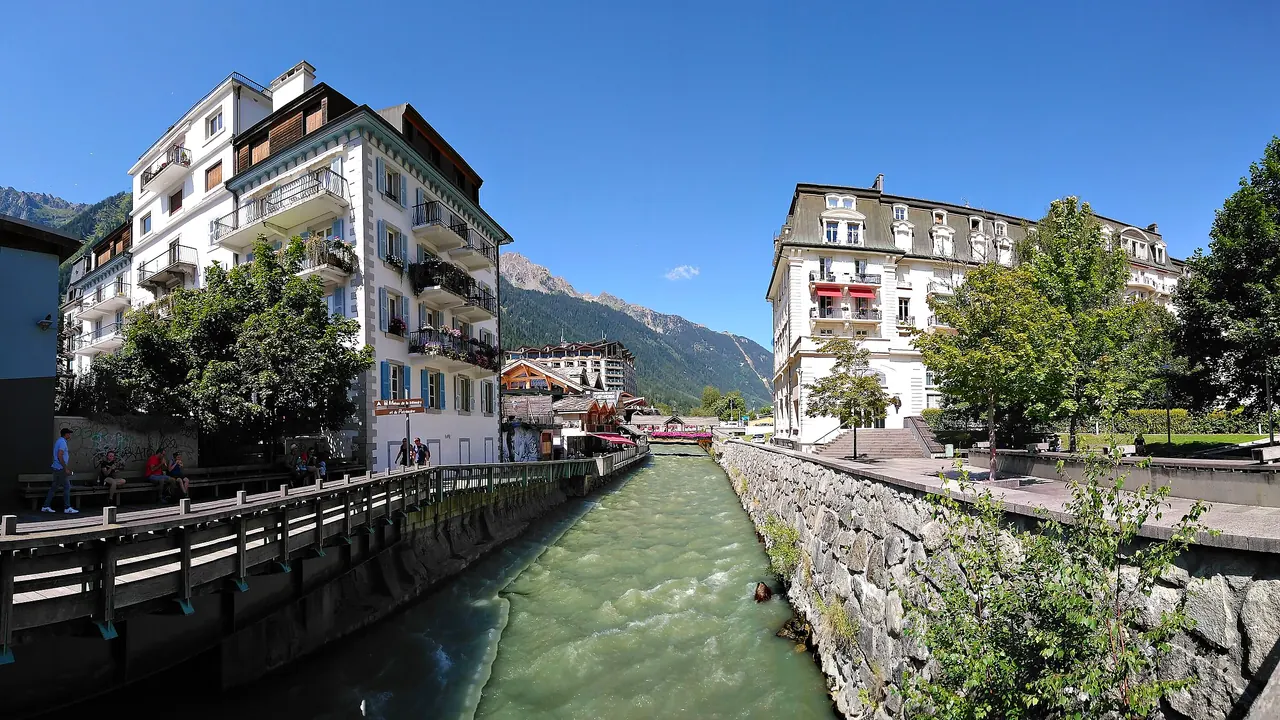
If your idea of a good day starts at a cable car, choose Chamonix. The Mont Blanc massif rises straight out of the valley, with glaciers, hiking trails, climbing and serious skiing close to town, and a hot spa for afterwards. It has little to offer in beaches, culture or shopping, so it is best for travellers who come mainly for the mountains.
Scoreboard
Twelve categories on one fixed scale from 0 to 100. The shaded stretch is the gap between the two.
Your match
Pick a travel style or drag the sliders, and both match scores follow your weighting.
Wins on beaches and shopping with your weighting.
Wins on nature and the outdoors and wellness with your weighting.
What matters to you?
Category by category
What the scores mean for a trip.
Beaches & swimming
On beaches the two could hardly be further apart. Cannes has a sandy bay on calm Mediterranean water, with free public stretches such as Plage du Midi between the private concessions. For clearer water there are the rocky swimming spots of the Lérins islands and the red-rock coves of the Esterel.
Chamonix has no sea. Swimming means the small Lac de Passy down the valley in midsummer, the town pool, or a drive of over an hour to Lake Annecy. Any of these makes a pleasant afternoon off, but none is a reason to plan a trip there.
Food & drink
Cannes offers more variety. The Forville market has the morning catch and local goat cheeses, the bistros of Le Suquet serve bouillabaisse and socca, and there is fine dining towards Mougins. The seafront, though, serves plenty of tired, costly plates.
Chamonix sticks to one cuisine, served generously: fondue, raclette and tartiflette made with Reblochon and Beaufort. It is best eaten on a terrace facing the glaciers or carried up as a picnic from the town's cheese shops. Beyond that, resort menus tend to look alike, and many kitchens close between seasons.
Culture & sights
Neither town is a culture destination, but Cannes has more to fill a morning. There is the castle museum and the church on Le Suquet, the Belle Époque palace hotels along the Croisette and the red-carpet steps of the Palais des Festivals, and bigger art collections are a short train ride along the coast.
Chamonix's sights all tell one story, the birth of alpinism. The Musée Alpin, the statues of the pioneers and the climbers' cemetery are done in a few hours, and the real sight is the mountain above them.
Nightlife
Both have small nightlife scenes that depend on the season, but they feel nothing alike. Cannes in summer means champagne at the beach clubs on the Croisette and cocktail bars behind the old port. It is dressy and costly, and it goes quiet outside summer and festival weeks.
Chamonix is liveliest in winter. Après-ski starts in the late afternoon, then moves to a lane of loud pubs in the old town where guides, seasonal workers and young English-speaking visitors drink until late. In summer the evenings are mostly drinks on a terrace after a day on the hills.
Nature & outdoors
Cannes has good countryside within reach: the red volcanic rock of the Esterel, the pine paths on Sainte-Marguerite and the shore path around Cap d'Antibes, with kayaking and diving around the islands.
Chamonix is on another scale altogether. Cable cars climb from the valley to 3,842m at the Aiguille du Midi, and the Tour du Mont Blanc and the Lac Blanc trails start from town. You can go mountaineering with the world's oldest guiding company, try paragliding or via ferrata, or ski steep runs and the Vallée Blanche. The trade-off is weather that changes fast and can hide the peaks in cloud.
Day trips
Cannes has the whole Riviera within easy reach. The coastal train gets you to Antibes in about fifteen minutes and to Nice in half an hour, then carries on to Monaco and Menton. Saint-Paul-de-Vence, Èze and Grasse are a bus or car ride inland, and Saint-Tropez is within a long day.
Chamonix's outings cross borders: Courmayeur and the Roman town of Aosta in Italy, Martigny in Switzerland, and Geneva and Annecy. The list runs out sooner, though, and mountain roads make every trip longer.
Good for families
Both work for families, in different ways. Cannes is a beach trip for small children, with gently shelving sand, calm water, the flat Croisette for pushchairs and a boat to the pine woods of the Lérins islands. Little in the town is aimed at children, though, and the midsummer heat needs planning around.
Chamonix is an active trip that suits older children best. Winter brings ski schools and sledging, and summer has the luge, treetop courses, the Merlet animal park and the little red train to the Mer de Glace. The highest cable cars are not suitable for toddlers, and wet days are hard to fill.
Getting around
You can manage without a car in either town, and both have small centres that are easy to walk. In Cannes the main advantage is the coastal railway from the central station, plus ferries to the islands. The inland villages and the Esterel corniche are easier to reach by car, if you can face the summer traffic.
Chamonix relies on valley buses and the Mont Blanc Express, both free with the guest card, and the main cable car stations are in town. The catch is packed ski buses in winter and few services in the evening.
Shopping & style
Cannes is the much better shopping town. The Paris fashion and jewellery houses line the Croisette, Rue d'Antibes has a long run of mid-range French shops, and Rue Meynadier sells Provençal soaps, fabrics and olive oil.
Chamonix's shops are almost all about mountain gear, and in that it excels. Its long-established climbing and ski specialists are worth saving a big purchase for. Beyond gear, cheese and génépi, it is mostly souvenirs.
Affordability
Neither is a budget choice, and both are most expensive at their peaks: Cannes in summer and during the film festival and trade fairs, Chamonix at Christmas, in the February school weeks and in midsummer. The ways to save differ. In Cannes they are the public beaches, set lunch menus in the backstreets, cheap coastal trains and staying in a neighbouring town.
In Chamonix, free valley transport, self-catering and trails that start without a lift help keep costs down. Lift passes, guides and paragliding flights add up quickly.
Live music & performing arts
Cannes has a modest but real programme. The Palais des Festivals hosts concerts, touring shows and the regional philharmonic, and there is a dance festival, summer concerts in the castle courtyard on Le Suquet and free beach screenings during the film festival. The jazz festival at Juan-les-Pins is just along the coast.
Chamonix has no theatre or concert season. Its live music is mostly a summer jazz festival, with some sets played high in the mountains, plus church concerts and mountain film evenings. For opera or an orchestra you have to go to Geneva.
Wellness & relaxation
Chamonix is the better place to rest tired legs. Its large day spa, built on the Italian thermal model, has hot outdoor pools looking up at the glaciers. Many chalets have their own saunas, and the warm springs of Saint-Gervais-les-Bains are down the valley.
Cannes offers palace-hotel spas and thalassotherapy but no public baths or springs. Rest there comes from slow spring and autumn mornings on a terrace and evening walks along the bay. In August and during festival weeks it is too noisy to unwind.
When should you go?
Pick your month. The climate figures are measured averages, not a forecast.
Cannes in July
Chamonix in July
Daytime high, °C
Rainfall in the month, mm
Where the figures come from
Chamonix's temperatures are measured 35 km from the centre, at Bourg-St-Maurice.
Chamonix has no rain gauge within 25 km of the centre, so its rainfall comes from a gridded climate dataset read at the city rather than from a gauge further away.
Temperature and rainfall are climate normals, averaged over the years shown. Cannes: 2004-2020 (sunshine 1991-2020, rainfall 1991-2020) normals, Cannes (5.8 km from centre). Chamonix: 1999-2020 (rainfall 1991-2020) normals, Bourg-St-Maurice (34.9 km from centre).
Cannes is at its best for the beach from June to August. Highs reach about 29°C in July and August, the sea warms to around 25°C, the days are long and sunny and there is hardly any rain. The water is still warm enough for swimming through September and into early October, but September brings the rain back. It gets heavier through autumn and peaks in November at about 138mm. May and early October are pleasant for walking and day trips. Winters are mild and fairly sunny, cool rather than cold, so you can walk the seafront comfortably all year.
Chamonix gets plenty of rain or snow in every month. December is the wettest month and brings the snow skiers come for, with daytime highs in the valley near 5°C. Hiking and high-mountain trips are best from late June to early September, when valley afternoons reach about 27°C, though showers are common even then. The two differ most in summer: Cannes is hot and dry, while Chamonix is milder, greener and much wetter.
Which traveller are you?
For a beach and sun trip, Cannes wins easily. Its sandy beaches on calm water are warm enough to swim from June to early October, island coves are a short ferry ride away and summers are long and dry. Chamonix has only a mountain lake and a pool.
On an outdoors trip, Chamonix is the obvious choice. Cable cars go straight up into glacier terrain, long trails start from the valley floor, and climbing, paragliding and steep skiing fill every season. Cannes has the Esterel and the island paths, but on a smaller scale.
For a culture and arts trip, Cannes makes the better base. Its own sights are few, but trains run to Antibes and its Picasso museum and to Nice's old town, buses reach the art foundations of Saint-Paul-de-Vence, and the town has more concerts and dance.
Before you go
| Measure | Cannes | Chamonix |
|---|---|---|
| Official language | French | French |
| Currency | Euro (EUR) | Euro (EUR) |
| Sockets | CE230 V, 50 Hz | CE230 V, 50 Hz |
| Driving side | Right | Right |
| Time zone | UTC+1, UTC+2 in summer | UTC+1, UTC+2 in summer |
| Emergency number | 112 | 112 |
| Elevation | 0 m | 995 m |
| Main airport | Nice-Côte d'Azur Airport (NCE)20 km from centre130 non-stop destinations | Geneva International Airport (GVA)68 km from centre150 non-stop destinations |
| Public holidays this year | 11 days | 11 days |
By the numbers
| Measure | Cannes | Chamonix |
|---|---|---|
| City population | 74,350 | 8,705 |
| People per km² | 3,793 | 75 |
| Museums within 10 km | 16 | 3 |
| UNESCO World Heritage sites within 50 km | 2 | 0 |
| Swim season, months above 21 °C | 4 months | - |
Where else could you go?
Every comparison below shares a destination with this one, so you can follow Cannes or Chamonix somewhere new.