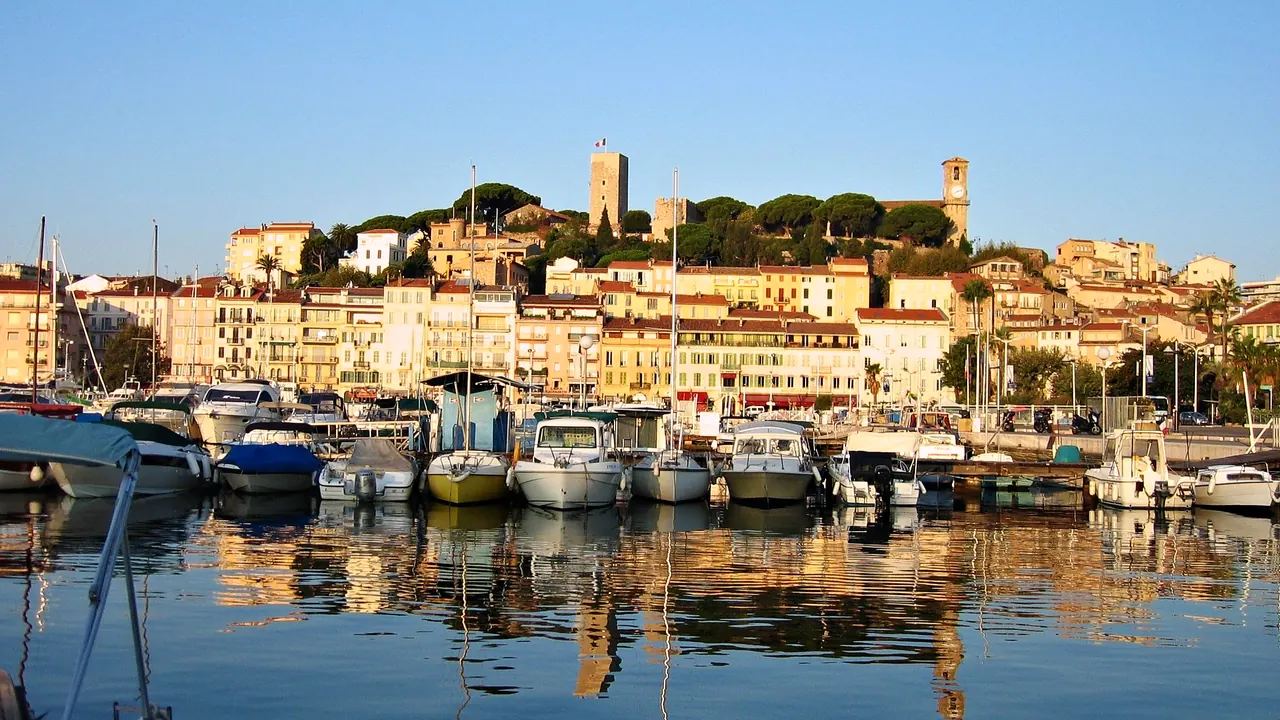
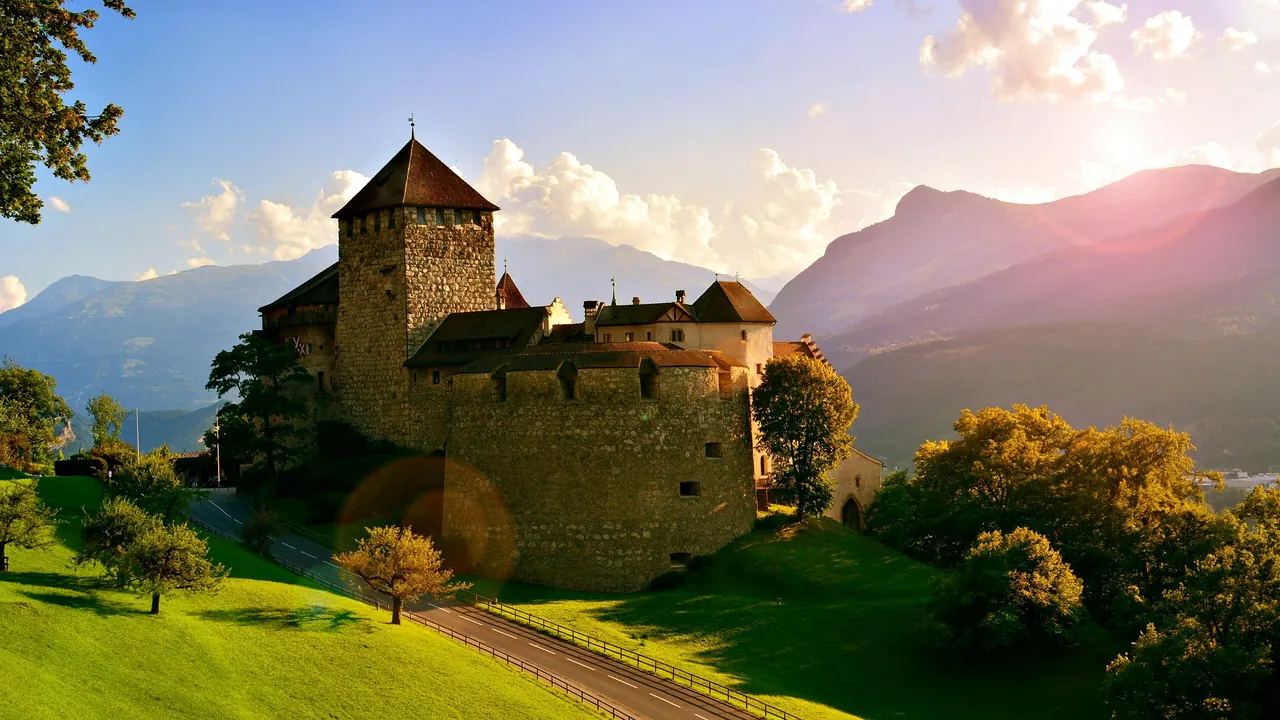
Photos: Cannes by qwesy qwesy, CC BY 3.0, cropped; Vaduz by Justin LaBerge, CC BY 2.0, cropped.
Cannes or Vaduz?
Our verdict in twelve categories, each scored against the same fixed benchmark cities, and the climate month by month, so you can choose for your trip.
Choose Cannes for
- beaches
- shopping
- nightlife
Cannes suits a summer trip built around the sea. You get sandy beaches on calm water, terraces of rosé, a stretch of luxury shops and dressed-up nights in season. It also makes a good base for exploring the whole Riviera, with Antibes, Nice and Monaco a short train ride away. It is the easier choice for families, for shoppers and for anyone who wants their evenings to go on after dinner. It is also the less punishing of two expensive places.
Choose Vaduz for
- nature and the outdoors
- wellness
Vaduz is for travellers who want mountains outside the door and quiet once the day is done. Trails climb from the centre through vineyards, the Rätikon peaks are half an hour up the road, and Malbun has gentle skiing in winter. It rewards walkers, cyclists and people on a slow, orderly stay who are happy to eat early and sleep well. Anyone looking for beaches, shopping or nightlife will be disappointed, and the Swiss price level makes it a costly place to stay.
Scoreboard
Twelve categories on one fixed scale from 0 to 100. The shaded stretch is the gap between the two.
Your match
Pick a travel style or drag the sliders, and both match scores follow your weighting.
Wins on beaches and shopping with your weighting.
Wins on nature and the outdoors and wellness with your weighting.
What matters to you?
Category by category
What the scores mean for a trip.
Beaches & swimming
These two are about as far apart as it gets for swimmers. Cannes has a curve of fine sand on calm Mediterranean water, warm enough for swimming from June into October. You can choose between private concessions with loungers, the free Plage du Midi, rocky coves on the Lérins islands and the red rock of the Esterel.
Vaduz has no beach at all, and the Rhine is not for swimming. A hot afternoon there means an open-air pool or a drive to the Walensee or Lake Constance, which is a pleasant outing but nothing to plan a trip around.
Food & drink
Cannes offers much more to eat. The Forville market shows off Provençal produce and the morning catch, the backstreets of Le Suquet serve bouillabaisse and stuffed vegetables, and there is real fine dining towards Mougins. The seafront has its share of overpriced tourist food, though.
In Vaduz the choice is small: hotel dining rooms, a few places on the Städtle and hill inns serving Käsknöpfle and game. What makes up for it is the wine, with Pinot Noir grown on the slopes below the castle.
Culture & sights
Neither town is a major cultural destination, but Cannes has a little more to see. You can climb Le Suquet to the castle museum and the church, then walk the Belle Époque palace hotels and the Palais des Festivals steps along the Croisette, all in a morning.
Vaduz is stronger on art than its size suggests. The Kunstmuseum and the Hilti Art Foundation hold serious modern collections, and the National Museum and the Postage Stamp Museum fill out a short day. The castle itself is closed to visitors.
Nightlife
Cannes at least has a nightlife in season. From June to September, beach clubs on the Croisette become party venues and the streets behind the old port fill with cocktail bars, though the mood is champagne rather than underground. Off-season it gets much quieter.
Vaduz has nothing comparable at any time of year. A few wine bars and hotel lounges close early, and locals cross to Feldkirch or go to Zurich for a proper night out.
Nature & outdoors
Vaduz is the better choice for the outdoors, because the mountains start at the edge of town. You can walk up through vineyards and beech forest from the centre, take the road to Malbun for high Rätikon ridges, cycle the Rhine dam path or ski in winter.
Cannes has a different kind of scenery: coast rather than Alps. The Esterel's red volcanic rock above a deep blue sea, the pine paths of Sainte-Marguerite and the Cap d'Antibes shore path are lovely, and the sailing and diving are good. The serious hills are further inland, though, and summer fire risk can close the trails.
Day trips
Both make good bases, but Cannes has more within easy reach. The coastal train links Antibes, Nice, Villefranche, Monaco and Menton without a car, and Grasse, Saint-Paul-de-Vence and the Lérins monastery are close.
From Vaduz the outings cross borders. Medieval Feldkirch, the abbey library at St Gallen, painted Appenzell, Chur and Lake Constance offer real variety, but connections often mean changing trains at Buchs or Sargans.
Good for families
Cannes is easier with children. Gently shelving sand and calm water suit small swimmers, and the flat Croisette has carousels and play areas. A boat to the Lérins islands makes a good picnic day, and the Monaco aquarium is close by.
Vaduz is very safe and calm, but there is nothing in town built for children. It suits families with older children who like to hike, or who will be happy at the pools and the beginner slopes at Malbun.
Getting around
Both centres are small and walkable, but Cannes is better connected. Its station sits in the middle of town, so regional trains along the coast are simple to use, and ferries leave from the old port. A car helps only for the hill villages and the Esterel.
Vaduz has no station of its own. Its buses are tidy and reach every village and Malbun, but journeys beyond the country usually need a change, which is why many visitors hire a car.
Shopping & style
Cannes is a real shopping town. The big Paris fashion and jewellery houses line the Croisette, Rue d'Antibes runs for over a kilometre of mid-range French fashion, and Rue Meynadier sells olive oil, soaps and Provençal fabrics.
Vaduz has a handful of shops on the Städtle selling watches, souvenirs and collectable stamps. A bottle of local wine is the best thing to take home, and serious shoppers go to Zurich.
Affordability
Neither town is cheap, but Cannes is clearly the gentler of the two on a budget. The high prices sit mainly on the Croisette and in festival weeks, and off the seafront the town falls back on ordinary French costs. A picnic from the Forville market, a free stretch of sand and the coastal train all cost little, and a visit in spring or autumn takes much of the sting out of the hotel bill.
Vaduz has no cheaper side to fall back on. The whole principality runs at Swiss prices, so a plain room or an everyday meal costs well above anything in a Cannes backstreet, and with so few hotels there is almost nothing at the low end. The usual way to save is to sleep over the border near Feldkirch and come in for the day.
Live music & performing arts
Cannes has the busier programme, though its famous film festival is for the industry, with only the free beach screenings open to the public. The Palais hosts concerts and touring shows, the regional philharmonic plays through the season, and there are summer concerts in the Le Suquet castle courtyard. The Juan-les-Pins jazz festival is just along the coast.
Liechtenstein has a modest calendar for a small country. There is the theatre in neighbouring Schaan, a short orchestral season and a summer classical festival in Vaduz, which is enough for an evening out but not a reason to go.
Wellness & relaxation
The two are level here, but the experience is different. In Cannes, wellness means polished palace hotel spas and seawater thalassotherapy, with slow mornings and walks along the bay in spring and autumn. August and festival weeks are too crowded and noisy to unwind.
Vaduz relies on quiet and mountain air, with only a few hotel spas in town. Its real asset is the historic thermal bath at Bad Ragaz across the Rhine, fed by warm spring water from the Tamina gorge. Cannes has nothing like it.
When should you go?
Pick your month. The climate figures are measured averages, not a forecast.
Cannes in July
Vaduz in July
Daytime high, °C
Rainfall in the month, mm
Where the figures come from
Vaduz's temperatures are measured 51 km from the centre, at Sigmarszell-Zeisertsweiler.
Vaduz has no rain gauge within 25 km of the centre, so its rainfall comes from a gridded climate dataset read at the destination rather than from a gauge further away.
Temperature and rainfall are climate normals, averaged over the years shown. Cannes: 2004-2020 (sunshine 1991-2020, rainfall 1991-2020) normals, Cannes (5.8 km from centre). Vaduz: 1991-2020 normals, Sigmarszell-Zeisertsweiler (51.3 km from centre).
Cannes has a long warm season. Highs reach about 29°C in July and August and the sea warms to around 25°C, so swimming is comfortable from June to early October, under far more sunshine than Vaduz ever gets. Midsummer afternoons are hot for walking the streets, which makes May and early June the best time for climbing Le Suquet or walking the Esterel trails. The rain sets in from September and peaks at around 138mm in November, and winters are mild but grey enough that the beaches empty.
Vaduz follows an Alpine pattern. Summer highs settle around 24°C, pleasant for hiking, but the valley is wet from May right through September, and July and August are the rainiest months of all, so plan around showers. April and October are noticeably drier and still mild enough for walking, though cool on the heights. Winter is cold, with highs near 4°C and little sun in the valley, which suits a ski trip to Malbun better than wandering the Städtle.
Which traveller are you?
On a beach and sun trip, Cannes is the obvious pick. It has fine sand along the Croisette, the free Plage du Midi and clear water off the Lérins islands. Landlocked Vaduz only offers municipal pools and lakes that warm briefly in summer.
For an outdoors trip, Vaduz has the edge. Forest and vineyard trails start in town, high Rätikon walks and the Fürstensteig are half an hour away, and there is skiing at Malbun. The Esterel near Cannes is beautiful, but further off and fire-prone in summer.
For a food and nightlife trip, Cannes wins easily. It has the Forville market, bouillabaisse and socca in Le Suquet, and beach clubs and cocktail bars that keep going in summer. Vaduz serves hearty Alpine dishes and good local wine, then goes quiet after dinner.
Before you go
| Measure | Cannes | Vaduz |
|---|---|---|
| Official language | French | German |
| Currency | Euro (EUR) | Swiss Franc (CHF) |
| Sockets | CE230 V, 50 Hz | CJ230 V, 50 Hz |
| Driving side | Right | Right |
| Time zone | UTC+1, UTC+2 in summer | UTC+1, UTC+2 in summer |
| Emergency number | 112 | 112 |
| Elevation | 0 m | 455 m |
| Main airport | Nice-Côte d'Azur Airport (NCE)20 km from centre130 non-stop destinations | Zürich Airport (ZRH)81 km from centre226 non-stop destinations |
| Public holidays this year | 11 days | 21 days |
By the numbers
| Measure | Cannes | Vaduz |
|---|---|---|
| Population | 74,350 | 5,668 |
| People per km² | 3,793 | 328 |
| Museums within 10 km | 16 | 7 |
| UNESCO World Heritage sites within 50 km | 2 | 3 |
| Swim season, months above 21 °C | 4 months | - |
Where else could you go?
Every comparison below shares a destination with this one, so you can follow Cannes or Vaduz somewhere new.