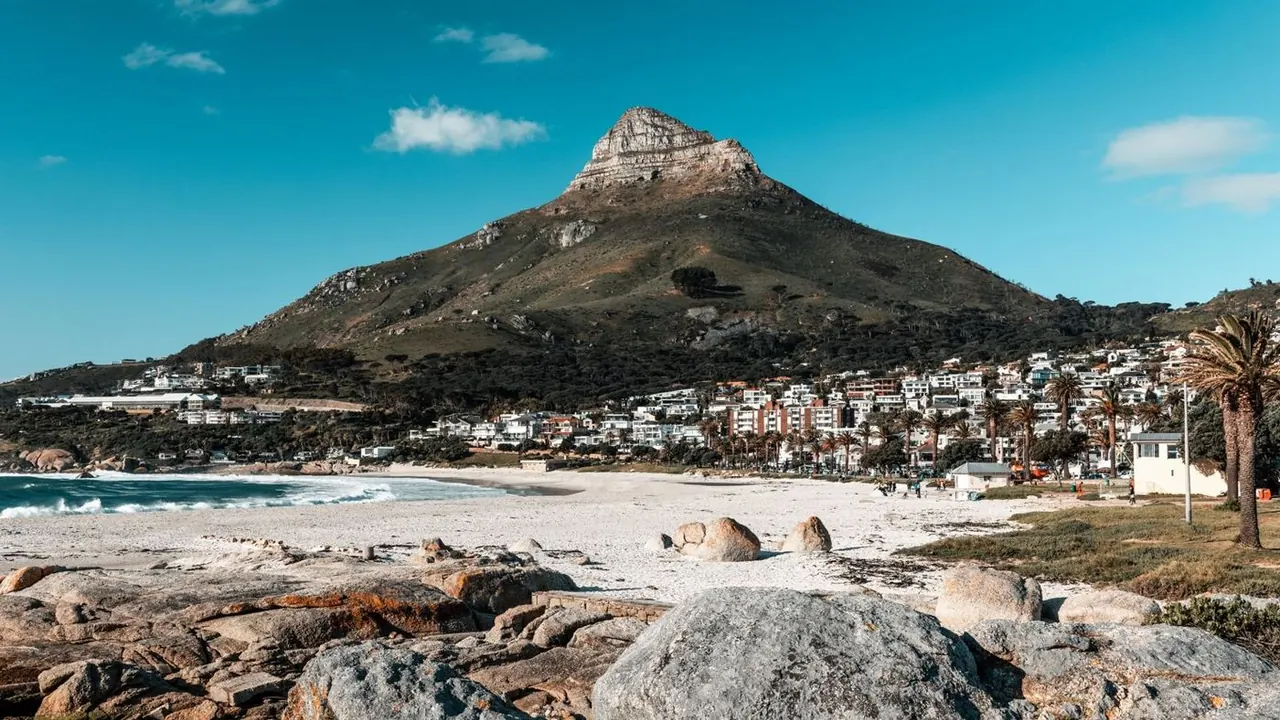
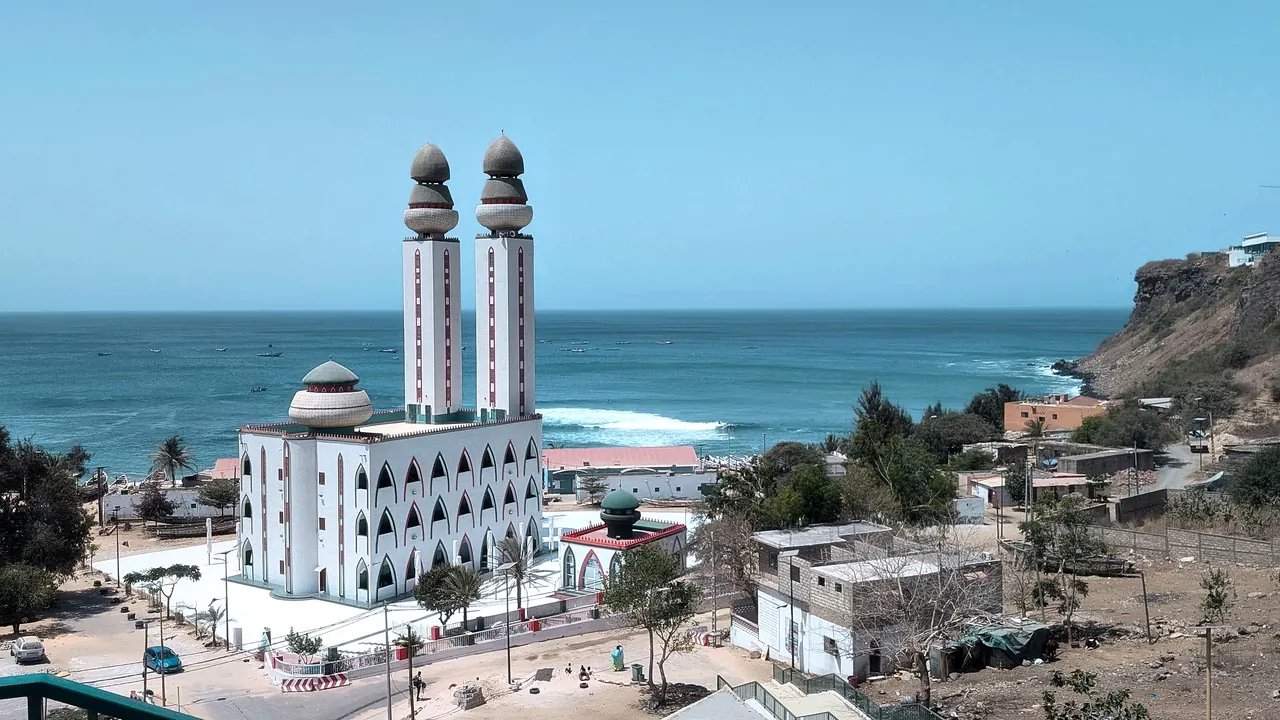
Photos: Cape Town by Stephan Louis, Pexels License; Dakar by Issathiome, CC BY-SA 4.0, cropped.
Cape Town or Dakar?
Our verdict in twelve categories, each scored against the same fixed benchmark cities, and the climate month by month, so you can choose for your trip.
Choose Cape Town for
- nature and the outdoors
- day trips
- families
Cape Town is the choice if your idea of a good trip is time outdoors. You can walk up a mountain from the city centre, drive the coast to Cape Point and see penguins on the way, then finish with a long lunch on a wine estate in the Winelands. It also suits families and anyone who wants good restaurants and wine without paying northern prices. Plan around a car and go in the southern summer.
Choose Dakar for
- live music and the arts
Dakar works better for travellers who want a West African capital as it really is, rather than a scenic base for excursions. Its strengths are Gorée Island, mbalax bands that start long after midnight, thieboudienne at lunch and fabric made into clothes by a tailor. The landscape and the outings around the city are thinner than at the Cape, and a stay here takes more patience. In return you get a city whose music and street life are entirely its own.
Scoreboard
Twelve categories on one fixed scale from 0 to 100. The shaded stretch is the gap between the two.
Your match
Pick a travel style or drag the sliders, and both match scores follow your weighting.
Wins on nature and the outdoors and day trips with your weighting.
Wins on live music and the arts with your weighting.
What matters to you?
Category by category
What the scores mean for a trip.
Beaches & swimming
The two are about equal for a beach trip but suit different travellers. Cape Town's Atlantic coves at Clifton and Camps Bay are among the most beautiful anywhere, but the water there is cold enough to take your breath away. The real swimming is at Muizenberg, St James and the False Bay tidal pools, and only in summer.
Dakar's beaches are part of everyday life rather than a view. N'Gor island has calm water a short pirogue ride away, and Yoff's long sands fill with Sunday football. The sea is warm from July, but that is the humid rainy season, and the water near the port is best avoided.
Food & drink
Cape Town has more to offer here. Cape Malay curries and bobotie from the Bo-Kaap give it a cooking style of its own, Bree Street and Woodstock have ambitious chefs, and the Winelands put Chenin Blanc and Pinotage on every table. Its one gap is a street-food culture you can graze through on foot.
That is exactly where Dakar is strong. Café Touba, attaya tea, fataya pastries, mutton from the dibiteries and fish grilled at Soumbédioune make the street the best place to eat. Thieboudienne and yassa are hearty home cooking, but fine dining and wine are scarce.
Culture & sights
The two cities are about equal for sightseeing, and in both the strongest sights are memorials to hard history. In Cape Town, the ferry to Robben Island and the District Six Museum tell the story of apartheid, Zeitz MOCAA in its converted silo shows contemporary African art, and the Castle and the Company's Garden recall the Dutch settlement.
Dakar's counterpart is Gorée, a UNESCO-listed island whose House of Slaves confronts the Atlantic slave trade. The Museum of Black Civilisations and IFAN have stronger collections of traditional masks and textiles, and the Village des Arts lets you meet working artists. Either city needs only three or four days of sightseeing.
Nightlife
Both cities are good for a night out, but in different ways. Cape Town's evenings revolve around drinks: sundowners on the Camps Bay seafront, wine bars on Bree and Kloof Street, the backpacker crowd on Long Street and De Waterkant's gay bars. Outside summer it goes quiet.
Dakar starts later and is more about dancing than drinking. Clubs in Point E and Mermoz play Senegalese pop until dawn, and Almadies has lounges facing the ocean. In both cities you take a car between areas at night.
Nature & outdoors
This is the biggest difference between the two cities. Cape Town sits inside a national park. You can climb Table Mountain from the centre, the fynbos is unique to the Cape, and Cape Point, Kirstenbosch, penguins, seals, whales, surfing and kitesurfing are all within a short drive.
Dakar's outdoors is mainly its coast: basalt cliffs, the Mamelles hills, and reef breaks at Ngor and Ouakam that make it a real surf city. Beyond that you have the seabirds of the Madeleine Islands and a vehicle safari at Bandia. The land inland is flat and gives little shade.
Day trips
Cape Town is far better for day trips, mainly because of the Winelands under an hour away. Stellenbosch, Franschhoek and Paarl alone could fill several days. Whale watching at Hermanus and Tulbagh's Cape Dutch street add more variety.
Dakar's outings are fewer and longer. The best are the Petite Côte villages, the shell island of Joal-Fadiouth and the Great Mosque at Touba. Saint-Louis, the best of them, is too far for a single day.
Good for families
Cape Town is much easier with children. The Two Oceans Aquarium, the Boulders penguins, the treetop walkway at Kirstenbosch and the warm False Bay pools fill several days, and many wine farms have play areas. With a car, the distances are manageable.
Dakar welcomes children warmly but has little made for them beyond N'Gor island, the Gorée ferry and the giraffes at Bandia. The heat, the dust, malaria precautions and the lack of pavements make most families base themselves by the sea or on the Petite Côte.
Getting around
Neither city can be explored on foot, but you get around them differently. In Cape Town the answer is to hire a car. You drive on the left, the roads are good, and the coast roads are part of the pleasure. MyCiTi buses cover the Atlantic seaboard.
Dakar is a taxi city, where you agree the fare first, and its long peninsula means long rides. The TER railway and rapid bus are useful, but rush-hour traffic jams can be severe. Most visitors would not want to drive themselves.
Shopping & style
From Cape Town you bring home South African design and wine. From Dakar you bring home clothes cut to fit you from cloth you chose yourself. In Cape Town, Woodstock's warehouses and the shops on Kloof Street sell ceramics, leather and fashion by local designers, the Waterfront mall covers the chains, and rooibos fits in any suitcase.
In Dakar you pick wax print or bazin at the HLM market, and a tailor makes it up within a few days. Carvings, leather and drums come from the artisan village at Soumbédioune, and you are expected to haggle for all of it.
Affordability
Cape Town is the better value. Tasting menus, wine and car hire all cost far less than visitors from Europe or North America expect, and rooms become cheaper outside the December to January peak.
Dakar is cheap only if you live as locals do, eating street food and taking taxis. Comfortable hotels in Almadies and the Plateau charge close to southern European rates, and restaurants aimed at expats are similarly pricey, so a comfortable stay costs more than in Cape Town.
Live music & performing arts
Dakar has more live music. Mbalax bands play the city's clubs well after midnight, the big names still give hometown shows, and sabar drumming spills into the streets at weddings and wrestling matches. The Sorano theatre presents the national ballet, though there is almost no opera or classical music.
Cape Town has Cape jazz, a large annual jazz festival and summer sunset concerts on the Kirstenbosch lawns. It also has the formal stages Dakar lacks: Artscape for opera and ballet, the Baxter for drama, and a resident philharmonic.
Wellness & relaxation
Neither city has a bathing tradition, but Cape Town is far easier to relax in. Long lunches on wine estates, morning swims in the False Bay tidal pools and the slow pace of Kalk Bay are the real attractions, and the spas on the grander estates are good value.
Dakar is noisy, congested and dusty, especially when the harmattan blows. Rest there usually means escaping to N'Gor island or the lagoons of the Petite Côte.
When should you go?
Pick your month. The climate figures are measured averages, not a forecast.
Cape Town in July
Dakar in July
Daytime high, °C
Rainfall in the month, mm
Temperature and rainfall are climate normals, averaged over the years shown. Cape Town: 1991-2020 normals, Cape Town Airport (17.5 km from centre). Dakar: 1991-2020 normals, Dakar / Yoff (10 km from centre).
The two cities share their best season. From December to March both are dry and sunny, so a trip in the northern winter suits either. Cape Town is then at its warmest, around 28°C in February, with long, bright days and the only weather for the beach. Even so, the sea barely reaches 18°C, so proper swimming means False Bay. Dakar in the same months is in the mid to high twenties, pleasant for walking the Plateau, with a fresh sea and strong surf.
Both turn wet in the middle of the year, but in different ways. Cape Town's winter is cool and grey, with rain peaking at about 97mm in June. That is fine for museums and whale watching but poor for the coast. Dakar stays dry into June but gets hotter, reaching around 30°C or more from July to November, and the rains peak at about 162mm in August, when the sea is warmest and the air is heavy and humid. Each city has a good month just outside the shared season: November in Cape Town, which is warming up and nearly dry, and April in Dakar, which is still dry and not yet hot.
Which traveller are you?
On an outdoors trip, Cape Town is the clear choice. Table Mountain, Lion's Head, the fynbos of the peninsula national park, whales in False Bay and Chapman's Peak Drive are all close at hand. Around Dakar the land is flat, dry and mostly built over.
On a family trip with children, Cape Town is much easier. The aquarium, the penguins at Boulders, the cableway and the tidal pools keep children busy, and a hire car solves most of the logistics. In Dakar, traffic, heat, malaria precautions and broken pavements wear families down.
For a trip built around live music, Dakar has the edge. Mbalax is played live in its clubs late into the night, and sabar drumming breaks out at weddings and wrestling matches. Cape Town's jazz festival and Kirstenbosch concerts are lovely but come mostly in season.
Before you go
| Measure | Cape Town | Dakar |
|---|---|---|
| Official language | English, Zulu, Xhosa, Afrikaans, Venda, Northern Sotho, Swazi, Tswana, Tsonga, Sesotho, Southern Ndebele, South African Sign Language | French, Wolof, Balanta, Badyara |
| Currency | Rand (ZAR) | CFA Franc BCEAO (XOF) |
| Sockets | CMN230 V, 50 Hz | CEK230 V, 50 Hz |
| Driving side | Left | Right |
| Time zone | UTC+2 | UTC |
| Emergency number | 112 | Police 17, fire 18 |
| Elevation | 5 m | 10 m |
| Main airport | Cape Town International Airport (CPT)18 km from centre45 non-stop destinations | Blaise Diagne International Airport (DSS)39 km from centre32 non-stop destinations |
| Public holidays this year | 13 days | 9 days |
By the numbers
| Measure | Cape Town | Dakar |
|---|---|---|
| City population | 3,776,313 | 1,438,725 |
| People per km² | 1,538 | 18,029 |
| Museums within 10 km | 22 | 8 |
| UNESCO World Heritage sites within 50 km | 3 | 1 |
| Swim season, months above 21 °C | None | 8 months |
Where else could you go?
Every comparison below shares a destination with this one, so you can follow Cape Town or Dakar somewhere new.
- Stellenboschvs Cape Town
- Johannesburgvs Cape Town
- Windhoekvs Cape Town
- Durbanvs Cape Town
- Swakopmundvs Cape Town
- Victoria Fallsvs Cape Town