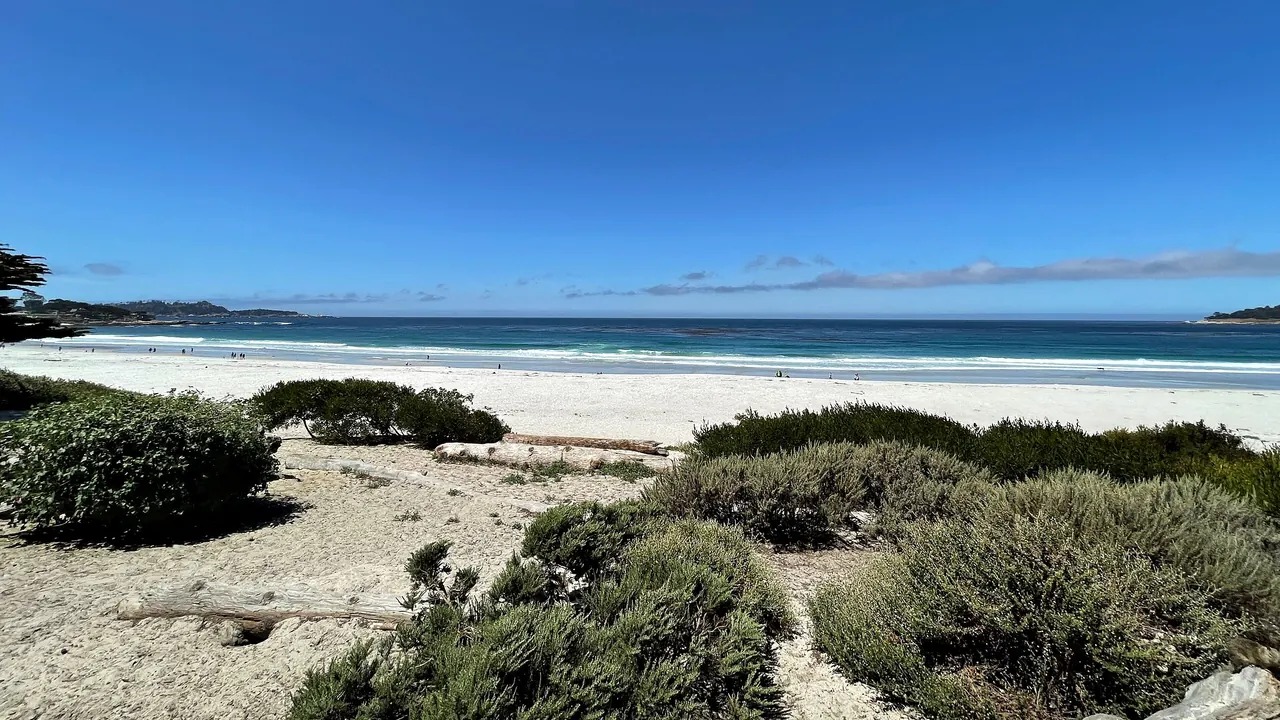
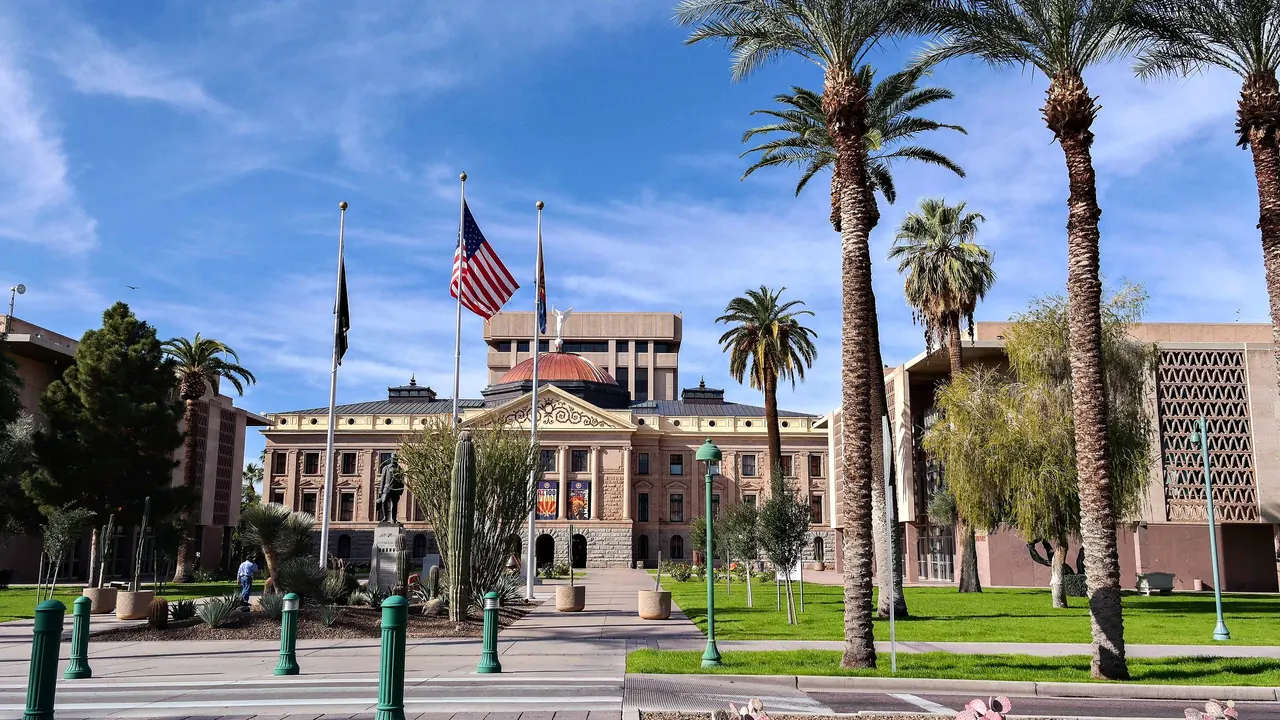
Photos: Carmel-by-the-Sea by Gregory Ford Henderson, CC BY-SA 4.0, cropped; Phoenix by Visitor7, CC BY-SA 3.0, cropped.
Carmel-by-the-Sea or Phoenix?
Our verdict in twelve categories, each scored against the same fixed benchmark cities, and the climate month by month, so you can choose for your trip.
Choose Carmel-by-the-Sea for
- beaches
- nature and the outdoors
- getting around
Carmel-by-the-Sea is for a slow, scenic trip, usually as a couple, where the days go on coastal walks and the evenings on long dinners. Point Lobos and the Big Sur coast are right on its doorstep, and the village itself is small enough to explore on foot. It costs a great deal and goes quiet early, so it rewards people who come for the landscape and the calm rather than for things to do after dark.
Choose Phoenix for
- nightlife
- prices
- shopping
Phoenix gives you more to do and costs less. It has better museums, a proper night out in Scottsdale or Tempe, Sonoran food, malls and more for children, and its resort spas are among the classic winter escapes in America. The price is a car for everything and a summer heat that rules the city out for months, so it suits a winter or spring visit with a rental car more than a summer walking trip.
Scoreboard
Twelve categories on one fixed scale from 0 to 100. The shaded stretch is the gap between the two.
Your match
Pick a travel style or drag the sliders, and both match scores follow your weighting.
Wins on beaches and nature and the outdoors with your weighting.
Wins on nightlife and prices with your weighting.
What matters to you?
Category by category
What the scores mean for a trip.
Beaches & swimming
Neither city is a place to swim, but only Carmel has a real beach. Its long curve of white sand below Ocean Avenue, backed by cypress and dunes, is good for sunrise walks, digging and sunset picnics. The Pacific stays cold with strong surf, and the coves to the south at Monastery Beach are for looking at, not swimming.
Phoenix has no coast at all. Its water means a day at the Salt River reservoirs, such as Saguaro Lake with its small desert beaches, a summer tubing trip down the river, or the slides and lazy rivers of a resort pool.
Food & drink
Carmel eats well for a village, with candlelit French and Italian rooms, Pinot Noir from the Santa Lucia Highlands, and Dungeness crab and sand dabs from the bay. The range is narrow, though. Dinner is formal, expensive and early, and there is very little that is casual or from beyond Europe and California.
Phoenix gives you more variety and more character. Machaca, carne asada and paper-thin flour tortillas from family Mexican kitchens, bacon-wrapped Sonoran hot dogs from evening carts and serious wood-fired pizza cover everything from cheap to polished, though in a city this spread out, eating well usually means a drive.
Culture & sights
Phoenix has the stronger collections. The Heard Museum's Native American art, the Musical Instrument Museum and Frank Lloyd Wright's Taliesin West can each fill a good part of a day, though they are separate drives and there is no historic centre to wander.
Carmel is the reverse: few institutions, but the whole village is part of the experience. The 1771 mission where Junípero Serra is buried, the storybook cottages, Robinson Jeffers's hand-built Tor House and the galleries can all be seen on foot in a morning or two.
Nightlife
This is where the two cities differ most. In Carmel an evening means a tasting room before it closes, a long dinner and perhaps a drink in a hotel lounge, and the streets are silent by ten.
Phoenix offers a real night out, divided into separate districts. Old Town Scottsdale has clubs and rooftop bars that fill with weekend groups, Tempe's Mill Avenue runs on students, and Roosevelt Row has craft beer and cocktails for a more local crowd. In summer the drinking moves onto patios with misters and to resort pool parties.
Nature & outdoors
Both cities are close to superb landscapes, but Carmel's coast wins. Point Lobos, with its granite headlands, sea otters and grey whales passing in winter and spring, is minutes away. Bixby Bridge and the Pfeiffer Big Sur redwoods are within an easy drive, and you can kayak or dive in Monterey Bay's kelp forests. All of it is usable in any month.
Phoenix has desert mountains rising out of the suburbs: Camelback's steep scramble, the saguaro trails of the McDowell Sonoran Preserve and the huge South Mountain park, with Sedona's red rock further out. It is wonderful from autumn to spring, but the summer heat limits it to the early mornings.
Day trips
The two are broadly level, but the outings differ in scale. From Carmel the trips are short and coastal: Cannery Row and old adobe Monterey, Victorian Pacific Grove, the tasting rooms of Carmel Valley, Steinbeck country in Salinas and the Santa Cruz boardwalk.
From Phoenix every trip is a longer drive into the Old West and older cultures. You can visit the hillside mining town of Jerome, Prescott's saloon street, the Montezuma Castle cliff dwelling, or Tucson with its adobe barrios and the white Mission San Xavier del Bac.
Good for families
Phoenix does more for children. The zoo, the science centre, a children's museum, water parks, resorts with slides and relaxed spring training games make for easy days from autumn to spring. Its weak points are long drives across the metro area and a summer heat that is risky for small children.
Carmel relies on the Monterey Bay Aquarium nearby, plus tide pools at Point Lobos and a sandy beach for digging. Cold water and quiet, grown-up restaurants make it better for school-age children who love wildlife than for toddlers.
Getting around
Carmel at least lets you park the car once you arrive. The square-mile village is walkable from the Ocean Avenue shops down to the beach, though the hill is steep, and the residential lanes have no street lights. Point Lobos, Big Sur and the aquarium still need a drive.
Phoenix is built for the car. Scottsdale, Tempe, downtown and the trailheads lie far apart across a flat grid, and the light rail only serves the airport to Tempe corridor. Walking is limited to a few small cores, and in summer even those are hard going.
Shopping & style
Phoenix has the bigger choice, centred on Scottsdale. A luxury mall and an open-air centre near the Biltmore have department stores and international brands, and Navajo and Zuni silver, Hopi katsina carvings and rugs are well worth buying from museum shops and reputable galleries.
Carmel is mostly for browsing. Plein-air paintings and photography fill an unusual number of galleries, and the courtyards hide cashmere and jewellery boutiques. It is polished and costly, and you can see it all in an afternoon.
Affordability
Phoenix is much easier on the wallet. Freeway chain hotels are good value all year, resort rates fall sharply in summer, and Sonoran Mexican food is cheap and good. The main extra cost is the rental car.
Carmel is priced as a luxury destination even out of season, with boutique inns, costly dinners and wine tasting, and little cheap food to balance them. The beach and the coastal walks are free, and many visitors save by staying in Monterey or Seaside and driving in.
Live music & performing arts
Phoenix keeps a full programme through the cooler months. There is the symphony at Symphony Hall, Arizona Opera, Ballet Arizona, touring Broadway shows at Wright's round ASU Gammage in Tempe, and concerts in the Musical Instrument Museum's intimate hall.
Carmel's offer is smaller and comes mainly in summer. The Bach Festival has played Baroque music since 1935, often at the Sunset Center, the open-air Forest Theater stages plays among the pines, and the Monterey Jazz Festival arrives nearby each September. The two calendars are almost the reverse of each other.
Wellness & relaxation
Neither city has thermal springs or a public bathing culture, so both come down to spas and a slower pace. Phoenix does it on a larger scale. The desert resorts below Camelback and in north Scottsdale have full spas, several pools and treatments using sage, clay and agave, and winter's dry sunshine makes a week by the pool easy.
Carmel's calm is quieter and cooler. Spa days are at the lodges of Pebble Beach or Carmel Valley, the mornings are misty, the rooms have fires and the walks run along the cliffs, which suits a couple's slow weekend more than a long retreat.
When should you go?
Pick your month. The climate figures are measured averages, not a forecast.
Carmel-by-the-Sea in July
Phoenix in July
Daytime high, °C
Rainfall in the month, mm
Temperature and rainfall are climate normals, averaged over the years shown. Carmel-by-the-Sea: 1991-2020 normals, Monterey / Pacific Grove Acres (8.7 km from centre). Phoenix: 1991-2020 (sunshine 1981-2010) normals, Phoenix Sky Harbor Airport (2.8 km from centre).
Carmel-by-the-Sea changes little through the year. Daytime highs are mild in every month and never hot enough to make walking hard. The warmest, clearest days come in September and October at around 23°C, once the summer morning fog has mostly lifted. Rain falls mainly from December to March, with January the wettest month, while May to September are almost completely dry. The sea never rises above about 15°C, so in any month the beach is for walking rather than for a warm swim.
Phoenix runs to extremes. From June to August highs reach 41°C, which makes walking and hiking dangerous after mid-morning and leaves the resort pool as the main refuge. December to February are the mildest months at around 20°C. March and November are warmer, at about 25°C, and are ideal for trails and for walking the streets. Rain is light by most standards, but it comes mainly in winter and in the short July and August monsoon, while April to June are almost dry. The sunshine is long in every month. The two cities complement each other: Phoenix is at its best in the months when Carmel is wettest, and Carmel stays pleasant through the summer that drives people indoors in Phoenix.
Which traveller are you?
On a food and nightlife trip, Phoenix is the clear choice. Sonoran kitchens, evening hot dog carts and wood-fired pizza give it far more range than Carmel's refined dining rooms, and Scottsdale, Mill Avenue and Roosevelt Row stay open long after Carmel has gone to bed.
On an outdoors trip, Carmel-by-the-Sea has the edge. Point Lobos, with its seals, otters and cypress headlands, is five minutes away and Big Sur begins just beyond it, and you can walk there all year. In Phoenix the desert trails are out of bounds in the summer heat.
On a trip on a tight budget, Phoenix is far easier. Its chain hotels along the freeways are good value, summer resort rates drop sharply and Mexican food is cheap. Carmel is priced as a luxury destination all year, and saving money there means sleeping in a neighbouring town.
Before you go
| Measure | Carmel-by-the-Sea | Phoenix |
|---|---|---|
| Currency | US Dollar (USD) | US Dollar (USD) |
| Sockets | AB120 V, 60 Hz | AB120 V, 60 Hz |
| Driving side | Right | Right |
| Time zone | UTC-8, UTC-7 in summer | UTC-7 |
| Emergency number | 911 | 911 |
| Elevation | 68 m | 331 m |
| Main airport | Monterey Regional Airport (MRY)8 km from centre11 non-stop destinations | Phoenix Sky Harbor International Airport (PHX)6 km from centre149 non-stop destinations |
| Public holidays this year | 13 days | 12 days |
By the numbers
| Measure | Carmel-by-the-Sea | Phoenix |
|---|---|---|
| City population | 3,220 | 1,608,139 |
| People per km² | 1,150 | 1,199 |
| Museums within 10 km | 5 | 10 |
| UNESCO World Heritage sites within 50 km | 0 | 1 |
| Swim season, months above 21 °C | None | - |
Where else could you go?
Every comparison below shares a destination with this one, so you can follow Carmel-by-the-Sea or Phoenix somewhere new.
- Montereyvs Carmel-by-the-Sea
- Scottsdalevs Phoenix
- San Josevs Carmel-by-the-Sea
- San Franciscovs Carmel-by-the-Sea
- Sedonavs Phoenix
- Tucsonvs Phoenix