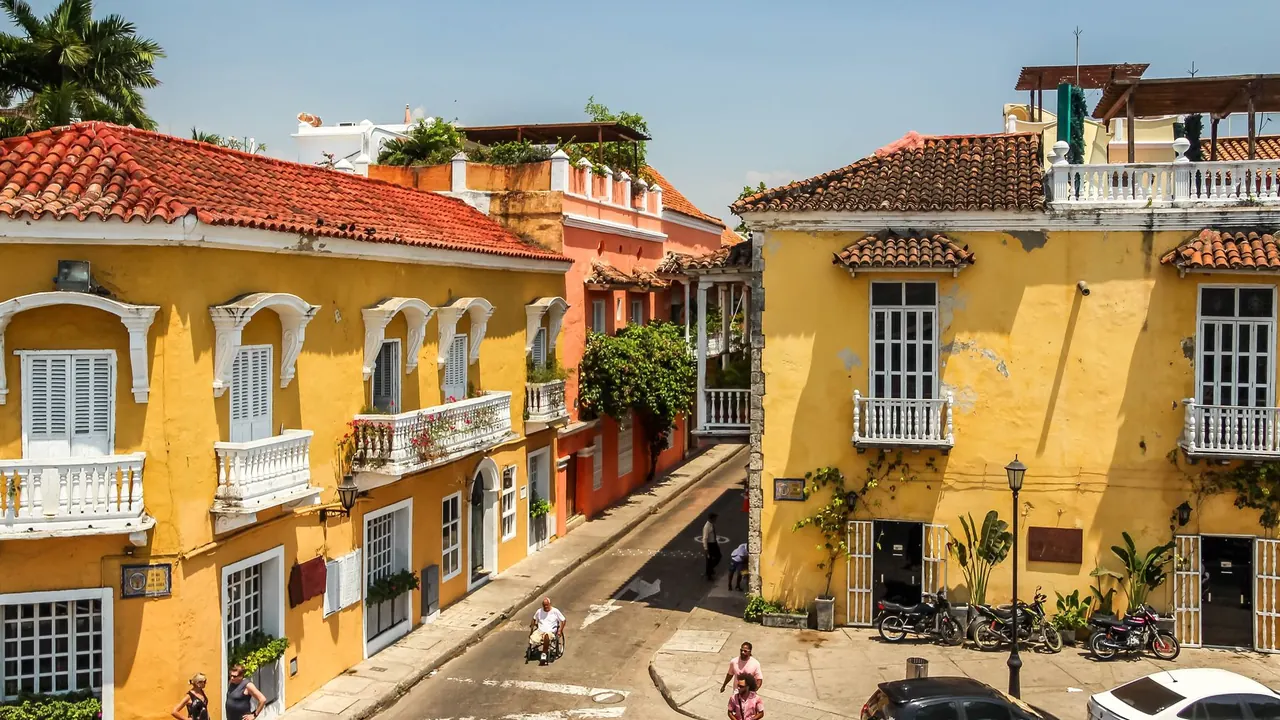
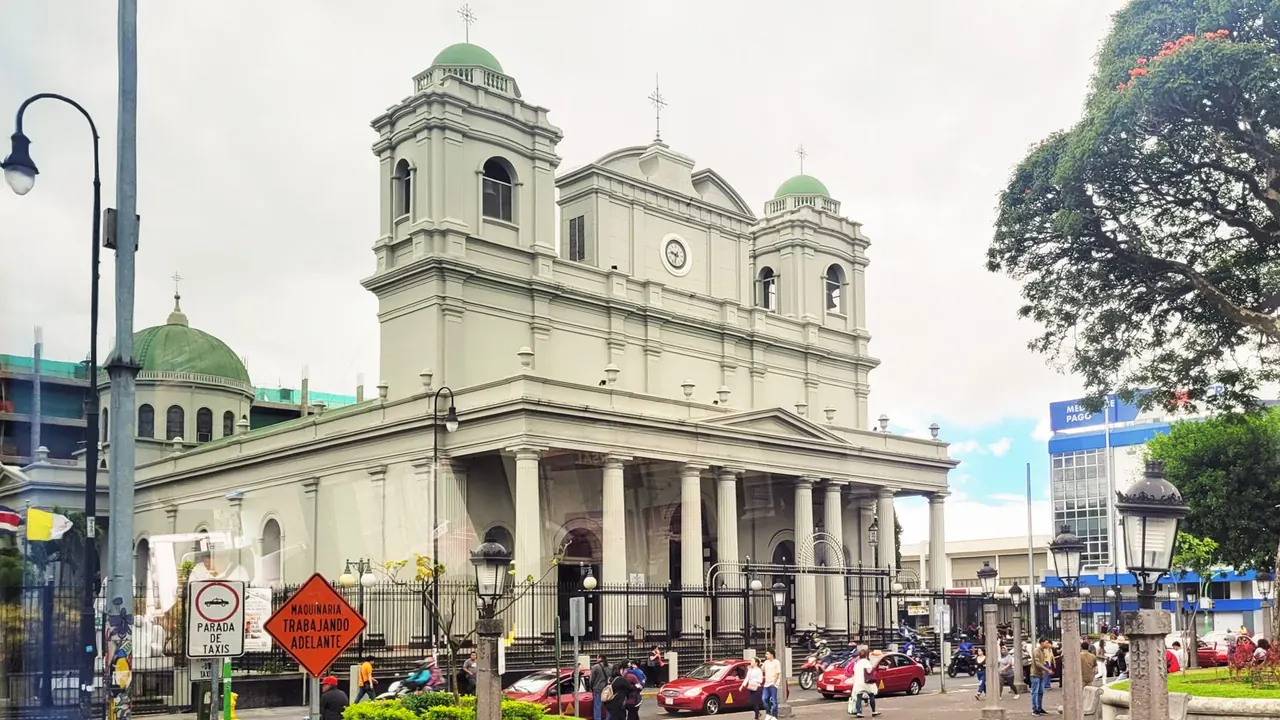
Photos: Cartagena by Dr. Thomas Liptak, CC BY-SA 4.0, cropped; San Jose, Costa Rica by Bernard Gagnon, CC0.
Cartagena or San Jose, Costa Rica?
Our verdict in twelve categories, each scored against the same fixed benchmark cities, and the climate month by month, so you can choose for your trip.
Choose Cartagena for
- beaches
- culture and sights
- nightlife
Cartagena is the choice for a trip built around the Caribbean itself: warm sea, boat days to the Rosario Islands and Baru, and evenings in a walled colonial city that is a pleasure simply to walk through. It suits couples and friends who want old streets, seafood, salsa and late nights within a few minutes' walk of each other, and who don't mind heat, hawkers and a fairly tourist-heavy centre.
Choose San Jose, Costa Rica for
- nature and the outdoors
- day trips
- families
Travellers who come for volcanoes, cloud forest and white water should pick San Jose. The city itself is plain and traffic-bound, with a day's worth of museums, but it sits in the middle of the Central Valley with active craters, rainforest parks, coffee farms and rafting rivers all within reach. It works best as a base or an arrival point for an active trip, not as a destination in its own right.
Scoreboard
Twelve categories on one fixed scale from 0 to 100. The shaded stretch is the gap between the two.
Your match
Pick a travel style or drag the sliders, and both match scores follow your weighting.
Wins on beaches and culture and sights with your weighting.
Wins on nature and the outdoors and day trips with your weighting.
What matters to you?
Category by category
What the scores mean for a trip.
Beaches & swimming
This is the widest gap between the two. Cartagena has warm Caribbean water every month, and although the city strands at Bocagrande are only fine for a dip, the Rosario Islands and Baru are an hour or less by boat, with turquoise coves and nights on the islands if you want them.
San Jose sits high in the Central Valley with no coast nearby. The Pacific at Jaco or Puntarenas means a two-hour drive at least, so a beach day becomes an overnight trip, and in the city the only swim is in a hotel pool.
Food & drink
Cartagena eats better, mainly because of the sea. Fried whole fish, ceviche from street carts, arepas de huevo and cut fruit from the Palenquera women give it a clear Caribbean flavour, and the restored houses of the walled city hold a polished tier of modern Colombian cooking.
San Jose's food is honest and filling rather than exciting: gallo pinto and casado plates in neighbourhood sodas and at the Mercado Central counters. Its real strength is coffee from the surrounding slopes, and Barrio Escalante is the place to go for a more ambitious dinner.
Culture & sights
Cartagena's walled city is the attraction itself: a UNESCO-listed colonial grid of painted, balconied houses, ramparts you can walk along at dusk, and the huge Castillo San Felipe on its hill. Its museums are modest, but simply wandering through San Diego and Getsemaní fills several days.
San Jose lost most of its old buildings to earthquakes and growth, so its sights are a few good indoor ones: the gilded Teatro Nacional, goldwork beneath the Plaza de la Cultura, the Jade Museum and the National Museum in its bullet-marked fortress. These are worth a day, but the streets around them are mostly concrete.
Nightlife
Cartagena has much more going on after dark. Plaza de la Trinidad in Getsemaní fills with drummers and street food, salsa bars run into the small hours, and rooftop bars and reggaetón clubs sit inside the walls, with party boats and chivas as local extras. Expect touts and plenty of other tourists.
San Jose's nights are a local, weekend affair, spread across craft beer bars in Escalante, student bars in San Pedro and the El Pueblo complex. The dancing is serious, but downtown empties after dark, so the evening means taxis from one door to the next.
Nature & outdoors
San Jose is far ahead. Within easy reach you can stand at the crater rims of Poas and Irazu, walk down from cloud forest to rainforest in Braulio Carrillo, hike among waterfalls in Tapanti, raft the Pacuare and Reventazon, and spot scarlet macaws at Carara.
Cartagena's nature is mostly in the water: the reefs of Corales del Rosario for snorkelling and diving, mangrove canoe trips at La Boquilla and kitesurfing in the dry months. Inland the land is flat and farmed, and the Totumo mud volcano is more of a novelty than a landscape.
Day trips
San Jose has a fuller list of outings because the Central Valley is dotted with coffee towns. Cartago's basilica and ruined church, the colonial church in the Orosi valley, the orchids at Lankester, Sarchi's painted oxcarts and coffee farm tours on the volcano slopes make easy, pleasant days, even if none of them is remarkable on its own.
From Cartagena the choice is thinner. San Basilio de Palenque is a meaningful half day, but Barranquilla is a working city, and Mompox and Santa Marta are too far to visit without staying the night.
Good for families
Both are about equally manageable with children, and both are warm towards them. What differs is the kind of day. In Cartagena it means calm, warm water at the island beaches and the aviary on Baru, but the heat and long boat rides wear small children out.
In San Jose the best of it is outside the city: volcano craters you can drive up to, waterfall gardens with sloths and hummingbirds, and butterfly farms, plus the Museo de los Ninos and La Sabana park in town. Heavy traffic means families usually stay in the western suburbs and travel by car.
Getting around
Cartagena is much easier. The walled city, San Diego and Getsemaní are a few minutes' walk apart on quiet streets, and cheap taxis cover Bocagrande and the rest. The main thing that slows you down is the midday heat.
San Jose has no metro, a muddle of private bus companies and traffic that clogs the valley roads. The pedestrian Avenida Central links the central sights, but most visitors depend on taxis in town and a hire car, shuttle or tour to go anywhere else.
Shopping & style
Cartagena has more to browse. Las Bóvedas, built into the city walls, sells Wayuu bags, sombreros vueltiaos and hammocks, emerald jewellers cluster around the Plaza de Bolívar, and local designers sell linen resortwear in the old town.
San Jose's shopping is mainly practical: the Mercado Central for coffee and leather, Boruca masks and oxcart miniatures at the craft market, and the Escazu malls for brands. A bag of local coffee is the best thing to bring home.
Affordability
Cartagena is the slightly better deal, provided you avoid its top end. Boutique hotels inside the walls cost close to European rates in high season, but Getsemaní guesthouses, street food, set lunches and island day trips are cheap, as long as you agree prices with boatmen and hawkers first.
San Jose is cheap at a soda or in a taxi, and its hotels cost less than those on the coast. But Costa Rica is a pricey country overall: restaurants and alcohol cost close to North American levels, and parks and tours charge foreigners much more, which adds up on a nature-focused trip.
Live music & performing arts
Neither city is a strong draw for performances, and they differ in the kind on offer. San Jose has the more regular formal programme, with the National Symphony Orchestra performing through much of the year at the Teatro Nacional, plus dance at the Melico Salazar and Spanish-language drama on small stages.
Cartagena's stage life is thinner apart from its January classical festival in churches and courtyards, but its streets make up for it, with cumbia dancers in the plazas, salsa bands in Getsemaní and champeta sound systems most evenings.
Wellness & relaxation
Cartagena gives more chances to slow down, though the old town itself is noisy. Courtyard hotels with plunge pools, cheap massages and above all a few nights in a hammock on the islands are the way to unwind.
San Jose is a working capital with little rest to offer inside the city. Quiet means a coffee-farm lodge on the volcano slopes or simple thermal pools in the Orosi valley, while the well-known hot springs at Arenal are too far for a day trip.
When should you go?
Pick your month. The climate figures are measured averages, not a forecast.
Cartagena in July
San Jose, Costa Rica in July
Daytime high, °C
Rainfall in the month, mm
Where the figures come from
San Jose, Costa Rica's station stands 241 m below the city centre, so the centre is likely a little cooler than the figures say.
Temperature and rainfall are climate normals, averaged over the years shown. Cartagena: 1991-2020 normals, Cartagena / Rafael Nunez (3.1 km from centre). San Jose, Costa Rica: 1991-2020 normals, Juan Santamaria (16.8 km from centre).
Both cities share the same pattern of a dry season from December to April and rains from May to November, but the heat feels different. Cartagena stays at 30°C to 31°C all year with the sea warm enough to swim in every month, so the question is only rain: January to March are almost completely dry and the sunniest, while October is the wettest month at around 240mm, usually in heavy bursts. December and April are good months on either side of the dry season.
San Jose's daytime highs are close to Cartagena's on paper, but the city's altitude brings cooler nights and makes walking easier. Its rains are much heavier, reaching about 330mm in September and October, with cloud and afternoon downpours that hide the volcano views. For crater rims and forest trails, aim for December to April and set out early in the day.
Which traveller are you?
On a beach and sun trip, Cartagena wins outright. Boats run to the pale sand and clear water of the Rosario Islands and Playa Blanca, while San Jose is landlocked in a mountain valley, a couple of hours' drive from the Pacific.
For an outdoors trip, San Jose is the better base by a long way. Active volcano craters, cloud forest in Braulio Carrillo, waterfall hikes in the Orosi valley and world-class rafting on the Pacuare all sit within reach, where Cartagena offers mainly snorkelling and mangroves.
On a food and nightlife trip, choose Cartagena. Street ceviche, fried fish with coconut rice and colonial-house restaurants lead into nights of salsa bars and plaza drumming in Getsemaní, all on foot. San Jose's sodas and Escalante bars are pleasant but more modest.
Before you go
| Measure | Cartagena | San Jose, Costa Rica |
|---|---|---|
| Official language | Spanish | Spanish |
| Currency | Colombian Peso (COP) | Costa Rican Colon (CRC) |
| Sockets | AB110 V, 60 Hz | AB120 V, 60 Hz |
| Driving side | Right | Right |
| Time zone | UTC-5 | UTC-6 |
| Emergency number | 123 | 911 |
| Elevation | 2 m | 1,161 m |
| Main airport | Rafael Nuñez International Airport (CTG)2 km from centre26 non-stop destinations | Juan Santamaría International Airport (SJO)16 km from centre49 non-stop destinations |
| Public holidays this year | 19 days | 11 days |
By the numbers
| Measure | Cartagena | San Jose, Costa Rica |
|---|---|---|
| City population | 914,552 | 335,007 |
| People per km² | 1,599 | 7,511 |
| Museums within 10 km | 2 | 9 |
| UNESCO World Heritage sites within 50 km | 1 | 0 |
| Swim season, months above 21 °C | 12 months | - |
Where else could you go?
Every comparison below shares a destination with this one, so you can follow Cartagena or San Jose, Costa Rica somewhere new.