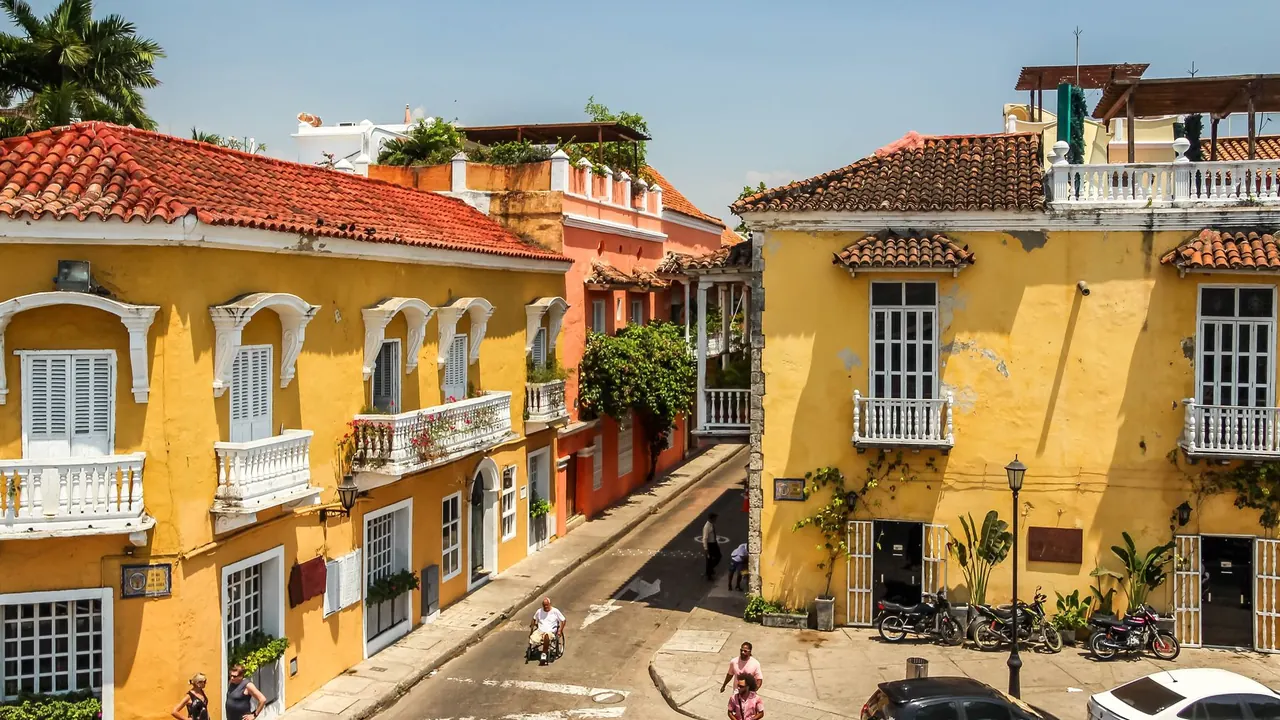
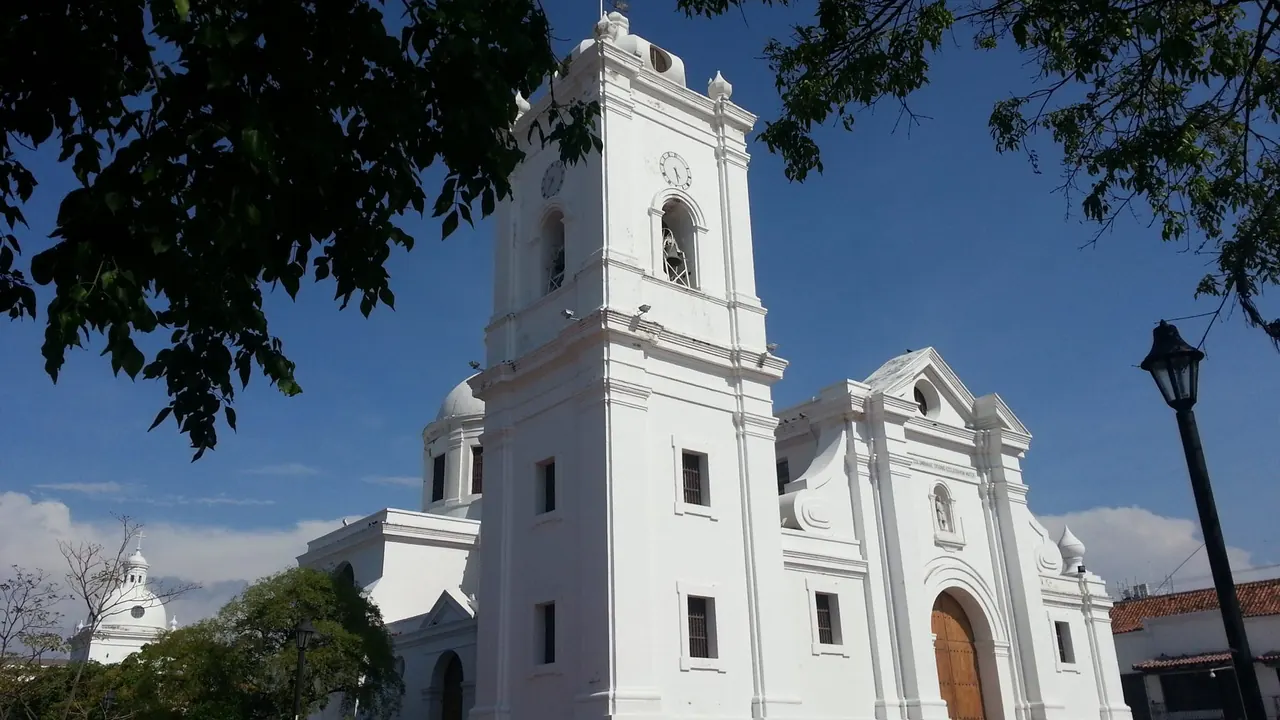
Photos: Cartagena by Dr. Thomas Liptak, CC BY-SA 4.0, cropped; Santa Marta by Oliver H, CC BY-SA 3.0, cropped.
Cartagena or Santa Marta?
Our verdict in twelve categories, each scored against the same fixed benchmark cities, and the climate month by month, so you can choose for your trip.
Choose Cartagena for
- culture and sights
- live music and the arts
- shopping
Cartagena suits a trip built around the town itself: walking the ramparts and painted streets of the walled city, eating in restored colonial houses and staying out late in Getsemaní's salsa bars. It works well for couples and first-time visitors to Colombia who want a compact base they can explore on foot, with boat days to the Rosario Islands for clear water.
Choose Santa Marta for
- nature and the outdoors
- prices
- day trips
Travellers drawn more by landscape than by architecture will do better in Santa Marta. Tayrona's jungle coast, the cloud forest around Minca and the trek to the Lost City are all close by, and day-to-day costs are lower. The town is plainer and its evenings quieter, so treat it as a base for getting out rather than a destination in its own right.
Scoreboard
Twelve categories on one fixed scale from 0 to 100. The shaded stretch is the gap between the two.
Your match
Pick a travel style or drag the sliders, and both match scores follow your weighting.
Wins on culture and sights and live music and the arts with your weighting.
Wins on nature and the outdoors and prices with your weighting.
What matters to you?
Category by category
What the scores mean for a trip.
Beaches & swimming
Both cities face a warm Caribbean, and in both the town beaches are the weaker option. Cartagena's best water is offshore and reached by boat: the pale sand and turquoise coves of the Rosario Islands and Playa Blanca on Baru, with the option of spending a night on an island.
Santa Marta's best sand is reached on foot. El Rodadero and nearby coves such as Bahía Concha are easy to get to, but Tayrona's golden beaches between jungle and boulders mean a walk of an hour or more, and several have currents too strong for swimming. Choose Cartagena for boat days and clear water, and Santa Marta for wilder beaches that take some effort to reach.
Food & drink
Both serve the same Caribbean staples of fried fish, coconut rice, patacones and arepas de huevo, but Cartagena takes them further. Restored colonial houses inside the walls hold a polished tier of modern Colombian kitchens, Getsemaní adds cheaper casual places, and you can buy ceviche from street carts and cocadas at the Portal de los Dulces.
Santa Marta eats simply and well, with filling set lunches and a modest choice around Parque de los Novios, but serious dining is rare. What sets it apart is coffee from the Sierra Nevada, grown in the hills above town.
Culture & sights
For many visitors, Cartagena's walled city is the reason to come. It has balconied streets, 11km of ramparts and the great fortress of San Felipe, with the Palace of the Inquisition and the Church of San Pedro Claver along the way. That fills two or three days of wandering.
Santa Marta is older, founded in 1525, but has far less to show. The cathedral, the Tairona gold collection in the Casa de la Aduana and the hacienda where Bolívar died fill a single day. Its great Tairona site, the Lost City, is a trek of several days rather than a sight to visit.
Nightlife
Cartagena offers the bigger night out. The Plaza de la Trinidad in Getsemaní fills with drummers and street food, salsa bars stay open into the small hours, and rooftop bars and reggaetón clubs cluster near the Clock Tower. Party boats and chivas are local specialities, though touts come with the scene.
In Santa Marta, evenings centre on the pavement bars around Parque de los Novios, Colombian vacationers dancing to vallenato at El Rodadero, and the backpacker beach parties in Taganga. It is fun at weekends and in peak season but much quieter midweek.
Nature & outdoors
This is where Santa Marta pulls far ahead. The Sierra Nevada rises from the coast to snow peaks, Tayrona's rainforest shore has monkeys and jungle trails, and the cloud forest around Minca has some of the richest birdwatching in the Americas. The Lost City trek starts from the city.
Cartagena's outdoors is mostly at sea level and underwater: snorkelling and diving over the Corales del Rosario reefs, canoeing through the mangroves at La Boquilla and kitesurfing in the winds of the dry months. Inland, the country is flat and farmed.
Day trips
Neither city is a strong base for visiting other towns, and they are too far apart to see one from the other in a day. Cartagena's most rewarding outing is San Basilio de Palenque, an hour inland, a village founded by escaped enslaved Africans that keeps its own language and music. Mompox is worth seeing but needs an overnight stay.
Santa Marta's outings lean towards landscape: a half day up to Minca, the beach village of Palomino or the fishing village of Taganga over the hill. For readers of García Márquez, Aracataca keeps his childhood home as a museum. Barranquilla is about two hours from either.
Good for families
Neither city is built around children. Both bring heat, uneven pavements and few attractions made for young visitors. In Cartagena, family days centre on the calm, warm water of the island beaches, the National Aviary on Baru and carriage rides round the walled city, and a hotel pool to retreat to helps.
Santa Marta's El Rodadero gives younger children a shallow bay, beachfront hotels and a boat trip to a small aquarium. Older children who enjoy wildlife get more out of the area, as long as they can manage Tayrona's long, hot walks.
Getting around
Cartagena's main districts, the walled city, San Diego and Getsemaní, are within a few minutes' walk of each other, and the fortress is a short walk from Getsemaní. You need taxis mainly for Bocagrande and the boat terminal, and the heat is the main obstacle.
Santa Marta's small centre is walkable, but almost everything visitors come for is out along the road. That means crowded buses to El Rodadero and Tayrona, shared jeeps up to Minca and taxis for the rest, and many visitors end up on tours or hire a driver.
Shopping & style
Cartagena has more to browse. The vaulted chambers of Las Bóvedas in the city walls hold rows of craft shops selling Wayuu bags, sombreros vueltiaos and hammocks. Emerald jewellers work around the Plaza de Bolívar, and Colombian designers sell linen resortwear in the walled city.
Santa Marta's best buys are fewer but distinctive: Arhuaco mochilas in natural wool and coffee from the Sierra Nevada farms, sold in small shops and along the waterfront. Beyond those there is little but malls and beach stalls.
Affordability
Santa Marta is the cheaper stay. Hostels, set lunches, buses and short taxi rides cost little, and even boutique hotels in the historic centre are reasonably priced for much of the year. The big costs are Tayrona entry and guided Lost City treks.
Cartagena is Colombia's most expensive city, with mansion hotels and old-town restaurants close to European levels. Staying and eating in Getsemaní brings it back to good value, but agree prices with hawkers and boatmen first. Both get pricier at Christmas, New Year and Easter.
Live music & performing arts
Cartagena at least has a formal stage. The ornate Teatro Adolfo Mejía hosts concerts and dance, and a January classical music festival brings international performers to churches and courtyards. Beyond that, both cities rely on street and bar music.
Santa Marta has no regular season to plan a trip around. What it offers instead is vallenato accordion bands, champeta at street parties and drumming in the squares. This is the coast's music heard in its home region, best around carnival.
Wellness & relaxation
Neither town is restful, but Cartagena makes it easier to rest without leaving. Its colonial-house hotels have plunge pools and shaded courtyards in the old town, day spas and cheap massages are easy to find, and a few nights on the Rosario Islands slow everything down. The Totumo mud bath is more novelty than cure.
Santa Marta's calm is outside the city, in the cloud-forest eco-lodges around Minca with river pools and birdsong, or the yoga retreats and beach cabins towards Palomino. Reaching them means a trip out of town.
When should you go?
Pick your month. The climate figures are measured averages, not a forecast.
Cartagena in July
Santa Marta in July
Daytime high, °C
Rainfall in the month, mm
Temperature and rainfall are climate normals, averaged over the years shown. Cartagena: 1991-2020 normals, Cartagena / Rafael Nunez (3.1 km from centre). Santa Marta: 1991-2020 normals, Santa Marta / Simon Bolivar (11.9 km from centre).
Both cities are hot all year, with daytime highs of about 30°C to 32°C every month, so the real difference is rain. Both have an almost rainless dry season from December to April, the best months for walking Cartagena's old town and Santa Marta's trails. The rain returns in May, and Cartagena gets far more of it, peaking in October at around 241mm, about twice Santa Marta's wettest month at 122mm. Santa Marta also stays sunnier through the second half of the year.
The sea is warm enough for swimming every month in both. Cartagena's water is slightly warmer. Santa Marta's drops to about 25°C in February, when the trade winds also make the water rougher along its coast.
Which traveller are you?
On a culture and arts trip, Cartagena is the clear choice. The walled city, its ramparts and the Castillo San Felipe give several days of wandering, and the January classical festival adds far more than Santa Marta's single day of sights.
For an outdoors trip, Santa Marta wins easily. Tayrona's jungle trails, birdwatching among the coffee farms around Minca and the multi-day trek to the Lost City all start nearby, while the flat, farmed country around Cartagena offers little beyond its reefs and mangroves.
On a trip on a tight budget, Santa Marta is the easier fit. Cartagena can be done cheaply, but only by basing yourself in Getsemaní and choosing your island boat days carefully. In Santa Marta everyday life barely dents the budget, leaving money for Tayrona and the Sierra.
Before you go
| Measure | Cartagena | Santa Marta |
|---|---|---|
| Official language | Spanish | Spanish |
| Currency | Colombian Peso (COP) | Colombian Peso (COP) |
| Sockets | AB110 V, 60 Hz | AB110 V, 60 Hz |
| Driving side | Right | Right |
| Time zone | UTC-5 | UTC-5 |
| Emergency number | 123 | 123 |
| Elevation | 2 m | 8 m |
| Main airport | Rafael Nuñez International Airport (CTG)2 km from centre26 non-stop destinations | Simón Bolívar International Airport (SMR)13 km from centre6 non-stop destinations |
| Public holidays this year | 19 days | 19 days |
By the numbers
| Measure | Cartagena | Santa Marta |
|---|---|---|
| City population | 914,552 | 505,915 |
| People per km² | 1,599 | 1,723 |
| Museums within 10 km | 2 | 3 |
| UNESCO World Heritage sites within 50 km | 1 | 0 |
| Swim season, months above 21 °C | 12 months | 12 months |
Where else could you go?
Every comparison below shares a destination with this one, so you can follow Cartagena or Santa Marta somewhere new.