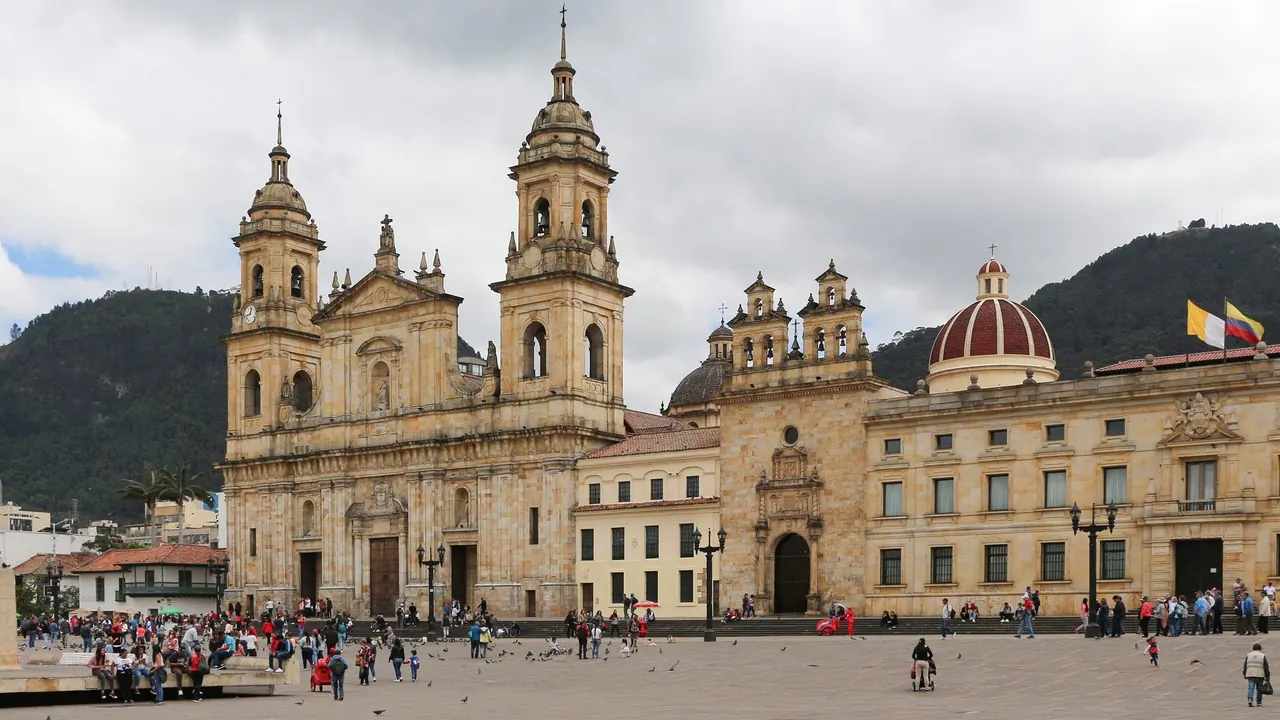
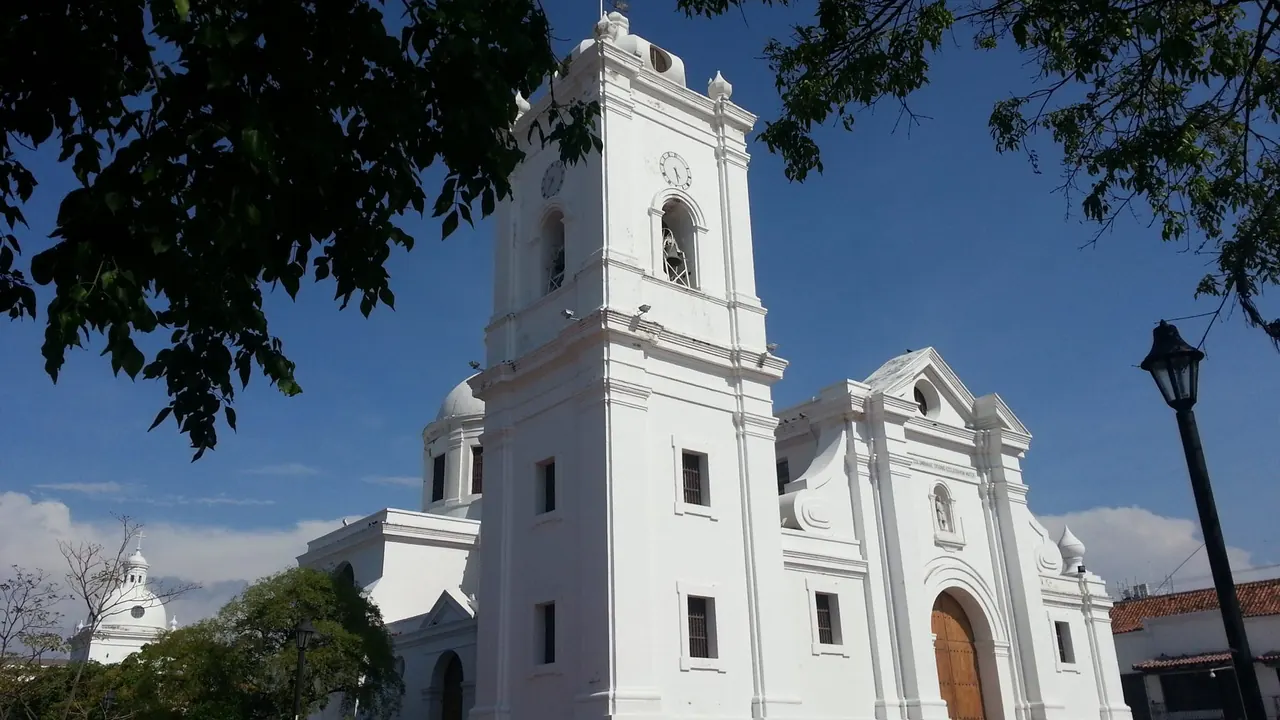
Photos: Bogota by Bernard Gagnon, CC BY-SA 4.0, cropped; Santa Marta by Oliver H, CC BY-SA 3.0, cropped.
Bogota or Santa Marta?
Our verdict in twelve categories, each scored against the same fixed benchmark cities, and the climate month by month, so you can choose for your trip.
Choose Bogota for
- live music and the arts
- culture and sights
- shopping
Bogota suits a city trip with substance. You get the Museo del Oro and the colonial lanes of La Candelaria, chef-led kitchens in Zona G and Chapinero, salsa bars, and a theatre and concert life that Santa Marta cannot come close to. Pack a jacket rather than a swimsuit, because the plateau stays cool and there is no sea.
Choose Santa Marta for
- beaches
- nature and the outdoors
- prices
If you want warm water and wild landscape, go to the coast. Santa Marta has fewer museums and restaurants, but it has the jungle beaches of Tayrona, the cloud forest at Minca and the Lost City trek into the Sierra Nevada, with hot sun on most days. The town itself is a modest base, so plan the trip around what lies outside it.
Scoreboard
Twelve categories on one fixed scale from 0 to 100. The shaded stretch is the gap between the two.
Your match
Pick a travel style or drag the sliders, and both match scores follow your weighting.
Wins on live music and the arts and culture and sights with your weighting.
Wins on beaches and nature and the outdoors with your weighting.
What matters to you?
Category by category
What the scores mean for a trip.
Beaches & swimming
On beaches, Santa Marta wins outright. Bogota sits on a cool plateau at about 2,600m. The nearest swimming is in hotel pools and water parks in the warmer towns down the mountainside, a long drive away, and the sea means a flight.
Santa Marta has warm sea all year. El Rodadero has calm water and grey sand for easy days, coves such as Bahía Concha are a short boat or taxi ride away, and the golden beaches of Tayrona reward anyone willing to walk. Swim at the sheltered spots there, because Arrecifes and several others have dangerous currents.
Food & drink
Bogota offers much more to eat. Highland dishes such as ajiaco, tamales and hot chocolate with cheese are hearty rather than famous. The draw is Paloquemao market's tropical fruit and the chefs of Zona G, Chapinero and Usaquén cooking with produce from across the country, along with specialty coffee and craft beer.
Santa Marta keeps it simple: fried fish with coconut rice and patacones, seafood soups and arepas de huevo, all good and cheap. Fine dining is scarce, and there is only a short list of places for dinner around Parque de los Novios.
Culture & sights
For sightseeing, Bogota is the clear choice. La Candelaria and the Plaza de Bolívar, the Museo del Oro's huge collection of pre-Columbian gold, the Botero Museum, the National Museum in its former prison and the street art along Calle 26 fill several days.
Santa Marta has the older colonial roots, as Colombia's oldest surviving Spanish city, but far fewer sights. It has a whitewashed cathedral, a small Tairona gold museum in the Casa de la Aduana and the hacienda where Bolívar died, all of which you can see in a day. The great Tairona site, the Lost City, needs a trek of several days.
Nightlife
Bogota is the better city for going out. From Thursday to Saturday you can choose between salsa bars where locals dance with real skill, the very large clubs of Chapinero, the polished bars of Zona T and an underground electronic scene. You will need a taxi home.
Santa Marta's evenings are smaller and more casual. There are pavement tables and rooftops around Parque de los Novios, vallenato and champeta in the dance bars of El Rodadero, and backpacker beach parties in Taganga. It is much livelier at weekends and in the Colombian peak seasons than on quiet weeknights.
Nature & outdoors
Santa Marta has the more dramatic setting. The Sierra Nevada rises to snow peaks within sight of the Caribbean, and Tayrona combines rainforest, monkeys and boulder-strewn shore. Minca's cloud forest has some of the richest birdwatching in the Americas, and Taganga is a base for diving.
Bogota's outdoors is higher and cooler. It offers the morning climb to Monserrate, guided visits to the misty páramo of Chingaza and Sumapaz, rock climbing at Suesca and long road climbs for cyclists. It is rewarding, but less varied, and the weather is changeable.
Day trips
Bogota has the better set of outings. The salt cathedral at Zipaquirá is about an hour north, and nearby are the quieter mine at Nemocón and the sacred lake of Guatavita. Sabana towns such as Chía make easy lunch trips. Villa de Leyva is three hours away and deserves a night.
Santa Marta's excursions are mostly into the countryside, and the towns within reach are modest. García Márquez's birthplace at Aracataca, the carnival city of Barranquilla and the river-mouth village of Palomino are each a fair drive away. Cartagena is too far for a day trip.
Good for families
Neither city is easy with children, but the problems are different. Bogota has the attractions: the Maloka science museum, two amusement parks, Simón Bolívar park and the car-free Sunday Ciclovía. Against that, journeys are long, traffic is heavy and the altitude tires small children for the first day or two.
Santa Marta offers beach time instead, with El Rodadero's calm, shallow bay, sheltered coves such as Bahía Concha and boat trips to a small aquarium. Beyond the beach there is little made for children, the heat is fierce, and Tayrona suits older children who can manage long walks.
Getting around
In both cities you will rely on taxis, but for different reasons. Bogota is long and spread out, and La Candelaria and the northern districts are half an hour or more apart in heavy traffic. TransMilenio's buses are crowded and hard to work out, though confident cyclists can use the extensive bike lanes.
Santa Marta's old centre is compact and walkable but hot. Everywhere else, from El Rodadero to Tayrona and Minca, is reached by crowded small buses, shared jeeps, taxis or hired drivers.
Shopping & style
Bogota has much more to buy. Emerald dealers trade along Avenida Jiménez, so it pays to know your stones. Usaquén's Sunday flea market sells crafts from all over Colombia, and the north adds malls, local designers and good leather.
Santa Marta's range is narrower, but what it has comes from the region: Arhuaco mochilas, Wayuu bags and hammocks, and coffee from the Sierra Nevada farms. Beyond those, there is not enough for a shopping day.
Affordability
Both cities are cheap by Western standards, but your money goes on different things. In Bogota, comfortable hotels, set lunches, taxis and the major museums cost little. The bigger bills come in the smart restaurants and cocktail bars of Zona G and Zona T.
Daily life in Santa Marta is just as cheap, but the extras add up. These include the higher entry rate for foreign visitors at Tayrona, guided Lost City treks, and beach hotels that fill and raise their prices around Christmas and Easter.
Live music & performing arts
This is one of the widest gaps between the two cities. Bogota is Colombia's stage capital. It has opera and ballet at the gilded Teatro Colón, visiting orchestras at the Teatro Mayor, the Filarmónica, a large Ibero-American Theatre Festival and the free Rock al Parque, plus jazz and independent theatre in Chapinero.
Santa Marta has no regular season. Its music is informal, with vallenato and champeta in bars and drumming groups in the squares, and it is at its best around carnival time.
Wellness & relaxation
Neither city is restful, and neither has a bathing tradition. From Bogota, you can soak in the thermal springs at Choachí and Tabio, each about an hour away, use the day spas in the north, or spend a quiet Sunday morning in Usaquén.
From Santa Marta, rest means a few nights out of town. You can stay in Minca's cloud-forest eco-lodges, with hammocks and river pools, or at the yoga retreats and beach cabins along the coast towards Palomino.
When should you go?
Pick your month. The climate figures are measured averages, not a forecast.
Bogota in July
Santa Marta in July
Daytime high, °C
Rainfall in the month, mm
Temperature and rainfall are climate normals, averaged over the years shown. Bogota: 1991-2020 normals, Bogota / Eldorado (14.1 km from centre). Santa Marta: 1991-2020 normals, Santa Marta / Simon Bolivar (11.9 km from centre).
Bogota's temperature hardly changes through the year. Days reach about 18°C in every month, which is mild for walking but never beach weather, and evenings are cool. The rain is what changes. It comes in two wet seasons, April to May and October to November, each bringing over 100mm a month. December to February and July to August are drier, and January is both the driest and the sunniest month.
Santa Marta is hot all year, with highs of around 32°C that make midday walks in the old town hard work. December to April is almost free of rain and very sunny, which makes it the best time for Tayrona and the mountain trails. From May the rain builds to a peak of about 120mm in October. The sea is warm enough to swim in every month, from 25°C in February to its warmest in September and October, though it is rougher from December to March, when the trade winds blow hard.
Which traveller are you?
On a beach and sun trip, Santa Marta is the only real option of the two. The sea is warm all year, El Rodadero and the coves around it are easy to reach, and Tayrona's palm-backed sand is close by. Bogota sits high in the Andes, far from any shore.
For a culture and arts trip, Bogota wins clearly. The gold of the Museo del Oro, the Botero Museum, the streets of La Candelaria, and opera, orchestras and theatre at the Teatro Colón and Teatro Mayor fill both days and evenings. Santa Marta's sights take a single day.
On an outdoors trip, Santa Marta has the edge. Jungle trails in Tayrona, birdwatching in Minca's cloud forest, snorkelling and diving from Taganga and the multi-day Lost City trek all start close to town. Bogota has walks on the páramo and climbing at Suesca, but less variety.
Before you go
| Measure | Bogota | Santa Marta |
|---|---|---|
| Official language | Spanish | Spanish |
| Currency | Colombian Peso (COP) | Colombian Peso (COP) |
| Sockets | AB110 V, 60 Hz | AB110 V, 60 Hz |
| Driving side | Right | Right |
| Time zone | UTC-5 | UTC-5 |
| Emergency number | 123 | 123 |
| Elevation | 2,582 m | 8 m |
| Main airport | El Dorado International Airport (BOG)13 km from centre98 non-stop destinations | Simón Bolívar International Airport (SMR)13 km from centre6 non-stop destinations |
| Public holidays this year | 19 days | 19 days |
By the numbers
| Measure | Bogota | Santa Marta |
|---|---|---|
| City population | 8,034,649 | 505,915 |
| People per km² | 5,092 | 1,723 |
| Museums within 10 km | 30 | 3 |
| UNESCO World Heritage sites within 50 km | 0 | 0 |
| Swim season, months above 21 °C | - | 12 months |
Where else could you go?
Every comparison below shares a destination with this one, so you can follow Bogota or Santa Marta somewhere new.