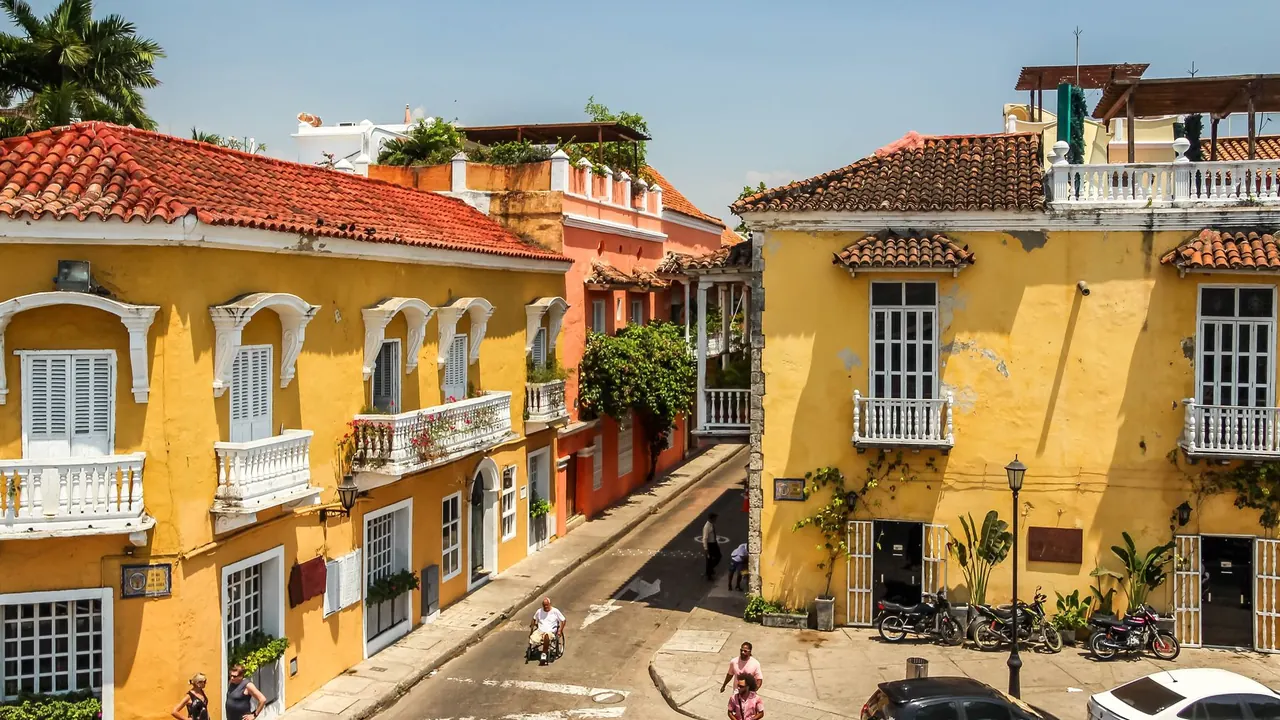
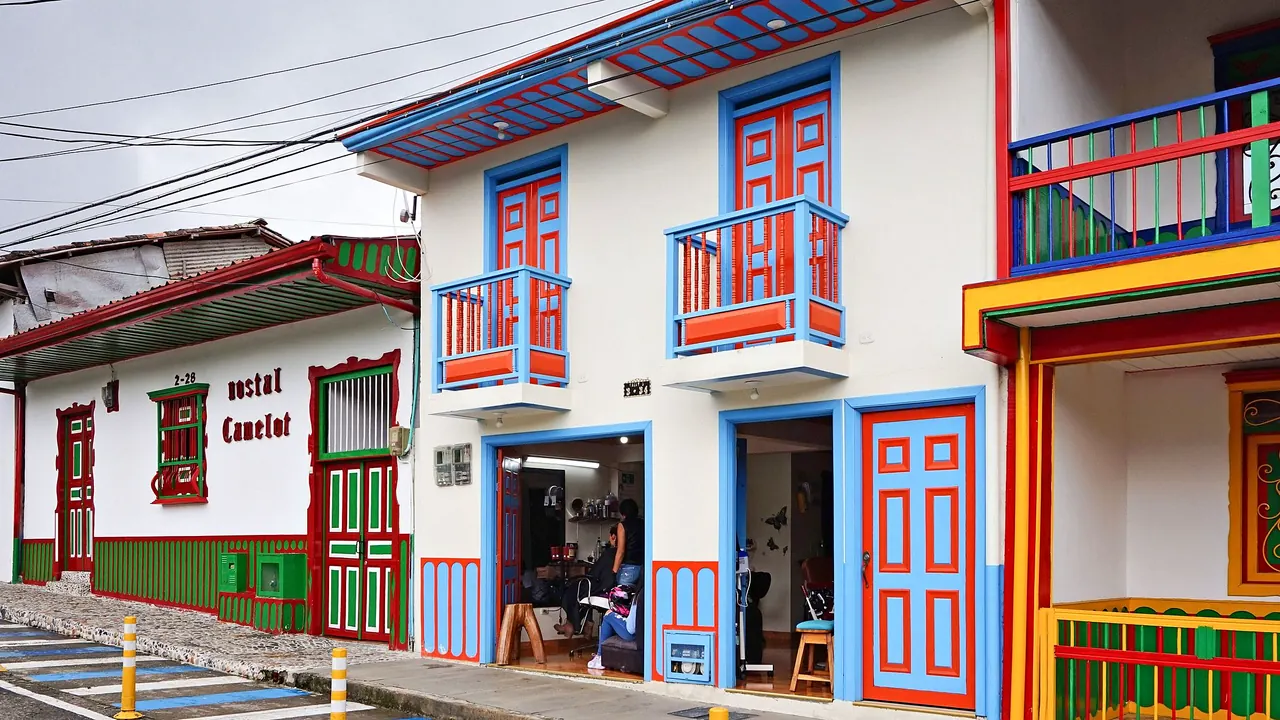
Photos: Cartagena by Dr. Thomas Liptak, CC BY-SA 4.0, cropped; Salento by Bernard Gagnon, CC BY-SA 4.0, cropped.
Cartagena or Salento?
Our verdict in twelve categories, each scored against the same fixed benchmark cities, and the climate month by month, so you can choose for your trip.
Choose Cartagena for
- beaches
- nightlife
- culture and sights
Cartagena is the choice for a hot, sociable trip on the Caribbean. It has a walled colonial city to wander, warm evenings of salsa and street food in Getsemaní, and boat days out to the clear water of the Rosario Islands. It suits couples and friends who want history, the sea and late nights in one compact place, and who don't mind the heat.
Choose Salento for
- nature and the outdoors
- prices
- families
Pick Salento if what you mainly want is to walk in green mountains. The wax palms of the Cocora Valley, the cloud forest and the coffee farms are close by, the air is cool, a stay costs less, and families who like the outdoors will find more to do. Evenings end early and there is no sea, so it suits travellers who come for the landscape rather than the town.
Scoreboard
Twelve categories on one fixed scale from 0 to 100. The shaded stretch is the gap between the two.
Your match
Pick a travel style or drag the sliders, and both match scores follow your weighting.
Wins on beaches and nightlife with your weighting.
Wins on nature and the outdoors and prices with your weighting.
What matters to you?
Category by category
What the scores mean for a trip.
Beaches & swimming
On the water these two could hardly be more different. Cartagena has a warm Caribbean sea all year, though the dark sand of Bocagrande is only good for a quick dip. The real swimming is an hour or less offshore, at the Rosario Islands and at Playa Blanca on Baru, where the water is clear and turquoise.
Salento has no beach and no rivers you can swim in, only finca pools and the water rides at the theme parks near Armenia. If a Colombian trip needs the sea, Cartagena has it, and Salento has to be combined with the coast.
Food & drink
Cartagena has far more to eat. There is Caribbean fried fish with coconut rice, ceviche from street carts, arepas de huevo, and coconut sweets at the Portal de los Dulces. A smarter range of modern Colombian restaurants fills restored colonial houses, and Getsemaní has cheaper places to eat.
Salento's menu is narrow, built around farmed river trout served on a large patacón and filling set lunches. Its strength is coffee. Walking out to a finca to watch the beans being picked and roasted, then drinking a cup where it was grown, is something Cartagena cannot match.
Culture & sights
Cartagena is one of the great colonial cities of the Americas. Its walled grid of painted houses with balconies, the ramparts of about 11km, the Castillo San Felipe and the Palace of the Inquisition fill two or three days of wandering, even though the museums are modest.
Salento's heritage is on a much smaller scale. It has the brightly painted bahareque houses of Calle Real, a viewpoint at the top of a long stairway, and a place in the coffee landscape listed by UNESCO. An hour or two is enough to see the town.
Nightlife
After dark Cartagena is in another league. The Plaza de la Trinidad in Getsemaní fills with drummers and street food, salsa bars stay open until the small hours, and the walled city adds rooftop cocktail bars and reggaetón clubs. Party boats and chivas are a local speciality, though touts come with all of it.
Salento's evenings mean a few bars around the plaza and a game of tejo, the local sport in which players throw discs at small gunpowder charges, played over beer. Most people go to bed early before a hike, except on Colombian long weekends.
Nature & outdoors
Salento is clearly ahead here. The Cocora Valley is half an hour away by jeep, with wax palms up to 60m tall, cloud forest, plank bridges and hummingbirds. Guided treks continue up into the páramo and volcanoes of Los Nevados.
In Cartagena, nature is mostly at sea level or underwater. You can snorkel and dive in the Corales del Rosario, canoe through the mangroves at La Boquilla and kitesurf in the dry-season winds. The land around the city is flat farmland, and the Totumo mud volcano is the only inland outing.
Day trips
Neither city is a strong base for outings, but Salento has more within easy reach. Filandia, Buenavista and Circasia repeat its painted balconies and coffee hills, and the museum of Quimbaya goldwork in Armenia adds some depth, all within about an hour.
From Cartagena, San Basilio de Palenque, with its own language and music, makes a thoughtful half day. Mompox and Santa Marta need an overnight stay, though, and most other outings are boat days to the islands.
Good for families
Salento suits children better, as long as the family likes being outdoors. There are jeep rides, horses, hummingbirds, coffee picking and an easy short walk among the palms, and the Parque del Café and Panaca are about an hour away. Rain and steep streets are the drawbacks.
In Cartagena, children will enjoy the calm water at the better island beaches, the carriage rides in the walled city and the National Aviary on the way to Playa Blanca. Little is built for children, though, and the constant heat and long boat rides tire small children.
Getting around
Cartagena is easier to move about. The walled city, San Diego and Getsemaní are a few minutes' walk apart, and cheap, plentiful taxis cover Bocagrande and beyond. The only real obstacle is the midday heat on narrow pavements.
Salento is just as easy to walk around, though steeper, but once you leave town you depend on Willys jeeps that set off when full, or on buses with a change in Armenia or Pereira. Many visitors hire a driver to cover the region quickly.
Shopping & style
Cartagena has more to buy and more choice. Las Bóvedas, the vaulted chambers in the city walls, hold craft shops selling Wayuu bags and sombreros vueltiaos, there are emerald jewellers near the Plaza de Bolívar, and boutiques of Colombian designers sell linen resortwear. Salento's shopping is one street of craft shops along Calle Real, and the best thing to take home is a bag of beans from the surrounding farms.
Affordability
Salento is the cheaper stay. Hostels, guesthouses, set lunches and jeep rides cost little, and only the boutique fincas and guided mountain treks push the budget up.
Cartagena is Colombia's most expensive city. It can still be good value if you stay in a Getsemaní guesthouse, eat street food and take taxis, but the hotels in restored mansions inside the walls charge close to European rates, especially at Christmas, New Year and Easter. It also pays to agree prices with hawkers and boat operators before you set off.
Live music & performing arts
Cartagena at least has a stage. The ornate Teatro Adolfo Mejía hosts concerts and dance, a classical music festival fills churches and courtyards each January, and salsa bands, champeta and cumbia dancers perform in the plazas in the evening. Salento has no theatre or concert life at all, just a guitar in a café or a band on a weekend, and anything more means a trip to Pereira or Armenia.
Wellness & relaxation
Neither place has a spa tradition, so the difference is in the kind of calm. In Cartagena it comes from courtyard hotels with plunge pools in the old town, cheap massages and, best of all, a few nights in a hammock on the islands, away from the hot, noisy town.
Salento's quiet is cool and green: misty mornings on a coffee finca, birdsong, some yoga, and the hot springs of Santa Rosa de Cabal about two hours away. Day-trippers fill the town at weekends, so the peace is found on its edges.
When should you go?
Pick your month. The climate figures are measured averages, not a forecast.
Cartagena in July
Salento in July
Daytime high, °C
Rainfall in the month, mm
Where the figures come from
Salento has no weather station within reach, so its figures come from a gridded climate model rather than a measured record, and read a broad area rather than the city itself.
Temperature and rainfall are climate normals, averaged over the years shown. Cartagena: 1991-2020 normals, Cartagena / Rafael Nunez (3.1 km from centre). Salento: 2001-2020 normals, NASA POWER reanalysis grid, no weather station within 90 km.
Cartagena is hot every month, with afternoons around 31°C and a sea warm enough to swim in all year, so beach weather is never in doubt. Rain is what changes. From December to April the city is dry and sunny, and January to March are almost rainless, which makes these the best months for island days and walking the ramparts. From May the showers build and peak in October at about 241mm, and the wettest months also have the least sunshine. In any season midday is too hot for long walks, so sightseeing works best in the morning and evening.
Salento is the opposite: a mild 19°C by day all year, and never too hot for walking. Its problem is rain, not heat. Some rain falls every month, with two rainy seasons, from March to May and from October to November, when monthly totals reach about 193mm and the trails turn muddy. January and July to August are the drier spells. Early in the year both places are at their best together. From October the two wet seasons coincide.
Which traveller are you?
On a beach and sun trip, Cartagena is the obvious pick. The city's own beaches are only passable, but boats reach the pale sand and turquoise coves of the Rosario Islands and Playa Blanca in about an hour. Salento is far inland, with cold mountain rivers.
For an outdoors trip, Salento wins clearly. The Cocora Valley loop through wax palms and cloud forest is half an hour away, and multi-day treks lead into Los Nevados. Cartagena's outdoors is mostly snorkelling over worn reefs and canoeing in the mangroves.
On a food and nightlife trip, Cartagena offers far more. You can eat fried fish with coconut rice, street ceviche and cooking in colonial houses, then go on to salsa bars, rooftop cocktails and champeta parties until the small hours. Salento has trout, excellent coffee and a few bars that close early.
Before you go
| Measure | Cartagena | Salento |
|---|---|---|
| Official language | Spanish | Spanish |
| Currency | Colombian Peso (COP) | Colombian Peso (COP) |
| Sockets | AB110 V, 60 Hz | AB110 V, 60 Hz |
| Driving side | Right | Right |
| Time zone | UTC-5 | UTC-5 |
| Emergency number | 123 | 123 |
| Elevation | 2 m | 1,895 m |
| Main airport | Rafael Nuñez International Airport (CTG)2 km from centre27 non-stop destinations | El Eden Airport (AXM)30 km from centre2 non-stop destinations |
| Public holidays this year | 19 days | 19 days |
By the numbers
| Measure | Cartagena | Salento |
|---|---|---|
| City population | 914,552 | 7,578 |
| People per km² | 1,599 | 20 |
| Museums within 10 km | 2 | 0 |
| UNESCO World Heritage sites within 50 km | 1 | 1 |
| Swim season, months above 21 °C | 12 months | - |
Where else could you go?
Every comparison below shares a destination with this one, so you can follow Cartagena or Salento somewhere new.
- Bogotavs Salento
- Calivs Salento
- Santa Martavs Cartagena
- Medellinvs Salento
- Medellinvs Cartagena
- Panama Cityvs Cartagena