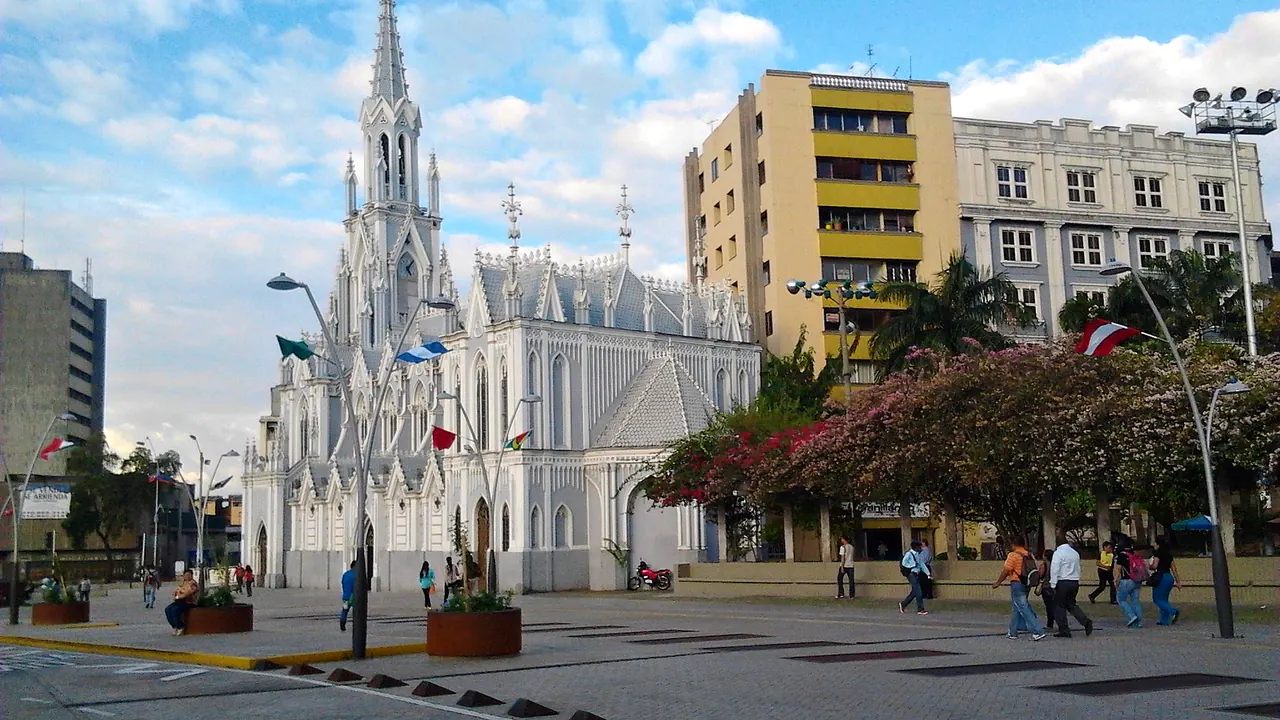
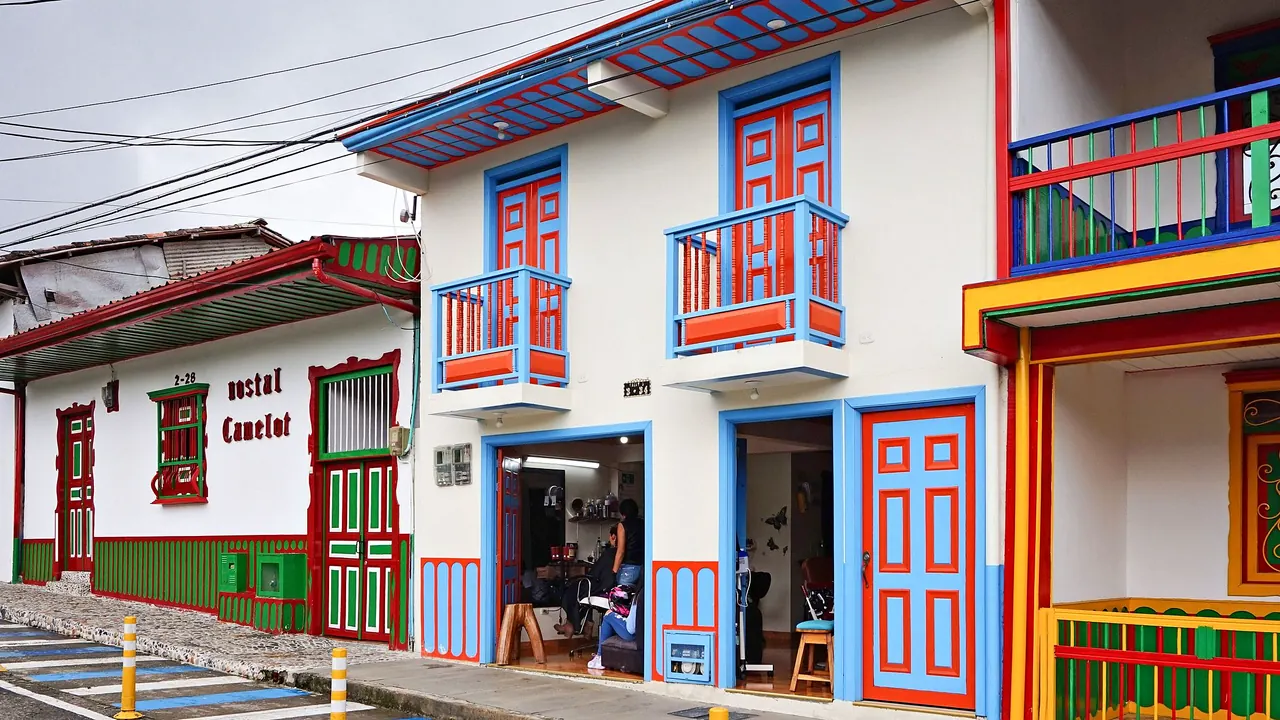
Photos: Cali by Melissa Marin, CC BY-SA 3.0, cropped; Salento by Bernard Gagnon, CC BY-SA 4.0, cropped.
Cali or Salento?
Our verdict in twelve categories, each scored against the same fixed benchmark cities, and the climate month by month, so you can choose for your trip.
Choose Cali for
- nightlife
- live music and the arts
- food and drink
Cali suits travellers who want a city with a pulse after dark. Salsa is the reason to come, from the vinyl-playing salsotecas to the late clubs of Juanchito. The cooking of the Valle and the Pacific coast gives the days a flavour Salento cannot match. It is warm and cheap, with better live shows, a few colonial churches and small museums, though you will need taxis and some care at night.
Choose Salento for
- wellness
- families
- nature and the outdoors
Salento is for people who come to walk rather than dance. The wax palms and cloud forest of the Cocora Valley lie half an hour away, coffee fincas sit on the edge of town, and the evenings are quiet enough for an early start. Families who like the outdoors, and anyone after a slower, cooler pace in the hills, will feel more at home here than in a hot, spread-out city.
Scoreboard
Twelve categories on one fixed scale from 0 to 100. The shaded stretch is the gap between the two.
Your match
Pick a travel style or drag the sliders, and both match scores follow your weighting.
Wins on nightlife and live music and the arts with your weighting.
Wins on wellness and families with your weighting.
What matters to you?
Category by category
What the scores mean for a trip.
Beaches & swimming
Neither city is a beach destination, and from both the sea is a separate journey. What differs is the substitute. Cali has the river pools of the Pance on its southern edge, where locals swim and picnic at weekends, and the Pacific beaches at Juanchaco and Ladrilleros are reachable as an overnight trip by road and boat.
Salento's mountain rivers are too cold and fast to swim in, so a dip means a finca pool or the water rides at the theme parks in the valley. Its nearest coast worth the trip is the Caribbean, which is much further away.
Food & drink
Cali is the better place to eat by some way. The street carts, morning pandebono and lunches of sancocho and aborrajados draw on both the Valle and the Afro-Colombian Pacific coast. At the Galería Alameda you can eat Pacific fish at the counters among fruits you will not have seen before.
Salento's food is narrower: trout on a big patacón, filling set lunches and tourist menus that repeat themselves. Its strength is coffee drunk on the farm where it was grown, an experience the cafés of San Antonio cannot quite offer.
Culture & sights
Neither is a museum city, but Cali has more to see. The small colonial core of La Merced, the San Francisco tower and La Ermita, a walk among the low houses of San Antonio and the Museo La Tertulia fill a day or two, and the Museo del Oro Calima adds pre-Hispanic gold.
Salento's main sight is its own painted bahareque streets, Calle Real above all, within the UNESCO-listed Coffee Cultural Landscape, together with the view from the Alto de la Cruz. The town hangs together well as a whole, but an hour or two covers it.
Nightlife
This is the widest gap between the two. Cali lives for salsa. There are salsotecas playing old vinyl for serious dancers, big clubs in Juanchito running towards dawn at weekends, louder bars along Avenida Sexta and in Menga, and the week-long Feria de Cali in December. A few dance lessons before you go out are well worth it.
Salento has a couple of bars around the plaza and a game of tejo with beer and small gunpowder bangs. That makes a memorable evening, but there is no real nightlife, and on weeknights the town goes quiet early because most visitors are hiking at dawn.
Nature & outdoors
Both have mountains on the doorstep, but in Salento they are the whole reason to come. The Cocora Valley is half an hour away, with wax palms up to 60m tall and a half-day loop through cloud forest and over plank bridges. Treks of several days climb into Los Nevados towards glaciated volcanoes.
Cali does well for a city. The Farallones rise behind the southern suburbs, the forests at Kilometre 18 are first-rate for birding, and Lake Calima has steady wind for kitesurfing. Here the outdoors is something to add to city life, not the main event.
Day trips
The day trips are about as good from either base but differ in character. From Cali they run through the sugar country of the valley: the pilgrimage town of Buga, the Hacienda El Paraíso where the novel María is set, and Ginebra for local cooking. Popayán is better done as an overnight trip.
From Salento the outings are to other coffee towns, such as Filandia with its wooden lookout tower and Buenavista on its ridge, plus the Quimbaya gold museum in Armenia. They are easy to link up, but the towns look much alike.
Good for families
Salento is the easier choice with children. The town is small, the ride in an open jeep is a treat, and horse rides, hummingbirds and coffee picking fill the days. The Parque del Café and Panaca are about an hour away. Rain and steep streets are the drawbacks.
Cali has a good zoo by the river, the Pance pools and malls for wet afternoons. But heat, traffic, uneven pavements and the need for care after dark mean families mostly take taxis between a few planned outings.
Getting around
You can manage without a car in either, but for opposite reasons. Cali is a large, flat city where cheap taxis and ride-hailing do most of the work and the MIO buses cover the main avenues. Walking is pleasant only around San Antonio, Granada and the riverside.
You can cross Salento on foot in minutes, though some streets climb steeply. The difficulty is getting out of town. The Willys jeeps to Cocora leave only when they are full, and reaching other towns often means changing buses in Armenia or Pereira, so you need patience or a hired driver.
Shopping & style
Cali has more to buy. Most of it is in big malls, with Colombian fashion, swimwear and leather goods. Particular to the city are the salsa shoes and dancewear, and the coffee and fruit stalls of the Galería Alameda, though there is no boutique quarter.
Shopping in Salento is one street: crafts, ponchos and woven bags along Calle Real, plus coffee beans from the nearby farms, which make the best thing to take home.
Affordability
Both are cheap by the standards of Europe or North America. What differs is where the money goes. In Cali, hotels in Granada and San Antonio, taxis, street food and nights out dancing all cost little, and spending climbs in the northern restaurants and during the December feria.
Salento is dearer than the farming towns around it because it lives on visitors, but it has plenty of hostels and cheap set lunches. Boutique finca hotels and guided treks into the high mountains are what push the budget up.
Live music & performing arts
Cali has a real performance life, and Salento has almost none. Cali has big salsa shows with full orchestras and dance-school showcases. In August, the Petronio Álvarez festival celebrates the music of the Pacific coast, and the Festival Mundial de Salsa brings in dancers from around the world. The Teatro Municipal, the Filarmónica and the long-established Teatro Experimental de Cali cover the formal stage.
In Salento, music means a guitar in a café or a band in a bar at the weekend. The nearest theatres and concert halls are in Armenia and Pereira.
Wellness & relaxation
In Cali, you have to go looking for rest. The city runs on music, heat and traffic, it has no bathing or spa tradition, and pampering means a hotel spa or a beauty salon. Caleños unwind by getting away from the city, to a country house with a pool in the hills around Pance, or at least to a long afternoon in a garden café on the green slopes of San Antonio.
Salento comes out ahead because calm is part of the place itself. The mild mountain climate, days that start and end early and the lack of real nightlife do much of what a spa would do elsewhere, and the farms on the surrounding hills are slower still. The catch is visitors. Saturdays, Sundays and Colombian long weekends crowd the centre, so a restful stay is best planned for midweek or based outside town.
When should you go?
Pick your month. The climate figures are measured averages, not a forecast.
Cali in July
Salento in July
Daytime high, °C
Rainfall in the month, mm
Where the figures come from
Salento has no weather station within reach, so its figures come from a gridded climate model rather than a measured record, and read a broad area rather than the city itself.
Temperature and rainfall are climate normals, averaged over the years shown. Cali: 1991-2020 normals, Cali / Alfonso Bonillaaragon (19.5 km from centre). Salento: 2001-2020 normals, NASA POWER reanalysis grid, no weather station within 90 km.
Cali's temperature hardly changes through the year, with highs around 28°C in every month, so the choice comes down to rain. July and August are the driest and sunniest months, at about 34mm of rain a month, and December to February is also fairly dry. April and October to November are wetter. The heat makes walking the streets at midday tiring in any season, and there is no beach weather to plan around, because the city is inland.
Salento is much cooler, near 19°C, which is good for hiking but means a jacket in the mist. It is also wetter than Cali in every month. Its two rainy peaks fall at the same times as Cali's, in April and in October to November, when rainfall passes 190mm and the Cocora trails are at their muddiest. January and July to August are the least wet months in both places, so they are the best time to combine the two.
Which traveller are you?
For a food and nightlife trip, Cali is the clear pick. It has salsa clubs from Juanchito to Avenida Sexta, the December feria and Pacific-coast cooking at the Galería Alameda. Quiet Salento, with its trout and early nights, cannot compete with those evenings and meals.
On an outdoors trip, Salento wins. The wax palms and cloud forest of the Cocora Valley are half an hour away, and Los Nevados offers treks of several days. Cali's Farallones and its birding are good, but they are a sideline to a city stay.
For a relaxing and wellness trip, choose Salento. It offers a coffee finca with misty mornings and cool air, some yoga and massage, and the Santa Rosa hot springs within reach. In Cali, rest mostly means a hotel spa or a slow afternoon in San Antonio.
Before you go
| Measure | Cali | Salento |
|---|---|---|
| Official language | Spanish | Spanish |
| Currency | Colombian Peso (COP) | Colombian Peso (COP) |
| Sockets | AB110 V, 60 Hz | AB110 V, 60 Hz |
| Driving side | Right | Right |
| Time zone | UTC-5 | UTC-5 |
| Emergency number | 123 | 123 |
| Elevation | 1,018 m | 1,895 m |
| Main airport | Alfonso Bonilla Aragon International Airport (CLO)19 km from centre28 non-stop destinations | El Eden Airport (AXM)30 km from centre2 non-stop destinations |
| Public holidays this year | 19 days | 19 days |
By the numbers
| Measure | Cali | Salento |
|---|---|---|
| City population | 2,471,474 | 7,578 |
| People per km² | 4,382 | 20 |
| Museums within 10 km | 10 | 0 |
| UNESCO World Heritage sites within 50 km | 0 | 1 |
Where else could you go?
Every comparison below shares a destination with this one, so you can follow Cali or Salento somewhere new.