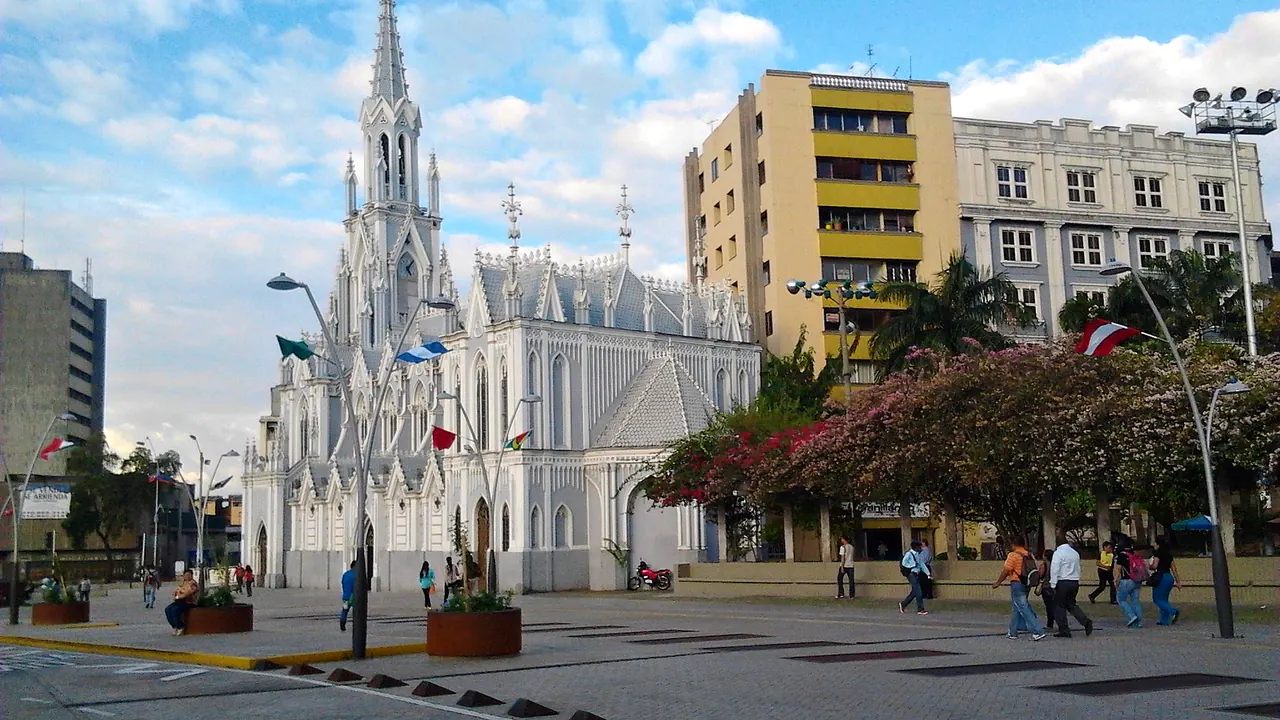
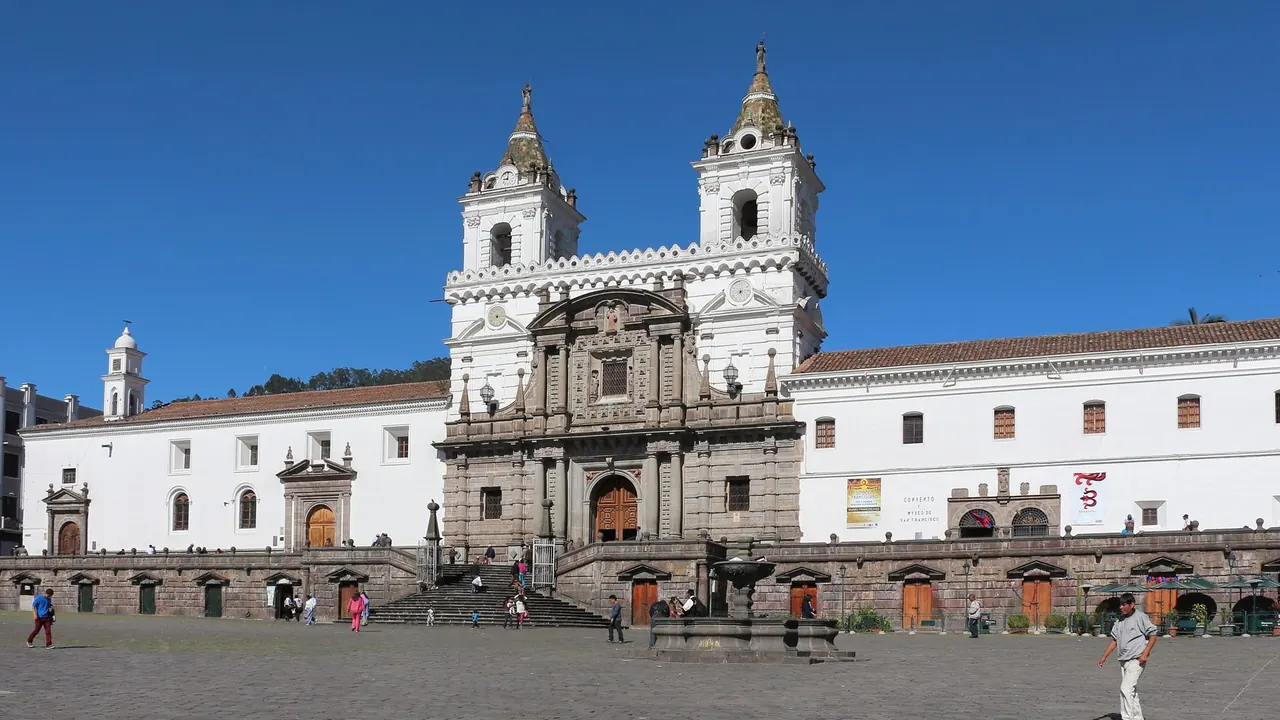
Photos: Cali by Melissa Marin, CC BY-SA 3.0, cropped; Quito by Bernard Gagnon, CC BY-SA 3.0, cropped.
Cali or Quito?
Our verdict in twelve categories, each scored against the same fixed benchmark cities, and the climate month by month, so you can choose for your trip.
Choose Cali for
- nightlife
- live music and the arts
- families
Cali is the choice for travellers who want their evenings to be the point of the trip. Salsa runs through everything here, from vinyl-playing salsotecas to the late clubs of Juanchito and the big dance shows, and the warm climate, cheap taxis and Pacific-flavoured street food make it easy to fill several nights. It also suits families a little better, since small children deal with warm afternoons in a low valley rather than the thin air of the high Andes.
Choose Quito for
- culture and sights
- wellness
- nature and the outdoors
Anyone who comes to look and to walk will get more from Quito. Its gilded churches and colonial grid are far beyond Cali's small historic core, and the volcanoes, páramo and cloud forest within a day's reach give it the stronger outdoors. Add the Otavalo market and the thermal pools at Papallacta, and it rewards a curious, active visitor more than a night owl.
Scoreboard
Twelve categories on one fixed scale from 0 to 100. The shaded stretch is the gap between the two.
Your match
Pick a travel style or drag the sliders, and both match scores follow your weighting.
Wins on nightlife and live music and the arts with your weighting.
Wins on culture and sights and wellness with your weighting.
What matters to you?
Category by category
What the scores mean for a trip.
Beaches & swimming
Neither city is a beach destination, and in both the sea has to be planned as a separate leg. From Cali the Pacific beaches of Juanchaco and Ladrilleros mean a drive and a boat and a night away. From Quito the coast is a long day's drive or a flight, and many visitors pair it with the Galápagos instead.
The everyday swimming differs. Cali's heat makes the Pance river pools a real pleasure at weekends, while in cool Quito a swim means a hotel pool or the warm municipal pools in the valleys below the city.
Food & drink
The two are evenly matched, but they taste of different worlds. Cali cooks with tropical fruit and the Afro-Colombian Pacific: lulada and cholado from street carts, warm pandebono in the morning, and seafood stews with coconut, with the Galería Alameda the place to see it all.
Quito's food is highland and warming, built on potatoes, corn and pork, from locro de papa to hornado, with canelazo on cold evenings. Its extra draw is Ecuadorian cacao and coffee, easy to taste around the old town and La Floresta, while Cali's market counters give the sharper sense of place.
Culture & sights
Here Quito is far ahead. Its colonial centre is one of the largest and best-preserved in the Americas, with the gilded La Compañía, the San Francisco monastery on its great plaza, the Quito school altarpieces and towers to climb at the Basílica del Voto Nacional, plus solid museums such as the Capilla del Hombre.
Cali has a handful of good sights, La Merced, the San Francisco tower and the Museo La Tertulia among them, and the low houses of San Antonio make a pleasant walk. But its culture is heard more than seen, and a day or two covers the buildings.
Nightlife
Cali is one of the great dancing cities of Latin America, and Quito cannot match it. Nights here revolve around salsa, from small salsotecas spinning old vinyl to the big clubs of Juanchito running until near dawn, with louder bars on Avenida Sexta and Menga and the December Feria turning the whole city out.
Quito's going-out scene is concentrated around Plaza Foch in La Mariscal, busy from Thursday to Saturday and quiet midweek. Its quieter craft-beer and cocktail bars and a canelazo on La Ronda make for good evenings, but rarely late ones.
Nature & outdoors
Both cities have wild country at their edge, but Quito's is grander. The TelefériQo lifts you to about 4,000m on the slopes of Pichincha, and the Avenue of the Volcanoes brings Cotopaxi's glacier, Antisana and Cayambe within reach, with Mindo's cloud forest dropping away to the west.
Cali is strong in its own right, with the Farallones rising behind the southern suburbs, the dawn climb to Tres Cruces and superb birding around Kilometre 18. Lake Calima adds windsurfing and kitesurfing, but there are no snow peaks or high páramo to compare with Quito's.
Day trips
Quito has the more memorable days out. Otavalo's Saturday market, one of the largest Indigenous markets on the continent, pairs with Cotacachi and the weaving villages, and the equator line at Mitad del Mundo is under an hour away.
From Cali the outings are gentler: the pilgrimage town of Buga, the old sugar haciendas including El Paraíso of the novel María, and Lake Calima. Its finest neighbours, Popayán and the coffee region, really need an overnight stay.
Good for families
Neither city is built around children, but Cali is the easier of the two. Its zoo by the river and weekends in the Pance pools give fixed outings, water parks and malls cover rainy afternoons, and young children face heat rather than thin air.
Quito has fun moments, from straddling the equator to the TelefériQo ride and the Yaku water museum, but the altitude can make small children unwell at first and the old town is steep. Families often treat it as a gateway rather than a base.
Getting around
Getting about is similar work in both: taxis and ride-hailing do most of the job, and walking after dark is best avoided. The shape of the city is what differs. Cali is flat and spread out, served by the MIO bus lanes, with San Antonio, Granada and the riverside close enough to walk between in the heat.
Quito is long and thin, so its single metro line running the length of the valley is genuinely useful, backed by crowded bus corridors where pickpockets work. The historic centre is compact and best on foot, though its steep streets at altitude leave newcomers breathless.
Shopping & style
There is little to choose between them for shopping, but they sell different things. Cali's shopping mostly happens in the big malls of the north and south, with Colombian fashion labels, swimwear and leather goods, and its most local buys are salsa shoes and dancewear. For something less polished, the stalls of the Galería Alameda sell coffee and household goods, and woven baskets from the Pacific coast turn up at fairs and small shops.
Quito is the place for souvenirs with a story: Panama hats of toquilla straw, bean-to-bar chocolate, alpaca textiles and tagua-nut carvings, all gathered under one roof at the La Mariscal artisan market. Its malls hold little for a visitor. In Cali the best buys are things to dance in, while in Quito they are crafts to take home.
Affordability
Both are cheap for a visitor, and day-to-day costs barely separate them. Cali's money goes on nights out and dance classes that cost a fraction of their price elsewhere, with spending climbing only in the upscale north and during the December Feria.
In Quito the set lunch, the metro and colonial-house guesthouses are all good value, but guided trips to the volcanoes and cloud forest add up, and a Galápagos extension costs far more than anything in the city.
Live music & performing arts
Cali has the livelier stage, almost all of it salsa. Big cabaret-style shows with orchestras and acrobatic dancers, dance-school showcases and the Petronio Álvarez festival of Pacific marimba and drums give a visitor plenty to watch, alongside the Teatro Municipal and the historic Teatro Experimental.
Quito's programme is more formal and more modest. The nineteenth-century Teatro Nacional Sucre hosts opera, the national symphony and dance, and the folk ballet is the distinctive thing to see, but it fills an evening rather than a trip.
Wellness & relaxation
Quito offers a proper way to unwind, Cali hardly any. About an hour and a half from Quito, the misty thermal pools of Papallacta have a real spa culture, and simpler hot springs such as El Tingo lie in the valleys below the city, even if the altitude makes the first days in town tiring.
Cali has no bathing tradition, so rest means a hotel spa, a slow afternoon in San Antonio or a country house with a pool in the hills around Pance.
When should you go?
Pick your month. The climate figures are measured averages, not a forecast.
Cali in July
Quito in July
Daytime high, °C
Rainfall in the month, mm
Where the figures come from
Quito's station stands 208 m above the city centre, so the centre is likely a little warmer than the figures say.
Temperature and rainfall are climate normals, averaged over the years shown. Cali: 1991-2020 normals, Cali / Alfonso Bonillaaragon (19.5 km from centre). Quito: 1961-1990 normals, Izobamba-Santa Catalina (16.8 km from centre).
The two cities have opposite temperatures but a similar rhythm of rain. Cali stays warm all year at around 28°C by day, warm enough for a river pool in any month, though the heat makes long midday walks tiring. Its rain comes in two spells, peaking in April and again in October and November. July and August are the driest and sunniest months and the best time to go.
Quito holds steady at about 18°C, pleasant for walking the old town but cool once the sun goes and never warm enough for an outdoor swim. Its wet season is long, from February to May, with April the wettest at around 195mm, and showers come back from October. June to August is clearly the best stretch, with July down to 32mm and the most sunshine of the year, so both cities are at their best in the same months.
Which traveller are you?
On a culture and arts trip, Quito is the clear pick. Its UNESCO-listed old town, the gold-leaf interior of La Compañía and museums such as Casa del Alabado offer days of sightseeing, where Cali's colonial heart is covered in a day or two.
For a food and nightlife trip, Cali wins. The food is level in quality, lulada carts and coconut seafood stews against Quito's hornado and locro, but Cali's salsa nights, from old-record salsotecas to dawn in Juanchito, outclass anything around Plaza Foch.
On an outdoors trip, Quito has the edge. The TelefériQo leads straight onto Rucu Pichincha, Cotopaxi is about two hours away and Mindo's cloud forest lies to the west, while Cali offers good birding at Kilometre 18 but fewer big landscapes.
Before you go
| Measure | Cali | Quito |
|---|---|---|
| Official language | Spanish | Spanish, Shuar, Northern Quichua |
| Currency | Colombian Peso (COP) | US Dollar (USD) |
| Sockets | AB110 V, 60 Hz | AB120 V, 60 Hz |
| Driving side | Right | Right |
| Time zone | UTC-5 | UTC-5 |
| Emergency number | 123 | 911 |
| Elevation | 1,018 m | 2,850 m |
| Main airport | Alfonso Bonilla Aragon International Airport (CLO)19 km from centre27 non-stop destinations | Mariscal Sucre International Airport (UIO)20 km from centre22 non-stop destinations |
| Public holidays this year | 19 days | 11 days |
By the numbers
| Measure | Cali | Quito |
|---|---|---|
| City population | 2,471,474 | 1,763,275 |
| People per km² | 4,382 | 4,735 |
| Museums within 10 km | 10 | 16 |
| UNESCO World Heritage sites within 50 km | 0 | 2 |
Where else could you go?
Every comparison below shares a destination with this one, so you can follow Cali or Quito somewhere new.