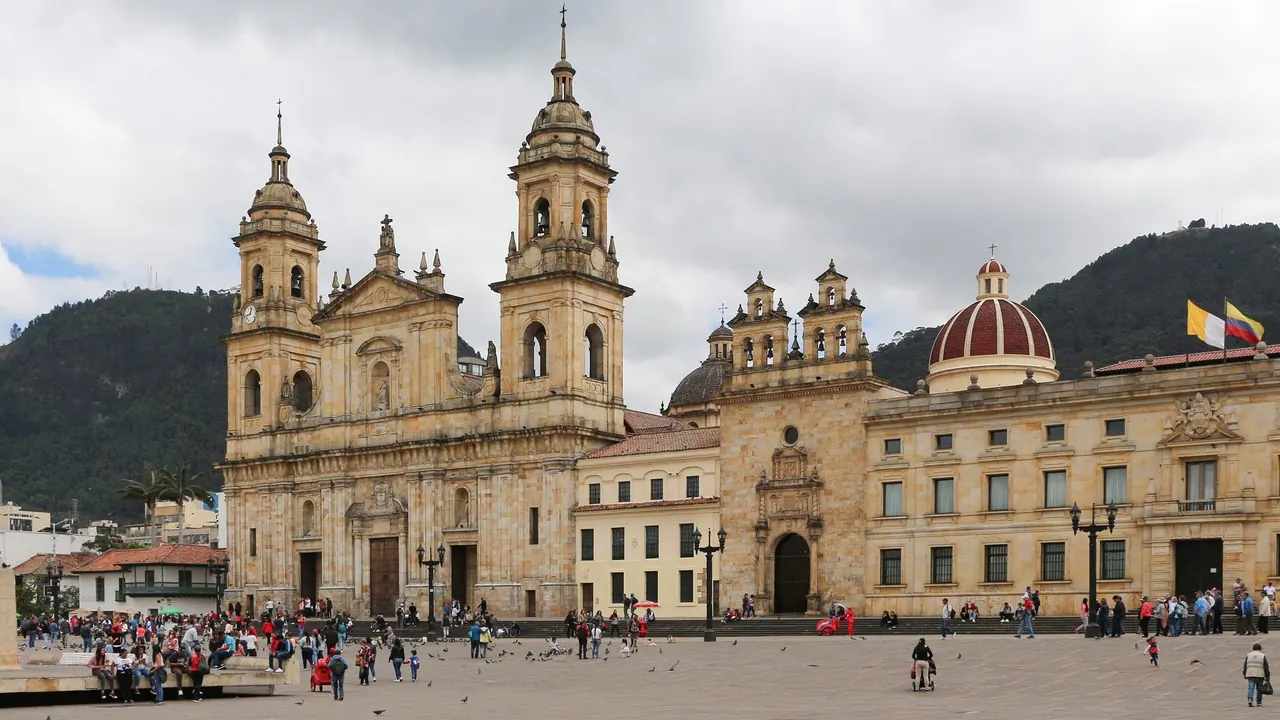
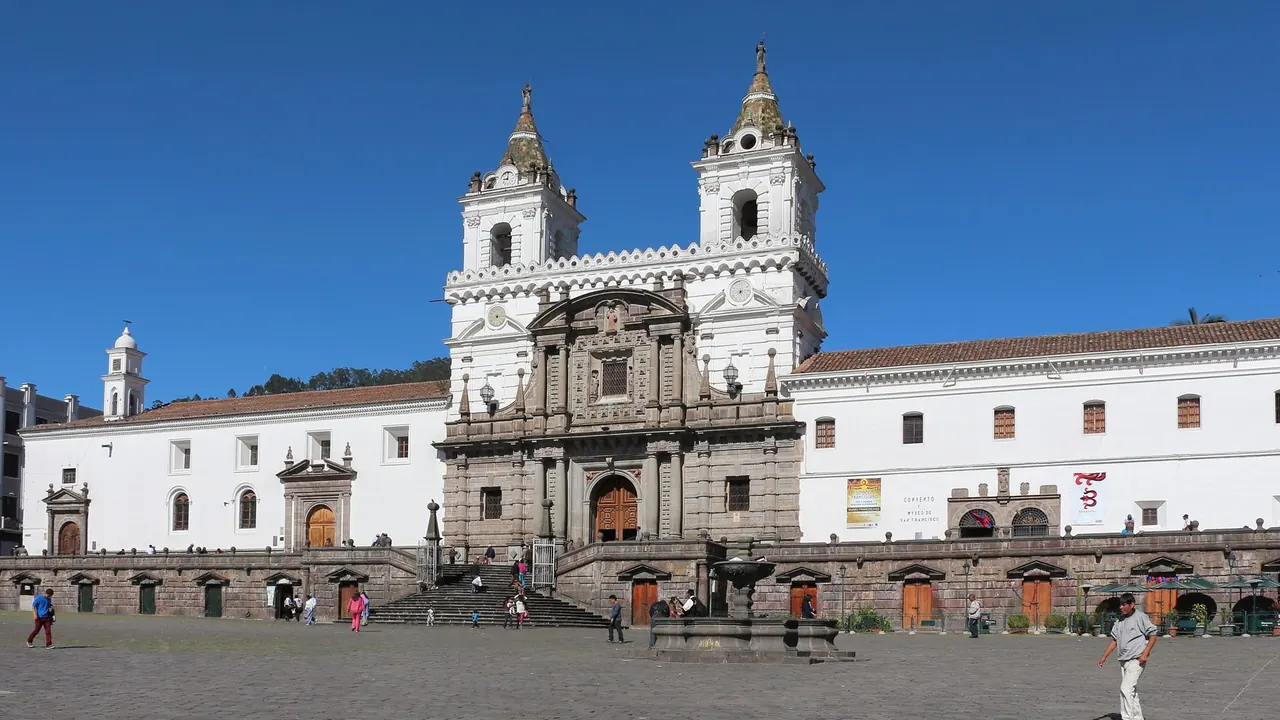
Photos: Bogota by Bernard Gagnon, CC BY-SA 4.0, cropped; Quito by Bernard Gagnon, CC BY-SA 3.0, cropped.
Bogota or Quito?
Our verdict in twelve categories, each scored against the same fixed benchmark cities, and the climate month by month, so you can choose for your trip.
Choose Bogota for
- nightlife
- live music and the arts
- families
Bogota is the better pick for travellers who want a big Andean capital with an evening life to match. It has the stronger restaurant scene, the much livelier weekend nights, and a stage programme that runs from opera at the Teatro Colón to salsa bars where locals dance seriously. It also does a little more for children and for shoppers. The price is a sprawling city where the old centre and the northern districts are a long taxi ride apart.
Choose Quito for
- nature and the outdoors
- wellness
- culture and sights
Quito suits travellers who come for colonial architecture and mountain scenery. Its historic centre is larger and better preserved, and gold-covered churches fill street after street. Volcanoes, páramo and the cloud forest at Mindo are close enough to reach in a day, and the thermal pools at Papallacta are on hand for the walk back down. The trade-off is quieter nights and a narrower food scene.
Scoreboard
Twelve categories on one fixed scale from 0 to 100. The shaded stretch is the gap between the two.
Your match
Pick a travel style or drag the sliders, and both match scores follow your weighting.
Too close to call, 2 points apart
Wins on nightlife and live music and the arts with your weighting.
Wins on nature and the outdoors and wellness with your weighting.
What matters to you?
Category by category
What the scores mean for a trip.
Beaches & swimming
Neither city has any beach life, and in both the sea means a flight or a very long drive. Bogota's nearest warm water is in the lowland towns down the western slope, where people go for hotel pools and water parks. Quito's equivalent is the warm municipal pools in the valleys below town. In practice, travellers add a separate stay on the Caribbean coast from Bogota, or on the Pacific coast or the Galápagos from Quito.
Food & drink
Both cities eat hearty highland food, but Bogota has more depth. Beyond ajiaco and hot chocolate with cheese, chefs in Chapinero, Zona G and Usaquén cook modern menus with ingredients from every region of Colombia, and specialty coffee and craft beer are easy to find. Paloquemao market is a lesson in tropical fruit.
Quito's best eating is at the simple end: locro de papa, roast hornado and set almuerzo lunches in the food courts of the Mercado Central. Ecuadorian cacao is a real treat. Past that, the choice narrows quickly.
Culture & sights
Quito has the richer old town. Its historic centre was one of the first places named a World Heritage site, and it is a large, little-altered grid of convents, plazas and churches such as La Compañía, which is covered almost entirely in gold leaf. Casa del Alabado and the Guayasamín chapel back this up with strong collections.
Bogota's La Candelaria is smaller, and the city around it is mostly modern. Its strength is museums: the Museo del Oro is among the great pre-Columbian collections anywhere, the Botero Museum is close by, and the street art along Calle 26 adds a contemporary side that Quito lacks.
Nightlife
Bogota is the place to go out. From Thursday to Saturday there are large clubs, a strong LGBTQ scene in Chapinero, serious salsa dancing and underground electronic nights, spread across several districts with different moods.
Quito's going out is concentrated around Plaza Foch in La Mariscal, with bars and backpacker hangouts that fill up at weekends. La Floresta adds quieter cocktail and craft-beer bars. Midweek it is fairly quiet. In both cities you take a taxi between areas after dark.
Nature & outdoors
Quito is the stronger base for the outdoors because it sits on a volcano. The TelefériQo lifts you to about 4,000m for the hike up Rucu Pichincha, Cotopaxi's snow cone is about two hours south along the Avenue of the Volcanoes, and the road west drops into the cloud forest at Mindo with its hummingbirds and waterfalls.
Bogota's mountain scenery is gentler but still distinctive: the climb to Monserrate, the misty páramo of Chingaza and Sumapaz with a guide, and the rock climbing on the cliffs at Suesca. Cyclists will find more to do in Bogota.
Day trips
The two cities offer a similar number of day trips, but of different kinds. Bogota's best outings are underground and legendary: the salt cathedral at Zipaquirá, the smaller mine at Nemocón and the El Dorado lake at Guatavita. Its finest colonial town, Villa de Leyva, really needs a night.
Quito's trips lean towards markets and landscape: the large Indigenous market at Otavalo, the equator line at Mitad del Mundo, a day in the cloud forest around Mindo or a soak at Papallacta. Leaving Bogota through its traffic can stretch any trip.
Good for families
Bogota keeps children busier. Maloka is a large hands-on science museum, Salitre Mágico and Mundo Aventura are proper amusement parks, and the Sunday Ciclovía lets families ride car-free roads. Long distances and heavy traffic are the catch.
Quito has some memorable moments, such as standing astride the equator, riding the cable car and visiting the Yaku water museum, but the list is shorter. Its higher altitude and the steep old town make days harder on small children, which is why families often treat it as a stopover.
Getting around
Quito is the easier city to move around. The historic centre is compact enough to explore on foot, if breathlessly, and a metro line runs the length of the narrow valley, with bus corridors to back it up.
In Bogota, La Candelaria and the northern districts are far apart and joined by some of the region's worst traffic. The TransMilenio buses are crowded and confusing at first, so most visitors rely on taxis and ride-hailing. Both cities share the same pickpocket warnings on public transport.
Shopping & style
Bogota offers more to buy. Emerald dealers along Avenida Jiménez are a speciality for buyers who know stones, Usaquén's Sunday flea market gathers crafts from across Colombia, and Zona G and Chapinero have local designers and good leather.
Quito's appeal is a few very Ecuadorian things: toquilla-straw Panama hats, bean-to-bar chocolate, alpaca and tagua carvings, sold together at the La Mariscal artisan market. Its malls hold little for visitors, and keen craft buyers save their money for Otavalo.
Affordability
Both are inexpensive for visitors, and day-to-day costs are similar. In Bogota the bargain is big-city comfort: good hotels in the north, cheap taxis across a large city and some of the cheapest major museums anywhere. Quito's best value is in boutique hotels in old colonial houses and market food. Costs can mount on the guided volcano and cloud-forest excursions that most visitors take, and especially on a Galápagos trip booked from Quito.
Live music & performing arts
Bogota is Colombia's stage capital, and the gap is wide. The gilded Teatro Colón and the Teatro Mayor host opera, ballet and visiting orchestras, the Filarmónica plays around the city, and the Ibero-American Theatre Festival and the free Rock al Parque festival draw huge crowds in their seasons.
Quito's programme centres on the Teatro Nacional Sucre and the national symphony. Its most distinctive offering is Andean folk ballet in full costume, plus the odd baroque concert in an old-town church. It makes a good evening out, but not a reason to choose the city.
Wellness & relaxation
Quito has the better escape. The thermal pools at Papallacta, set among misty páramo hills about an hour and a half away, are a real spa destination, and there are simpler pools such as El Tingo in the valleys nearby.
Bogota has hot springs at Choachí and Tabio, each about an hour away, but they are local weekend spots rather than a draw. Within either city, relaxing comes down to hotel spas, and the noise and traffic are similar in both.
When should you go?
Pick your month. The climate figures are measured averages, not a forecast.
Bogota in July
Quito in July
Daytime high, °C
Rainfall in the month, mm
Where the figures come from
Quito's station stands 208 m above the city centre, so the centre is likely a little warmer than the figures say.
Temperature and rainfall are climate normals, averaged over the years shown. Bogota: 1991-2020 normals, Bogota / Eldorado (14.1 km from centre). Quito: 1961-1990 normals, Izobamba-Santa Catalina (16.8 km from centre).
Neither city has seasons of heat and cold. Both sit high in the Andes with spring-like days of around 18°C all year, so walking the streets is comfortable in any month, though evenings turn chilly. The difference lies in the rain. Bogota has two wet spells, roughly March to May and October to November, and its driest, sunniest stretch is December to February, with July and August as a second good window.
Quito's rain falls in one long season from about October to May, at its heaviest around April with close to 195mm. June to August is clearly the best time to go, with July bringing only about 32mm and the most sunshine of the year. That makes it the prime season for volcano hikes and clear views. If you are combining the two, go to Quito in mid-year and to Bogota around the turn of the year.
Which traveller are you?
On a food and nightlife trip, Bogota wins clearly. It has chef-led restaurants in Zona G and Chapinero, specialty coffee and craft beer, and weekend nights that run from polished clubs in Zona T to salsa bars and underground electronic parties.
For an outdoors trip, choose Quito. A cable car lifts you onto the slopes of Pichincha, Cotopaxi's glacier and high plains are about two hours away, and the cloud forest at Mindo offers some of the richest birdwatching anywhere, all within a day's reach.
On a family trip with children, Bogota is the easier of the two. Maloka's science museum, two city amusement parks and the car-free Sunday Ciclovía keep children busy, and the city sits a little lower than Quito, where the altitude tires small children more.
Before you go
| Measure | Bogota | Quito |
|---|---|---|
| Official language | Spanish | Spanish, Shuar, Northern Quichua |
| Currency | Colombian Peso (COP) | US Dollar (USD) |
| Sockets | AB110 V, 60 Hz | AB120 V, 60 Hz |
| Driving side | Right | Right |
| Time zone | UTC-5 | UTC-5 |
| Emergency number | 123 | 911 |
| Elevation | 2,582 m | 2,850 m |
| Main airport | El Dorado International Airport (BOG)13 km from centre98 non-stop destinations | Mariscal Sucre International Airport (UIO)20 km from centre22 non-stop destinations |
| Public holidays this year | 19 days | 11 days |
By the numbers
| Measure | Bogota | Quito |
|---|---|---|
| City population | 8,034,649 | 1,763,275 |
| People per km² | 5,092 | 4,735 |
| Museums within 10 km | 30 | 16 |
| UNESCO World Heritage sites within 50 km | 0 | 2 |
Where else could you go?
Every comparison below shares a destination with this one, so you can follow Bogota or Quito somewhere new.