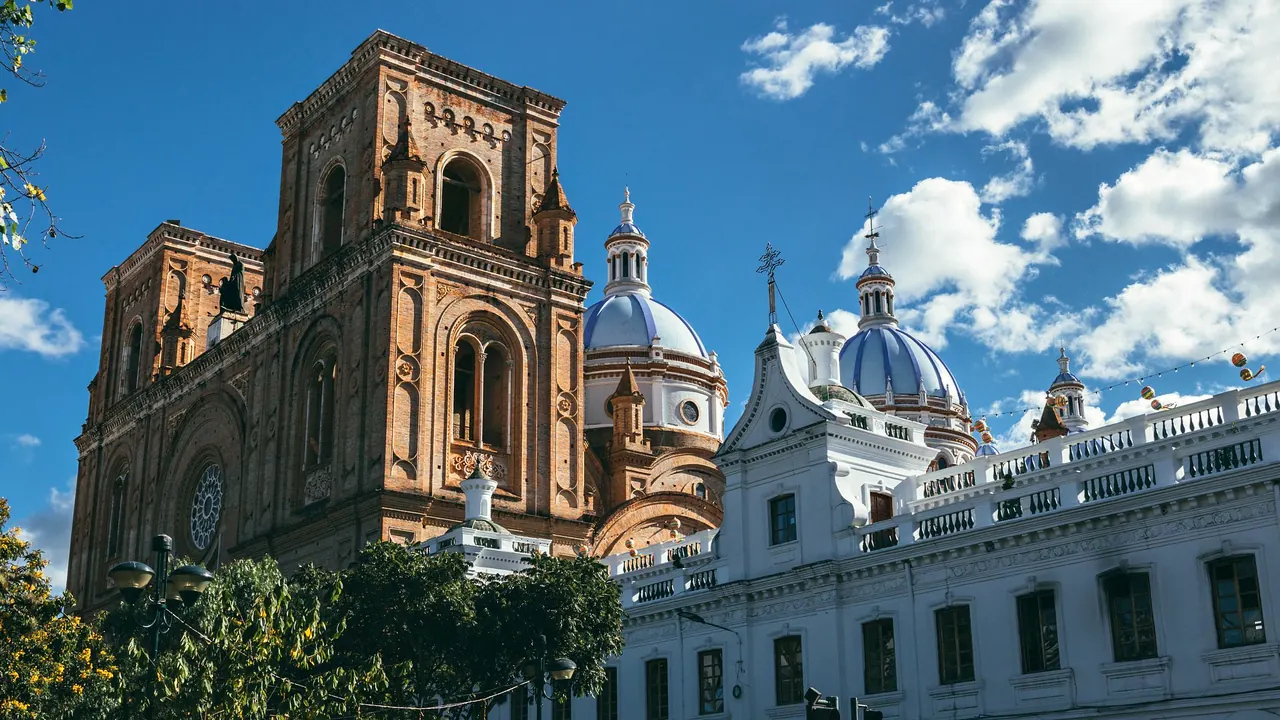
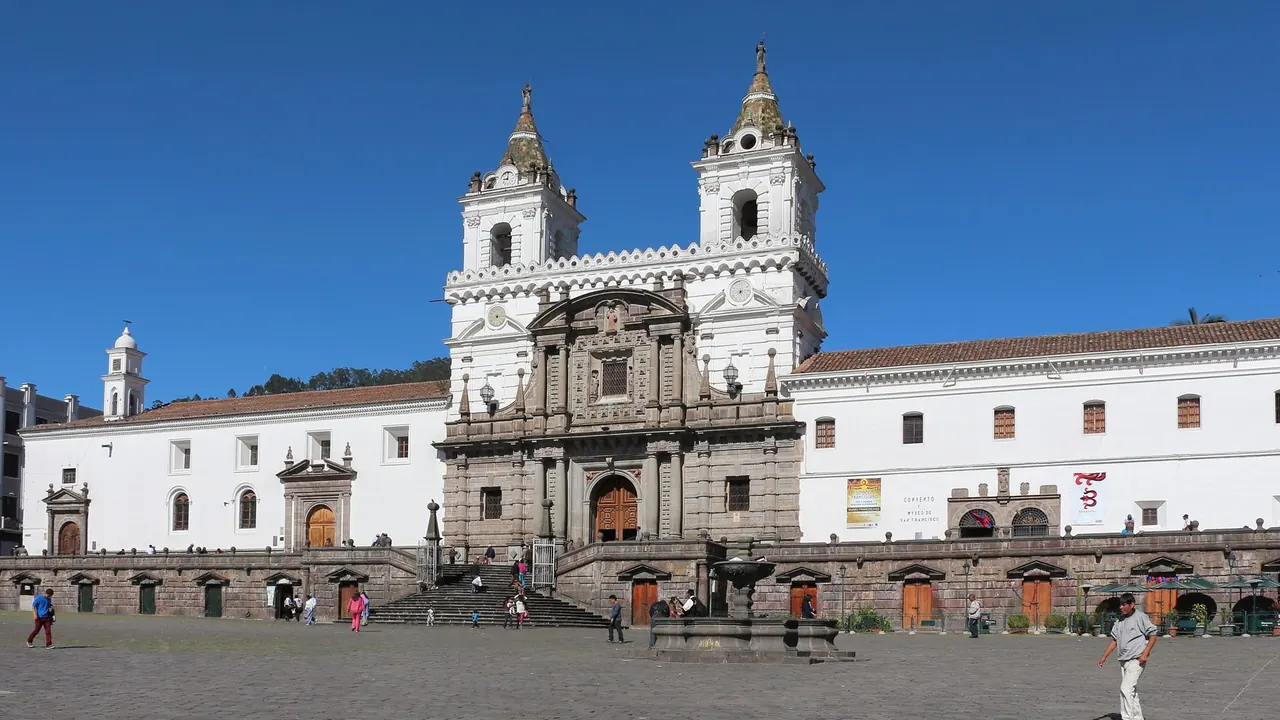
Photos: Cuenca, Ecuador by Charly Chacon, Pexels License; Quito by Bernard Gagnon, CC BY-SA 3.0, cropped.
Cuenca, Ecuador or Quito?
Our verdict in twelve categories, each scored against the same fixed benchmark cities, and the climate month by month, so you can choose for your trip.
Choose Cuenca, Ecuador for
- getting around
- wellness
- families
Cuenca suits a traveller who wants a slower, gentler stay in the Andes. Its old centre is small enough to walk end to end, the thermal pools at Baños are a short ride away, and everyday costs stay very low. Families, couples looking to unwind and anyone planning a longer stay on a modest budget will find it the easier city to settle into.
Choose Quito for
- nature and the outdoors
- culture and sights
- nightlife
Quito is the better choice for travellers who want more to see and do. Its colonial core is grander, with gilded churches and stronger museums, and the volcanoes, Cotopaxi and the Mindo cloud forest all lie within a day's reach. The nights are livelier too. In return you get a longer, steeper, busier city that takes more effort to get around.
Scoreboard
Twelve categories on one fixed scale from 0 to 100. The shaded stretch is the gap between the two.
Your match
Pick a travel style or drag the sliders, and both match scores follow your weighting.
Too close to call, 1 point apart
Wins on getting around and wellness with your weighting.
Wins on nature and the outdoors and culture and sights with your weighting.
What matters to you?
Category by category
What the scores mean for a trip.
Beaches & swimming
Neither city is anywhere near the sea, so swimming means a pool in both. In Cuenca, the warm water closest to hand is the thermal pools at Baños on the edge of town. Quito's warm municipal pools lie in the lower valleys, though Quito is the more natural place to set off for the coast or the Galápagos as a separate leg of the trip.
Food & drink
The two share the same highland base: hornado carved in the market halls, locro de papa and canelazo on chilly nights. Cuenca keeps to that tradition, with mote pillo in the Mercado 10 de Agosto and spit-roast cuy on weekend outings to Ricaurte. Beyond its cafés and set lunches, it has little ambitious cooking.
Quito gives a food lover more to explore. Its market food courts at the Mercado Central and Santa Clara add juices from unfamiliar fruits. Cacao and coffee tastings are easy to find in the old town and La Floresta, and a modern restaurant scene builds on Andean produce. Neither is a great eating city, but Quito has the wider range.
Culture & sights
Both centres are UNESCO-listed colonial grids, but they are on very different scales. Quito's is one of the largest in the Americas. It has the gold-leaf interior of La Compañía, the vast San Francisco monastery, altarpieces from the Quito school and the towers of the Basílica to climb. Museums such as Casa del Alabado and the Guayasamín chapel fill several more days.
Cuenca is smaller and more intimate. Its whitewashed streets lead to the blue domes of the New Cathedral, and Pumapungo, with the excavated Inca terraces of Tomebamba, is its standout museum. It rewards strolling along El Barranco more than a sightseeing list.
Nightlife
Quito has the more substantial night out. On weekends, La Mariscal around Plaza Foch fills with salsa clubs and bars, and La Floresta adds quieter cocktail and craft-beer places, though you take taxis between areas after dark. Cuenca's evenings centre on a handful of small bars and dance spots along Calle Larga, and the cool air sends most people home early.
Nature & outdoors
Cuenca has one superb asset: Cajas National Park, less than an hour away, with its glacial lakes, granite ridges and polylepis woods full of hummingbirds. The leafy river paths through town are a pleasant extra.
Quito offers more variety. You can ride the TelefériQo to about 4,000m and hike to the top of Rucu Pichincha, then head south to Cotopaxi's glacier and high plains. Westwards, the road drops into the Mindo cloud forest, with some of the best birdwatching anywhere, plus zip-lines and waterfalls. Volcanoes, páramo and cloud forest all lie within easy reach of one base.
Day trips
The two are broadly level here, but the outings differ in character. From Cuenca, the highlight is Ingapirca, Ecuador's largest Inca site, along with a craft loop through Gualaceo's market, the silver workshops of Chordeleg and the hat weavers of Sígsig.
From Quito, the classic trip is the Saturday market at Otavalo, combined with leather-making Cotacachi. The equator monument at Mitad del Mundo is close by, and Mindo and Papallacta suit a day in the forest or the hot springs. Cuenca leans towards archaeology and craft villages, Quito towards markets and mountains.
Good for families
Quito actually has more attractions aimed at children: standing astride the equator, the cable-car ride, the hands-on Yaku museum and the pedal boats in Parque La Carolina. The difficulty is the city itself, with higher altitude, steep streets, heavy traffic and broken pavements.
Cuenca is the easier place to spend a few days with children. It is lower and calmer, families are out in the riverside parks at weekends, and Bioparque Amaru with its condors and spectacled bears makes a good outing. Only the cobbles slow a pushchair down.
Getting around
Cuenca is far simpler to get around. Nearly everything worth seeing lies within the compact grid and along the river below it, so walking does most of the work, with the tram and cheap taxis for the rest.
Quito stretches about 40km along its valley. The metro and bus corridors run its length but are crowded, with pickpockets at rush hour. Visitors end up taking taxis or ride-hailing between neighbourhoods and at night, and only the steep old town is truly walkable.
Shopping & style
Both are craft cities rather than fashion cities. Neither has a fashion scene beyond the malls on its outskirts. Cuenca is where Panama hats are finished and blocked, so you can buy them from the workshops in every grade, along with local ceramics and the flowers by the New Cathedral.
Quito gathers goods from across the country in its La Mariscal artisan market: alpaca, tagua carvings, silver and fine bean-to-bar chocolate. Serious buyers there save their money for Otavalo.
Affordability
Both are cheap places to visit, and Cuenca goes a little further. Restored colonial hotels in its centre cost little, the market food is among the best-value eating anywhere, and many museums and churches are free or nearly so.
Quito's day-to-day costs are similarly low. The bills climb with international-style hotels in the north and with guided trips to the volcanoes or the cloud forest, and the Galápagos excursions sold there cost far more.
Live music & performing arts
Both cities have modest scenes, and neither is a reason to choose a destination. Cuenca's highlights are free symphony concerts in its old churches and theatres, and the Pase del Niño Viajero procession on Christmas Eve.
Quito offers a little more variety. Opera and dance are staged at the nineteenth-century Teatro Nacional Sucre, folk ballet companies perform Andean dance in full costume, and bars in La Floresta host live bands.
Wellness & relaxation
Cuenca makes relaxing easy. The hot springs and spa complexes at Baños are a short taxi ride away, so a long afternoon soak takes no planning. The city's slow pace and quiet nights do the rest.
Quito's best thermal pools, at Papallacta, are lovely in the misty páramo but about ninety minutes away. In the city itself, unwinding comes down to hotel spas, and the traffic and noise work against rest.
When should you go?
Pick your month. The climate figures are measured averages, not a forecast.
Cuenca, Ecuador in July
Quito in July
Daytime high, °C
Rainfall in the month, mm
Where the figures come from
Cuenca, Ecuador has no weather station within reach, so its figures come from a gridded climate model rather than a measured record, and read a broad area rather than the city itself.
Quito's station stands 208 m above the city centre, so the centre is likely a little warmer than the figures say.
Temperature and rainfall are climate normals, averaged over the years shown. Cuenca, Ecuador: 2001-2020 normals, NASA POWER reanalysis grid, no weather station within 90 km. Quito: 1961-1990 (rainfall 1981-2010) normals, Izobamba-Santa Catalina (16.8 km from centre).
Both cities have spring-like weather all year, with daytime highs between 16°C and 19°C. Neither is ever too hot for walking, and neither gets warm enough for anything resembling beach weather. Cuenca is a touch cooler in June and July. What separates the two is the rain. Cuenca's wettest month is March at 124mm, and its drier spell from July to September is a mild one rather than a true dry season.
Quito's year swings much harder. March and April are very wet, with about 175mm in March, and then June to August turn almost dry at around 20mm a month. Those months are also Quito's sunniest, the best time for volcano hikes and clear views from the TelefériQo. Rain returns from October. In the wet months of March and April, Cuenca is the drier and more predictable of the two.
Which traveller are you?
On an outdoors trip, Quito wins clearly. The cable car up Pichincha, the snow cone of Cotopaxi and the birdlife of the Mindo cloud forest give far more range than Cuenca's single great park at Cajas, fine as its lake trails are.
On a family trip with young children, Cuenca is the easier base. It sits lower, it is calmer and flatter to walk, and it has riverside parks, the condors at Bioparque Amaru and the warm pools at Baños. Quito's steep streets and traffic wear small children out.
For a relaxing and wellness trip, Cuenca is the better pick. Its hot springs are a short taxi ride from the centre, its evenings are quiet and slow, and its massages are inexpensive. In Quito the soaking is ninety minutes away at Papallacta, and the city around you is noisy.
Before you go
| Measure | Cuenca, Ecuador | Quito |
|---|---|---|
| Official language | Spanish, Shuar, Northern Quichua | Spanish, Shuar, Northern Quichua |
| Currency | US Dollar (USD) | US Dollar (USD) |
| Sockets | AB120 V, 60 Hz | AB120 V, 60 Hz |
| Driving side | Right | Right |
| Time zone | UTC-5 | UTC-5 |
| Emergency number | 911 | 911 |
| Elevation | 2,550 m | 2,850 m |
| Main airport | Mariscal Lamar Airport (CUE)2 km from centre3 non-stop destinations | Mariscal Sucre International Airport (UIO)20 km from centre23 non-stop destinations |
| Public holidays this year | 11 days | 11 days |
By the numbers
| Measure | Cuenca, Ecuador | Quito |
|---|---|---|
| City population | 361,524 | 1,763,275 |
| People per km² | 5,121 | 4,735 |
| Museums within 10 km | 4 | 16 |
| UNESCO World Heritage sites within 50 km | 2 | 2 |
Where else could you go?
Every comparison below shares a destination with this one, so you can follow Cuenca, Ecuador or Quito somewhere new.
- Guayaquilvs Cuenca, Ecuador
- Guayaquilvs Quito
- Calivs Quito
- Bogotavs Quito
- Salentovs Cuenca, Ecuador
- San Jose, Costa Ricavs Quito