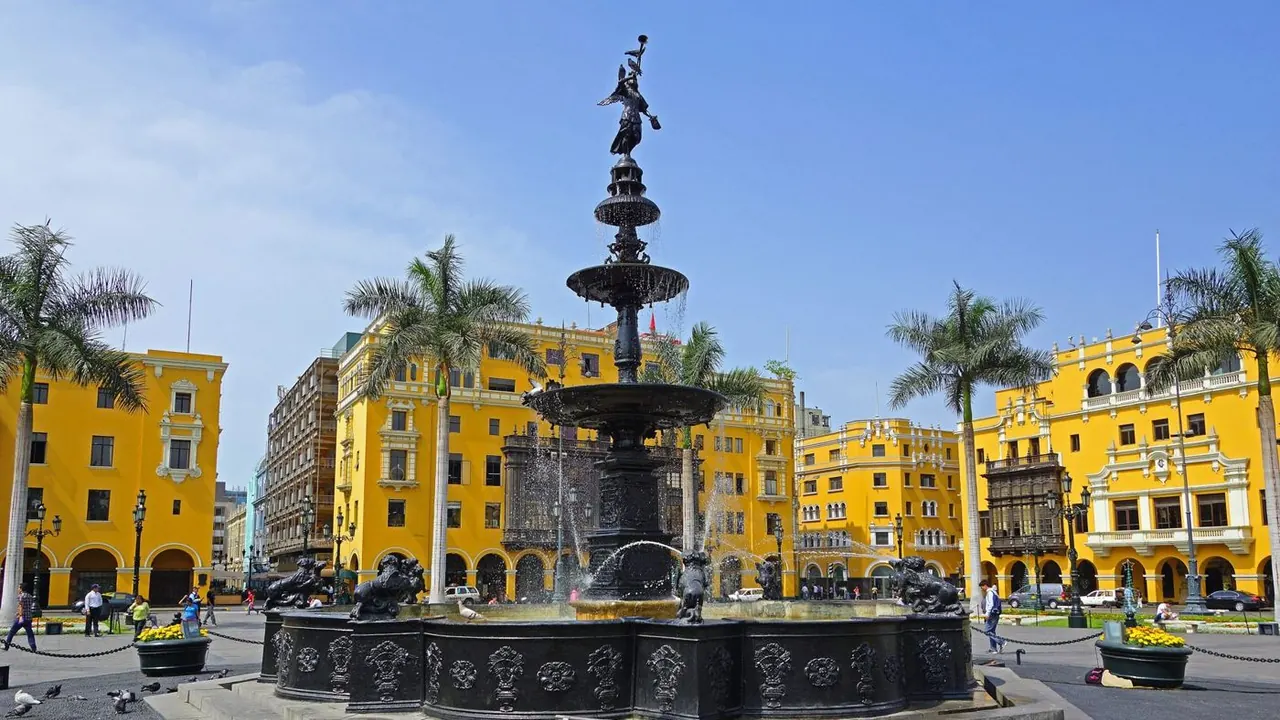
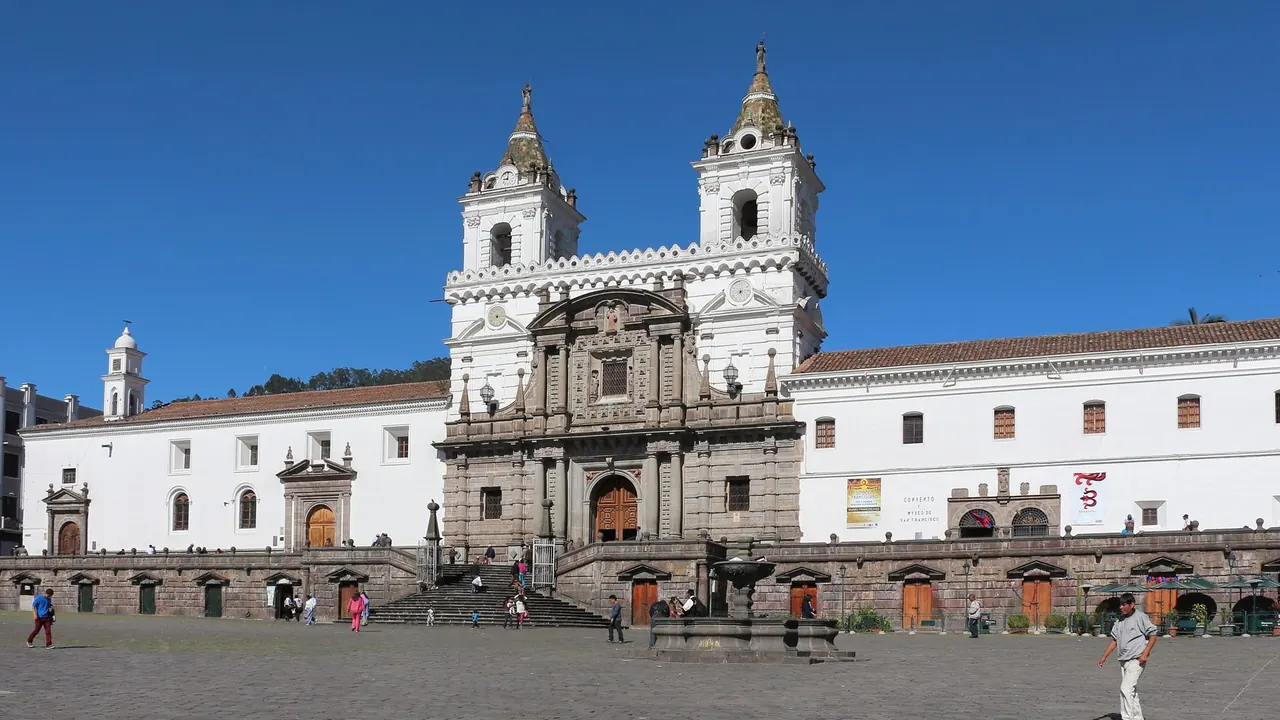
Photos: Lima by James C., CC BY-SA 2.0, cropped; Quito by Bernard Gagnon, CC BY-SA 3.0, cropped.
Lima or Quito?
Our verdict in twelve categories, each scored against the same fixed benchmark cities, and the climate month by month, so you can choose for your trip.
Choose Lima for
- beaches
- food and drink
- nightlife
Lima is the choice for travellers who plan their days around meals and their nights around going out. Ceviche lunches, Nikkei and chifa kitchens and some of the most celebrated tasting menus in the Americas make eating the core of the trip, and Barranco's bars and peñas carry on into the small hours. Add a sea-level climate, a cliff-top walk over the Pacific and summer beaches to the south, and it suits a food-led city stay with a coastal edge.
Choose Quito for
- nature and the outdoors
- day trips
- wellness
Quito rewards those who want mountains and colonial streets more than restaurants. Its old town is one of the largest and best-preserved in the Americas, the Pichincha volcano rises straight from the city, and Cotopaxi, the Mindo cloud forest and the Otavalo market are all within a day. Day-to-day costs are a little lower too. The price is altitude, which slows the first days, and a much quieter evening scene.
Scoreboard
Twelve categories on one fixed scale from 0 to 100. The shaded stretch is the gap between the two.
Your match
Pick a travel style or drag the sliders, and both match scores follow your weighting.
Too close to call, 1 point apart
Wins on beaches and food and drink with your weighting.
Wins on nature and the outdoors and day trips with your weighting.
What matters to you?
Category by category
What the scores mean for a trip.
Beaches & swimming
Lima at least has the Pacific on its doorstep, although the pebbly Costa Verde below Miraflores and Barranco belongs to surfers, and the Humboldt Current keeps the water cool. For proper sand you drive about an hour south to Punta Hermosa, San Bartolo and the coves beyond, which are pleasant from December to March and grey for the rest of the year.
Quito, at about 2,850m in an Andean valley, offers nothing of the kind. Swimming means a hotel pool or the warm pools in the valleys below, and a beach requires a separate leg to the coast or the Galápagos.
Food & drink
This is where the two cities differ most for many travellers. Lima's cooking draws on the coast, the Andes and the Amazon as well as Chinese and Japanese immigration, so a single day can run from a ceviche lunch and Nikkei raw fish to anticuchos from a street cart and a pisco sour. Surquillo market shows off the produce, and the tasting-menu restaurants are destinations in their own right.
Quito eats more simply: potato soup with cheese and avocado, roast pork, sugared empanadas and the set lunch, best tried at the Mercado Central. Its strengths are Ecuadorian cacao, unfamiliar fruit juices and a cup of hot canelazo on a cold evening, but the range is far narrower than Lima's.
Culture & sights
Both capitals have UNESCO-listed colonial centres, but they feel different on the ground. Lima's centre is about grand set pieces, such as the Plaza de Armas with its carved wooden balconies and the catacombs of San Francisco, while its finest treasures lie in other districts: pre-Columbian gold at the Larco Museum and adobe pyramids standing among the apartment blocks of Miraflores.
Quito offers the richer whole. Its old town was one of the first World Heritage sites and remains a large, little-altered grid of churches and convents, with the gilded interior of La Compañía and Quito school altarpieces at every turn. Casa del Alabado and Guayasamín's Capilla del Hombre add strong museums, and almost everything can be seen on foot.
Nightlife
Lima goes out later and with more style. Barranco's old mansions turn into bars and clubs that fill around midnight and run until dawn at weekends, Miraflores adds a more polished crowd, and salsa and cumbia matter more than electronic music.
Quito's nights centre on Plaza Foch in La Mariscal, with salsa clubs and backpacker bars from Thursday to Saturday, plus quieter craft-beer and cocktail bars in La Floresta. A canelazo on the lantern-lit lane of La Ronda is charming but finishes early, and midweek the city is quiet.
Nature & outdoors
Lima's outdoors faces the sea: walking or cycling the clifftop malecón, paragliding off its parks, surfing below and swimming with sea lions at the Palomino Islands. Inland it is brown desert under a grey sky for much of the year.
Quito is in a different league. The TelefériQo climbs to about 4,000m on Pichincha, with a páramo trail on to the summit, and the Avenue of the Volcanoes leads to Cotopaxi's snow cone, Antisana and Cayambe. Westward, the road drops into the Mindo cloud forest, one of the world's great places for birdwatching.
Day trips
Lima has one strong outing, the pre-Inca sanctuary of Pachacamac at the southern edge of the city, plus the old port of Callao. Its bigger draws, Caral, Paracas and the Ica vineyards, are too far for a day and need an overnight stay.
Quito's surroundings work much better for day trips. Otavalo's Saturday Indigenous market is about two hours north and pairs with the weaving villages and the leather town of Cotacachi, the equator monument is under an hour away, and Mindo and the hot springs of Papallacta each make a full day in very different landscapes.
Good for families
Lima is the easier of two demanding cities for children. Parque de las Leyendas combines a zoo of Peruvian animals with ruins, the lit fountains of the Circuito Mágico del Agua make a good evening, and older children can enjoy the summer beaches. Long distances and heavy traffic mean families do best staying in Miraflores or Barranco.
Quito has fun moments, such as standing astride the equator, riding the cable car and the hands-on Yaku water museum. However, the altitude can make small children unwell for the first days, and the steep old town wears out little legs, so many families treat it as a gateway rather than a base.
Getting around
Lima is the harder city to cross. Miraflores and Barranco are walkable and linked by the cliff path, and the Metropolitano busway runs fast to the historic centre, but almost everything else means a taxi stuck in some of the slowest traffic in South America.
Quito's long, thin shape suits public transport: a metro line runs its length, supported by the Trolebús and Ecovía busways, although they are packed at rush hour and pickpockets work them. The compact old town is best seen on foot, if slowly at altitude. Day trips beyond the city usually need a tour, a driver or an intercity bus.
Shopping & style
Lima gives shoppers more to work with. Fine baby alpaca knitwear from specialist shops in Miraflores and San Isidro is the prize, the craft markets on Avenida Petit Thouars gather textiles, silver and retablos from across Peru, and Barranco adds small shops of Peruvian design.
Quito's best buys are just as distinctive but fewer: genuine toquilla-straw Panama hats, bean-to-bar chocolate and tagua-nut carvings, mostly found at the artisan market in La Mariscal and a few galleries. Its malls hold little for visitors.
Affordability
Both cities are cheap at street level, with set lunches, market food and taxis costing very little in either. Lima's catch is that its main attraction is also its biggest expense, since a trip built around the famous tasting menus and Miraflores cocktail bars soon adds up.
Quito stretches a budget slightly further, and comfortable guesthouses in old colonial houses are particularly good value. Its costs rise mainly with guided trips to the volcanoes and cloud forest, and with a Galápagos extension if you add one.
Live music & performing arts
Lima has the livelier evening of music. A peña in Barranco, with música criolla and Afro-Peruvian rhythms on guitar and cajón and the audience up dancing, is the outing to plan for, and the Gran Teatro Nacional and the restored Teatro Municipal cover symphony, ballet and opera.
Quito's programme is more modest. The nineteenth-century Teatro Nacional Sucre and the colourful folk ballet companies are the highlights, with occasional baroque and choral concerts in the old town churches, which are worth catching if one falls on your dates.
Wellness & relaxation
Neither city is restful in itself, but Quito has a real escape close by. Lima offers hotel spas and morning yoga in the clifftop parks, with no bathing tradition to fall back on.
From Quito, the steaming thermal pools of Papallacta, set among misty páramo hills about an hour and a half away, make a proper day of soaking, and simpler public hot pools such as El Tingo lie in the valleys below. The altitude still means the first days in town are tiring rather than relaxing.
When should you go?
Pick your month. The climate figures are measured averages, not a forecast.
Lima in July
Quito in July
Daytime high, °C
Rainfall in the month, mm
Where the figures come from
Quito's station stands 208 m above the city centre, so the centre is likely a little warmer than the figures say.
Temperature and rainfall are climate normals, averaged over the years shown. Lima: 1991-2020 normals, Lima-Callao / Aerop. Internacional Jorgechavez (10.9 km from centre). Quito: 1961-1990 normals, Izobamba-Santa Catalina (16.8 km from centre).
Lima barely sees rain at all, so its seasons are about sun and warmth. From December to April it is warm and fairly bright, reaching about 27°C, with the sea at its warmest, around 22°C, which is when the southern beaches are worth the drive. From June to October a grey sea mist settles over the city: it stays dry and mild for walking, but cool and almost sunless, and the water turns chilly.
Quito, high in the Andes, sits at about 18°C by day in every month, pleasant for walking but cool once the sun goes. Its year is defined by rain instead. October to May is wet, peaking in April at around 195mm, while June to September is the dry season, with July down to about 32mm and the most sunshine of the year, the best time for clear views of the volcanoes and for hiking. The two cities therefore peak at opposite ends of the year: Lima in the southern summer, Quito in the dry mid-year months.
Which traveller are you?
On a food and nightlife trip, Lima is the clear pick. Its cevicherías, Nikkei and chifa kitchens and tasting-menu restaurants outclass Quito's hearty highland cooking, and Barranco's bars, clubs and peñas keep going far later than Quito's weekend-only La Mariscal.
For an outdoors trip, choose Quito. A cable car lifts you onto Pichincha's slopes, Cotopaxi's glaciers and high plains are about two hours away, and Mindo's cloud forest is full of hummingbirds, while Lima's outdoors amounts to the cliff path, surf and sea lions.
On a beach and sun trip, Lima is the only one of the two with a coast, though it suits a summer visit between December and March. Sandy beaches lie an hour south, whereas Quito has no beach and no sea within easy reach.
Before you go
| Measure | Lima | Quito |
|---|---|---|
| Official language | Spanish, Aymara, Quechua | Spanish, Shuar, Northern Quichua |
| Currency | Sol (PEN) | US Dollar (USD) |
| Sockets | ABC220 V, 60 Hz | AB120 V, 60 Hz |
| Driving side | Right | Right |
| Time zone | UTC-5 | UTC-5 |
| Emergency number | 111 or 911 | 911 |
| Elevation | 154 m | 2,850 m |
| Main airport | Jorge Chávez International Airport (LIM)9 km from centre61 non-stop destinations | Mariscal Sucre International Airport (UIO)20 km from centre22 non-stop destinations |
| Public holidays this year | 16 days | 11 days |
By the numbers
| Measure | Lima | Quito |
|---|---|---|
| City population | 9,943,800 | 1,763,275 |
| People per km² | 3,721 | 4,735 |
| Museums within 10 km | 47 | 16 |
| UNESCO World Heritage sites within 50 km | 2 | 2 |
| Swim season, months above 21 °C | 2 months | - |
Where else could you go?
Every comparison below shares a destination with this one, so you can follow Lima or Quito somewhere new.