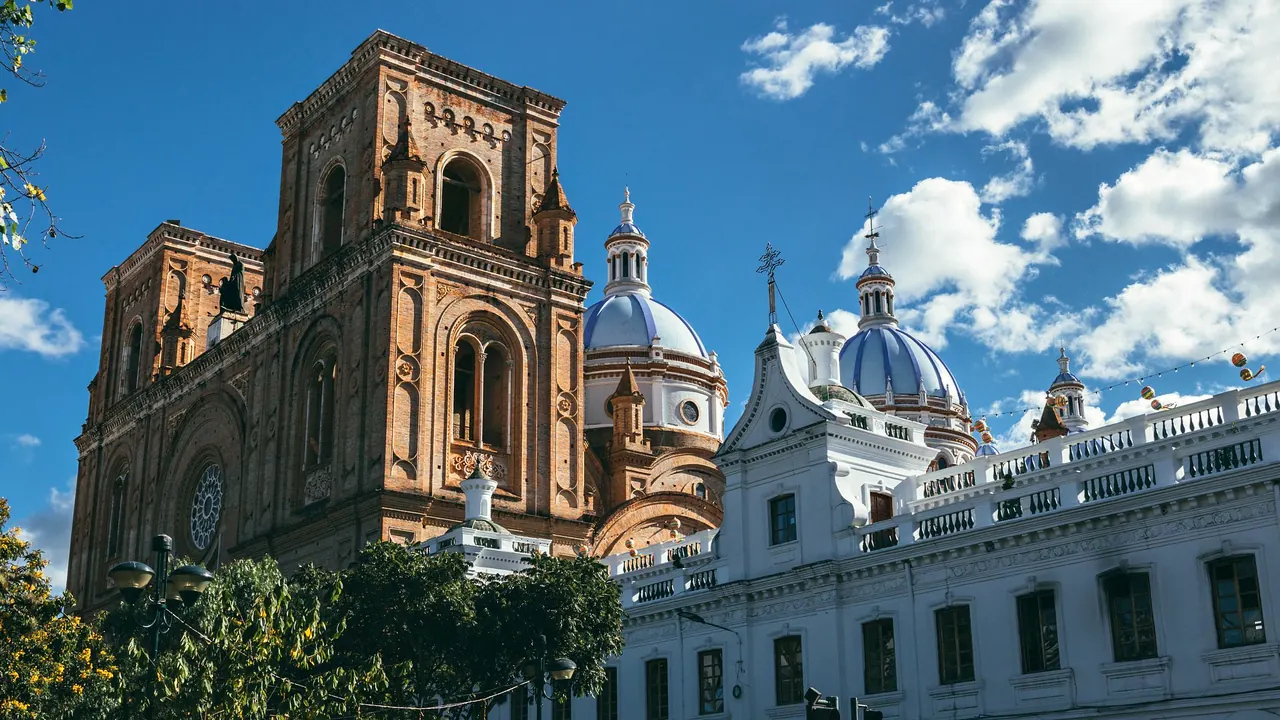
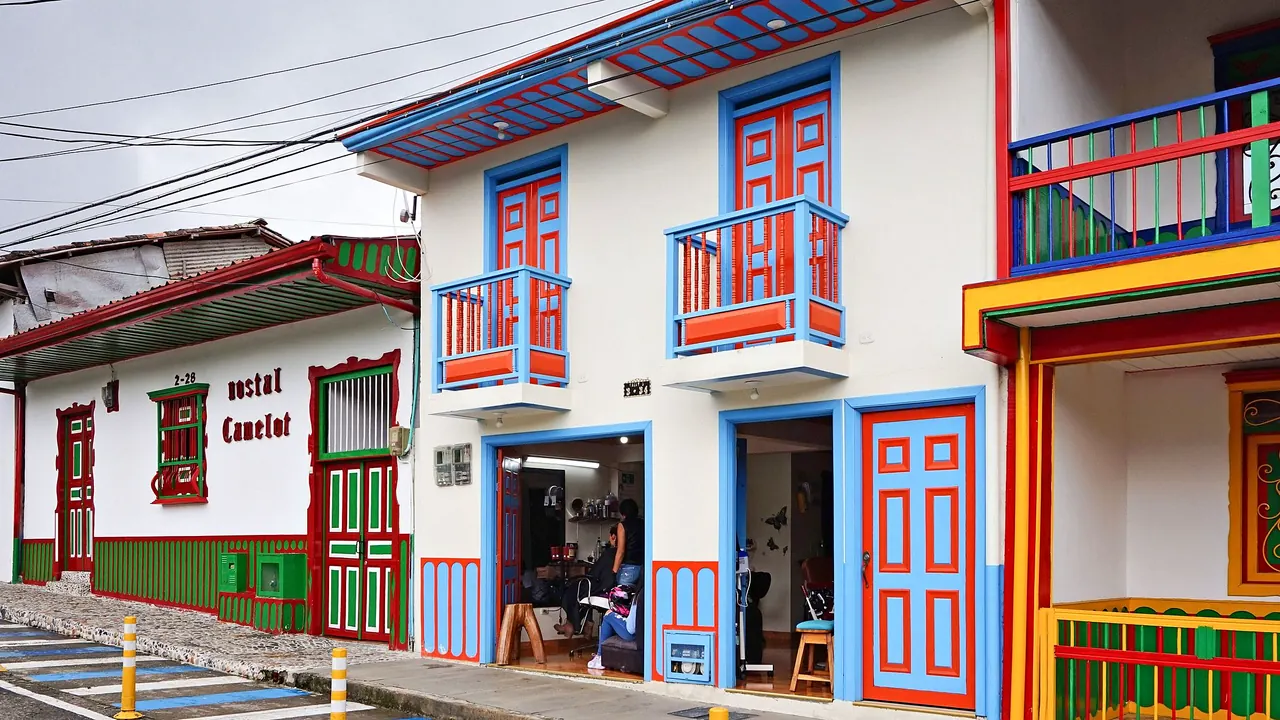
Photos: Cuenca, Ecuador by Charly Chacon, Pexels License; Salento by Bernard Gagnon, CC BY-SA 4.0, cropped.
Cuenca, Ecuador or Salento?
Our verdict in twelve categories, each scored against the same fixed benchmark cities, and the climate month by month, so you can choose for your trip.
Choose Cuenca, Ecuador for
- culture and sights
- live music and the arts
- getting around
Cuenca suits a traveller who wants a real small city at altitude. Its UNESCO-listed colonial centre rewards several days of walking, and it adds market halls carving roast pork, symphony concerts in old churches and the hot springs at Baños for a slow afternoon. It is also the cheaper and easier base, with a tram and plenty of taxis, and the lakes of Cajas are less than an hour away for hiking.
Choose Salento for
- families
- nature and the outdoors
Choose Salento when the landscape is the point. It is a small coffee town rather than a city, and you spend your days in the Cocora Valley among the wax palms, on visits to the farms and on longer treks towards the Nevados volcanoes. It also works for families who like being outdoors, with jeep rides, horses and two theme parks within reach. The trade-off is quiet evenings and a town you can see in a morning.
Scoreboard
Twelve categories on one fixed scale from 0 to 100. The shaded stretch is the gap between the two.
Your match
Pick a travel style or drag the sliders, and both match scores follow your weighting.
Wins on culture and sights and live music and the arts with your weighting.
Wins on families and nature and the outdoors with your weighting.
What matters to you?
Category by category
What the scores mean for a trip.
Beaches & swimming
Neither is a beach destination. Both sit high in the Andes far from the coast, so if you want to swim in the sea, plan it as a separate leg of the trip. What differs is the stand-in: Cuenca has warm thermal pools at Baños on the edge of town, while Salento's mountain rivers are too cold and fast for swimming, leaving a finca pool or the theme-park water rides around Armenia.
Food & drink
You eat better and more widely in Cuenca. In its market halls hornado is carved to order, and there are mote pillo, potato soups and hot canelazo on cold nights. Families go out to Ricaurte at weekends for roast cuy, and the old centre has a small choice of modern Ecuadorian restaurants.
Salento's food is narrower: river trout on a big crisp patacón, hearty set lunches, arepas and fruit juice, from menus that repeat. What it has that Cuenca lacks is coffee at the source, where you can walk out to the farm where it is grown and roasted.
Culture & sights
Here the gap is wide. Cuenca's UNESCO-listed centre is a whole district of colonial streets around Parque Calderón, with the blue-domed New Cathedral and the Old Cathedral facing each other across the square. Add Pumapungo's Inca terraces and the Conceptas convent museum and you have two or three unhurried days.
Salento has one handsome street of painted bahareque houses, the stairway up to the Alto de la Cruz and a plain church, all seen in an hour or two. Its heritage is the working coffee landscape around it rather than anything you go indoors to see.
Nightlife
Neither is a place to choose for its nights, but Cuenca offers more. Calle Larga and the streets down to the river have small bars, craft beer and some salsa and reggaeton, busy from Thursday to Saturday with students and expats. Salento has a handful of bars around the plaza and goes quiet early because people are up at dawn to hike, though a game of tejo, throwing metal discs at gunpowder targets over beer, makes one evening you will remember.
Nature & outdoors
Both have exceptional high country, and this is where Salento pulls ahead. The wax palms of the Cocora Valley, up to 60m tall, are half an hour away by jeep, and the cloud-forest loop is a classic half-day walk. Beyond it, Los Nevados offers multi-day treks across the páramo towards glaciated volcanoes.
Cuenca's answer is Cajas, less than an hour away: a stark, windswept páramo of granite ridges and more than two hundred lakes, with riverside paths back in town. It is grand walking, but bleaker than Salento's green, misty and more varied country.
Day trips
The two offer a similar number of outings, but of a different kind. From Cuenca the draw is Ingapirca, Ecuador's largest Inca site, and a craft loop through the market at Gualaceo, the silver filigree of Chordeleg and the hat weavers of Sígsig.
From Salento the circuit is coffee towns: the lookout tower at Filandia, Buenavista on its ridge and the Quimbaya gold in Armenia's museum. The trips are shorter but the towns look much alike, while Cuenca's outings mix archaeology with crafts.
Good for families
Salento is the easier choice for families, especially with children who like animals and being outside. There are jeep rides, horses, hummingbirds and coffee picking, and the rides and cable car of the Parque del Café and the farm animals at Panaca are about an hour away.
Cuenca is calm and friendly to children, with families out in the squares at weekends and condors and spectacled bears at Bioparque Amaru. Beyond that there is little for children, and the cobbles make pushchairs hard going.
Getting around
Cuenca works like a proper city. A tram crosses it, taxis are easy to flag, and the compact grid of the centre is a pleasure to walk, though the village buses take some learning. Salento itself is smaller still on foot, but beyond the town you depend on Willys jeeps that leave when they are full and regional buses that often mean changing in Armenia or Pereira.
Without a car, Cuenca is the simpler base. Seeing much of the coffee region in a few days from Salento usually means hiring a driver.
Shopping & style
Cuenca is where the so-called Panama hat is made: woven from toquilla straw in the region and blocked in workshops in town. It also sells ceramics and embroidery, has a flower market beside the New Cathedral, and Chordeleg's silver filigree is close by. Salento's Calle Real has woven bags, ponchos and carved wood, and the best buy is a bag of local coffee beans, but there is little beyond that.
Affordability
Both are cheap, with filling set lunches and local transport that costs little. Cuenca has a slight edge, because even restored colonial hotels and market-hall meals cost very little and most museums are cheap or free. Salento lives on visitors and is dearer than the farm towns around it, and boutique finca hotels and guided treks into the mountains push the bill up.
Live music & performing arts
Cuenca has a modest but real scene. The Cuenca Symphony Orchestra plays regularly in old theatres and churches, often for free, Teatro Sucre puts on theatre, dance and folk music, and on Christmas Eve the Pase del Niño Viajero fills the streets. Salento has no stage. Music there means a guitar in a café or a weekend band in a bar, and anything more formal means a trip down to Pereira or Armenia.
Wellness & relaxation
Cuenca makes the better case for rest, mainly because of the hot springs at Baños, a short ride from the centre, with public pools, steam rooms and mud treatments, as well as inexpensive massage and quiet nights. Salento's calm comes from staying on a coffee finca, with misty mornings and birdsong. The town fills up at weekends, though, and the nearest springs, above Santa Rosa de Cabal, are about two hours away.
When should you go?
Pick your month. The climate figures are measured averages, not a forecast.
Cuenca, Ecuador in July
Salento in July
Daytime high, °C
Rainfall in the month, mm
Where the figures come from
Cuenca, Ecuador has no weather station within reach, so its figures come from a gridded climate model rather than a measured record, and read a broad area rather than the city itself.
Salento has no weather station within reach, so its figures come from a gridded climate model rather than a measured record, and read a broad area rather than the city itself.
Temperature and rainfall are climate normals, averaged over the years shown. Cuenca, Ecuador: 2001-2020 normals, NASA POWER reanalysis grid, no weather station within 90 km. Salento: 2001-2020 normals, NASA POWER reanalysis grid, no weather station within 90 km.
Both towns sit high in the Andes near the equator, so neither has a real summer or winter. Days stay mild all year, and what decides your timing is rain, not heat. Cuenca is the cooler of the two, with highs rarely above 19°C and cool evenings. Its wettest stretch runs from February to April, peaking in March. July to September are the driest months, with about 50mm of rain, and the best time for clear walks in Cajas.
Salento is a little warmer, at about 20°C in most months, but much wetter. It has two rainy seasons, around April and May and again from October to December, when monthly rain reaches nearly 195mm and the Cocora trails turn muddy. January and July to August are its drier spells, so July and August are the best months if you want to combine the two.
Which traveller are you?
On a culture and arts trip, Cuenca is the clear choice. Its UNESCO-listed centre, the Inca terraces at Pumapungo, the convent museum and the free symphony concerts fill several days. Salento's painted streets take a morning, and it has no stage.
For an outdoors trip, Salento has the edge. The wax palms of the Cocora Valley, the cloud-forest loop and multi-day treks into Los Nevados are all close by. The Cajas lakes near Cuenca are superb, but in Salento the whole stay is built around walking.
On a family trip with children, Salento works better. The town is small, the open jeeps and horse rides are treats in themselves, and the Parque del Café and Panaca are about an hour away. Cuenca offers the Amaru wildlife park and not much more.
Before you go
| Measure | Cuenca, Ecuador | Salento |
|---|---|---|
| Official language | Spanish, Shuar, Northern Quichua | Spanish |
| Currency | US Dollar (USD) | Colombian Peso (COP) |
| Sockets | AB120 V, 60 Hz | AB110 V, 60 Hz |
| Driving side | Right | Right |
| Time zone | UTC-5 | UTC-5 |
| Emergency number | 911 | 123 |
| Elevation | 2,550 m | 1,895 m |
| Main airport | Mariscal Lamar Airport (CUE)2 km from centre3 non-stop destinations | El Eden Airport (AXM)30 km from centre2 non-stop destinations |
| Public holidays this year | 11 days | 19 days |
By the numbers
| Measure | Cuenca, Ecuador | Salento |
|---|---|---|
| City population | 361,524 | 7,578 |
| People per km² | 5,121 | 20 |
| Museums within 10 km | 4 | 0 |
| UNESCO World Heritage sites within 50 km | 2 | 1 |
Where else could you go?
Every comparison below shares a destination with this one, so you can follow Cuenca, Ecuador or Salento somewhere new.
- Guayaquilvs Cuenca, Ecuador
- Bogotavs Salento
- Calivs Salento
- Medellinvs Salento
- Quitovs Cuenca, Ecuador
- Cartagenavs Salento