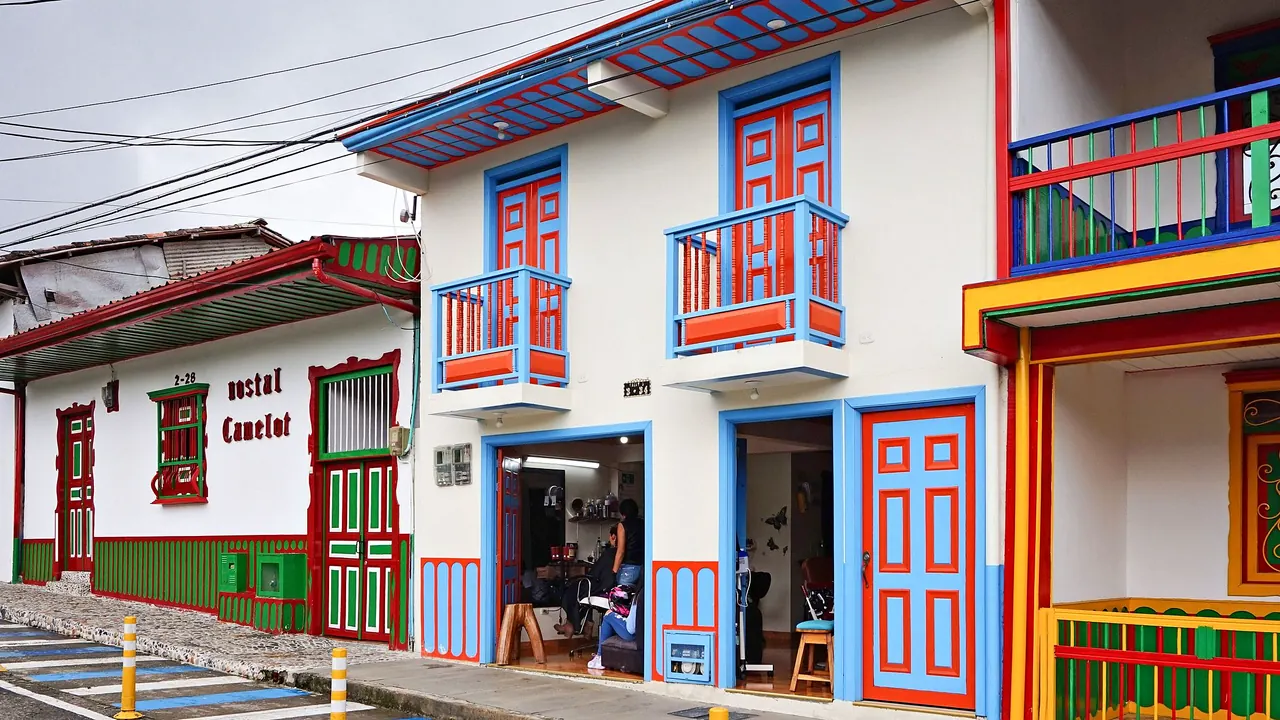
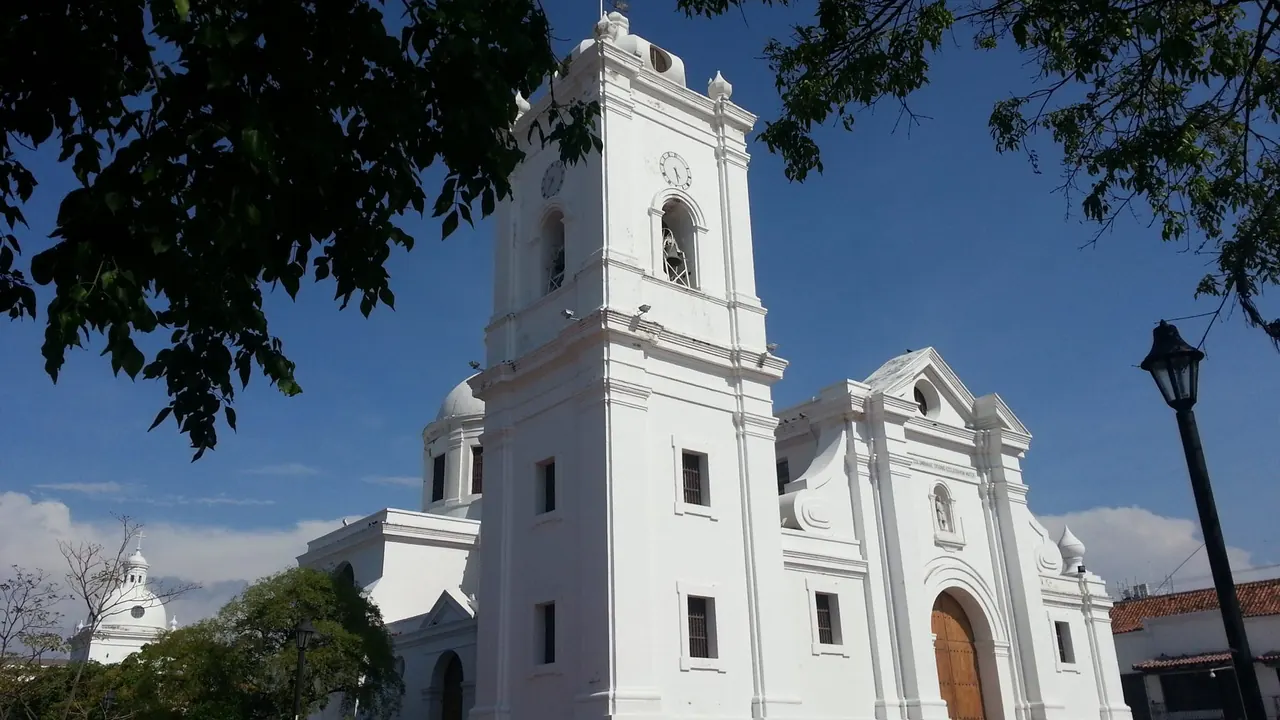
Photos: Salento by Bernard Gagnon, CC BY-SA 4.0, cropped; Santa Marta by Oliver H, CC BY-SA 3.0, cropped.
Salento or Santa Marta?
Our verdict in twelve categories, each scored against the same fixed benchmark cities, and the climate month by month, so you can choose for your trip.
Choose Salento for
- families
- wellness
- day trips
Salento suits travellers who want cool mountain air, long walks and coffee country at a slow pace. The Cocora Valley and its wax palms are the reason to go. The town is small enough to manage with children, and a finca stay on the hills is more restful than anything on the coast. Expect quiet evenings, little to eat beyond trout and coffee, and no swimming at all.
Choose Santa Marta for
- beaches
- nightlife
- food and drink
For sea, heat and evenings out, Santa Marta is the stronger choice. It has warm Caribbean water and the jungle beaches of Tayrona, with the Sierra Nevada rising behind. Its bars around Parque de los Novios are livelier, and its fried fish and seafood give more to eat. The city itself is hot and noisy, so most of what it offers lies just outside it.
Scoreboard
Twelve categories on one fixed scale from 0 to 100. The shaded stretch is the gap between the two.
Your match
Pick a travel style or drag the sliders, and both match scores follow your weighting.
Wins on families and wellness with your weighting.
Wins on beaches and nightlife with your weighting.
What matters to you?
Category by category
What the scores mean for a trip.
Beaches & swimming
Salento has nothing to offer here. It lies deep in the coffee mountains, its rivers are cold and rocky, and a finca pool is the closest you will get to a swim.
Santa Marta is a genuine beach base, with warm water all year, the calm grey sand of El Rodadero and coves such as Bahía Concha within easy reach. The finest beaches are in Tayrona, with golden sand between boulders and palms. They take a walk to reach, and only sheltered spots such as La Piscina and Cabo San Juan are safe for swimming.
Food & drink
You eat well and cheaply in both places, and neither is a place to travel for food, but Santa Marta has more range. Its Caribbean cooking offers more to try: whole fried fish, coconut rice, seafood soups and arepas de huevo from the street fryers. The evening restaurants around Parque de los Novios also include a few more ambitious kitchens.
Salento's menu centres on river trout served on a big patacón and on hearty set lunches, and it soon repeats itself. Its strength is coffee. Drinking a cup on the finca where it was picked and roasted is more memorable than the Sierra Nevada coffee served in Santa Marta's cafés.
Culture & sights
Santa Marta has more to see, though not a great deal. It is the oldest surviving Spanish city in Colombia, with a colonial grid around a whitewashed cathedral. It also has a gold museum on the Tairona people in the Casa de la Aduana and the hacienda where Bolívar died, which together fill a day.
Salento's appeal is a single street of painted bahareque houses with carved balconies, part of the UNESCO-listed coffee landscape, and the view from Alto de la Cruz. The town hangs together better than Santa Marta's uneven centre, but an hour or two covers it.
Nightlife
Santa Marta is clearly the better place for a night out. Bars and rooftop terraces fill the streets around Parque de los Novios and Carrera 3. El Rodadero has dance bars playing vallenato, reggaeton and champeta, and Taganga, over the hill, adds backpacker beach parties.
Salento has a few salsa bars on the plaza and a night of tejo, where you throw metal discs at gunpowder targets with a beer in hand. It is memorable once, but most people go to bed early for the next day's hike.
Nature & outdoors
Both are first-rate for the outdoors, and the difference is one of altitude and setting. Salento is cool Andean country. The wax palms of the Cocora Valley grow up to 60m tall above a half-day loop through cloud forest, and multi-day treks climb into the páramo and glaciated volcanoes of Los Nevados.
Santa Marta combines mountains and sea. Tayrona's rainforest coast has jungle trails and monkeys, Minca offers cloud-forest birdwatching with many species found nowhere else, and the Lost City trek starts from the city. Taganga also adds snorkelling and diving, which Salento cannot offer.
Day trips
Salento has the easier circuit of outings. Filandia, Buenavista, Circasia and Montenegro are short rides away, and Armenia's Quimbaya gold museum and the city of Pereira are about an hour off. The drawback is that the towns repeat the same painted balconies and coffee culture.
Santa Marta's excursions are fewer and further apart. Aracataca, the birthplace of García Márquez, is about an hour and a half away and Barranquilla about two hours. Taganga is just over the hill, but Cartagena is too far for a day.
Good for families
Salento is the easier choice with children. The town is small, a ride in an open jeep and the horses are treats in themselves, and the Parque del Café and the Panaca farm park are about an hour away. Only the steep streets, the rain and the long, muddy Cocora loop slow things down.
Santa Marta works if the plan is beach days at El Rodadero's shallow bay or at Bahía Concha. Beyond that, the heat, the chaotic traffic and the few attractions for children make it harder going, and Tayrona's long walks and strong currents suit older children better.
Getting around
Neither needs a car, but they work differently. Salento takes a few minutes to cross on foot, though some streets are steep. The Willys jeeps to Cocora leave when they are full, and most other coffee towns mean changing buses in Armenia or Pereira.
Santa Marta is a city that runs on taxis. The flat centre is walkable but hot and crowded, and buses, shared jeeps and mototaxis cover El Rodadero, Tayrona and Minca. In both places a hired driver saves time on a short stay.
Shopping & style
Neither is a place for shopping, and in both it comes down to crafts and coffee. Salento's Calle Real sells ponchos, woven bags, carved wood and beans from the surrounding farms. Santa Marta's best buys are the work of the region's indigenous peoples: Arhuaco mochilas in natural wool and bright Wayuu bags and hammocks, along with Sierra Nevada coffee.
Affordability
Both are cheap for visitors, with plenty of hostels, filling set lunches and low transport costs. The difference lies in the extras. In Salento the boutique finca hotels and guided treks into Los Nevados add up, while in Santa Marta it is the separate entry rate for foreign visitors to Tayrona, the Lost City trek and the busy seasons around Christmas, New Year and Easter.
Live music & performing arts
Neither has a stage worth planning a trip around, but Santa Marta has more music to hear. Its historic theatre hosts occasional concerts, and on busy evenings vallenato bands, champeta and drumming groups in the squares bring the sound of the coast to the centre.
In Salento, music means a guitar in a café or a band in a bar at the weekend. The town's annual festivities are the one bigger occasion.
Wellness & relaxation
Salento is the more restful base. A stay on a coffee finca brings misty mornings, birdsong and coffee from the slope, and a few places offer yoga and massage. The hot springs above Santa Rosa de Cabal, about two hours away, make a day of soaking.
Santa Marta is hot, loud and full of traffic, and in town there are only hotel spas and massage on the beach. To rest there, you move out to the eco-lodges of Minca or the yoga retreats towards Palomino.
When should you go?
Pick your month. The climate figures are measured averages, not a forecast.
Salento in July
Santa Marta in July
Daytime high, °C
Rainfall in the month, mm
Where the figures come from
Salento has no weather station within reach, so its figures come from a gridded climate model rather than a measured record, and read a broad area rather than the city itself.
Temperature and rainfall are climate normals, averaged over the years shown. Salento: 2001-2020 normals, NASA POWER reanalysis grid, no weather station within 90 km. Santa Marta: 1991-2020 normals, Santa Marta / Simon Bolivar (11.9 km from centre).
Salento barely changes through the year. Daytime highs sit around 19°C in every month, comfortable for walking but never warm, and evenings feel cool. Rain is the thing to plan around. It falls in two seasons, peaking in April and again in October and November at close to 194mm a month, when the trails turn muddy. January and July to August are the drier spells and the best time for the Cocora loop and longer treks.
Santa Marta is hot all year, at about 31°C by day. A long dry season runs from December to April, when almost no rain falls and sunshine is strongest in January. The wet months build from May and peak in October at around 122mm, still well below the mountain totals. The sea is warm enough to swim in every month and warmest near 29°C in September and October, though from December to March the wind blows harder and the water is rougher. January is dry in both places, which makes it a good month for a trip that combines the two.
Which traveller are you?
For a beach and sun trip, Santa Marta is the only real option. Salento sits high in the Andes with cold rivers and no coast, while Santa Marta has warm sea all year, the calm bay at El Rodadero and the jungle-backed coves of Tayrona.
On a food and nightlife trip, Santa Marta again comes out ahead. Its Caribbean seafood is more varied than Salento's trout and set lunches, and the bars of the historic centre, El Rodadero and Taganga stay open long after Salento has gone quiet.
On a family trip with young children, Salento is the easier pick. The town is compact, and jeep rides, horses and hummingbirds keep children busy. The Parque del Café is within an hour, whereas Santa Marta means fierce heat, chaotic traffic and long walks in Tayrona.
Before you go
| Measure | Salento | Santa Marta |
|---|---|---|
| Official language | Spanish | Spanish |
| Currency | Colombian Peso (COP) | Colombian Peso (COP) |
| Sockets | AB110 V, 60 Hz | AB110 V, 60 Hz |
| Driving side | Right | Right |
| Time zone | UTC-5 | UTC-5 |
| Emergency number | 123 | 123 |
| Elevation | 1,895 m | 8 m |
| Main airport | El Eden Airport (AXM)30 km from centre2 non-stop destinations | Simón Bolívar International Airport (SMR)13 km from centre6 non-stop destinations |
| Public holidays this year | 19 days | 19 days |
By the numbers
| Measure | Salento | Santa Marta |
|---|---|---|
| City population | 7,578 | 505,915 |
| People per km² | 20 | 1,723 |
| Museums within 10 km | 0 | 3 |
| UNESCO World Heritage sites within 50 km | 1 | 0 |
| Swim season, months above 21 °C | - | 12 months |
Where else could you go?
Every comparison below shares a destination with this one, so you can follow Salento or Santa Marta somewhere new.
- Bogotavs Salento
- Calivs Salento
- Cartagenavs Santa Marta
- Medellinvs Salento
- Medellinvs Santa Marta
- Cartagenavs Salento