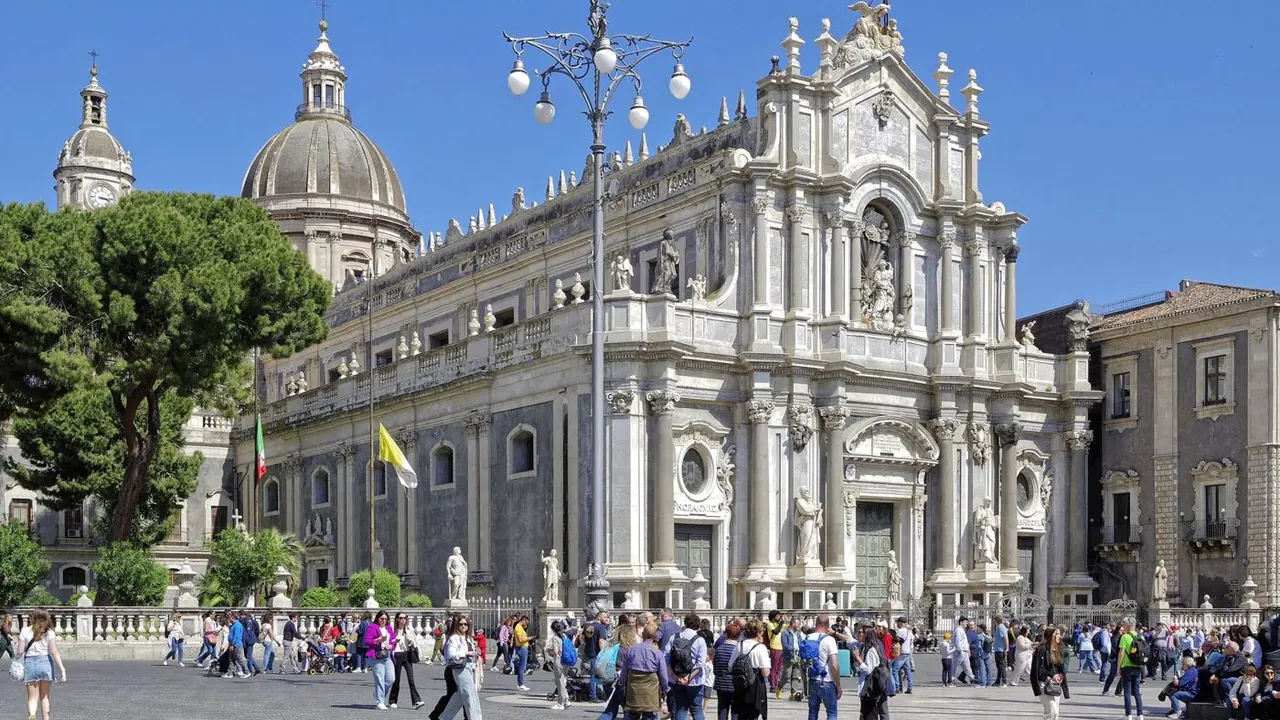
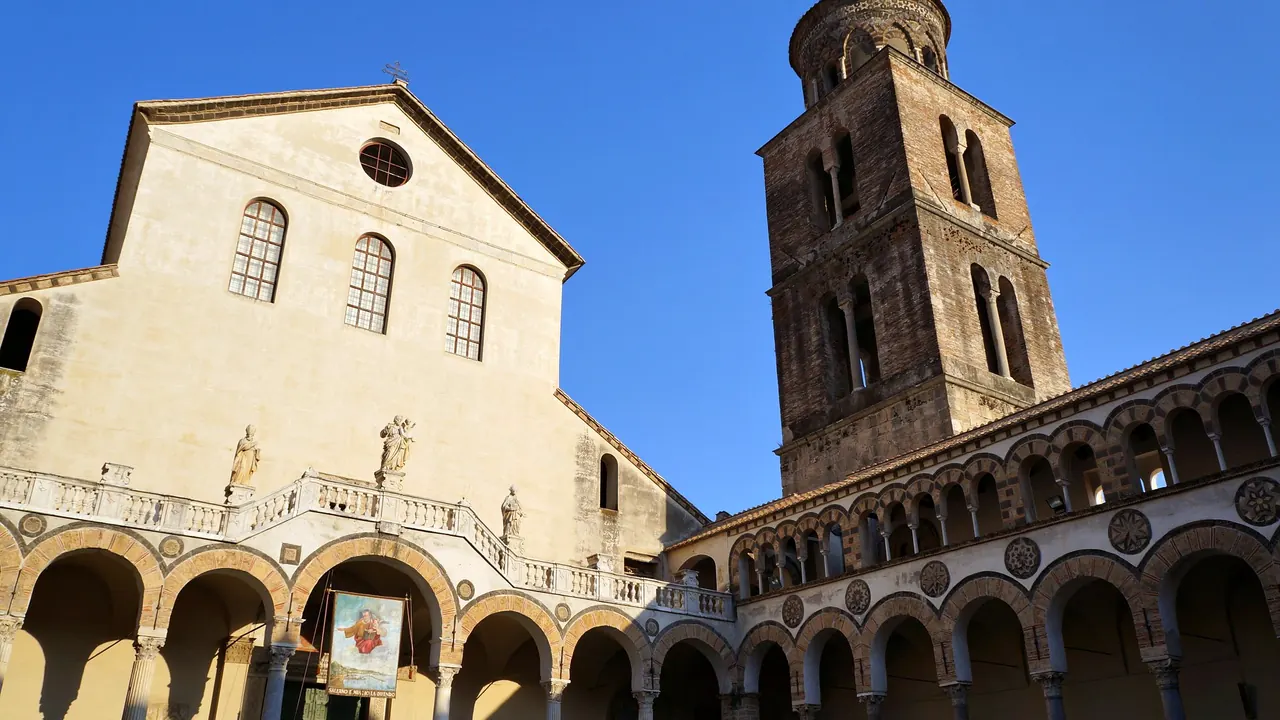
Photos: Catania by Berthold Werner, CC BY-SA 4.0, cropped; Salerno by Leandro Neumann Ciuffo, CC BY 2.0, cropped.
Catania or Salerno?
Our verdict in twelve categories, each scored against the same fixed benchmark cities, and the climate month by month, so you can choose for your trip.
Choose Catania for
- nightlife
- culture and sights
- live music and the arts
Catania suits travellers who want the city itself to be the main attraction. It has street food from morning granita to late grills on Via Plebiscito, a baroque centre built in black lava and pale stone, a young crowd out until well past midnight and Etna smoking above it all. It suits people who don't mind traffic and noise and are willing to hire a car for the volcano and the baroque towns.
Choose Salerno for
- getting around
- day trips
- families
Salerno is the better choice for a calm, well-connected base in one of Italy's richest regions. Pompeii, Paestum, Naples and the Amalfi villages are all a short train or ferry ride away, the centre is an easy walk along the sea and most visitors never need a car. The city is quieter and plainer than Catania, so pick it for what lies around it.
Scoreboard
Twelve categories on one fixed scale from 0 to 100. The shaded stretch is the gap between the two.
Your match
Pick a travel style or drag the sliders, and both match scores follow your weighting.
Wins on nightlife and culture and sights with your weighting.
Wins on getting around and day trips with your weighting.
What matters to you?
Category by category
What the scores mean for a trip.
Beaches & swimming
Catania has the better swimming close to town, and two kinds of it. La Playa is a long sandy strip of beach clubs just south of the centre. To the north, the lava coast at Aci Castello and Aci Trezza has very clear water that you reach by ladders from rock platforms, with basalt sea stacks just offshore.
Salerno's city beaches are grey sand, and the water near the port is murky. For good swimming you head out of town, either south to the long sandy lidos towards Paestum or west to the pebbly Amalfi coves.
Food & drink
Catania has the more distinctive food culture, built on its street food. There are cone-shaped arancini, fried crispelle, pastries such as the cipollina, horse meat grilled on Via Plebiscito and pistachio granita with brioche for breakfast. Add the theatre of La Pescheria and the volcanic wines of Etna, and eating becomes a reason to go.
Salerno eats simply and well, with wood-fired pizza, pasta with clams and lemon pastries. Its local treasures come from just outside town: buffalo mozzarella eaten fresh on the day it is made, and colatura anchovy sauce from Cetara. It is honest everyday food, but with less range than Catania's.
Culture & sights
Catania offers more to see in town. The whole centre is late baroque, rebuilt in lava stone after the 1693 earthquake. Via dei Crociferi is lined with churches, San Nicolò l'Arena is one of Europe's largest monasteries, and Roman ruins appear under the squares. The February Feast of Sant'Agata is one of Italy's largest religious processions.
Salerno's heritage is medieval and more compact. It has the Norman cathedral with Saint Matthew's crypt, the medicinal Giardino della Minerva and the Arechi Castle above the gulf. A day or two covers it, and the great ancient sites lie outside the city.
Nightlife
Catania goes out later and louder. Thanks to its large university, the lanes around Piazza Bellini and the Teatro Massimo fill with drinkers long after midnight. In summer, the beach clubs on La Playa become open-air dance floors.
Salerno's evenings are gentler. People drink outside the wine bars around Largo Campo and Via dei Mercanti, or take a passeggiata along the seafront with gelato. For a proper night out you go to Naples.
Nature & outdoors
Both cities sit in spectacular country, and Catania edges ahead because an active volcano of about 3,300m is under an hour away. You can walk across lava flows and old craters on Etna, ski with a sea view in winter and wade through the basalt Alcantara Gorge.
Salerno's landscape is about cliffs and sea. The Amalfi Coast's mule tracks include the Path of the Gods, and the Cilento national park has wooded hills and wild headlands. Boat trips and kayaking along the coast are the classic summer outings.
Day trips
Salerno is a superb base for day trips. Paestum's Greek temples and Pompeii are each about half an hour away by train, and ferries cross to Amalfi and Positano in season. Naples, Herculaneum and the palace at Caserta are also easy days out, all without a car.
Catania's day trips are excellent too: Ortigia in Siracusa, Taormina's theatre and the baroque towns of Noto, Modica and Ragusa. The difference is that the baroque circuit and the inland mosaics at Piazza Armerina are much easier with a hire car.
Good for families
Neither city is built around children, and their strengths differ. Catania has the bigger days out: walking on old craters on Etna and the Etnaland theme park and water park, plus gently shelving sand at La Playa. The city streets themselves are hard work, with narrow pavements and little shade.
Salerno is easier day to day, thanks to its flat, car-free seafront with playgrounds and shallow sandy beaches to the south. The Luci d'Artista lights make it a winter treat. It has no theme park, though, and the old town is all steps.
Getting around
Salerno is the easier place to manage without a car. The station, shopping street, seafront and old town lie along one walkable strip. Direct regional trains go to Naples, Pompeii and Paestum, and in summer ferries along the Amalfi Coast avoid the clogged coast road.
Catania's small baroque centre is pleasant on foot, but beyond it there is only a single metro line and slow buses stuck in traffic. Many visitors hire a car for Etna and the baroque towns, and then struggle to park in the centre.
Shopping & style
Shopping is ordinary in both cities, with chain-store streets in each: uphill Via Etnea in Catania, and pedestrian Corso Vittorio Emanuele in Salerno, where the evening passeggiata passes. The real difference is in markets and souvenirs. Catania's daily La Fiera market and Bronte pistachio creams have more character. Salerno's best buys come from its neighbours: painted majolica from Vietri, limoncello and Cetara's colatura.
Affordability
Both cities are easy on the budget for Italy, and they get expensive in different ways. In Catania, food is the bargain, since street food makes a full meal. The costs come from guided trips to the summit craters and the hire car many visitors want.
Salerno's main saving is its rooms, which cost far less than in the Amalfi cliff villages, so it works well as a base for the coast. Its extra costs are ferries over several days and entry to the big archaeological sites.
Live music & performing arts
Catania has the stronger musical identity as Bellini's birthplace. The Teatro Massimo Bellini runs a proper opera and symphony season, there is a museum of his manuscripts, and small companies still perform the opera dei pupi, the Sicilian puppet theatre of knights and Saracens.
Salerno's gilded Teatro Verdi, modelled on the San Carlo in Naples, offers a respectable season. Its best evening may be outside town, at a Ravello Festival concert on the cliff-top terraces.
Wellness & relaxation
Neither city is a retreat, and both have hotel spas rather than any bathing tradition. In Salerno you can sit in open-air sulphur pools at Contursi Terme about an hour inland, or take a slow sunset walk along the palm-lined seafront. In Catania, rest means staying in the quieter villages on Etna's slopes and enjoying long lunches, away from the noise of the centre.
When should you go?
Pick your month. The climate figures are measured averages, not a forecast.
Catania in July
Salerno in July
Daytime high, °C
Rainfall in the month, mm
Where the figures come from
Catania's sunshine is measured 88 km from the centre, at Messina.
Salerno's temperatures are measured 71 km from the centre, at Grazzanise.
Salerno has no rain gauge within 25 km of the centre, so its rainfall comes from a gridded climate dataset read at the city rather than from a gauge further away.
Temperature and rainfall are climate normals, averaged over the years shown. Catania: 1991-2020 normals, Catania / Fontanarossa (5.2 km from centre). Salerno: 1991-2020 normals, Grazzanise (71.3 km from centre).
The summers are much alike. Both cities are hot from June to September, with highs around 32°C in August that make midday sightseeing hard work. The sea warms to about 26°C in both, and swimming is comfortable from June into October. Catania's water stays slightly warmer into autumn, and its summers are almost completely dry, while Salerno gets the odd shower.
The real difference comes in the cooler half of the year. Salerno is far wetter from October to March, with around 154mm of rain in November against about 71mm in Catania, and its winters are a couple of degrees cooler. For walking and hiking, April, May and late September into October are best in both cities. Catania is the safer choice for a dry winter or early spring break, and it also gets a little more sunshine.
Which traveller are you?
For a food and nightlife trip, Catania is the clear choice. You can start at the Pescheria fish market and eat arancini and horse-meat grills from the street counters. Then the bars around Piazza Bellini stay full late into the night, and in summer the La Playa beach clubs turn into dance floors.
On a culture and arts trip, Catania has more within the city itself. Its UNESCO-listed baroque streets, the Benedictine monastery and the Roman theatre all sit in the centre. Bellini's opera house runs a full season, and small companies still stage the Sicilian marionette theatre.
For a short city break, Salerno is easier. You arrive by train and walk from the station to the seafront and the old town, with no car or slow buses involved. A day out to Pompeii or Paestum by train fits easily into a long weekend.
Before you go
| Measure | Catania | Salerno |
|---|---|---|
| Official language | Italian | Italian |
| Currency | Euro (EUR) | Euro (EUR) |
| Sockets | CFL230 V, 50 Hz | CFL230 V, 50 Hz |
| Driving side | Right | Right |
| Time zone | UTC+1, UTC+2 in summer | UTC+1, UTC+2 in summer |
| Emergency number | 112 | 112 |
| Elevation | 7 m | 4 m |
| Main airport | Catania-Fontanarossa Airport (CTA)4 km from centre96 non-stop destinations | Naples International Airport (NAP)46 km from centre131 non-stop destinations |
| Public holidays this year | 13 days | 13 days |
By the numbers
| Measure | Catania | Salerno |
|---|---|---|
| City population | 311,584 | 127,186 |
| People per km² | 1,704 | 2,123 |
| Museums within 10 km | 25 | 9 |
| UNESCO World Heritage sites within 50 km | 3 | 5 |
| Swim season, months above 21 °C | 5 months | 5 months |
Where else could you go?
Every comparison below shares a destination with this one, so you can follow Catania or Salerno somewhere new.